June 16: Six Minutes, Six Miles Per Hour, and a Dream on Wheels
Some days are made for breaking the mold. On June 16, a musician ignored every convention radio had ever imposed and recorded a song that rewrote what popular music could say and how long it could take to say it. A generation earlier, an industrialist walked into a Detroit office with a radical promise: that the machine of the future would belong not to the wealthy few but to anyone who wanted to go somewhere. And eighty years before either of them, a designer in Brooklyn invited the American public to sit down, hold on, and surrender to the pure, breathless pleasure of speed. Together they remind us that the most transformative ideas tend to look, at first glance, like a little too much.
Six Minutes That Changed Everything
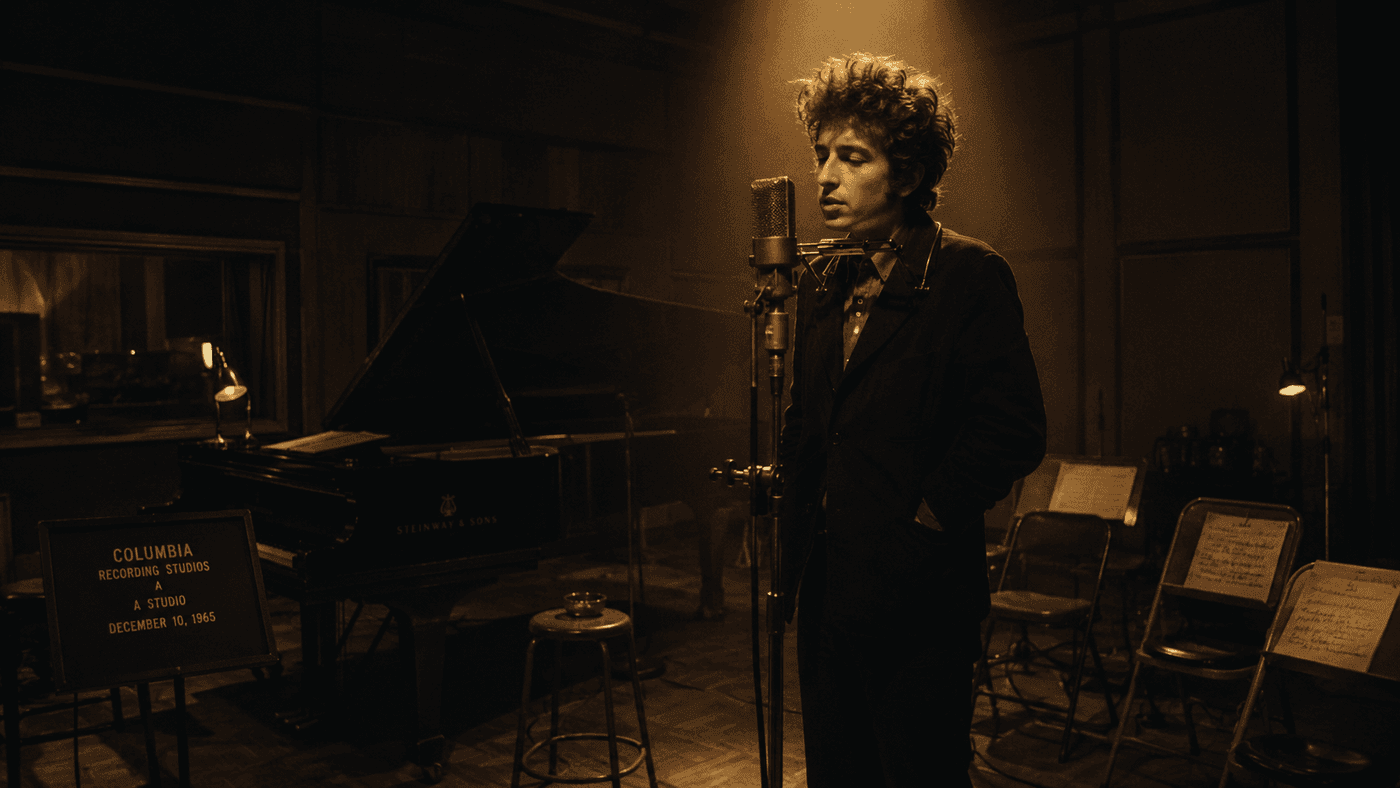
On June 16, 1965, Bob Dylan arrived at Columbia Records' Studio A in New York City and recorded "Like a Rolling Stone." He was twenty-four years old. The song that emerged from that session—dense with imagery, blistering in its contempt, driven by a hammering organ riff—ran six minutes and thirteen seconds, nearly twice the length radio programmers would touch at the time. Columbia's executives were skeptical. Radio stations said it was unplayable. Dylan released it anyway, and within weeks it had climbed to number two on the Billboard Hot 100. The rules, it turned out, had simply been waiting for someone to ignore them.
"Like a Rolling Stone" didn't just break format conventions — it announced a new kind of ambition for popular music. Where earlier rock and pop songs dealt in romance and adolescent longing, Dylan's lyrics hit with the force of literature: allusive, accusatory, philosophically charged. Rolling Stone magazine would later name it the greatest rock song ever recorded. Bruce Springsteen described hearing it for the first time as feeling like "somebody kicked open the door to your mind." For Dylan, it marked a turning point from folk troubadour to something harder to categorize and infinitely harder to dismiss. The recording session on June 16, 1965 lasted one afternoon. Its reverberations have not stopped.
The Car for Everyone
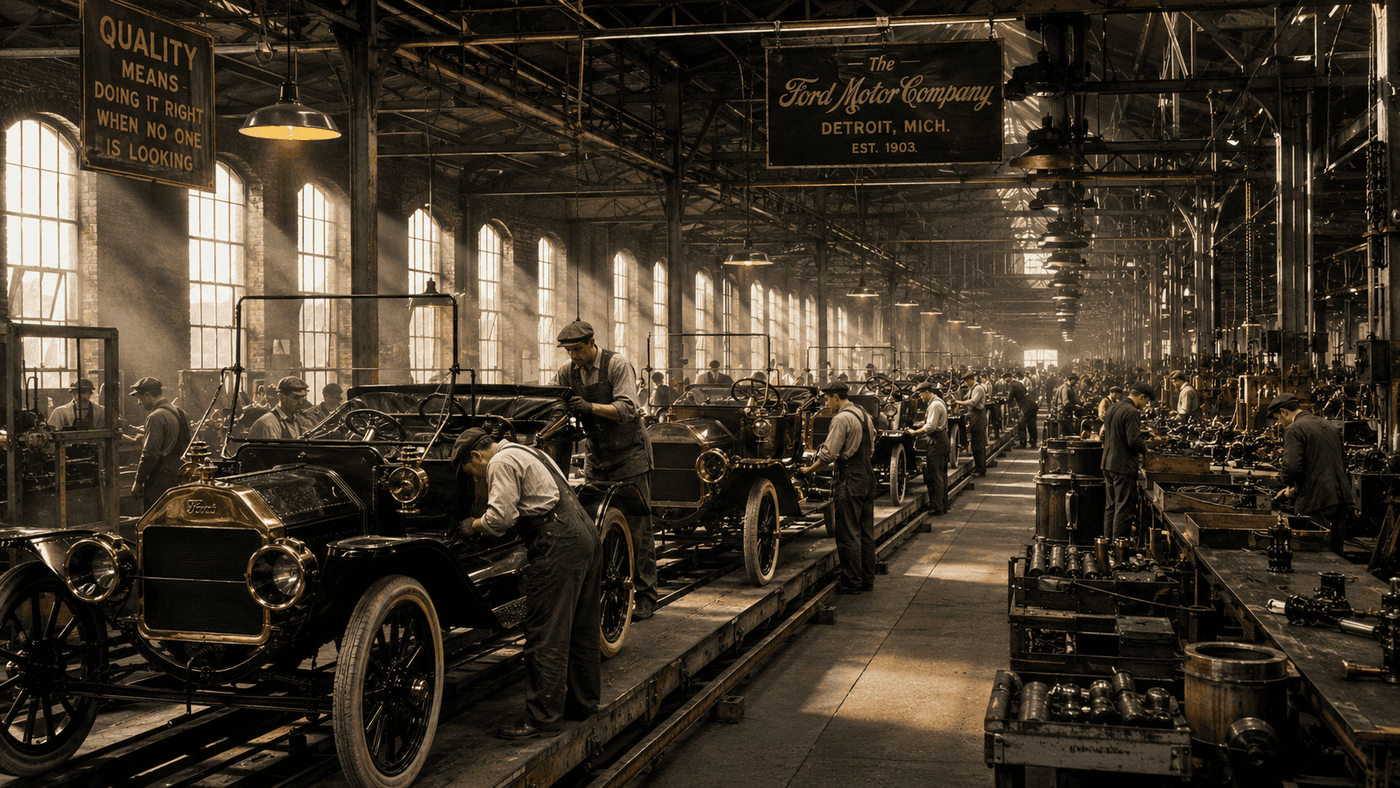
On June 16, 1903, Henry Ford and twelve investors signed the articles of incorporation for the Ford Motor Company in Detroit, Michigan, with a combined investment of $28,000. The automobile existed before Ford — European engineers had been tinkering with horseless carriages for decades — but it remained the province of the wealthy, hand-built and prohibitively expensive. Ford's animating vision was something different and, to many in the industry, dangerously naive: a car built simply enough and cheaply enough that the people who made it could afford to buy it. His investors were not entirely sure he could pull it off. The market, he insisted, was everyone.
The company Ford incorporated on that June afternoon would go on to reshape American life more thoroughly than almost any other single enterprise in the nation's history. The Model T, introduced in 1908, delivered on his promise: affordable, durable, and simple enough for a farmer to repair with basic tools. The moving assembly line, refined at Ford's Highland Park plant by 1913, slashed production time and cost so dramatically that it became the template for industrial manufacturing worldwide. By the time the fifteen millionth Model T rolled off the line in 1927, the American landscape — its roads, its suburbs, its rhythms of work and leisure — had been remade in the automobile's image. It had all started with twelve investors, a borrowed idea, and a conviction that ordinary people deserved to go wherever they pleased.
The Pleasure of Falling
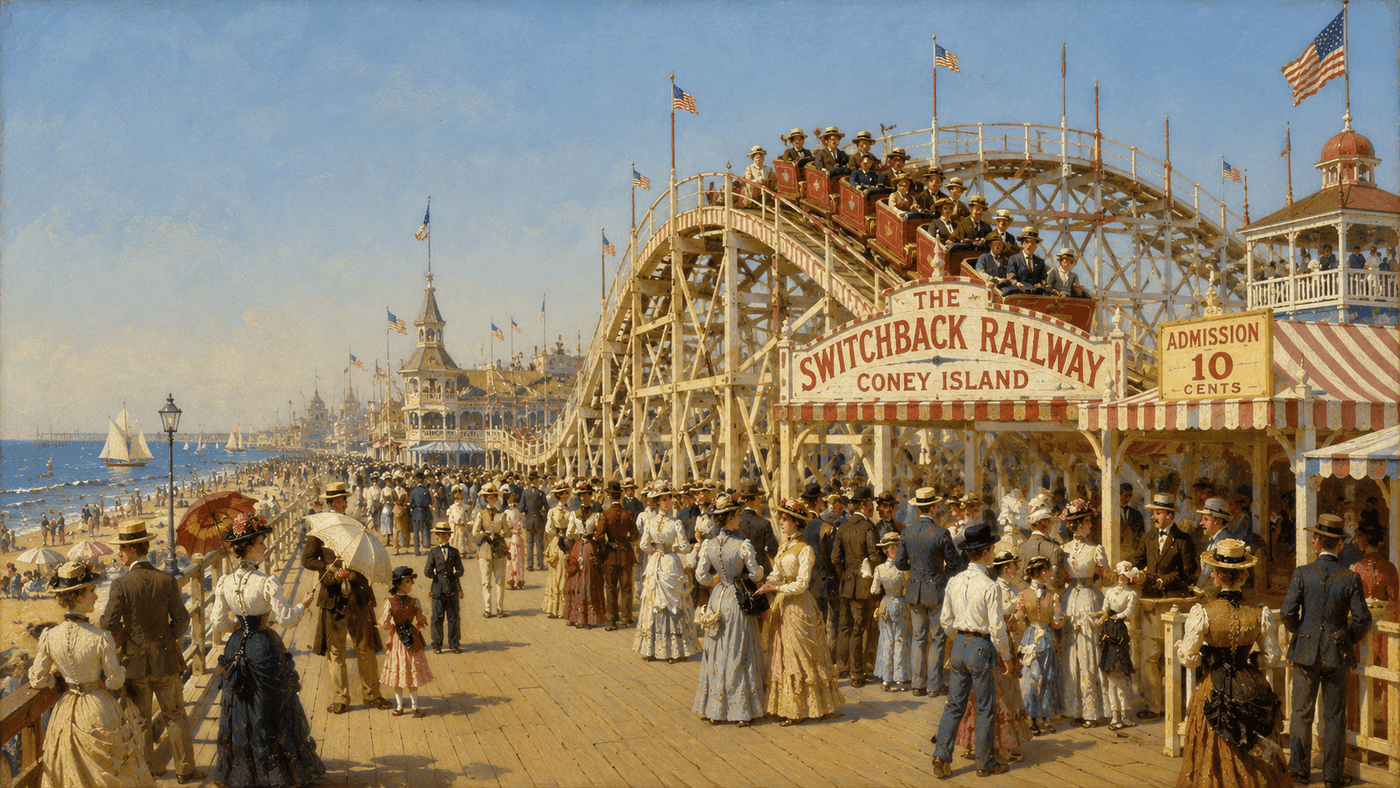
On June 16, 1884, LaMarcus Adna Thompson opened the Switchback Railway at Coney Island in Brooklyn, New York, and invented an American obsession. The ride was modest by any modern standard: a gravity-powered wooden track that carried passengers down a gentle slope at a top speed of six miles per hour, after which they climbed a small tower and coasted back to where they started. It cost a nickel. On its first day, riders lined up by the hundreds. Thompson reportedly recouped his $1,600 construction investment within weeks. The Switchback Railway was not thrilling in the way we use the word today — but it offered something the industrial city rarely did: the sensation of pure, purposeless speed, with nothing to do but feel it.
What Thompson unleashed at Coney Island that summer grew into one of the defining institutions of American popular culture. Competitors quickly built faster, steeper, more elaborate coasters along the boardwalk, and the innovation never stopped: wooden coasters gave way to steel, drops grew steeper, loops appeared, and the engineering of fear became an industry of its own. Today, amusement parks across the country host more than 900 roller coasters, drawing tens of millions of riders a year. Coney Island itself became the template for the American amusement park — a democratic space where for the price of a ticket, anyone could scream, laugh, and briefly forget the weight of the ordinary world. Thompson's Switchback Railway ran for only a few years before faster rides made it obsolete. But the appetite it revealed has never slowed down.