June 14: Stars and Stripes, Surrender, and a Secret Life
June 14 is a day that asks hard questions about what we stand for—and what we're willing to stand behind. In 2015, a small town in Missouri began to unravel a story so disturbing it would force the country to confront the invisible violence that can exist behind closed doors. In 1777, a fledgling nation stitched its values into a flag and dared to believe they would endure. And in 1982, two nations counted their dead and finally lowered their weapons after ten weeks of brutal, costly conflict. Across centuries, this date has marked moments when the truth—however complicated—finally came into the open.
The Girl in the Wheelchair
On June 14, 2015, neighbors in a quiet Springfield, Missouri neighborhood made a grim discovery: Clauddine "Dee Dee" Blanchard had been stabbed to death inside her home. Almost immediately, concern shifted to her daughter, Gypsy Rose—a frail young woman in her early twenties who was believed to suffer from a catalog of serious illnesses, including leukemia, muscular dystrophy, and epilepsy, and who had used a wheelchair for most of her life. Gypsy was nowhere to be found. A Facebook post from what appeared to be Gypsy's account, cryptic and disturbing, sent investigators reeling. Within days, police located Gypsy in Wisconsin—standing on her own two feet, in apparent good health, with her online boyfriend Nicholas Godejohn. Both were taken into custody. The case the world thought it understood had barely begun.
What emerged in the months that followed was a portrait of prolonged, calculated abuse. Dee Dee Blanchard had subjected her daughter to years of unnecessary medical procedures, fabricated diagnoses, and social isolation—a textbook case of Munchausen syndrome by proxy, now more commonly called factitious disorder imposed on another. Gypsy, it turned out, had no serious physical illness. She had been denied schooling, kept dependent, and prevented from forming meaningful relationships outside her mother's control. In 2016, Gypsy pleaded guilty to second-degree murder and was sentenced to ten years in prison; she was granted parole in December 2023. Godejohn was convicted of first-degree murder and sentenced to life. The case prompted renewed public conversation about medical child abuse, coercive control, and the ways institutions—schools, hospitals, charities—can fail to see what is happening right in front of them. For many who followed the story, Gypsy Rose Blanchard was simultaneously a victim and a perpetrator: a young woman whose circumstances defied easy judgment.

A New Constellation
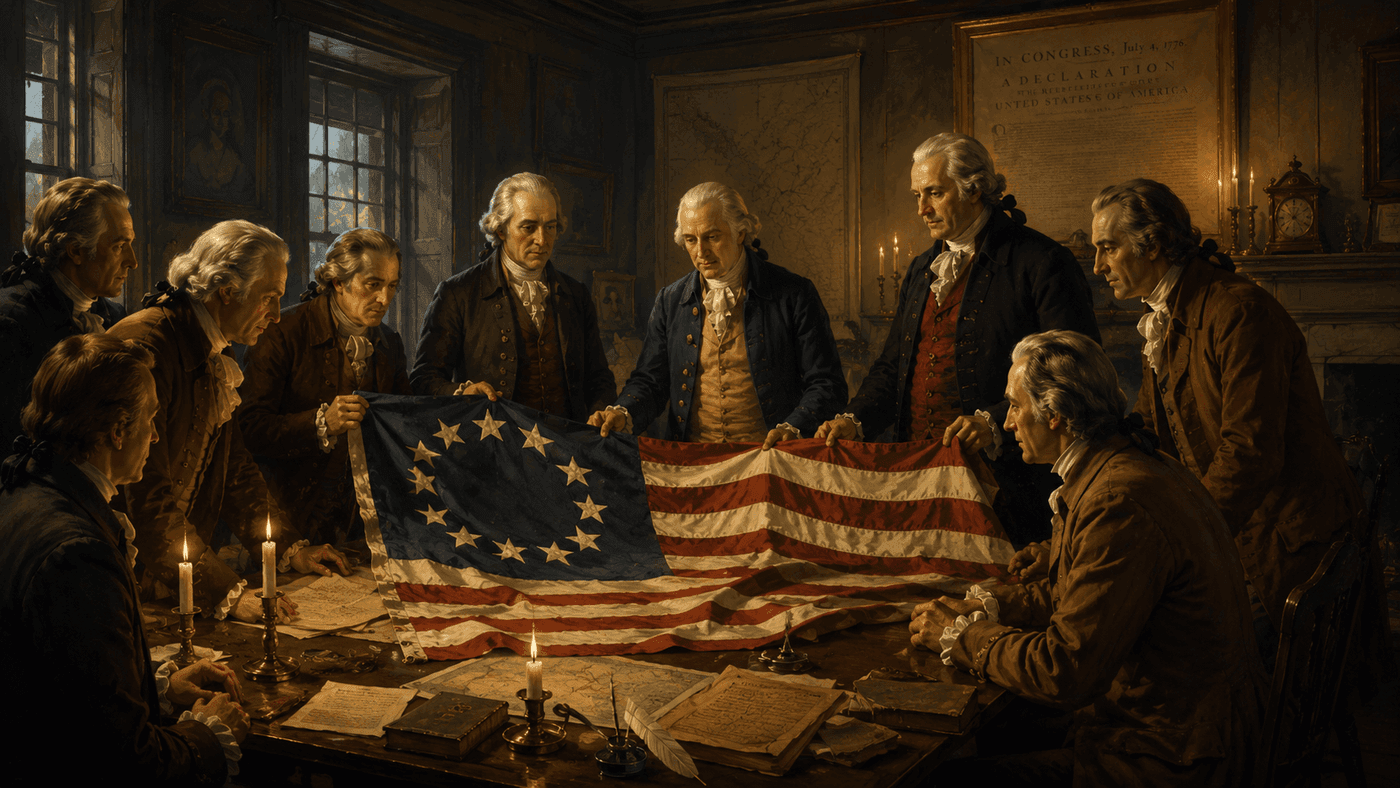
On June 14, 1777, the Second Continental Congress passed a resolution that would give the young United States one of its most enduring symbols: an official flag. The resolution was spare—just one sentence—declaring that the flag of the thirteen states would carry thirteen stripes of alternating red and white, and thirteen stars on a field of blue, representing "a new constellation." The country was barely a year old, still at war with Britain, still very much an experiment in self-governance. And yet in adopting that banner, Congress made a declaration not just of independence but of identity: here is what we are, and here is what we intend to become.
The flag's early history is steeped in lore—Betsy Ross, the seamstress of legend, may or may not have sewn the first one—but its evolution is well-documented. As the nation grew, so did the flag, each new state adding a star until the familiar fifty-star design was standardized in 1960 after Hawaii's admission to the Union. Flag Day itself wasn't officially proclaimed a national observance until 1949, but the date had been celebrated informally for decades before Congress acted. Today, the Stars and Stripes is among the most recognized symbols in the world, freighted with meaning—pride, protest, sacrifice, aspiration—that different Americans read in different ways. That complexity is itself a kind of tribute to the argument the founders started on June 14, 1777: a country always in the act of defining itself.
The Last White Flag
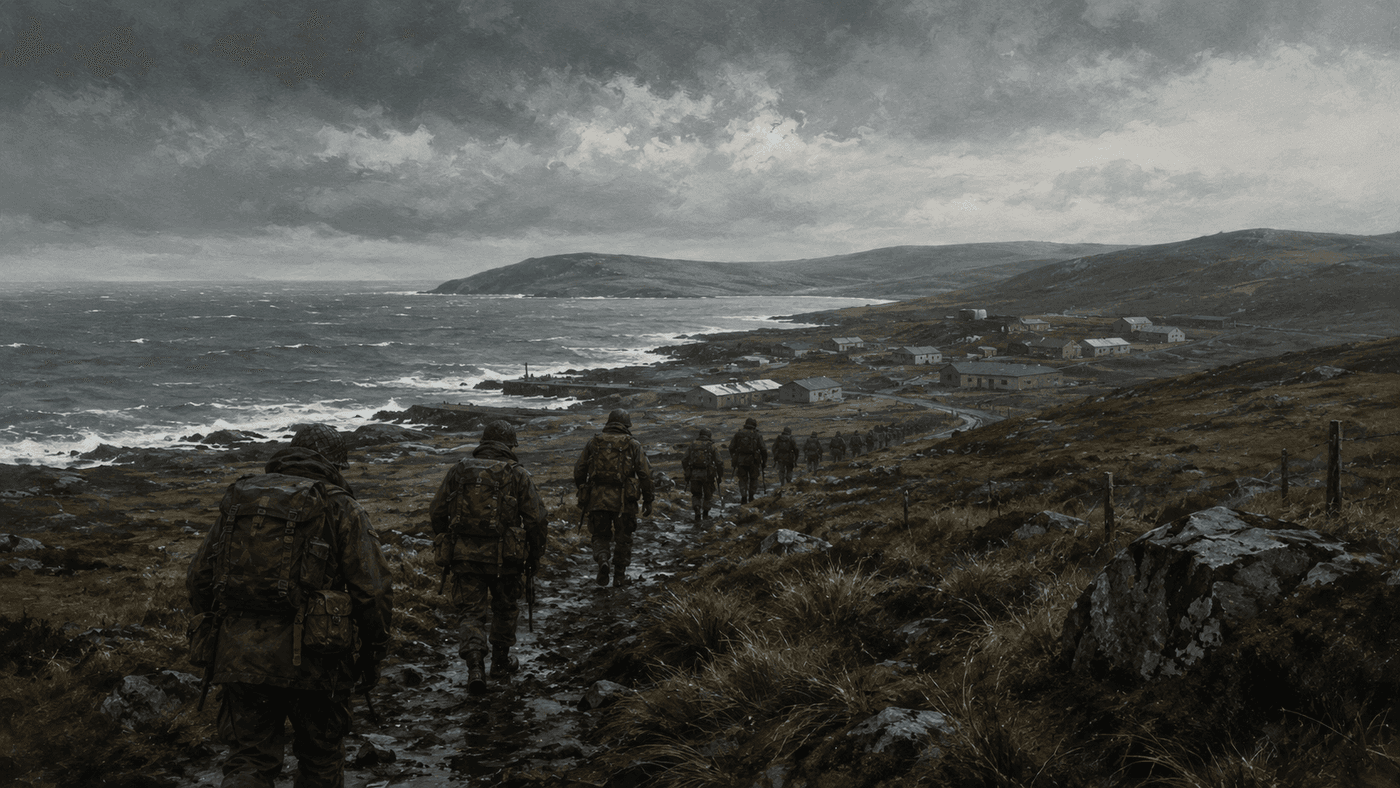
Two centuries after the Continental Congress gave America its flag, another flag went up over a wind-battered island in the South Atlantic—this one white. On June 14, 1982, Argentine forces in Stanley, the capital of the Falkland Islands, surrendered to British troops, ending a ten-week war that had stunned the world with its ferocity and its stakes. Argentina had seized the islands in early April, claiming sovereignty over the British-held territory it called the Malvinas. Britain, under Prime Minister Margaret Thatcher, responded by dispatching a naval task force across 8,000 miles of ocean—a military gamble that many observers considered audacious to the point of recklessness. The fighting that followed was fierce: 255 British and 649 Argentine soldiers died, along with three Falkland Island civilians.
The war's consequences extended far beyond the South Atlantic. In Argentina, the defeat accelerated the collapse of the military junta that had launched the invasion, hastening a return to democratic governance. In Britain, Thatcher's political standing—shaky before the conflict—was dramatically strengthened, reshaping the Conservative Party and British politics for years to come. For military planners worldwide, the Falklands became a case study in the complexities of modern naval and amphibious warfare. And for the roughly 3,000 residents of the islands themselves, whose wishes to remain under British sovereignty had been largely ignored in Buenos Aires's calculations, June 14 remains a day of solemn remembrance. The territorial dispute has never been fully resolved; Argentina still claims the islands. But the guns fell silent on June 14, 1982, and have not spoken since.