July 19: A Chapel, the Eternal City, and a Stone That Spoke
July 19 is a day for breaking silences that had lasted far too long. In 1848, roughly 300 people gathered in a small chapel in upstate New York to do something no formal American assembly had ever done before: discuss, openly and collectively, the legal and social status of women. Ninety-five years later, Allied bombers shattered a different kind of silence, ending the wartime illusion that Rome's ancient grandeur made it untouchable. And forty-nine years before either of those events, French soldiers in Egypt uncovered a stone that would eventually break a silence more than a thousand years old — unlocking a written language that had gone unread since antiquity. Three July nineteenths. Three moments when something that had been quiet for too long finally spoke.
Seneca Falls
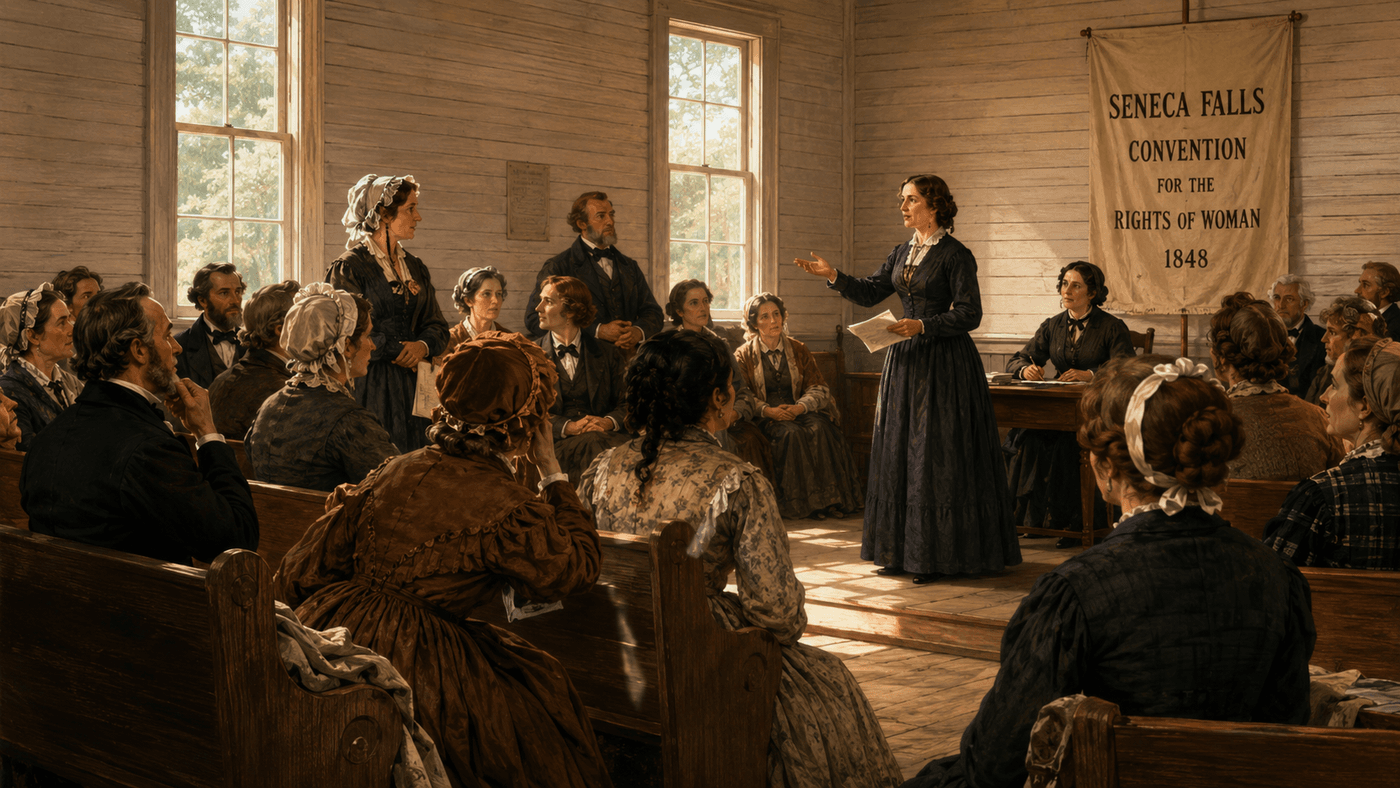
On July 19, 1848, approximately 300 people — most of them women, though men attended as well — gathered at the Wesleyan Chapel in Seneca Falls, New York, for the first day of what became known as the Seneca Falls Convention, the founding event of the organized American women's rights movement. The gathering had been organized by Elizabeth Cady Stanton and Lucretia Mott, both veteran abolitionists who had grown frustrated by the exclusion of women from full participation in the antislavery movement itself — Mott had famously been barred, alongside other female delegates, from speaking on the convention floor at the World Anti-Slavery Convention in London in 1840. Over two days, attendees discussed and ultimately signed the Declaration of Sentiments, a document modeled deliberately on the Declaration of Independence, which laid out a comprehensive list of grievances against the legal and social subjugation of women and demanded redress, including — most controversially even among attendees — the right to vote.
The Declaration of Sentiments was signed by 68 women and 32 men, including Frederick Douglass, whose forceful advocacy for the suffrage resolution helped secure its passage despite significant internal disagreement about whether the demand was too radical. The Seneca Falls Convention received considerable ridicule in the press at the time, with many newspapers treating the entire gathering as an object of mockery. It nonetheless became the acknowledged starting point of a movement that would take seventy-two years to achieve its central demand: the Nineteenth Amendment, granting women the right to vote, was not ratified until 1920 — a full generation after most of the original signers had died. Elizabeth Cady Stanton herself did not live to see it; she died in 1902. The Wesleyan Chapel where the convention was held still stands in Seneca Falls, now part of the Women's Rights National Historical Park, a quiet building that hosted one of the most consequential conversations in American history.
The Eternal City, Interrupted
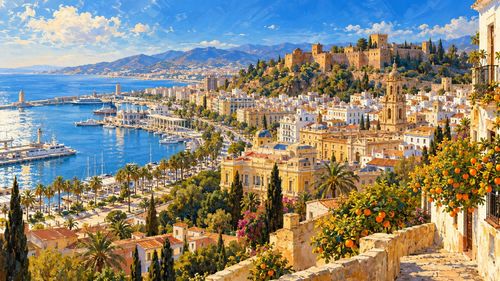
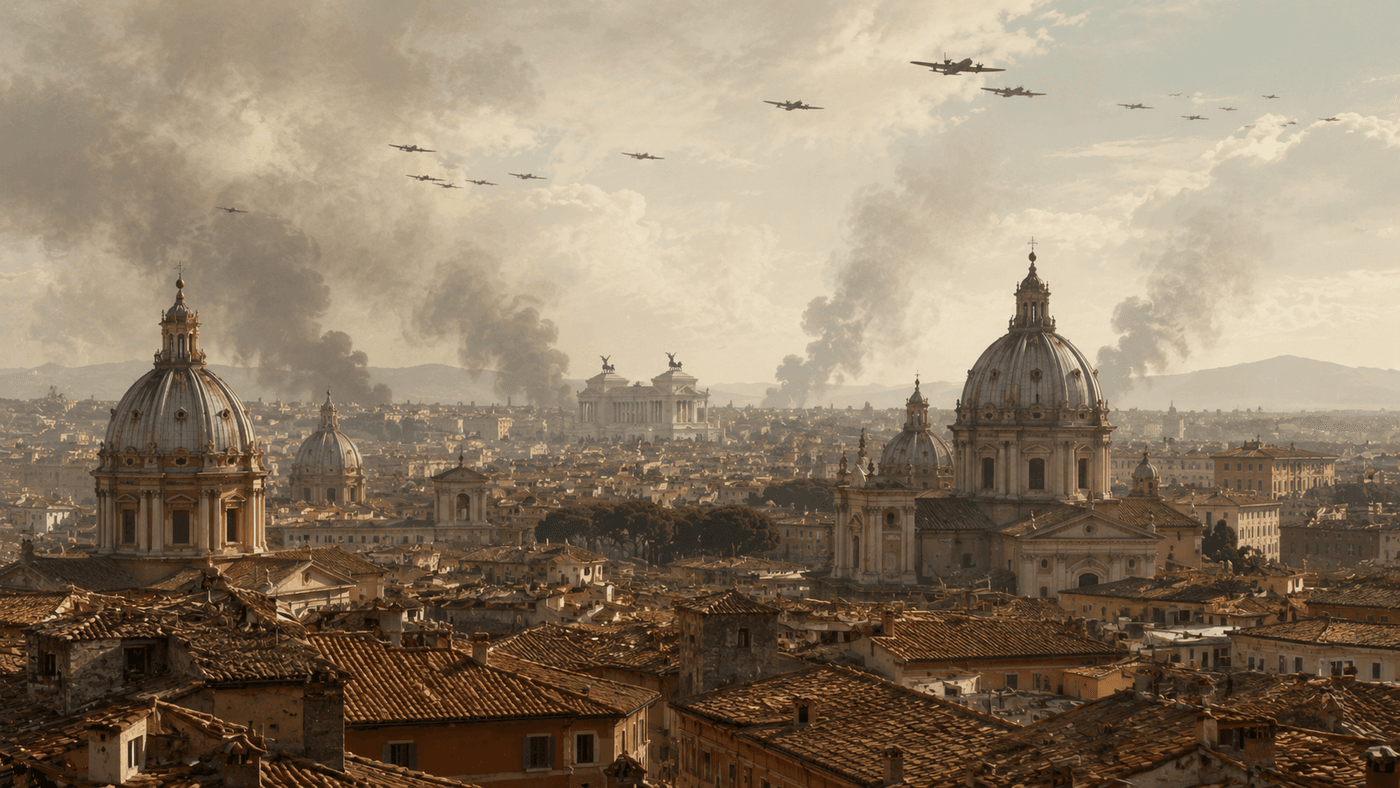
On July 19, 1943, more than 500 American bombers conducted the first major Allied air raid on Rome, targeting railway marshaling yards and military infrastructure in an attack that shattered the widespread belief — held by many Italians and Romans in particular — that the city's ancient and religious significance would shield it from the devastation visiting the rest of Europe. The raid struck the San Lorenzo district hard, killing an estimated 1,500 to 3,000 civilians and damaging the historic Basilica of San Lorenzo fuori le Mura, though Allied planners had deliberately avoided targeting the Vatican and the city's most significant ancient monuments. Pope Pius XII visited the bombed neighborhood the following day, an act of pastoral presence that was widely photographed and that became one of the defining images of his wartime papacy.
The bombing of Rome carried significant political consequences in addition to its military objectives. The Allied attack came amid mounting pressure on Benito Mussolini's fascist government, which had already been weakened by military setbacks across North Africa and the Allied invasion of Sicily, launched just nine days earlier. The psychological impact of the Eternal City being bombed — after years of propaganda assuring Italians that Rome would never be touched — contributed to the collapse of public confidence in Mussolini's regime. Six days after the raid, on July 25, 1943, the Fascist Grand Council voted to remove Mussolini from power, and King Victor Emmanuel III had him arrested. Italy would surrender to the Allies in September. The bombing of July 19 did not single-handedly end fascist rule in Italy, but it was a visible, undeniable demonstration that the war had arrived at the gates of a city that had, for two decades, been told it was untouchable.
The Stone That Spoke
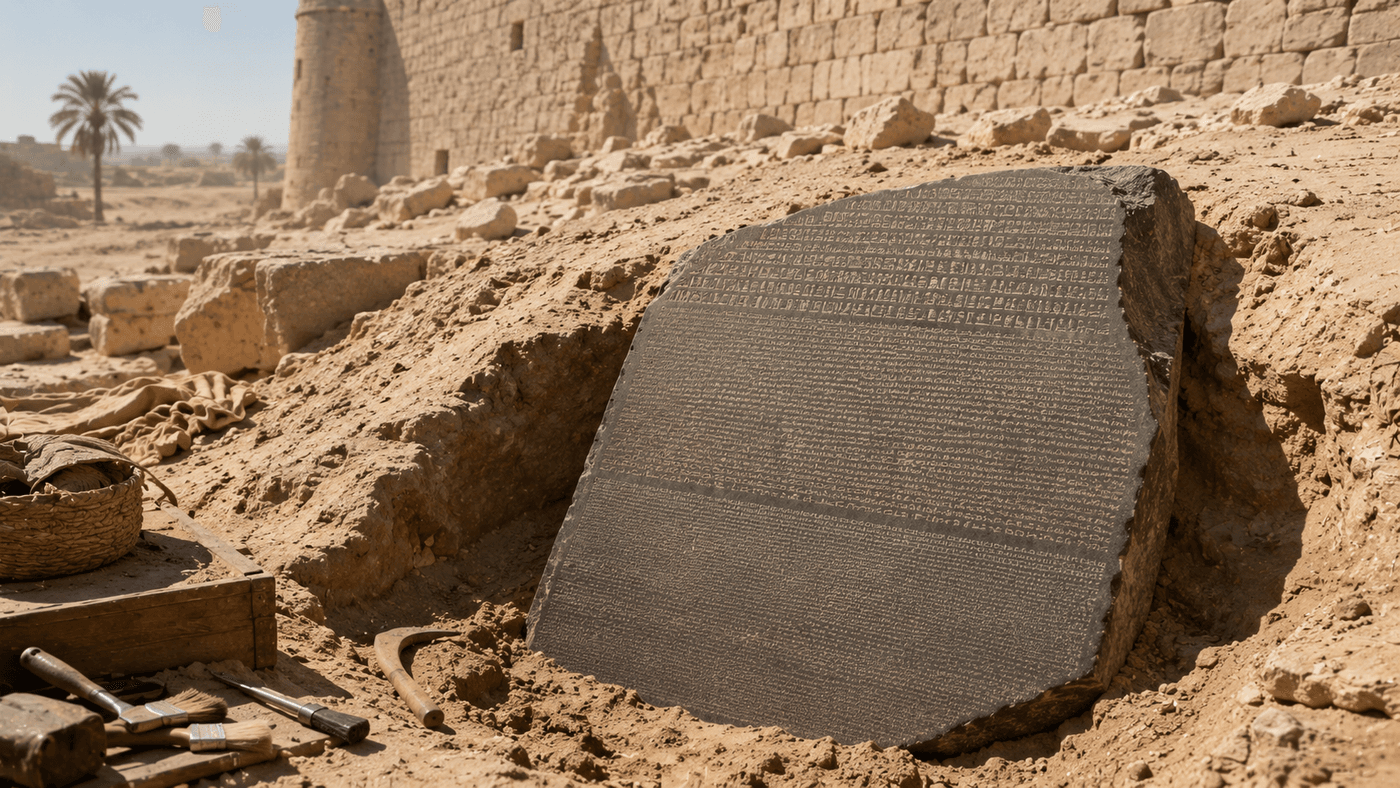
On July 19, 1799, French soldiers under Napoleon's Egyptian expedition, engaged in rebuilding fortifications near the town of Rosetta in the Nile Delta, uncovered a dark granodiorite stele inscribed with text in three distinct scripts: ancient Egyptian hieroglyphs, the cursive Egyptian demotic script, and ancient Greek. The stone, which came to be known as the Rosetta Stone, contained a decree issued in 196 BCE by a council of Egyptian priests affirming the cult of the thirteen-year-old pharaoh Ptolemy V — administrative and religious housekeeping of no particular historical drama in its own content. What made the discovery extraordinary was the trilingual format. Since ancient Greek could be read fluently by contemporary scholars, the stone offered, for the first time, the possibility of a key to decode the hieroglyphic script, which had been unreadable for more than a millennium after the knowledge of how to interpret it had died out with the last practitioners of ancient Egyptian religion.
The stone passed into British hands in 1801 under the terms of the French surrender in Egypt and has resided in the British Museum since 1802, where it remains one of the museum's most visited objects — and one of the most contested, with Egypt having formally requested its return on multiple occasions. The actual decipherment took more than two decades of painstaking scholarly effort: the English polymath Thomas Young made significant early progress in the 1810s, but it was the French scholar Jean-François Champollion who achieved the full breakthrough in 1822, correctly identifying that hieroglyphs combined phonetic and symbolic elements rather than functioning purely as picture-writing. Champollion's decipherment, built on the foundation the Rosetta Stone provided, opened the entirety of ancient Egyptian civilization to modern scholarship — tens of thousands of inscriptions, religious texts, and historical records that had been silent for nearly two thousand years suddenly became legible. The stone that French soldiers stumbled upon while digging fortifications on July 19, 1799, turned out to be one of the most important single objects in the history of archaeology.