July 10: The Monkey Trial, the Last Boy Out, and the Wall That Broke
July 10 is a day for holding your breath. In 1925, a young teacher sat at the defendant's table in a Dayton, Tennessee courtroom while two of the most famous lawyers in America argued over whether a man could teach children where they came from — and the whole country leaned in to listen. Ninety-three years later, on the other side of the world, the last boy was carried out of a flooded mountain cave in Thailand and the world exhaled in collective relief after eighteen days of agonized waiting. And in between, in a peaceful Swiss valley in 1887, a dam gave way without warning and turned an ordinary summer morning into a catastrophe that left seventy people dead and entire communities in ruins. Three days when everything depended on what happened next.
Dayton, Tennessee
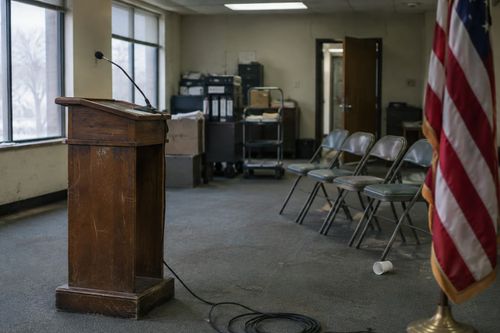
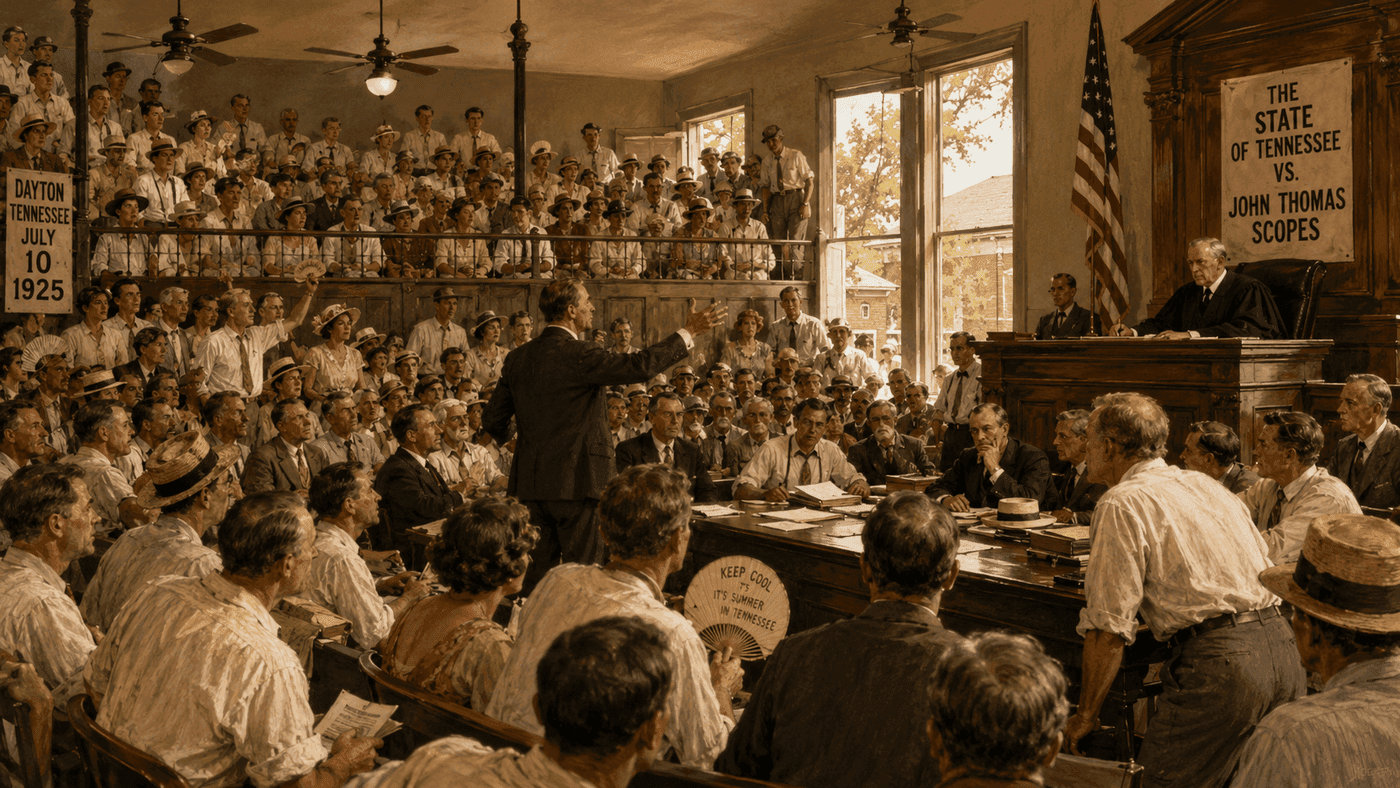
On July 10, 1925, the State of Tennessee v. John Thomas Scopes opened in a sweltering courthouse in Dayton, Tennessee, and immediately became something far larger than a local criminal trial. Scopes was a twenty-four-year-old high school teacher who had agreed — at the instigation of the American Civil Liberties Union, which was actively seeking a test case — to be prosecuted under the Butler Act, a state law that banned the teaching of human evolution in public schools. What made the trial a national spectacle was the legal talent assembled on both sides: William Jennings Bryan, three-time presidential candidate and champion of Protestant fundamentalism, joined the prosecution; Clarence Darrow, the most celebrated defense attorney of his era, led the defense. The town of Dayton, which had welcomed the attention as an economic opportunity, was unprepared for the scale of what arrived: reporters from across the country, the first live radio broadcast of a trial in American history, and an atmosphere that H.L. Mencken, covering for the Baltimore Sun, described with characteristic acidity as a carnival.
The trial's most extraordinary moment came when Darrow called Bryan himself to the stand as an expert witness on the Bible — an audacious move that turned the examination into a public dismantling of Biblical literalism before a crowd that had spilled onto the courthouse lawn. Bryan, visibly struggling, conceded that some Biblical passages might require interpretation rather than literal reading — admissions that delighted Darrow and dismayed Bryan's supporters. Scopes was ultimately convicted and fined $100 — a verdict later overturned on a technicality. Bryan died five days after the trial ended. The Butler Act remained on the books until 1967. But the Scopes trial's cultural legacy far outlasted its legal outcome: it became the defining American confrontation between scientific knowledge and religious tradition, a fault line that has never fully closed and that resurfaces with remarkable regularity whenever the question of what public schools may teach comes back before a legislature or a court.
The Last One Out
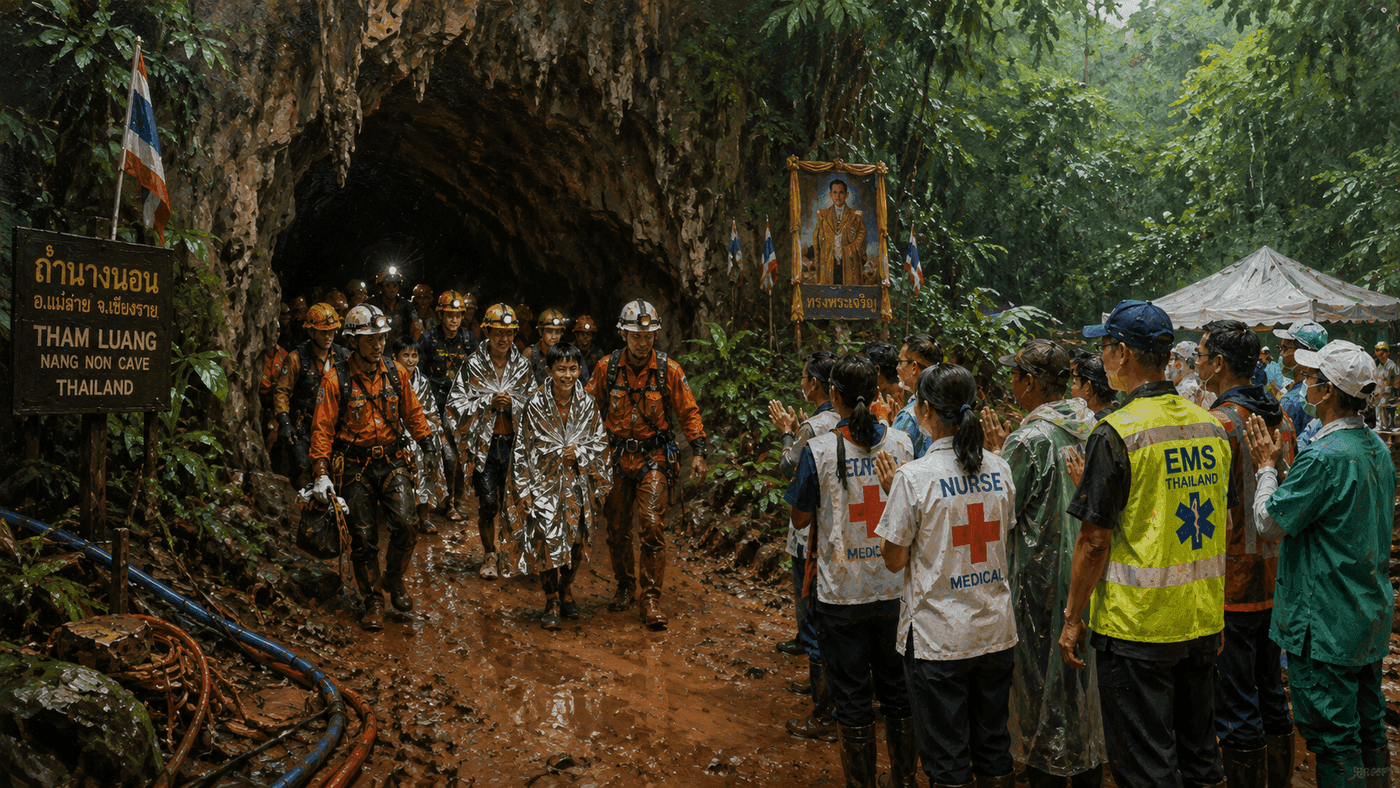
On July 10, 2018, the last member of the Wild Boars soccer team was brought out of the Tham Luang cave complex in northern Thailand, completing one of the most technically demanding and emotionally charged rescue operations in modern history. The team — twelve boys aged eleven to sixteen and their twenty-five-year-old assistant coach — had been trapped since June 23, when rising floodwaters cut off their exit after a post-practice visit to the cave. They were found alive on July 2, huddled on a muddy ledge more than two miles inside the mountain. Getting them out had required three days of extraordinary effort: expert cave divers threading anesthetized boys through flooded passages barely wide enough for a human body, hundreds of support personnel managing pumps, oxygen lines, and logistics across miles of submerged tunnel, and the quiet heroism of a Thai Navy SEAL diver named Saman Kunan, who died during the operation while placing oxygen tanks along the rescue route.
When the last boy emerged on July 10, followed by the remaining rescue divers, the reaction was global and immediate — crowds gathered outside hospitals, social media filled with relief, and the story that had dominated world news for eighteen days reached its extraordinary conclusion. The rescue was studied afterward by emergency management professionals around the world as a model of multinational coordination under impossible conditions: divers from Britain, Australia, the United States, China, and more than a dozen other nations had contributed expertise, equipment, and labor to a problem that no single country's resources could have solved alone. The coach, Ekapol Chanthawong, who had led the boys in meditation to conserve their energy and calm their fear during the days of waiting, was praised for his composure. All thirteen survivors recovered fully. The cave that had nearly become their tomb was subsequently closed to visitors, its entrance sealed. Eighteen days after the water rose, they were all home.
The Zug Dam
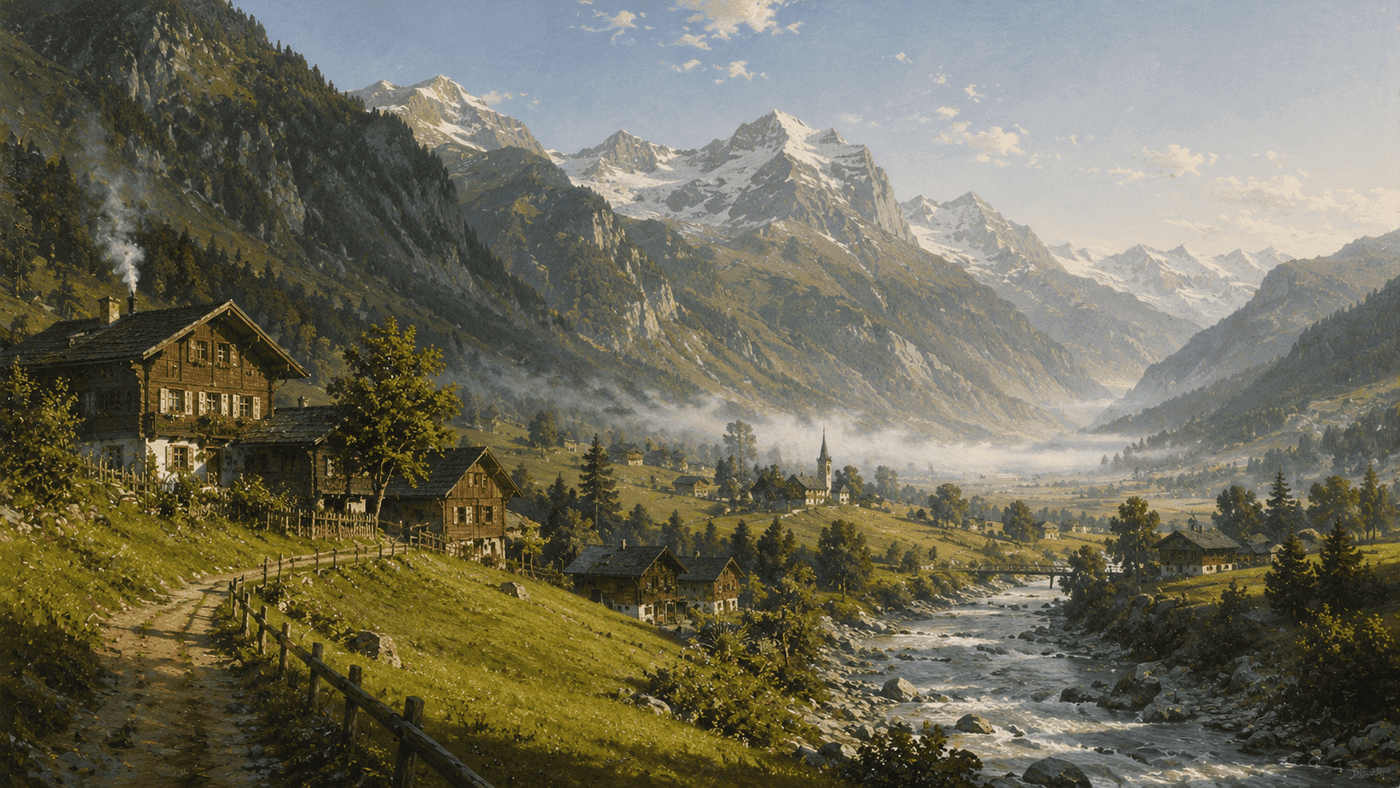
On the morning of July 10, 1887, the dam at Zug, in central Switzerland, failed without warning, releasing millions of gallons of water into the valleys below and killing approximately seventy people in one of the most devastating industrial disasters in Swiss history. The dam had been constructed to serve the region's growing industrial needs, impounding a significant reservoir above communities that had no warning systems and no realistic means of escape from a wall of water moving at catastrophic speed. Homes, livestock, and livelihoods were swept away within minutes. Entire sections of communities were destroyed. The disaster struck on an ordinary summer morning, with no tremor, no visible warning, no time for the residents in the path of the flood to do anything but run — and many could not run fast enough.
The Zug dam disaster joined a grim catalogue of nineteenth-century infrastructure failures that forced engineers, governments, and the public to reckon with the risks of the industrial age's ambitions. In the decades that followed, dam engineering underwent significant reform across Europe and North America — driven not by any single disaster but by the cumulative weight of catastrophes that made clear the price of inadequate design, inspection, and maintenance. The communities in the path of the 1887 flood rebuilt slowly, as such communities always do. The disaster itself faded from the broader historical memory with the speed that provincial tragedies often do — less remembered than the Johnstown Flood in Pennsylvania two years later, which killed more than 2,200 people and generated international attention. But for the seventy who died on a quiet Swiss morning in 1887, and for the families they left behind, July 10 was the day everything changed.