September 17: A Freedom Seeker, a Surgical Unit, and a Tent City in Lower Manhattan
September 17 is a day for people who decided they had had enough. In 1849, a young woman named Harriet Tubman walked off a Maryland plantation into the night and did not stop until she reached Philadelphia — the first step in a freedom that would become, over the following decade, one of the most consequential careers of resistance in American history. In 1972, a television series premiered that used the machinery of military comedy to make one of the most sustained anti-war arguments American television has ever produced, running eleven years on a war that lasted three. And in 2011, about a thousand people arrived at a park in lower Manhattan and set up tents, coining a phrase — "We are the 99 percent" — that named a structural inequality so precisely that it entered the language permanently, even if the encampment that produced it did not last the year. Three September seventeenths. Three refusals to accept that the present arrangements were the only possible ones.
Moses
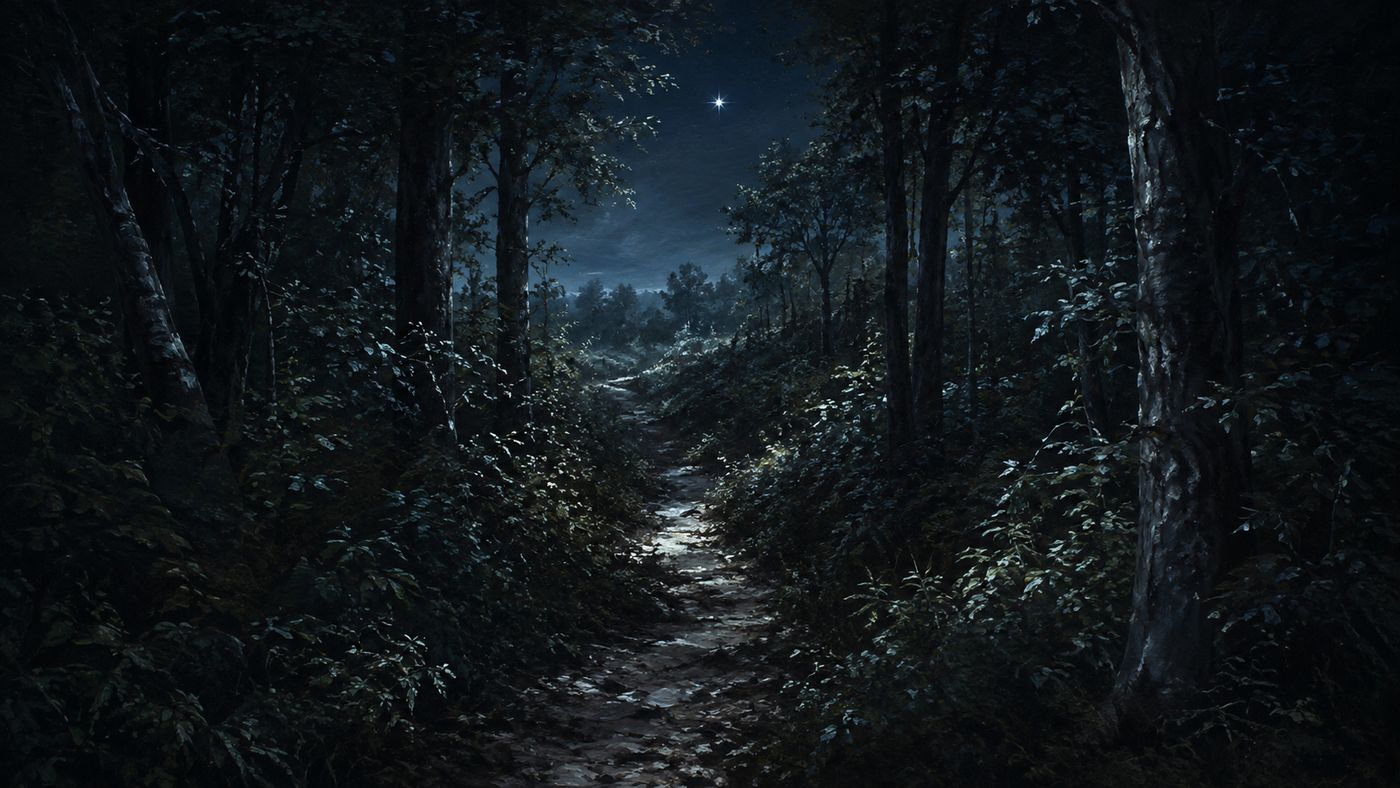
In September 1849 — with the specific date recorded as September 17 — Harriet Tubman escaped from slavery on a plantation in Dorchester County, Maryland, making her way north through the network of people, routes, and hiding places that would come to be known as the Underground Railroad. Tubman had been born into slavery around 1822 as Araminta Ross; she had been hired out to various enslavers from childhood, suffered a severe head injury from a thrown metal weight when she was an adolescent — an injury that caused narcoleptic episodes for the rest of her life — and had married a free Black man named John Tubman in 1844. When rumors spread in 1849 that she and her brothers were to be sold south, she decided to flee. Her brothers initially came with her but turned back; Tubman continued alone, traveling at night, guided by the North Star and the network of free Black people and abolitionist sympathizers who helped her reach Philadelphia. She arrived free, in a free state, for the first time in her life.
The escape of September 17, 1849, was the beginning rather than the end. In the decade that followed, Tubman returned to Maryland and the South thirteen times, guiding approximately seventy enslaved people to freedom through routes that involved extraordinary planning, physical endurance, and the calculated use of a neurological condition — her narcoleptic episodes — that she described as receiving visions from God about when to move and when to wait. Enslavers offered rewards totaling approximately $40,000 for her capture, but she was never caught and never lost a passenger. She said: "I never ran my train off the track and I never lost a passenger." During the Civil War, she served the Union Army as a spy and scout, leading a raid in June 1863 that liberated more than 700 enslaved people in South Carolina — the largest such liberation of the war. She spent her later years in Auburn, New York, working for women's suffrage and caring for elderly Black Americans. She died in 1913. The woman who walked off a Maryland plantation on September 17, 1849, is now on the national currency — but that process has moved slower than the escape that made her worthy of it.
The 4077th
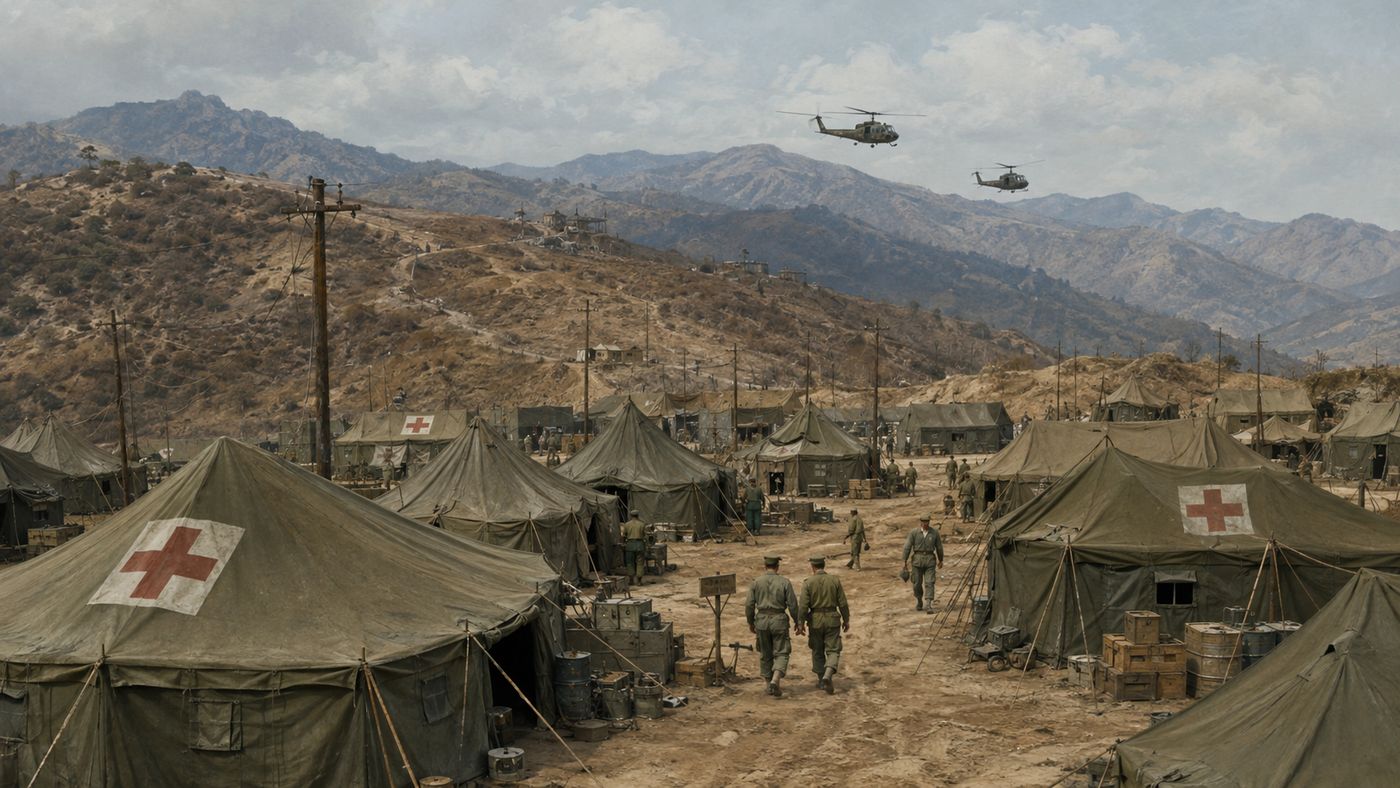
On September 17, 1972, CBS premiered M*A*S*H — a television adaptation of Robert Altman's 1970 film, which had itself been adapted from Richard Hooker's novel, set at a Mobile Army Surgical Hospital unit during the Korean War. The show starred Alan Alda as the irreverent Captain Benjamin "Hawkeye" Pierce, alongside Wayne Rogers as Trapper John McIntyre and McLean Stevenson as Lieutenant Colonel Henry Blake, with a rotating cast that would evolve significantly across its eleven-season run. The premiere episode was watched by 20 million viewers. What distinguished M*A*S*H from the television landscape of 1972 was its willingness to use the Korean War — with Vietnam playing in the background of every broadcast — as a setting for sustained, serious, and genuinely painful examination of what war costs the people who fight it, delivered through a comedic structure that made the darkness accessible without diminishing it.
M*A*S*H ran for eleven seasons — eight years longer than the Korean War it depicted — and became one of the most watched programs in American television history. Its final episode, "Goodbye, Farewell and Amen," broadcast on February 28, 1983, drew 106 million viewers — still the most-watched single episode of any series in American television history. The show won multiple Emmy Awards, a Golden Globe, and a Peabody, and is credited with demonstrating that American television comedy could sustain genuine moral and emotional complexity over a long run without sacrificing the warmth and entertainment that kept audiences returning. Its central themes — the waste of war, the bonds formed under extreme conditions, the persistence of humanity in dehumanizing circumstances — were specific to the Korean War in their setting and universal in their resonance. The final shot of the series, viewed from a helicopter pulling away from the abandoned camp, with "GOODBYE" spelled out in rocks on the hillside, became one of the most recognized images in television history. The show that premiered on September 17, 1972, had more to say about war than almost anything else American popular culture produced in the twentieth century.
Zuccotti Park
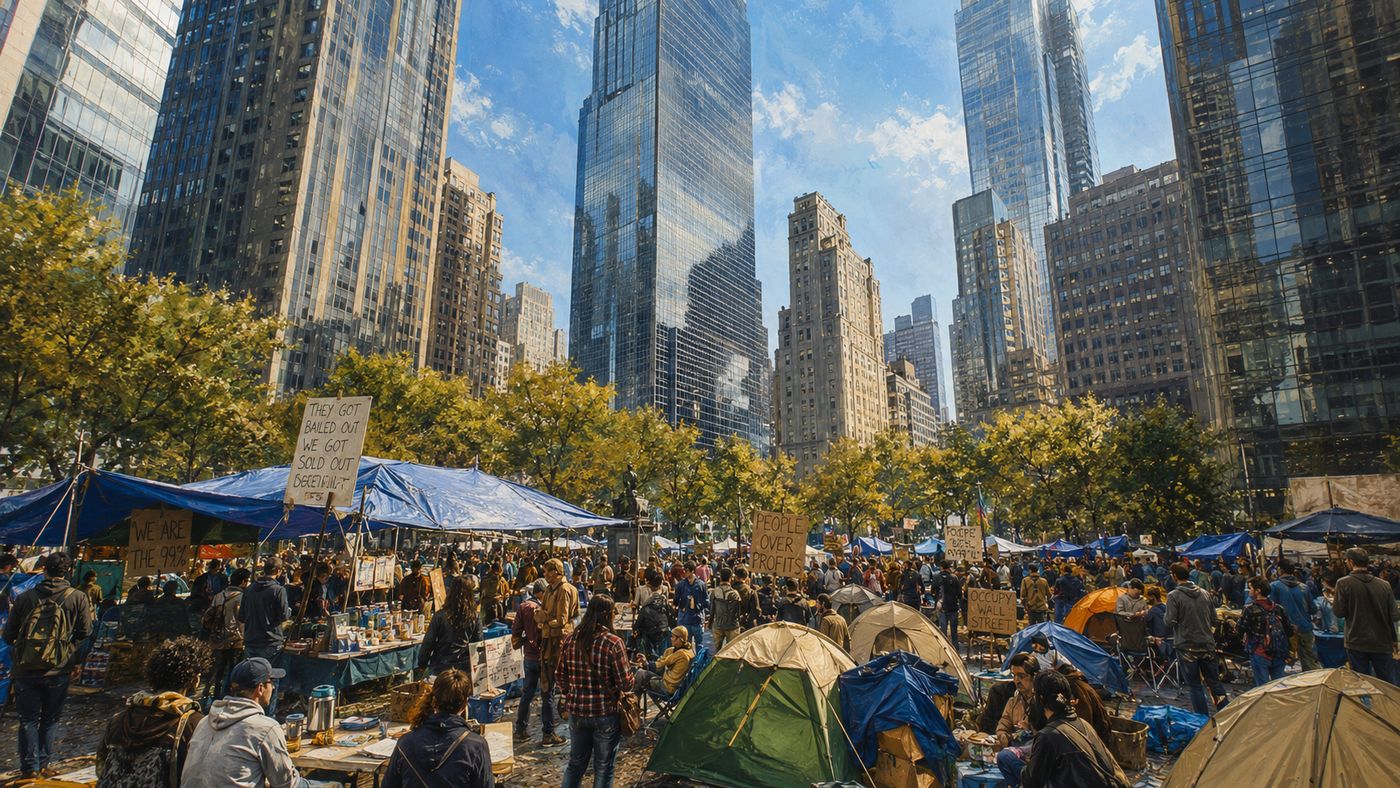
On September 17, 2011, approximately 1,000 demonstrators gathered in Zuccotti Park in lower Manhattan — a privately owned public plaza two blocks from the New York Stock Exchange — launching what became known as Occupy Wall Street, a protest movement against economic inequality, corporate power, and the perceived capture of democratic institutions by wealthy interests. The movement had been incubated by the Canadian anti-consumerist magazine Adbusters, which had published the initial call to occupy Wall Street in July 2011, inspired by the Arab Spring protests that had used sustained occupation of public spaces as a political tactic. The protesters who arrived on September 17 established an encampment in Zuccotti Park that would last sixty-six days before being cleared by New York City police in November. During that time, the movement spread to hundreds of cities across the United States and internationally, generating substantial media coverage and producing the phrase "We are the 99 percent" — a formulation of economic inequality that has entered the political vocabulary permanently.
The Occupy movement that began on September 17, 2011, has been evaluated very differently depending on the criteria applied. By the standard of its stated goals — reforming the financial system, reducing economic inequality, ending corporate influence over politics — it produced no concrete policy achievements and the encampments were cleared without negotiated concessions. By the standard of discourse — of what arguments it put into circulation and what it made possible to say in mainstream American political debate — its impact has been assessed as more significant: the language of the 1 percent and the 99 percent, the sustained focus on wealth inequality that had been gathering statistical documentation since the 2008 financial crisis, and the organizational networks formed during the occupation contributed to political developments that followed in subsequent years. The movement's deliberately horizontal, leaderless structure — which was both a principled rejection of hierarchical politics and a significant obstacle to effective negotiation — has been extensively analyzed as a model for and a cautionary tale about contemporary social movement organization. The tent city in Zuccotti Park lasted two months. The conversation it started has lasted considerably longer.