October 25: Picasso Is Born, the Microwave Arrives, and a Cabinet Member Goes to Prison
Every transformation begins with someone deciding that the existing arrangement is not the only possible one. A child in Málaga, Spain, born with a gift for drawing that his father recognized almost immediately, would grow into an artist who dismantled Western painting's assumptions about perspective, form, and representation so thoroughly that the word "Cubism" entered the language to describe what he had done. A Massachusetts engineer, working with technology developed to detect enemy aircraft, realized that the same waves that cooked a chocolate bar in his pocket could cook food in a kitchen — and the microwave oven was born. And in a Washington, D.C. courtroom, a jury decided that a member of a president's cabinet who traded public resources for private cash was a criminal, not simply a politician. October 25 belongs to all three kinds of transformation.
Málaga, 1881
On October 25, 1881, Pablo Picasso was born in Málaga, on the southern coast of Spain, to José Ruiz Blasco, an art teacher and painter, and María Picasso López. The full name recorded at his baptism ran to twenty-three words — Pablo Diego José Francisco de Paula Juan Nepomuceno María de los Remedios Cipriano de la Santísima Trinidad Ruiz y Picasso — a litany of saints and family members that he would eventually reduce to the maternal surname that has become one of the most recognizable in human history. His father recognized his son's gift early and gave him formal training in classical technique; by thirteen, Picasso had passed the entrance examination for the School of Fine Arts in Barcelona with a proficiency that shocked the admissions board. He had completed in a single day a test they allowed a full month to finish.
The mastery of traditional technique that Picasso demonstrated as a teenager gave him the foundation to dismantle it with authority. Cubism — developed with Georges Braque beginning around 1907 and most fully realized in works like Les Demoiselles d'Avignon and Guernica — fractured the single viewpoint that Western painting had operated from since the Renaissance and replaced it with multiple simultaneous perspectives, showing objects from several angles at once and making the viewer aware that representation itself is a choice. It was the most radical departure from pictorial convention in five hundred years, and it came from a man who had first mastered the convention so completely that he could not be accused of failing to understand what he was abandoning. Picasso lived until 1973 and produced an estimated 20,000 works. The child born in Málaga on October 25, 1881 produced more art than any other artist in recorded history — and changed what art could be more thoroughly than almost any of them.

The Accidental Oven
On October 25, 1955, the Tappan Company introduced the first domestic microwave oven for sale to American consumers — the RL-1, priced at $1,295 and roughly the size of a conventional range. The technology that powered it had been discovered entirely by accident. In 1945, Percy Spencer, an engineer at Raytheon working on radar systems, noticed that a chocolate bar in his pocket had melted while he was standing near an active magnetron — the device that generates microwave radiation. Intrigued, he tested the effect deliberately on popcorn and then on an egg, which exploded. He filed a patent for a "method of treating foodstuffs" using microwave radiation, and Raytheon introduced the first commercial microwave oven — the Radarange — in 1947. It stood five and a half feet tall, weighed 750 pounds, and cost between $2,000 and $3,000. It was marketed to restaurants and institutions, not homes.
The Tappan RL-1 of 1955 was the first attempt to bring the technology to domestic kitchens, and at $1,295 — roughly $14,000 in today's dollars — it found a very limited audience. But the direction was set. Over the following three decades, miniaturization and manufacturing improvements brought the price down and the size down with it, and by 1975 more microwave ovens were being sold in the United States than gas ranges. Today there is a microwave oven in approximately ninety percent of American homes, used to reheat leftovers, defrost proteins, and make the popcorn that Percy Spencer's discovery first produced by accident in a Massachusetts laboratory. The device that changed how billions of people prepare food began with an engineer, a magnetron, and a melted candy bar.

Teapot Dome
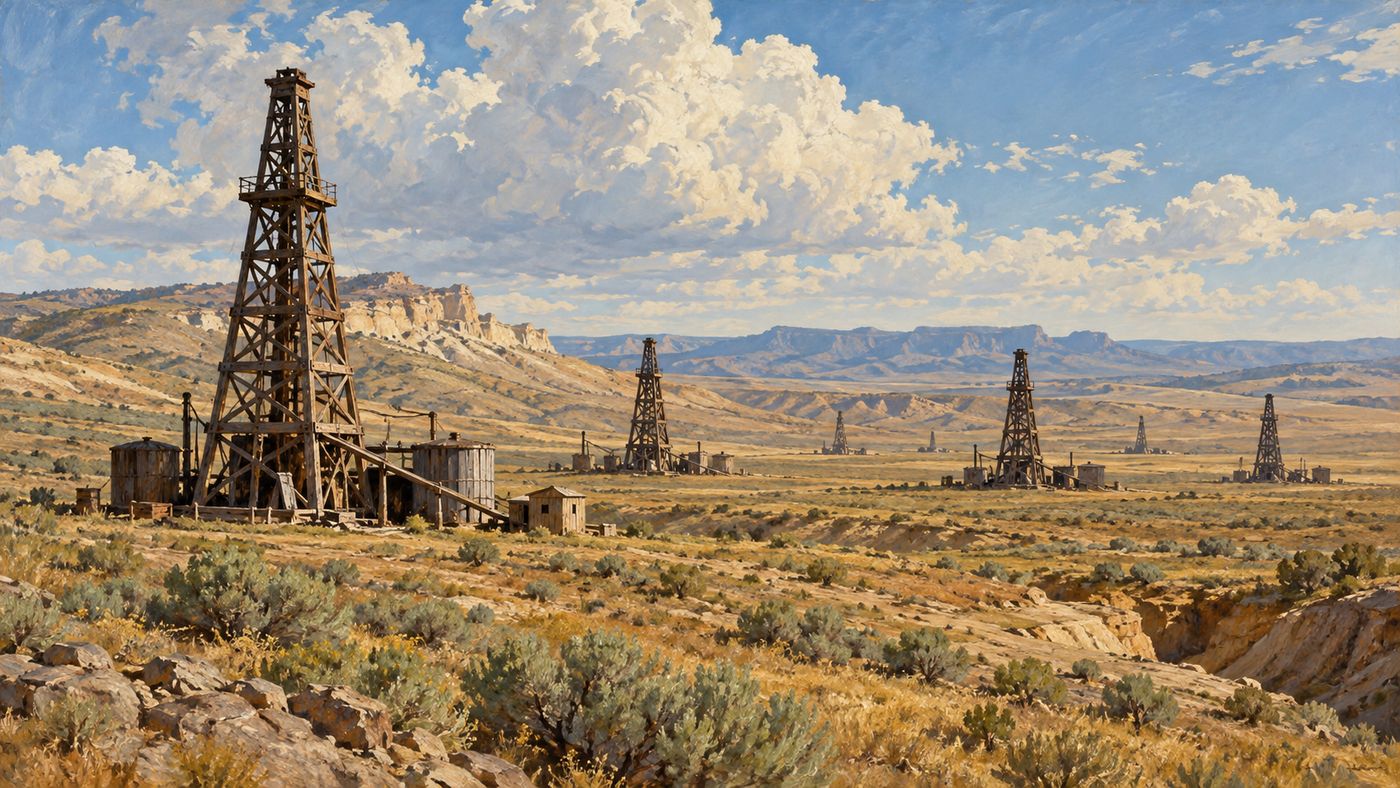
On October 25, 1929, Albert B. Fall, who had served as Secretary of the Interior under President Warren G. Harding, was convicted of bribery in a Washington, D.C. courtroom — becoming the first cabinet member in American history to be found guilty of a crime committed while in office. Fall had used his position to transfer control of two naval petroleum reserves — Teapot Dome in Wyoming and Elk Hills in California — from the Navy Department to his own Interior Department, and had then leased them to private oil companies in exchange for payments that totaled more than $400,000. The arrangement was made without competitive bidding, in secret, and with the apparent acquiescence of a president who either did not know or did not want to know what his Interior Secretary was doing. Harding died in office in 1923, before the scandal fully unraveled.
The Senate investigation that eventually exposed the Teapot Dome scandal took years and was resisted at every turn by the Harding administration's allies. Fall was ultimately sentenced to one year in prison and a $100,000 fine — one of the oilmen who had bribed him, Edward Doheny, was acquitted of paying the bribe in a separate trial, a verdict that produced one of legal history's more notable ironies: the man who took the bribe went to prison while the man who paid it went free. Teapot Dome remained the benchmark for presidential administration corruption for fifty years, until Watergate redefined the term. It established the principle, at some cost, that no position in American government — however powerful, however politically connected — placed its holder above the law. Fall served his prison term in ill health. He died in 1944, having spent his last years in poverty. The oil fields that made him a criminal produced wealth for their new owners for decades.