October 22: Thirteen Days, One Jump, the Fall of a Champion
There is a particular quality to the moment just before a leap — a stillness, a commitment, an understanding that whatever comes next cannot be undone. On October 22, across three very different centuries and three very different kinds of courage, three people took that step. A French aeronaut climbed into a basket 3,200 feet above Paris and jumped into the unknown, trusting a silk canopy he had never tested at altitude. An American president sat before the cameras and told a nation that the world was balanced on the edge of nuclear war. And a sporting hero who had been celebrated as the greatest of his generation was stripped of everything he had won, and the story that had made him famous collapsed into something much darker. Three leaps. Three October 22nds. Three things that could not be taken back.
Thirteen Days
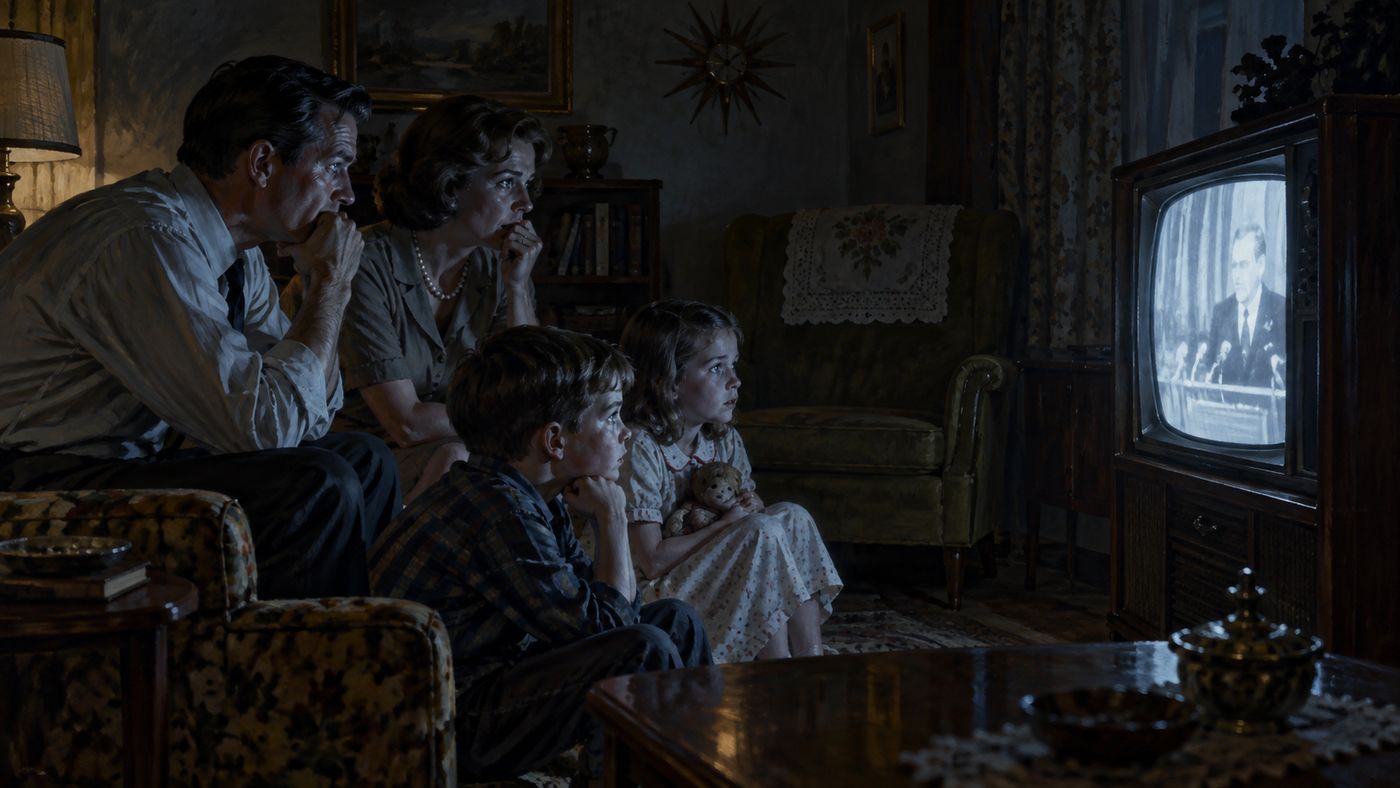
On October 22, 1962, President John F. Kennedy appeared on national television and told the American public what the government had known for eight days: that the Soviet Union was installing nuclear-capable ballistic missiles in Cuba, ninety miles from Florida, capable of striking most of the eastern United States within minutes of launch. Kennedy announced a naval "quarantine" of Cuba — a blockade in everything but name, the word "blockade" having been avoided as an act of war under international law — and demanded that the Soviet Union remove the missiles immediately. The speech was calm, measured, and terrifying. It was the moment the Cuban Missile Crisis ceased to be a classified crisis and became a public one, the moment ordinary Americans began buying canned goods and wondering whether the schools would still be open tomorrow.
The thirteen days that followed Kennedy's address — from the U-2 discovery of the missiles on October 14 to the resolution on October 28, when Soviet Premier Nikita Khrushchev agreed to remove them in exchange for a public American pledge not to invade Cuba and a secret agreement to remove American Jupiter missiles from Turkey — were the most dangerous in the history of the nuclear age. Documents declassified since have revealed how close the crisis came to catastrophe: a Soviet submarine commander, unable to communicate with Moscow and believing war had already begun, came within one dissenting officer's vote of launching a nuclear torpedo at an American destroyer. The world did not know how close it had come until decades later. On October 22, 1962, it only knew that the president had just told it something it had never expected to hear.
Parc Monceau
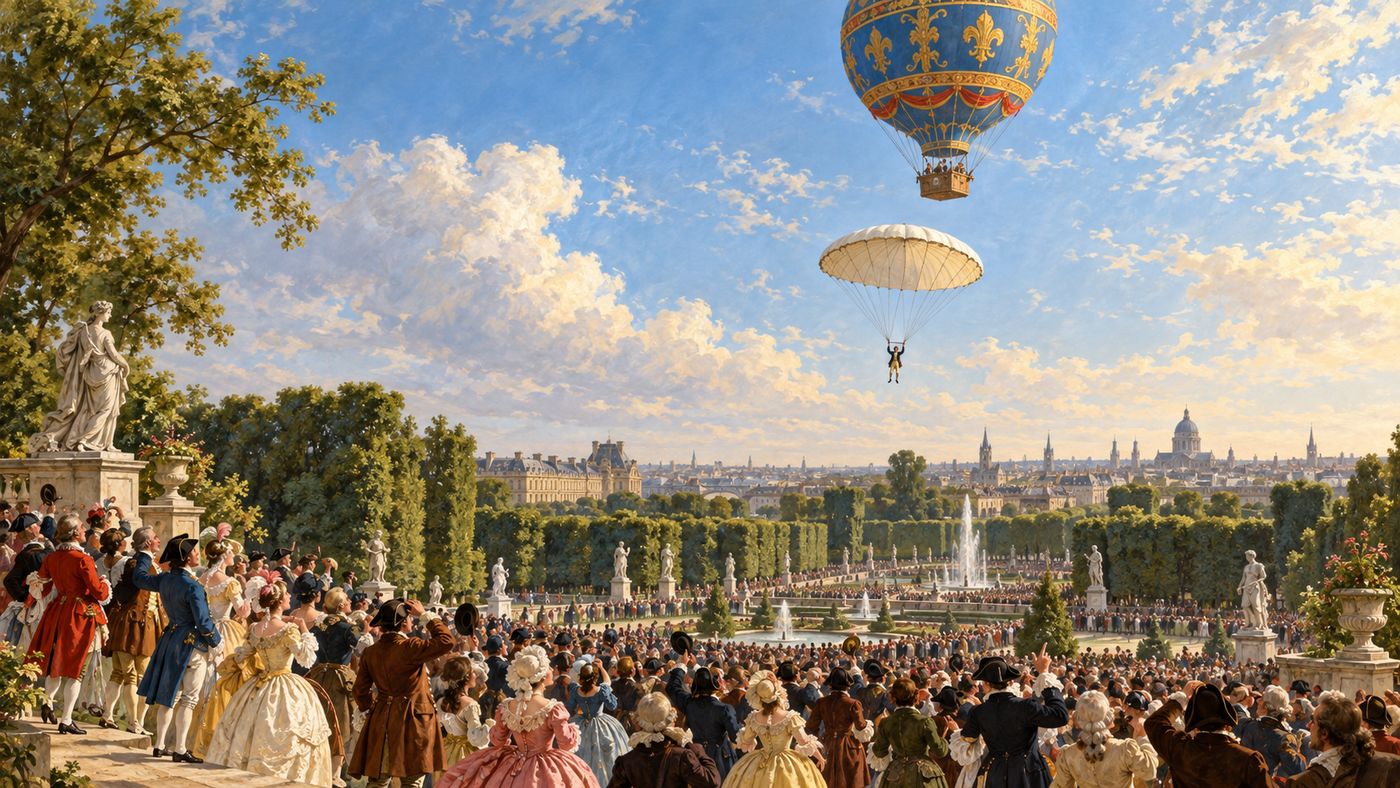
On October 22, 1797 — 165 years before Kennedy's broadcast and on a rather more peaceful October afternoon — French aeronaut André-Jacques Garnerin climbed into a basket suspended beneath a hydrogen balloon above Paris's Parc Monceau and, at an altitude of approximately 3,200 feet, cut the cord connecting him to the balloon. He was trusting his life to a silk canopy twenty-three feet in diameter, shaped like a closed umbrella, that he had designed and built himself but had never tested at altitude with a human passenger. The canopy deployed. Garnerin descended. The parachute oscillated violently — a problem he would later solve by adding a small hole at the top to allow air to escape — and thousands of spectators gathered below watched what they may have assumed would be a fatality turn into a landing in a nearby field. Garnerin walked away. The parachute had worked.
Garnerin had not simply invented a piece of equipment. He had demonstrated a principle — that a human being could survive a fall from extraordinary altitude with the right technology — that would eventually save millions of lives in the wars and disasters of the following two centuries. He went on to give public parachute demonstrations across Europe, and his wife Jeanne-Genevieve became the first female parachutist in 1799. The violent oscillation problem he identified on that first jump led directly to the vented parachute design that remains the basis of modern parachute engineering. The crowd that gathered at Parc Monceau to watch a man they expected might die instead witnessed the first demonstration of something that now seems completely ordinary — which is, perhaps, the best possible definition of a successful invention.
Seven Titles
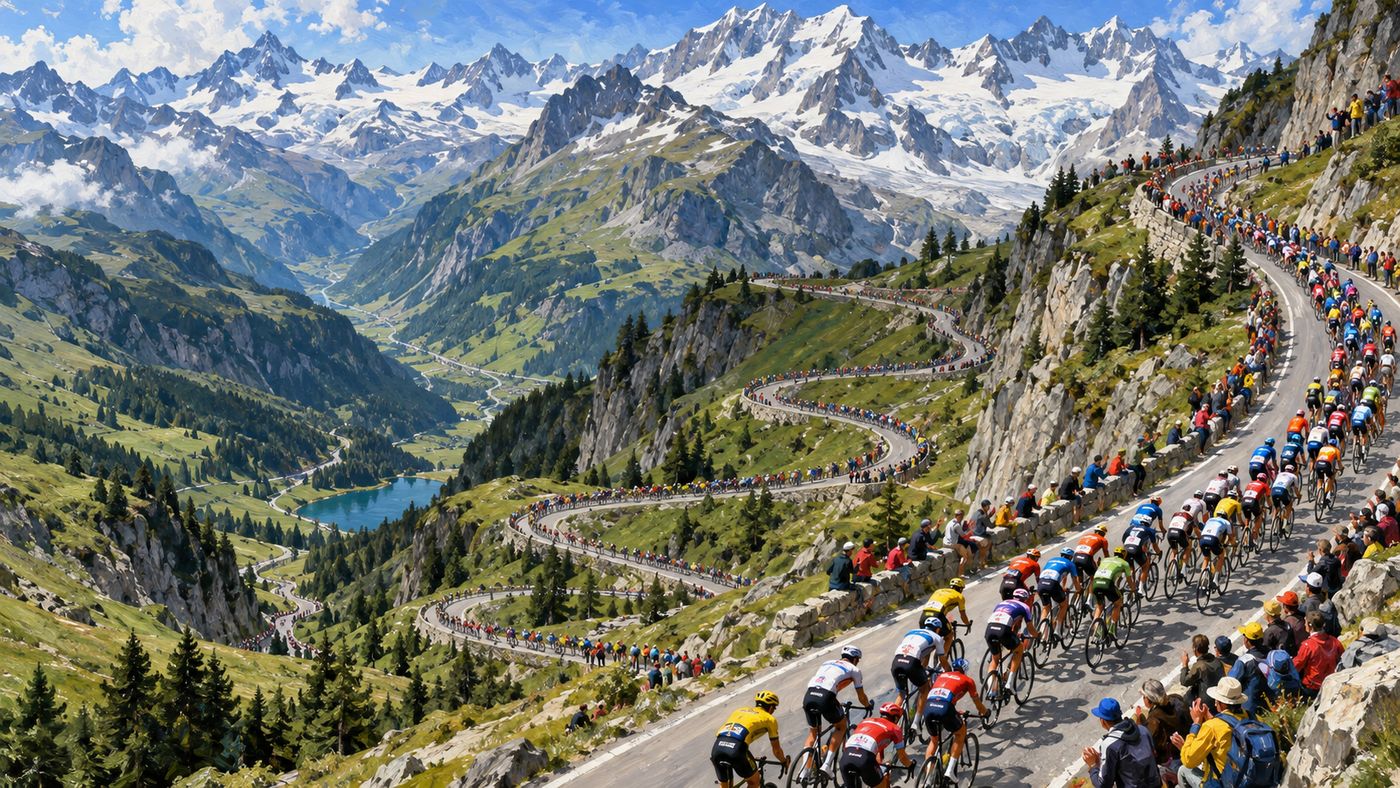
On October 22, 2012, the United States Anti-Doping Agency formally stripped Lance Armstrong of his seven Tour de France titles — won consecutively from 1999 through 2005 — and banned him from competitive cycling for life. The USADA's report, released the previous week, described what it called the most sophisticated doping program in the history of sport: a systematic, team-wide operation involving EPO, blood transfusions, testosterone, and human growth hormone, combined with years of intimidation of teammates and witnesses who had attempted to tell the truth. Armstrong had spent more than a decade denying everything — in press conferences, in legal depositions, in a defamation lawsuit against a Sunday Times journalist who had reported his doping, in a face-to-face confrontation with a teammate he had pressured into silence. The denials were precise, consistent, and entirely false.
The story of Lance Armstrong had been one of the most compelling in American sports: a cancer survivor who had returned from a diagnosis that should have ended his career, and instead dominated the most grueling race in the world for seven consecutive years. The foundation he built on that story — Livestrong, which sold more than eighty million yellow wristbands and raised hundreds of millions for cancer research — was real, whatever else was false. Armstrong admitted to doping in a 2013 television interview with Oprah Winfrey, after years of denial. The Tour de France chose not to award his titles to the runners-up, many of whom had also been implicated in doping. The seven victories remain officially vacated — belonging to no one, a gap in the record that stands as its own kind of monument to what was lost on October 22, 2012.