October 20: The Blacklist, the Opera House, the Crash
October 20 has witnessed both the construction and the destruction of things that mattered. In Washington, a congressional committee opened hearings that would dismantle careers, fracture friendships, and force some of the most talented people in American entertainment to choose between their livelihoods and their principles. In Sydney, a queen declared open a building that had taken fourteen years and nearly fourteen times its original budget to complete — and that justified every dollar and every delay. And in a Mississippi swamp, a plane went down and took with it a voice that had defined a sound, a region, and a generation of American music. Three October 20ths. Three things that could not be undone.
Are You Now or Have You Ever Been
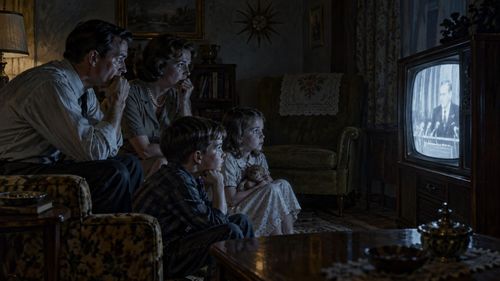
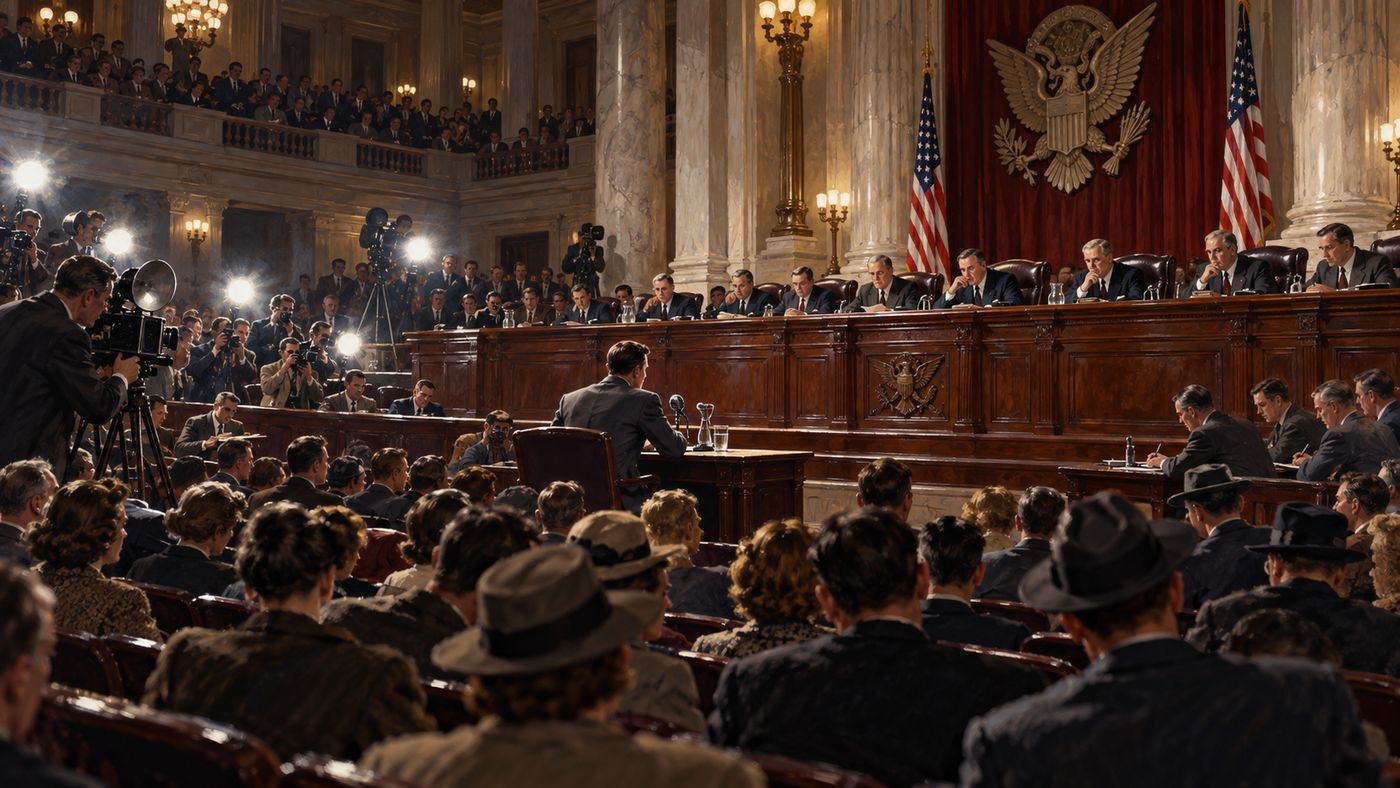
On October 20, 1947, the House Un-American Activities Committee opened its investigation into alleged communist influence in Hollywood in the Caucus Room of the Old House Office Building in Washington, D.C. The hearings began with what HUAC called "friendly witnesses" — studio executives and prominent figures who were willing to cooperate and name names — before moving to the "unfriendly witnesses" who would define the era. The committee's central question, posed to witness after witness, became one of the most notorious phrases in American political history: "Are you now, or have you ever been, a member of the Communist Party?" The question was designed to be unanswerable in any way that ended well. Cooperation meant naming colleagues and friends. Refusal meant contempt of Congress. The choice between conscience and career was not theoretical.
The Hollywood Ten — ten screenwriters and directors who refused to cooperate with the committee, citing their First Amendment rights — were cited for contempt of Congress, convicted, and sentenced to prison terms of up to a year. The studios, terrified of a public boycott and congressional pressure, fired them and issued the Waldorf Statement, committing the industry to refusing employment to anyone who was a communist or who refused to cooperate with government investigations. The blacklist that followed lasted more than a decade, destroyed hundreds of careers, and drove some of Hollywood's most talented writers and directors into exile or pseudonymity. HUAC's Hollywood investigation became the template for McCarthyism's broader assault on civil liberties — a reminder that the machinery of political persecution, once assembled, does not easily limit itself to its original targets.
Bennelong Point
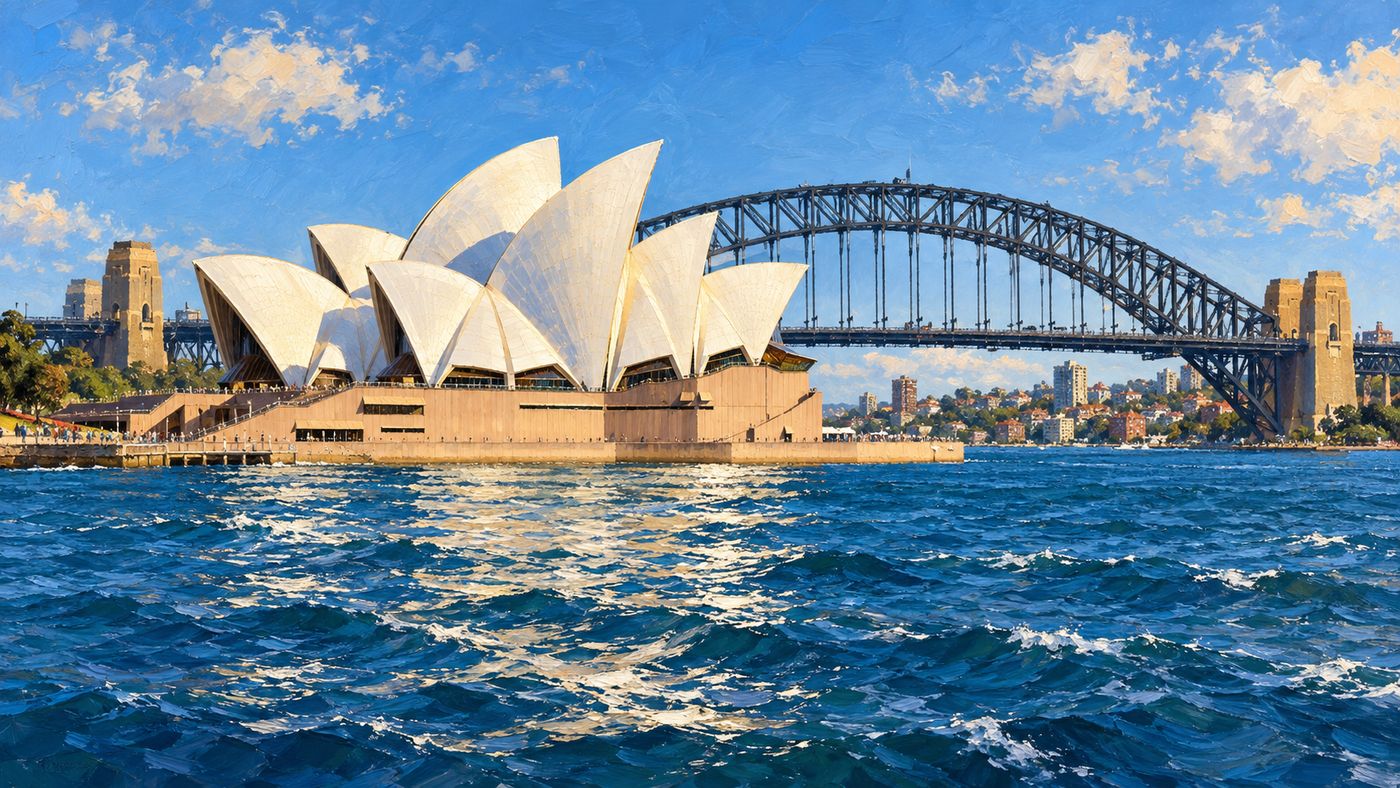
On October 20, 1973, Queen Elizabeth II officially opened the Sydney Opera House before a crowd of thousands gathered on the forecourt of Bennelong Point, completing a project that had consumed fourteen years, approximately $102 million Australian dollars — fourteen times the original budget estimate — and one of the most turbulent construction histories of any public building in the twentieth century. Danish architect Jørn Utzon had won the international design competition in 1957 with a vision so radical that the engineering required to realize it did not yet exist. The building's iconic shell-like roof forms — which Utzon reportedly conceived while peeling an orange — required years of mathematical and structural innovation before anyone knew how to build them. Utzon himself resigned from the project in 1966, following disputes with the New South Wales government over fees and design authority, and never returned to Australia to see the completed building.
The building that opened on October 20, 1973 was, in some respects, not entirely the building Utzon had designed — the interiors in particular were completed by other architects in ways that departed from his vision, a source of lasting controversy among architectural historians. And yet the Opera House on the harbor is undeniably among the handful of twentieth-century buildings recognizable to virtually every person on earth, a piece of architecture that has become inseparable from the identity of the continent it sits on. UNESCO designated it a World Heritage Site in 2007. Utzon was awarded the Pritzker Prize — architecture's Nobel — in 2003, with the jury specifically citing the Opera House. He died in 2008, having never seen it in person after his 1966 resignation. The building he left behind remains one of the most visited and most photographed structures in the world.
Sweet Home
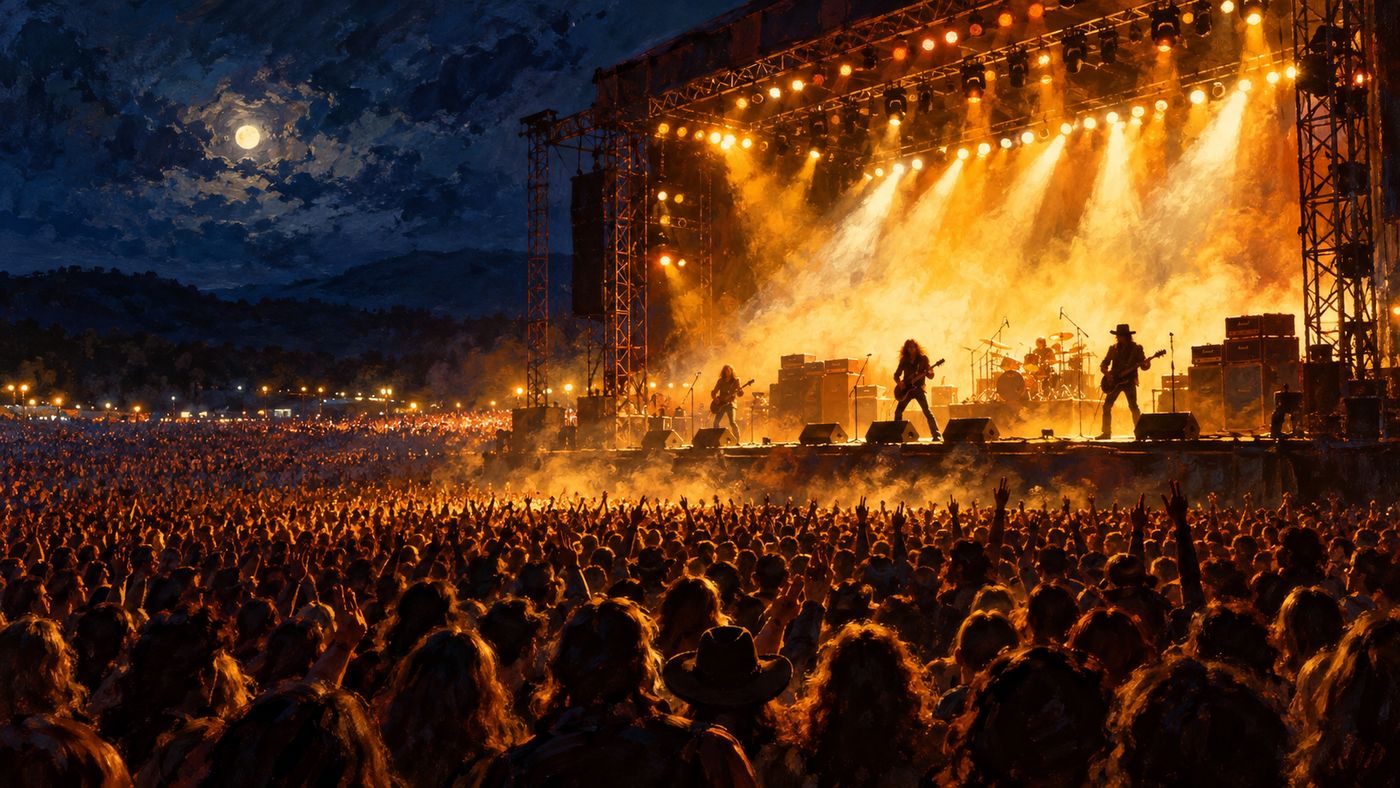
On October 20, 1977, Lynyrd Skynyrd's chartered Convair CV-240 ran out of fuel and crashed in a wooded swamp near Gillsburg, Mississippi, killing lead vocalist Ronnie Van Zant, guitarist Steve Gaines, backup singer Cassie Gaines, and three others aboard the aircraft. The band had been traveling from Greenville, South Carolina, to Baton Rouge, Louisiana, for a concert that night. Survivors later reported that the engines had been sputtering for much of the flight and that several band members had expressed concern to the pilots before the crash. The plane struck trees and broke apart on impact. Twenty of the twenty-six people aboard survived, many with serious injuries. The band's manager, who had been riding in the back, was among those who survived. Ronnie Van Zant, thirty years old and at the peak of his creative powers, did not.
The crash occurred three days into the promotional tour for Street Survivors, the album Lynyrd Skynyrd had released just three days before — an album whose cover art, showing the band surrounded by flames, was pulled from shelves in the days following the tragedy and replaced with a different image. Skynyrd had spent the 1970s building a sound that was distinctly Southern, distinctly American, and entirely their own — a fusion of blues, country, and hard rock that produced songs like "Free Bird," "Simple Man," and "Sweet Home Alabama" that have outlasted every cultural shift since. The band eventually reformed in 1987 with Ronnie's younger brother Johnny as lead vocalist, and it continues to tour today. But the version of Lynyrd Skynyrd that existed on October 19, 1977 — the one with Ronnie Van Zant at its center — ended in a Mississippi swamp the following evening, and that particular sound has never been fully recovered.