November 5: The Illegal Vote, the Third Term, the Order to Strike
Some rules exist to protect institutions. Others exist to protect the people who benefit from keeping others out. November 5 has witnessed both kinds being broken — by a woman who walked into a barbershop polling place in Rochester and cast a ballot she believed the Constitution already entitled her to cast, by a president who looked at Europe falling to fascism and decided that this was not the moment to honor a tradition, and by a military command that authorized a strike against an American naval base and set in motion a war that would cost fifty million lives. Three November 5ths. Three rule-breaking decisions. Three very different kinds of consequence.
Rochester, 1872
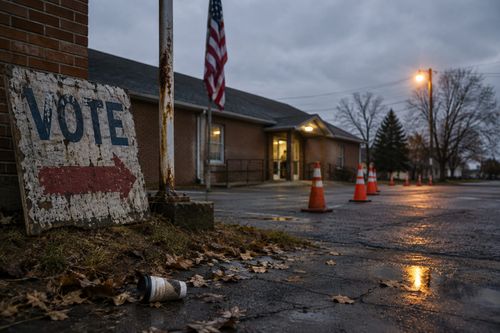
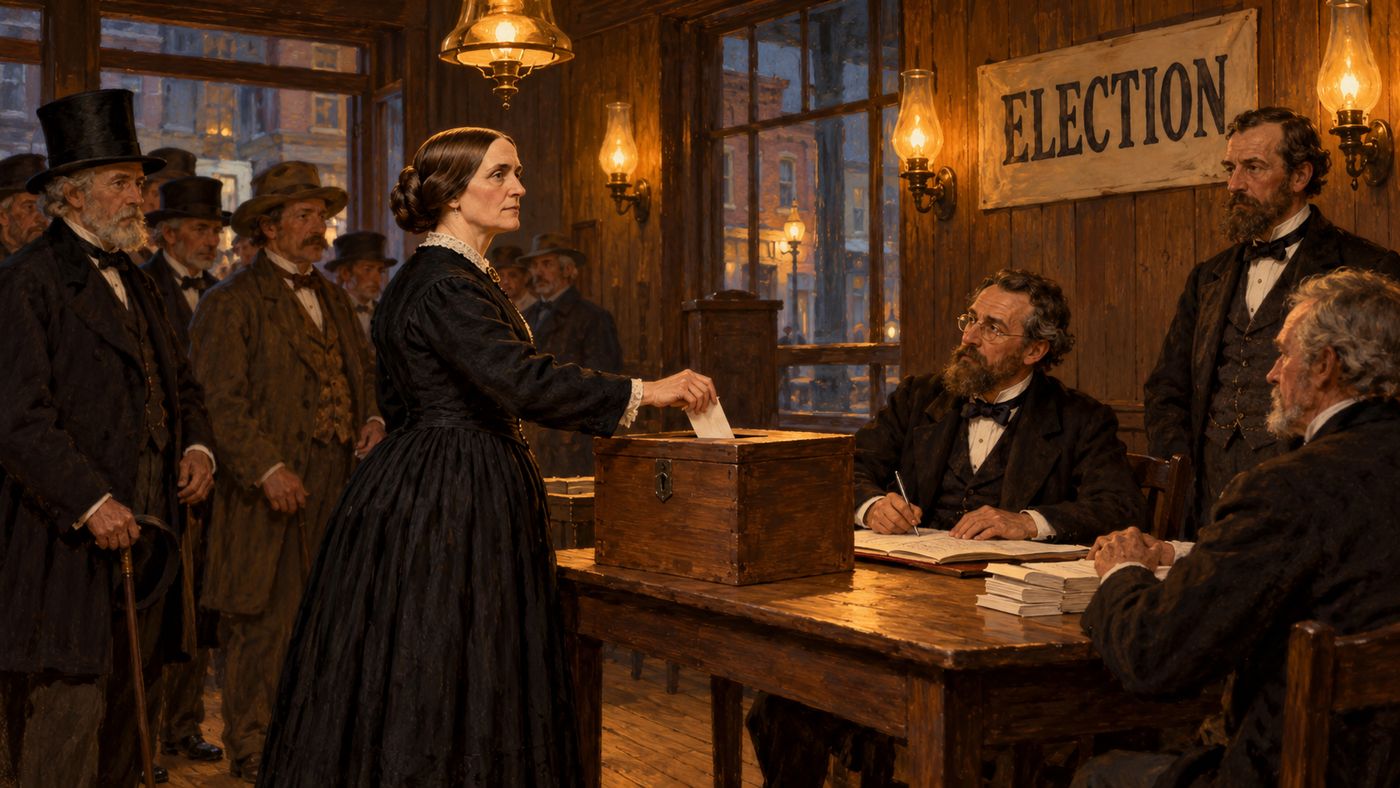
On November 5, 1872, Susan B. Anthony walked into a barbershop on West Street in Rochester, New York — which served, as many businesses did in that era, as a polling place — and cast a ballot in the presidential election between Ulysses S. Grant and Horace Greeley. She was fifty-two years old, she had spent more than twenty years campaigning for women's suffrage, and she had convinced the election inspectors to register her two weeks earlier by arguing that the Fourteenth Amendment's guarantee of citizenship rights applied to women as much as men. Fourteen other women voted with her that day. Two weeks later, a deputy US marshal appeared at her Rochester home and placed her under arrest for "knowingly, wrongfully, and unlawfully" voting in a federal election.
The trial that followed, in June 1873, became a national event — not least because the judge, Ward Hunt, had written his verdict before the trial began and refused to allow Anthony to testify on her own behalf or to submit the case to the jury, simply reading his prepared guilty verdict from the bench. He fined her $100. Anthony refused to pay it and never did. She also used every public moment the trial afforded her — the sentencing, the press coverage, the speaking tours she conducted while awaiting and during the proceedings — to advance the argument that the Constitution already guaranteed her the right she had exercised. It did not yet, legally. The Nineteenth Amendment that finally secured women's right to vote would not be ratified until 1920, fourteen years after Anthony's death. She had voted in 1872 knowing that the law might not protect her. She was right. She voted anyway.
Four More Years
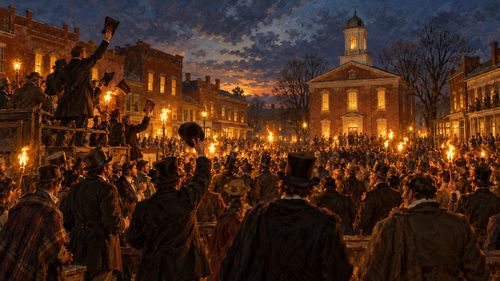
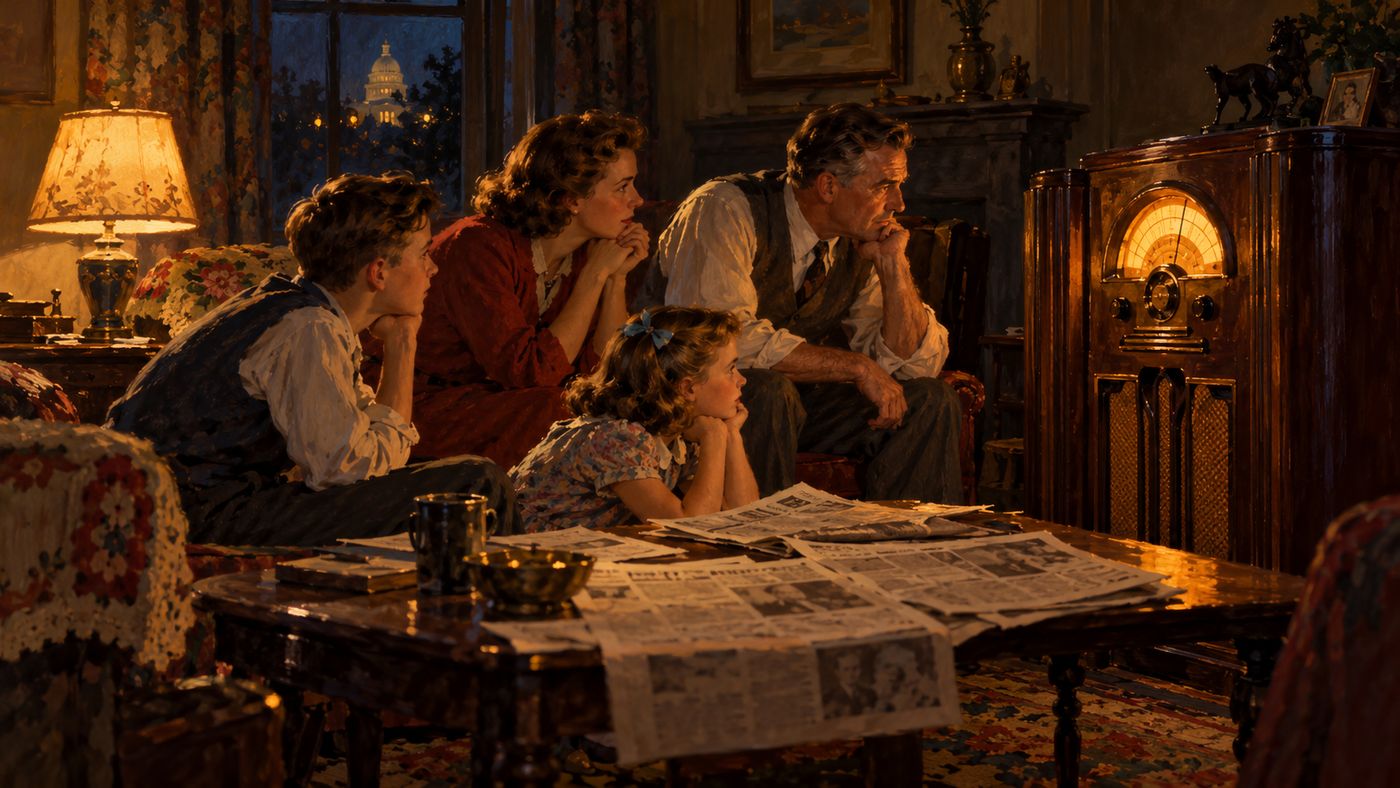
On November 5, 1940, Franklin D. Roosevelt won the presidential election by the largest electoral margin in American history to that point, defeating Republican Wendell Willkie with 449 electoral votes to 82 and capturing fifty-five percent of the popular vote. The victory was remarkable not only for its scale but for what it required Roosevelt to break: the two-term tradition established by George Washington and honored, as a matter of democratic custom rather than constitutional requirement, by every president for 144 years. Roosevelt had decided to seek a third term as Nazi Germany consumed Western Europe and Britain stood alone against Hitler's forces — reasoning that changing the nation's leadership at the moment of maximum global peril was a risk the country could not afford to take. His Republican opponents called it a power grab. His supporters called it a necessity. The voters, by a margin of five million, called it an election.
The tradition Roosevelt broke had been strong enough to feel, to many Americans, like a constitutional prohibition — but it was not one. The Twenty-Second Amendment, which formally limited presidents to two terms, was not ratified until 1951, six years after Roosevelt's death, enacted specifically in response to his four consecutive victories. Roosevelt would go on to win a fourth term in 1944, making him the only president in American history to be elected more than twice. He died in office on April 12, 1945, three weeks before Germany's surrender. The third term he won on November 5, 1940 — the one that broke Washington's tradition — would be followed by the wartime presidency that defined both his legacy and the twentieth century.
Tora, Tora, Tora
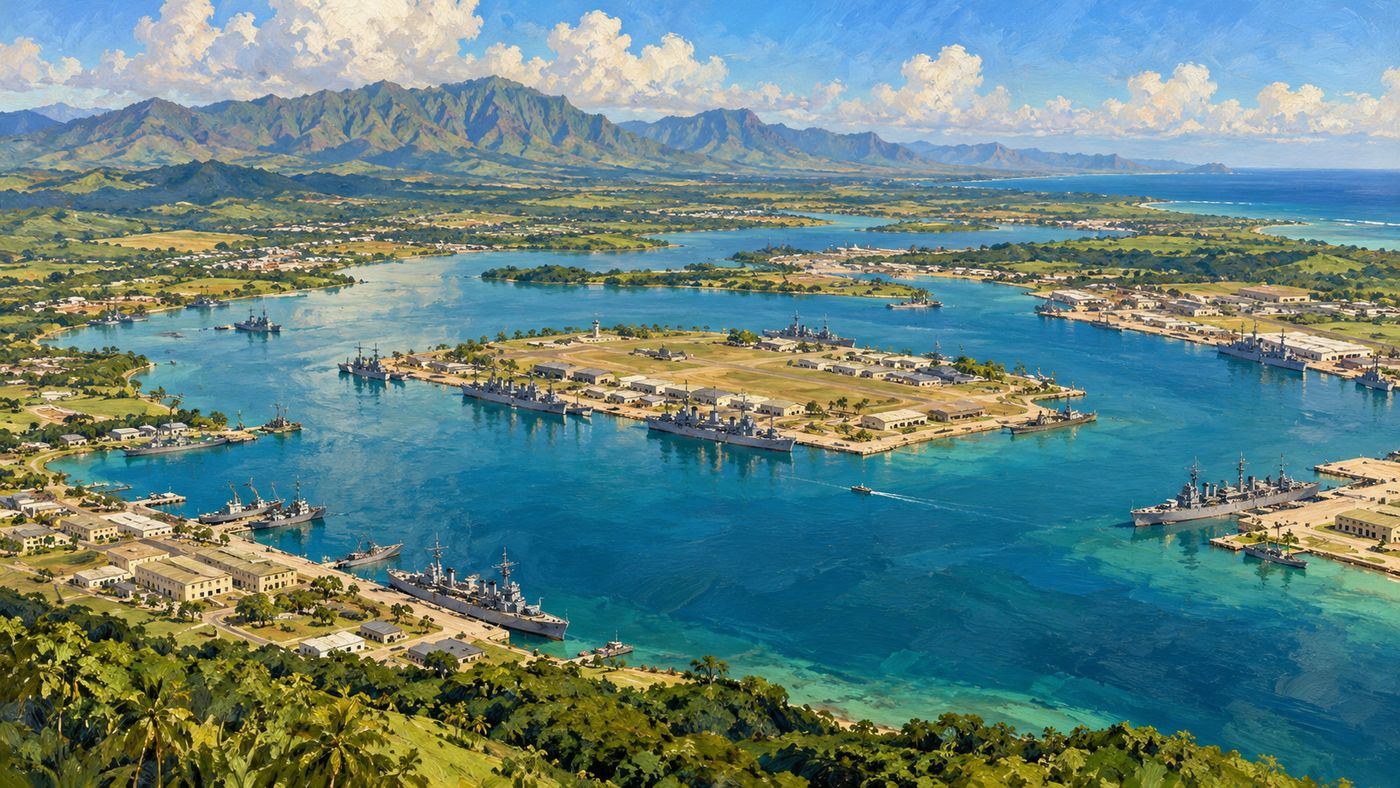
On November 5, 1941, Japanese Imperial Headquarters issued the final operational orders for the attack on Pearl Harbor — the decision that committed Japan to war with the United States at a moment when both nations were still formally engaged in diplomatic negotiations. The orders authorized the plan developed by Admiral Isoroku Yamamoto: a surprise air strike by carrier-based aircraft against the U.S. Pacific Fleet at anchor in Pearl Harbor, Hawaii, timed for early December and designed to cripple American naval power in the Pacific in a single blow. The strike was predicated on a calculated gamble — that destroying the American fleet before the United States could mobilize would give Japan time to consolidate control over Southeast Asian oil fields, rubber plantations, and other resources, and to establish a defensive perimeter strong enough to make reconquest too costly to attempt.
The attack that followed on December 7, 1941 — thirty-two days after the orders were signed — killed 2,403 Americans, wounded nearly 1,200 more, and destroyed or damaged eighteen naval vessels and 188 aircraft. It brought the United States into World War II. Yamamoto, who had studied in the United States and understood American industrial capacity better than most of his colleagues, had opposed going to war and had argued against the Pearl Harbor plan on strategic grounds. He understood what the orders of November 5 had actually committed Japan to: not a crippling blow and a negotiated settlement, but a war against a nation whose productive power would eventually be brought to bear with overwhelming force. He is reported to have said, after the attack succeeded, that Japan had awakened a sleeping giant and filled it with a terrible resolve. Whether he said it or not, he knew it was true.