November 4: History Made, a Chimp with a Twig, the Boy King Found
Discovery arrives in many forms. Sometimes it arrives as 365 electoral votes and a crowd of 240,000 people in a Chicago park, the weight of history visible in the faces of everyone watching. Sometimes it arrives as a chimpanzee in the Tanzanian forest, doing something with a stripped twig that nobody had seen before and that required the entire definition of humanity to be reconsidered. And sometimes it arrives as a stone step in the Valley of the Kings, the first of sixteen, leading down to a sealed door that had not been opened in more than three thousand years. November 4 has seen all three kinds — the discovery of a possible future, the discovery of an inconvenient past, and the discovery of a buried world that the desert had decided to keep for itself.
Grant Park
On November 4, 2008, Barack Obama was elected the forty-fourth President of the United States, winning 365 electoral votes to John McCain's 173 and capturing fifty-three percent of the popular vote in a victory that carried states no Democratic presidential candidate had won in decades. Obama — a first-term senator from Illinois, the son of a Kenyan father and a white mother from Kansas, raised in Hawaii and Indonesia, educated at Columbia and Harvard Law — became the first African American to win the American presidency, in an election whose result was announced on networks and devices across the world with a simultaneity that the advent of the internet age had made possible. That night, more than 240,000 people gathered in Chicago's Grant Park to hear him speak. Millions more watched on screens in living rooms, bars, and public squares in cities on every continent.
Obama's victory speech began with four words — "If there is anyone" — and built, over the following twenty minutes, into a meditation on what had just happened that was both celebratory and clear-eyed about what lay ahead. The country was in the early weeks of the worst financial crisis since the Great Depression. Two wars were ongoing. The divisions that would define the decade to come were already present, if not yet fully legible. Obama acknowledged all of it. He also acknowledged the person in that crowd he most wanted the world to see: Ann Nixon Cooper, a 106-year-old Black woman from Atlanta who had been born when neither her gender nor her race allowed her to vote, and who had lived long enough to cast a ballot that helped elect the first Black president. "Yes we can," he said. It has been translated into dozens of languages since. The phrase has been argued about, analyzed, and worn down by repetition, but the night it was spoken, in Grant Park in November, it carried everything the crowd needed it to carry.

David Greybeard
On November 4, 1960, Jane Goodall — twenty-six years old, largely self-trained, working in the Tanzanian forest at the invitation of paleoanthropologist Louis Leakey — watched a chimpanzee she had named David Greybeard select a blade of grass, strip its leaves to make it more effective, and insert it into a termite mound to extract termites for eating. She watched him do it repeatedly, deliberately, with evident intent. What she had witnessed was not simply an animal using an object — it was an animal manufacturing a tool, modifying a natural material to make it better suited for a specific purpose. This had been understood, until that moment, to be exclusively human behavior. The definition of humanity that had stood for millennia — that tool use was the bright line between us and every other species — had just been erased by a chimpanzee with a piece of grass in Tanzania.
When Goodall reported her observation to Leakey, his response became one of science's most quoted one-liners: "Now we must redefine tool, redefine man, or accept chimpanzees as humans." The scientific community's initial response to Goodall's work was skeptical — she had named her subjects rather than numbering them, a practice considered unscientific, and she lacked formal academic credentials. The observations proved impossible to dismiss. Goodall went on to earn a PhD from Cambridge and to conduct the longest continuous field study of any animal species in history, spending decades in the Gombe forest and building a body of knowledge about chimpanzee behavior, social structure, and emotional life that transformed primatology. The chimpanzee with a twig, watched by a young woman on a November morning in 1960, had redefined what it meant to be human — and Goodall spent the rest of her career asking what that redefinition required of us.
Step One
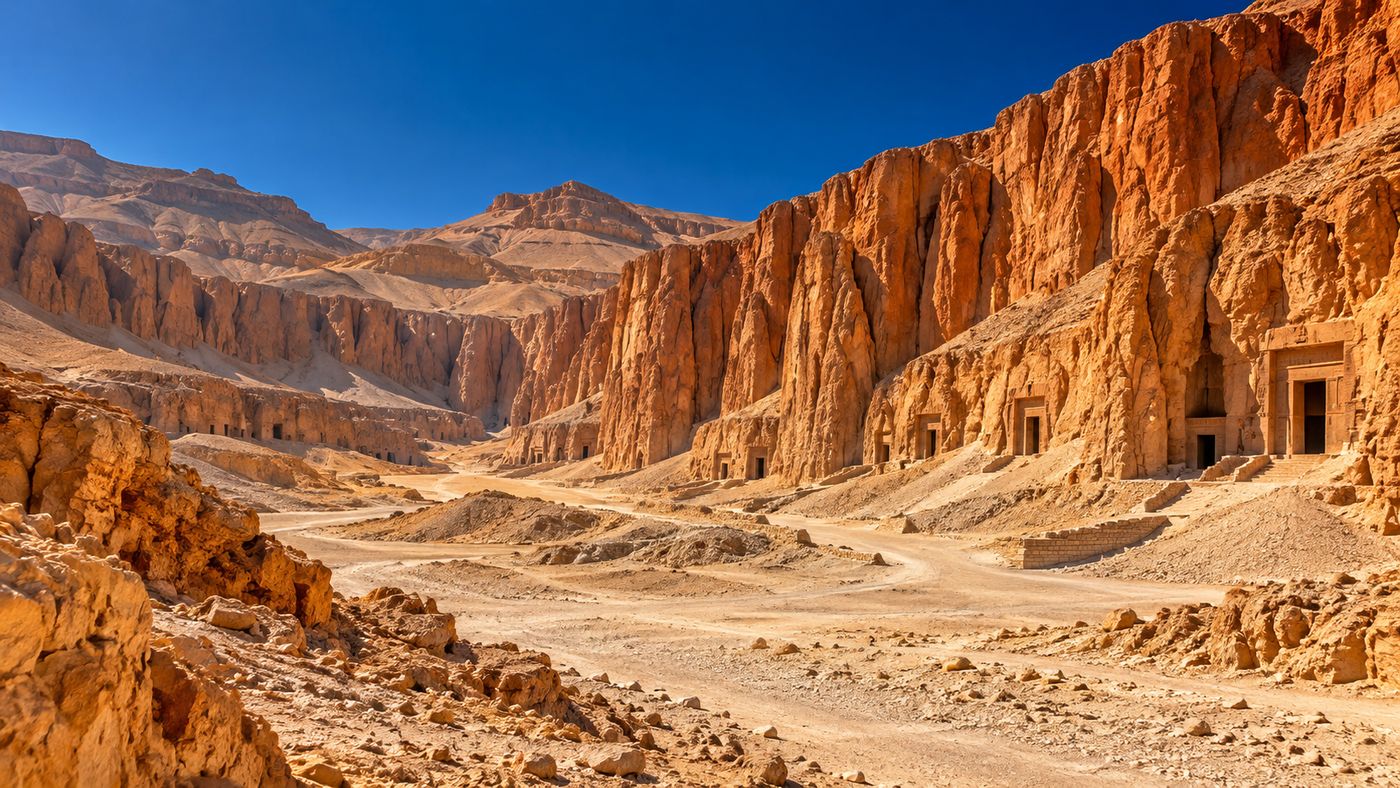
On November 4, 1922, a young water carrier working for Howard Carter's excavation team in Egypt's Valley of the Kings struck something with his foot while clearing rubble — a stone step, cut into the bedrock. Carter, who had been searching the valley for years with funding from his patron Lord Carnarvon and who had been on the verge of giving up entirely, was summoned. By the end of the day, sixteen steps had been uncovered, leading down to a sealed plastered door bearing the cartouches of royal necropolis officials. Carter had the stairs reburied, cabled Lord Carnarvon in England to come immediately, and waited. The door, when it was finally opened on November 26, revealed a second sealed door beyond a rubble-filled passageway. Carter made a small hole in this second door and held a candle up to it. When Carnarvon asked if he could see anything, Carter replied: "Yes, wonderful things."
The tomb of Tutankhamun — the boy pharaoh who had died at approximately nineteen years of age around 1323 BC — was the only nearly intact royal tomb ever discovered in the Valley of the Kings. Every other royal burial had been plundered by grave robbers in antiquity; Tutankhamun's had been entered twice and resealed, and its outer chambers had been missed entirely by the robbers who had plundered the inner areas. The more than 5,000 objects Carter's team catalogued over the following ten years — furniture, chariots, weapons, food offerings, ritual objects, and the extraordinary golden death mask that has become the most recognized object from the ancient world — provided an unparalleled window into the material culture of dynastic Egypt at its height. Tutankhamun himself had been a minor king, his reign short and historically unremarkable. The accident of his tomb's survival made him, three thousand years later, the most famous pharaoh who ever lived.