November 3: 1,776 Feet, One Dog, and the Most Powerful Editor in Fashion
Some pioneers build upward — steel and glass rising 1,776 feet above a site that once held catastrophe, the height itself a statement about what endures. Some are sent upward by others, small and trusting and entirely unaware of what they are making possible — and what it will cost them. And some build sideways and inward, constructing an empire of influence from a single office chair, using editorial judgment as the instrument by which culture is shaped one magazine cover at a time. November 3 belongs to all three kinds of pioneer: a tower, a dog, and a woman who turned fashion into power.
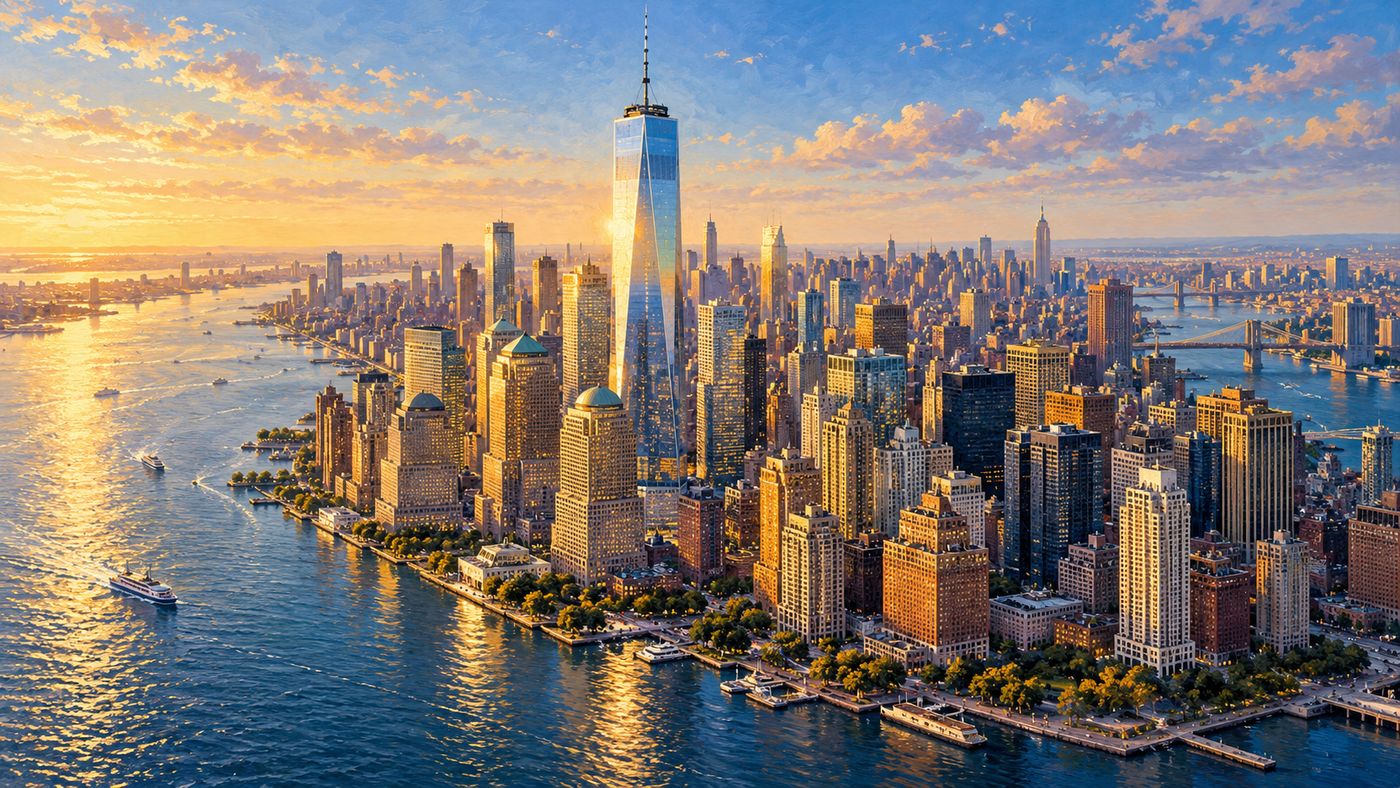
1,776
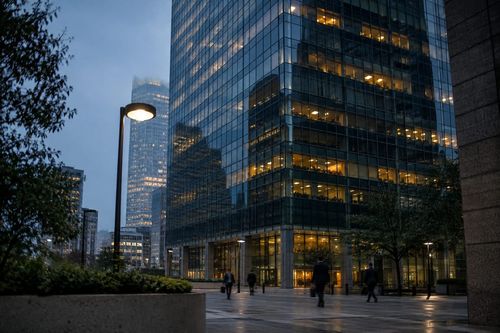
On November 3, 2014, Condé Nast employees rode the elevators of One World Trade Center to their new offices, becoming the first tenants of the tallest building in the Western Hemisphere and marking the moment the rebuilt World Trade Center site went from memorial and construction zone to functioning skyline. The building stands 1,776 feet tall — a deliberate encoding of 1776, the year of American independence, into a structure that had been conceived as a monument as much as an office tower. Construction had begun in 2006, five years after the September 11 attacks, on a site so charged with grief and civic meaning that every design decision and delay had been publicly scrutinized. The final structure — a tapered glass tower with chamfered corners that catch and reflect light differently at every hour — dominates the lower Manhattan skyline in a way the Twin Towers never quite did, visible from the outer boroughs and from New Jersey across the Hudson.
One World Trade Center is not merely a building. It sits directly beside the September 11 Memorial — the two square reflecting pools that occupy the footprints of the original towers, their names inscribed in bronze around the edges — and the relationship between the two structures is deliberate and poignant: the new tower rising from the site of loss, the pools descending into it. The building has been criticized by some architects for its conventional floor plans, its relatively uninspiring interior spaces, and the compromise between symbolic aspiration and commercial necessity that defines every major office tower. What it represents — the decision to rebuild, to insist that the skyline would not remain broken, to encode the year of founding into the height of what rose — has proven more enduring than any architectural review. Thirteen years after the attacks, New York had its tower back.
Good Dog
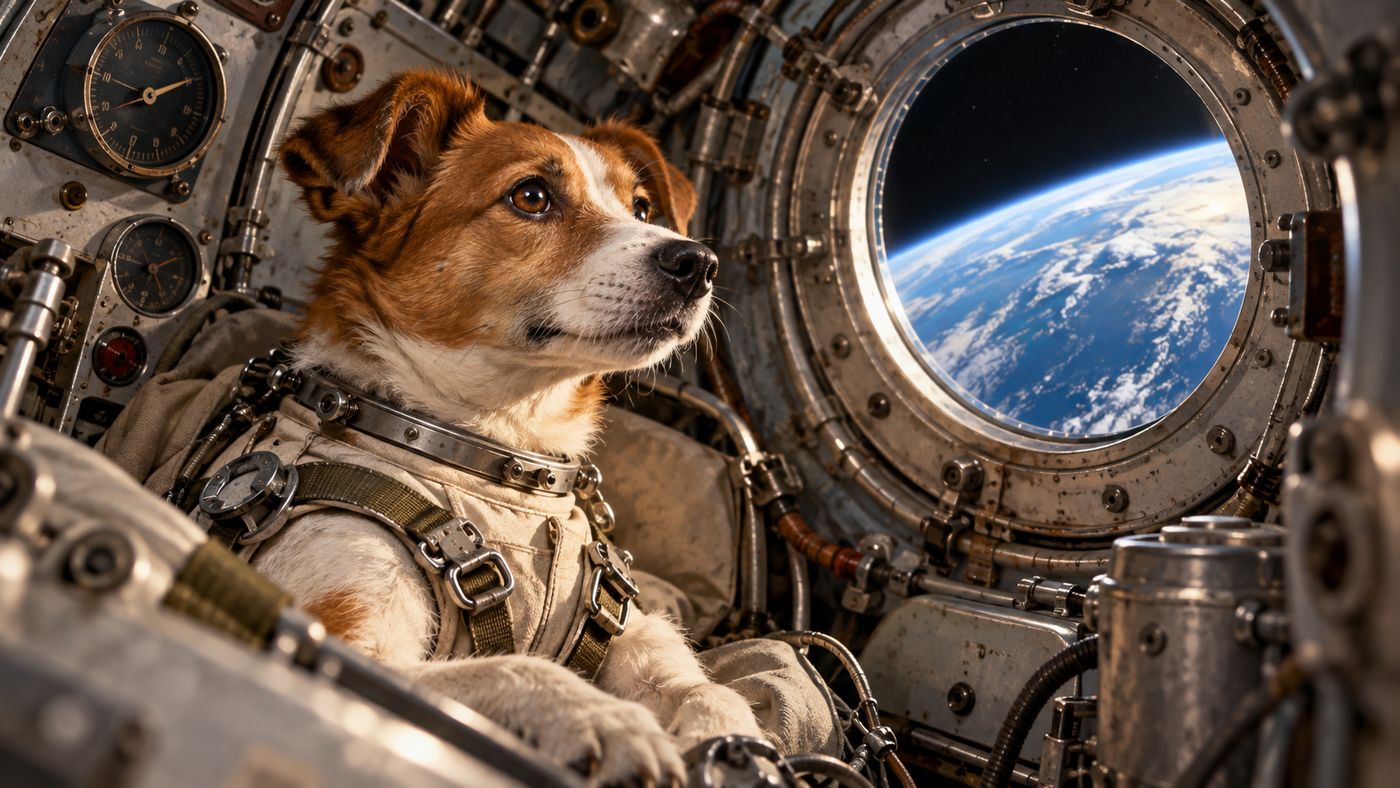
On November 3, 1957 — just four weeks after Sputnik 1 had become the first artificial satellite — the Soviet Union launched Sputnik 2, carrying a small stray dog from the streets of Moscow named Laika into orbit. She was the first living creature to orbit the Earth, and her mission was designed from the beginning as one-way: the technology to return a spacecraft safely from orbit had not yet been developed, and Soviet scientists made the decision to send Laika knowing she would not come back. The official Soviet account held that she survived for days before being humanely euthanized when her oxygen supply ran low. In 2002, Russian scientists revealed what had long been suspected: Laika had died within hours of launch from overheating caused by a thermal control malfunction. The spacecraft that carried her orbited Earth 2,570 times before burning up in the atmosphere in April 1958.
Laika's mission demonstrated that a living organism could survive the stresses of rocket launch and the conditions of orbital spaceflight — crucial data for the human missions that followed. She is, in the history of space exploration, both a pioneer and a sacrifice, and the ethical questions her mission raised have never been fully settled. Soviet scientists who worked on the program later expressed regret about her fate. Monuments to Laika have been erected in Russia. Her image appeared on postage stamps across the communist bloc. The dog who was scooped from Moscow's streets and sent to orbit — small, trusting, and entirely unaware of what she was doing — has become one of the most humanely mourned figures in the history of science, honored precisely because she could not choose what she was asked to give.
Nuclear Wintour
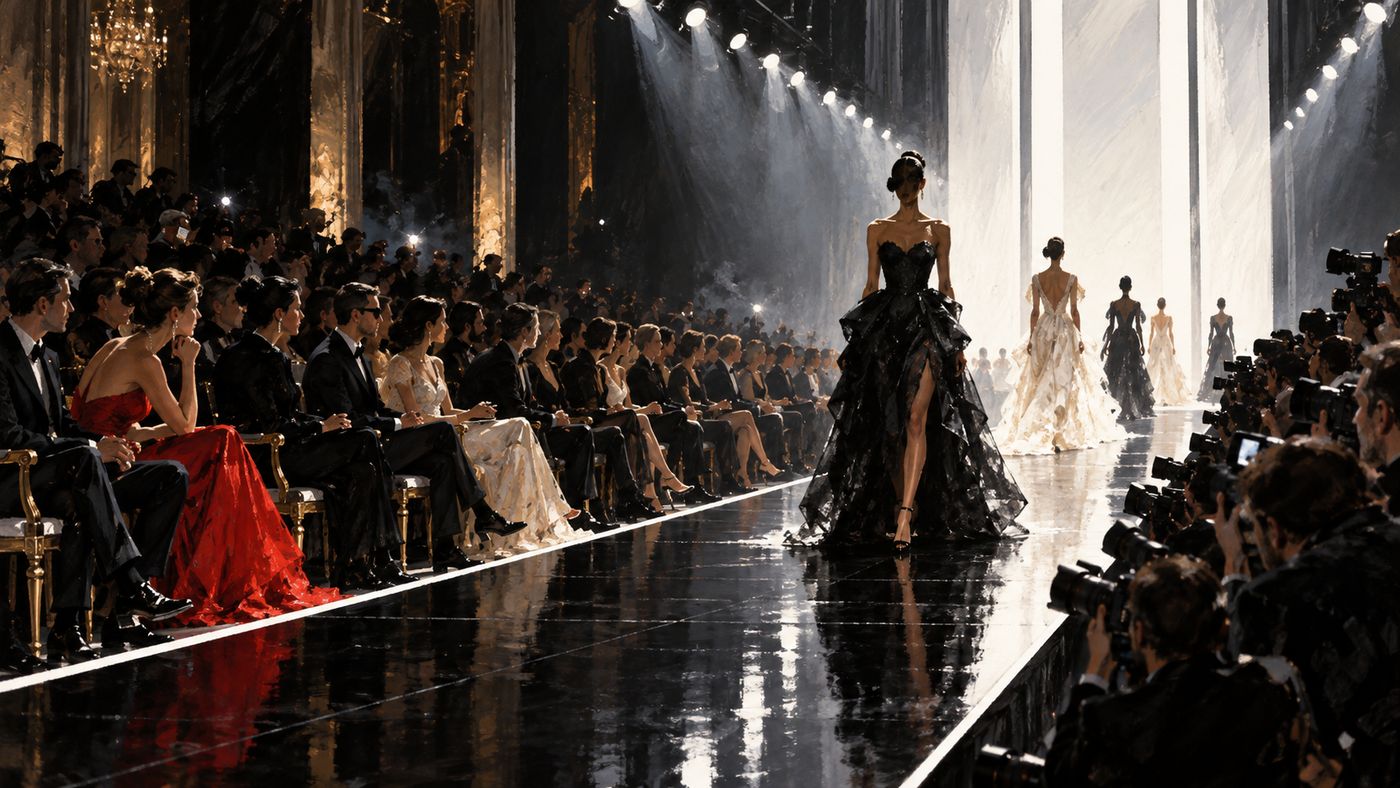
On November 3, 1949, Anna Wintour was born in London to Charles Wintour, editor of the London Evening Standard, and Eleanor Baker, an American philanthropist. She grew up in a household where editorial authority was modeled daily and where the relationship between media, culture, and influence was not abstract but professional and immediate. She left school at sixteen, trained at a London fashion boutique, and worked her way through British fashion journalism before moving to New York, where she held positions at Harper's Bazaar and House & Garden before being appointed editor-in-chief of American Vogue in 1988. She has held that position ever since — thirty-six years in the chair that sits at the center of the most influential fashion magazine in the world, making her the longest-serving editor in Vogue's history.
Wintour's influence extends far beyond the magazine's pages. She has been credited — and in some cases blamed — for transforming Vogue from a fashion publication into a cultural institution, placing politicians, athletes, and entertainers on its cover and expanding the definition of what a fashion magazine could address. Her nickname, "Nuclear Wintour," reflects the combination of reputation and reserve that has defined her public persona: the dark sunglasses, the precise bob, the studied unreadability in the front row. The 2003 book and subsequent film The Devil Wears Prada drew heavily on her reputation, though she has never confirmed the connection. She was appointed a Dame Commander of the Order of the British Empire in 2017. The girl born to a London newspaper editor on November 3, 1949 grew into the woman who decided, for more than three decades, what fashion meant — and who got to be on the cover.