July 30: A Promise Kept, a Record Broken, and a Camera in the Woods
July 30 is a day for proving skeptics wrong. In 1965, a president traveled to a former president's library to sign a law that Washington had been trying and failing to pass for two decades, finally delivering healthcare coverage to tens of millions of elderly and low-income Americans — and handing the first card to the man whose early efforts had made the eventual victory possible. Eleven years later, in the heat of a Cold War Olympic summer, an athlete delivered the single most dominant decathlon performance in Games history, setting a world record and cementing a place among the most celebrated figures in American athletics. And in 1999, a film made for $60,000 by two unknowns with a borrowed camera opened in theaters and promptly became one of the most profitable movies ever made, rewriting the economics of independent filmmaking in a single weekend. Three July thirtieths. Three bets on the possible that paid off beyond anyone's expectations.
Independence, Missouri
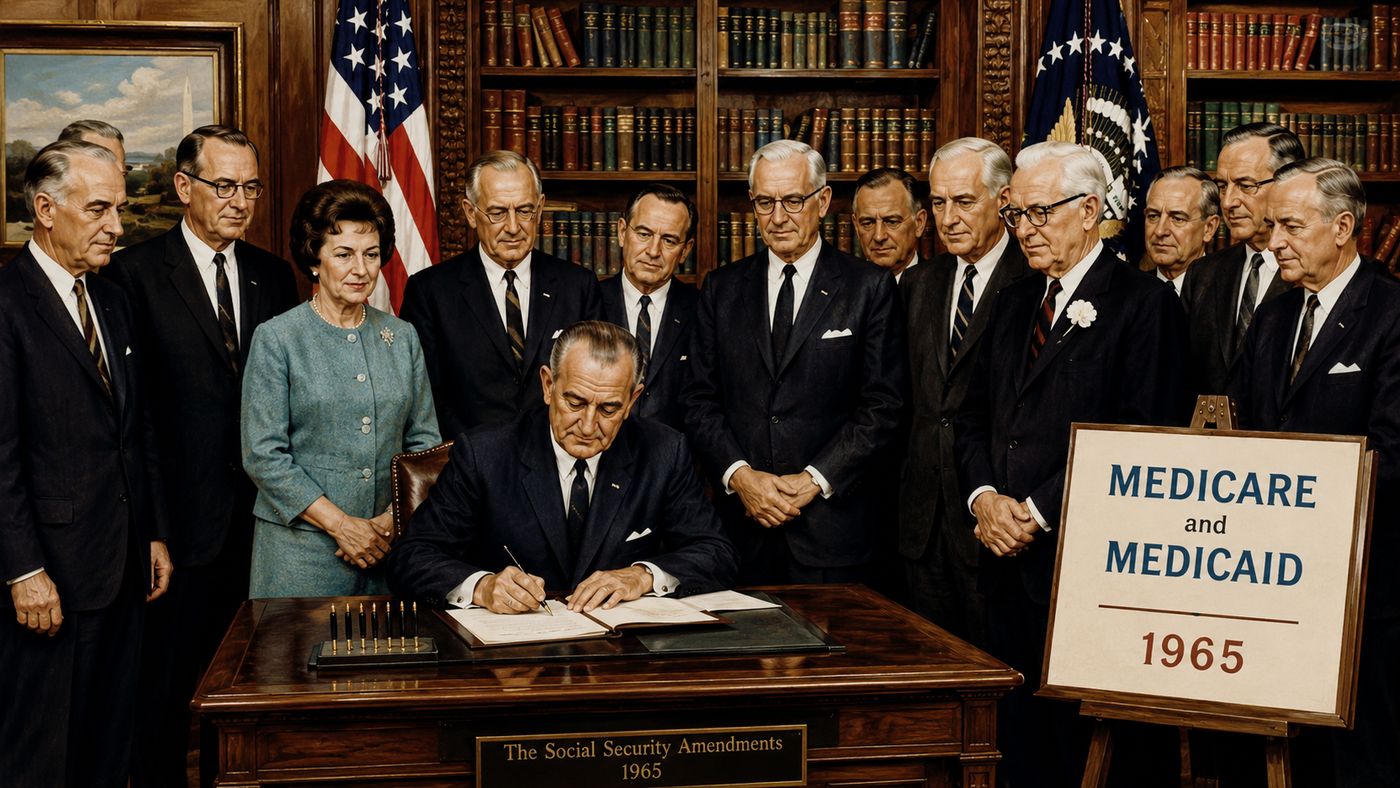
On July 30, 1965, President Lyndon B. Johnson flew to Independence, Missouri, and signed the Social Security Amendments of 1965 into law at the Harry S. Truman Presidential Library — creating Medicare and Medicaid in a ceremony designed as an explicit act of historical acknowledgment. Truman, then eighty-one years old, sat beside Johnson as the president signed, and received the first Medicare card afterward, a gesture that honored the former president's own long-failed effort to establish national health insurance. Truman had proposed universal health coverage in 1945, two decades before Medicare existed, and had been defeated by a coalition of the American Medical Association, conservative Democrats, and Republicans who had called the idea socialized medicine. Johnson's Great Society had finally succeeded where Truman had not, and bringing the signing to Independence was a deliberate statement about the continuity of the Democratic commitment to the idea.
The legislation Johnson signed on July 30, 1965, created two distinct programs: Medicare, which provided health insurance coverage for Americans sixty-five and older, financed through payroll taxes; and Medicaid, which provided coverage for low-income individuals and families, jointly funded by federal and state governments. Together they represented the most significant expansion of the American social safety net since Social Security itself had been created thirty years earlier. The programs have been expanded, debated, reformed, and politically contested in every decade since — but their basic structure has endured. Medicare today covers more than 65 million Americans; Medicaid covers more than 80 million. The law signed in a Missouri library on July 30, 1965, has provided healthcare coverage to a cumulative population numbering in the hundreds of millions over its six decades of operation — one of the most consequential domestic policy achievements in American history.
8,618
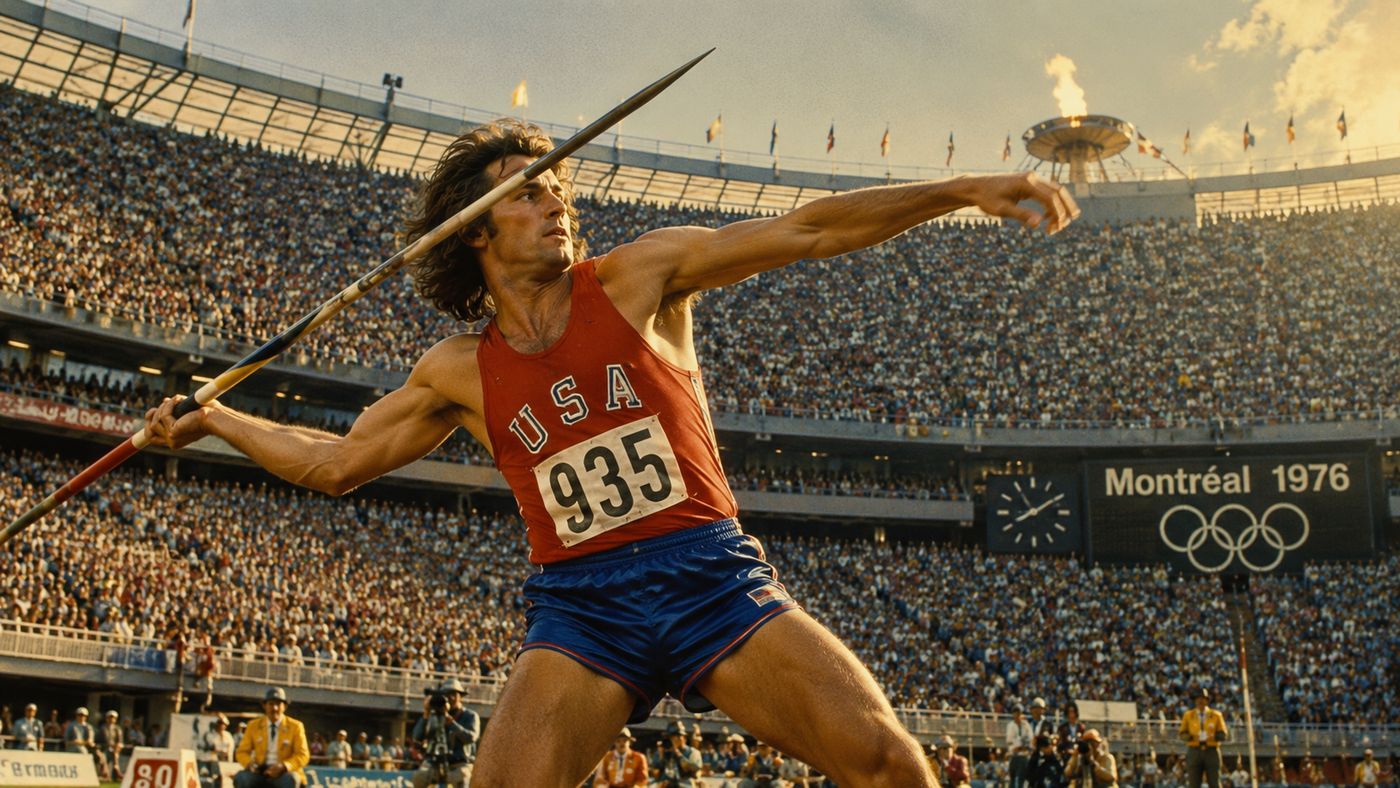
On July 30, 1976, Caitlyn Jenner — then competing as Bruce Jenner — completed the ten events of the Olympic decathlon at the Montreal Summer Games with a world record score of 8,618 points, claiming gold and the title of the world's greatest all-around athlete in one of the most commanding performances the event had ever seen. The decathlon, which spans two days and ten disciplines — from the 100 meters and long jump to the discus, pole vault, and 1,500 meters — is widely regarded as the most physically demanding test in track and field, requiring an extraordinary combination of speed, strength, technique, and endurance. Jenner had finished tenth at the 1972 Munich Olympics and had spent the intervening four years training with an obsessiveness that her autobiography would later describe as total — organizing virtually every element of her life around the goal of the Montreal podium.
The gold medal and world record claimed on July 30, 1976, made Jenner one of the most celebrated American athletes of her generation — a Wheaties box cover, a symbol of Cold War athletic triumph, and a figure whose public image was almost entirely defined by that Montreal summer for nearly four decades. In 2015, Jenner publicly came out as a transgender woman in a television interview watched by nearly seventeen million people, providing a visibility to transgender identity that prompted significant public conversation. The athletic achievement of July 30, 1976, and the personal journey that Jenner has described publicly since 2015 are each remarkable on their own terms — the story of a person whose public life has spanned two very different kinds of history, each one consequential in its own way.
$60,000
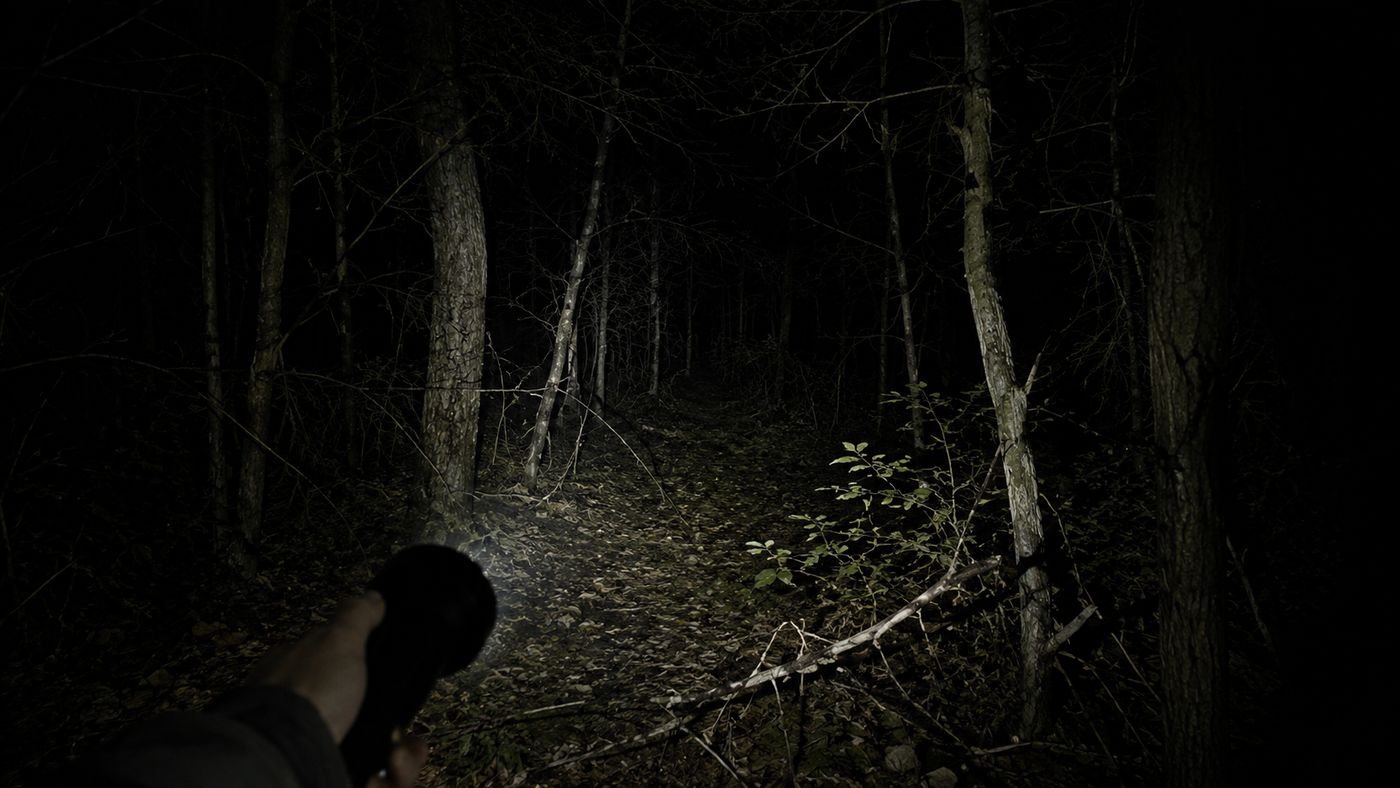
On July 30, 1999, The Blair Witch Project opened in wide release across the United States, having already generated an extraordinary amount of anticipation through one of the most inventive marketing campaigns in film history. Directors Daniel Myrick and Eduardo Sánchez had shot the film in eight days in the woods of Maryland for approximately $60,000, using a cast of three largely improvising actors and a deliberately crude visual aesthetic — handheld cameras, grainy footage, the deliberately clumsy look of amateur video — to sell the premise that what audiences were watching was actual recovered footage of three students who had disappeared in the woods while making a documentary. The film's website, which presented fake police reports, missing persons notices, and interviews with fictional townspeople, blurred the line between reality and fiction so effectively that a significant portion of the audience went into theaters unsure whether the events depicted were real.
The result was one of the most extraordinary financial performances in film history. The Blair Witch Project earned nearly $250 million worldwide against its $60,000 production budget — a return on investment that, by some calculations, remains the highest in the history of theatrical film. It won the Independent Spirit Award for Best Feature and fundamentally altered the landscape of low-budget horror filmmaking, establishing the found-footage format as a commercially viable genre that spawned dozens of imitators including the Paranormal Activity franchise and Cloverfield. The film's internet marketing campaign is also regarded as one of the earliest and most successful uses of the web to build audience anticipation for a theatrical release, a technique that has since become standard practice across the industry. The camera that Myrick and Sánchez pointed at three actors in a Maryland forest in 1997 produced, two years later, a film that changed how Hollywood thought about what movies could cost and still succeed.