July 27: A Vote, a Bomb, and a Leap Into the Jet Age
July 27 is a day for thresholds that cannot be uncrossed. In 1974, the House Judiciary Committee cast a vote that set in motion the only presidential resignation in American history, delivering the first formal verdict of the constitutional process that Watergate had made unavoidable. Twenty-two years later, in the middle of the Summer Olympics in Atlanta, a pipe bomb detonated in a park full of celebrating spectators and turned an international symbol of unity into a crime scene — permanently altering how America thinks about security at large public gatherings. And in 1949, in a field outside London, an aircraft lifted off the ground and changed the relationship between the world's peoples and the concept of distance, inaugurating the jet age that made the modern world possible. Three July twenty-sevenths. Three crossings from which there was no return.
27 to 11
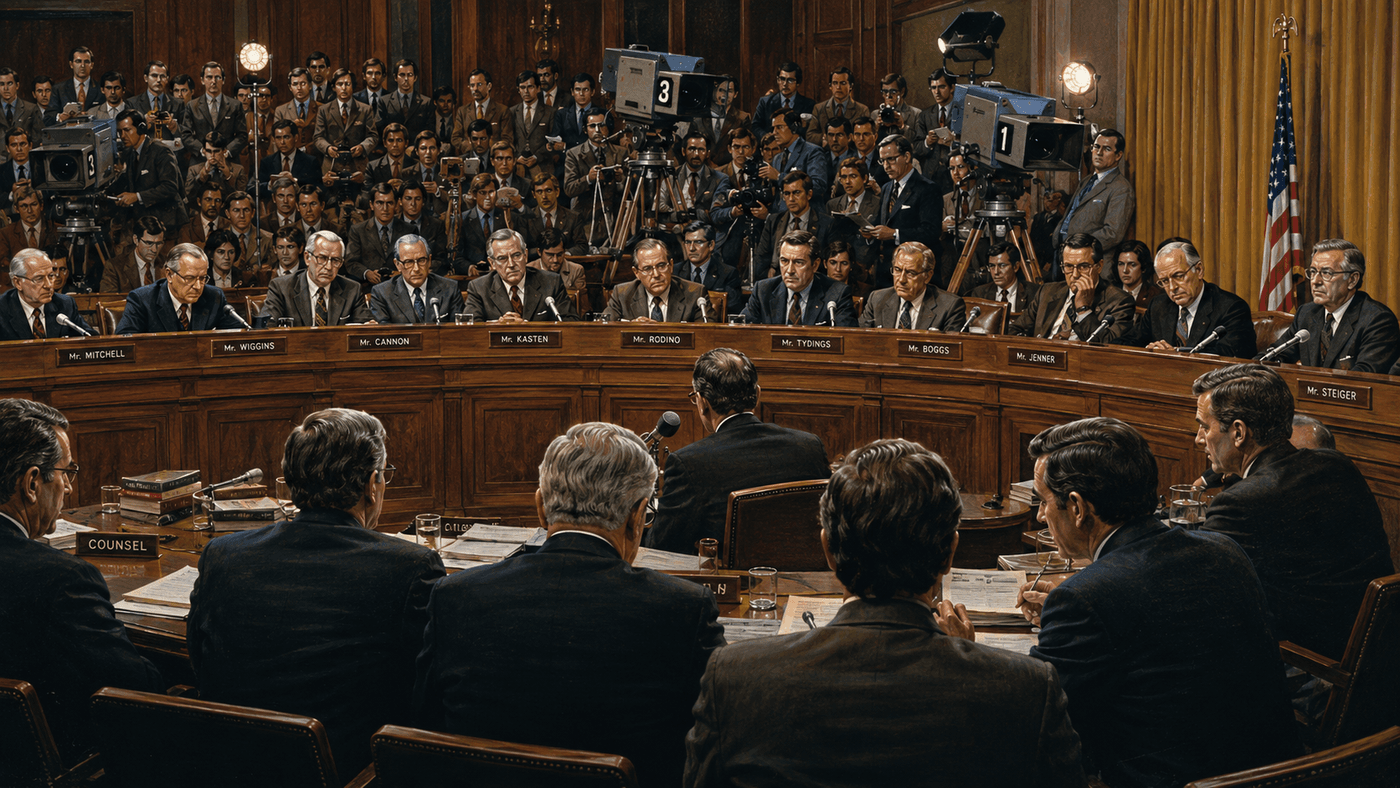
On July 27, 1974, the House Judiciary Committee voted 27 to 11 to approve the first article of impeachment against President Richard Nixon, formally charging him with obstruction of justice in connection with the Watergate scandal. The vote was the culmination of two years of investigation, subpoenas, court battles, and constitutional confrontation that had begun with the arrest of five men inside the Democratic National Committee headquarters at the Watergate complex in Washington on June 17, 1972, and escalated through the revelation of a White House taping system, the Saturday Night Massacre in which Nixon ordered the firing of the special prosecutor, and the Supreme Court's unanimous ruling that Nixon had to surrender the tapes he had been withholding. The committee's vote was not a surprise — the evidence of obstruction was by then extensive — but its formality gave the proceeding a gravity that the preceding months of revelation had not quite carried. The constitutional machinery was now fully engaged.
The committee went on to approve two additional articles of impeachment in the days that followed — abuse of power and contempt of Congress — but it was the July 27 vote that broke the dam. On August 5, the White House released transcripts of three previously withheld conversations that conclusively demonstrated Nixon had directed the CIA to obstruct the FBI's Watergate investigation six days after the break-in — the definitive "smoking gun" that collapsed his remaining political support. Republican leaders in Congress informed Nixon that he faced certain impeachment by the full House and conviction by the Senate. On August 9, 1974 — thirteen days after the Judiciary Committee's vote — Nixon became the first and only president in American history to resign from office. The process the committee had set in motion on July 27 had run its course in less than two weeks, and the country had demonstrated, at considerable cost, that its constitutional system of accountability could function even when the president himself did not wish it to.
Centennial Park
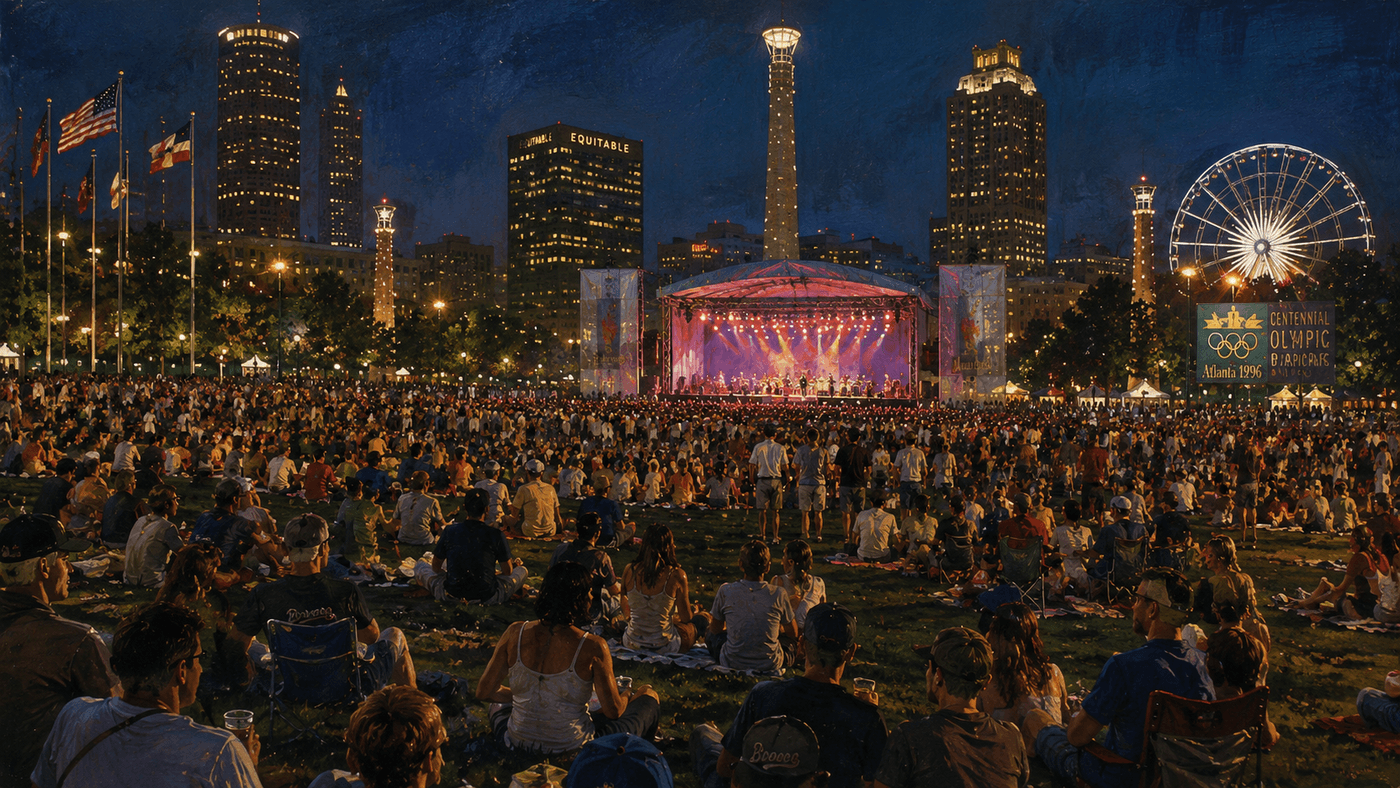
At 1:20 in the morning on July 27, 1996, a pipe bomb packed with nails exploded in Centennial Olympic Park in Atlanta, Georgia, in the middle of a crowded outdoor concert being held as part of the Summer Olympic Games. The blast killed Alice Hawthorne, a forty-four-year-old spectator from Albany, Georgia, and injured 111 others; a second fatality occurred when a Turkish journalist, Melih Uzunyol, suffered a fatal heart attack while running to cover the scene. The park — designed as the public heart of the Atlanta Games, a gathering place for athletes and visitors from around the world — had been packed with tens of thousands of people enjoying the evening's festivities when the bomb detonated. The attack cast a shadow over the remaining days of the Games and prompted an immediate, intensive manhunt for the perpetrator.
The investigation that followed was one of the most troubled in FBI history. Richard Jewell, a security guard who had discovered the suspicious backpack containing the bomb and helped evacuate the area before it detonated — almost certainly saving lives — was leaked to the media as a suspect and subjected to intense public scrutiny and investigation before being cleared. The actual perpetrator, Eric Robert Rudolph, a domestic terrorist motivated by opposition to abortion and homosexuality, evaded capture for more than seven years, hiding in the mountains of North Carolina before being arrested in 2003. He had also carried out bombings at abortion clinics and a lesbian nightclub during his time at large. Rudolph pleaded guilty in 2005 and is currently serving four consecutive life sentences. The bombing at Centennial Olympic Park accelerated the transformation of American security protocols at public events — a change so complete that the open, accessible park culture of the pre-1996 Olympics now feels like a different era entirely.
The Jet Age Begins
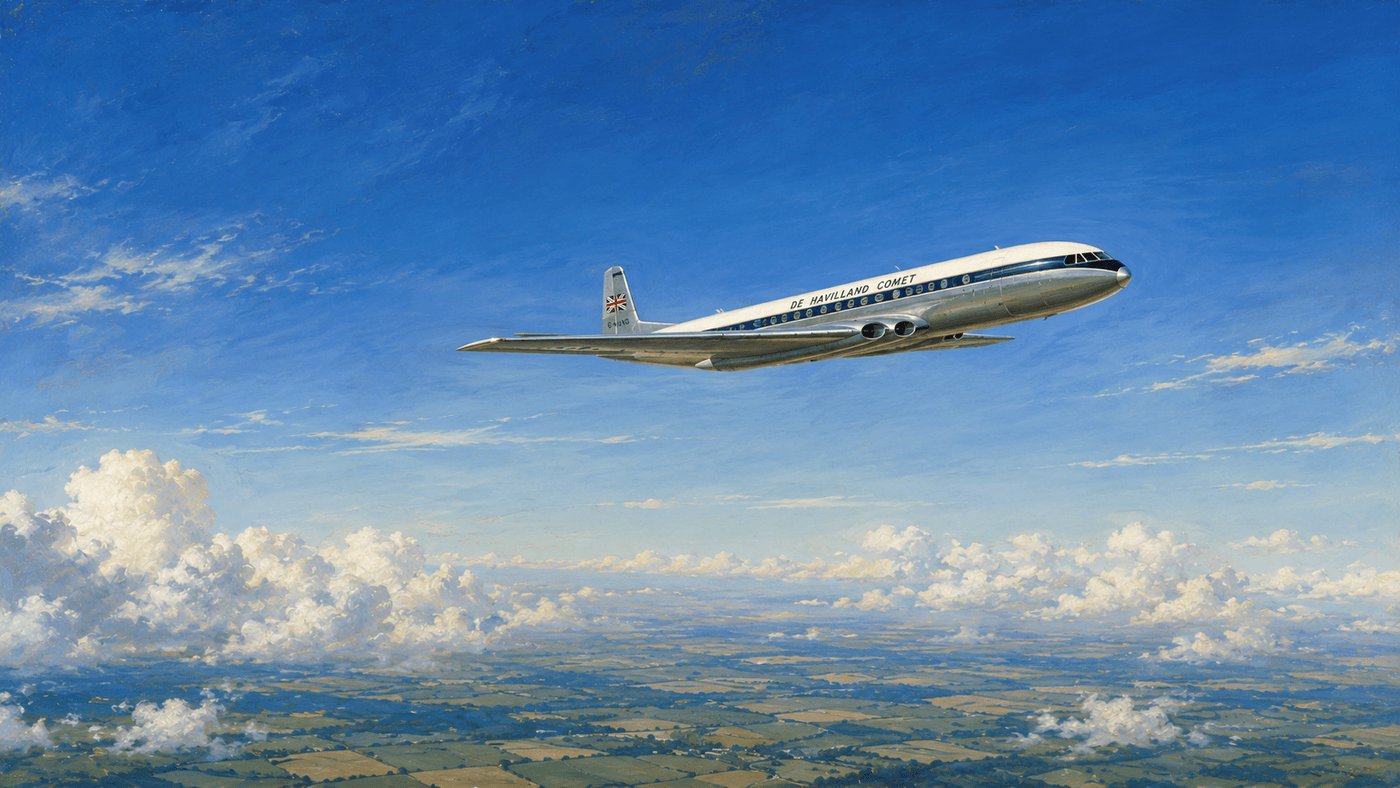
On July 27, 1949, the de Havilland DH.106 Comet lifted off from Hatfield Aerodrome in Hertfordshire, England, on its maiden flight — the first flight of a commercial jet airliner in history. Designed by the de Havilland aircraft company in the years immediately following World War II, the Comet represented a radical departure from the piston-engine propeller aircraft that had defined commercial aviation since the Wright Brothers: it was powered by four turbojet engines buried in the wings, capable of cruising at altitudes and speeds no airliner had previously reached, and offering a smoothness and quietness of flight that passengers who had endured the vibration of piston-engine aircraft found almost disorienting. The aircraft was beautiful — sleek, low-winged, futuristic in a way that immediately announced a break with everything that had come before.
The Comet entered commercial service with BOAC in 1952 and was an immediate sensation, but its story took a tragic turn. A series of catastrophic in-flight breakups beginning in 1953 — caused by metal fatigue around the aircraft's square windows, which concentrated stress at the corners with each pressurization cycle — grounded the fleet and subjected the Comet to the most intensive accident investigation aviation had ever seen. The investigation pioneered techniques in structural engineering and fatigue analysis that permanently transformed aircraft design, requiring rounded rather than square windows and establishing testing protocols that have been standard in the industry ever since. By the time the investigation concluded and a redesigned Comet returned to service, the American Boeing 707 had entered the market and the Comet's commercial moment had passed. But the lessons the Comet taught — at enormous and heartbreaking cost — made every subsequent airliner safer. The flight of July 27, 1949, launched the jet age. The crashes that followed made it survivable.