July 26: 34 Agents, One Postmaster, and a Baby in Kent
The most consequential institutions and careers rarely announce themselves at the beginning. On July 26, 1908, an Attorney General signed an order creating a modest investigative bureau with 34 agents and no name that anyone would remember — the quiet origin of what would become the Federal Bureau of Investigation, one of the most powerful law enforcement agencies in the world. One hundred and sixty-seven years earlier, the Continental Congress appointed Benjamin Franklin to oversee the mail, recognizing that a revolution could not be coordinated without reliable communication. And in 1943, in a market town in Kent, a baby was born to an ordinary English family who would grow up to become one of the defining figures of rock and roll — a performer whose career has now lasted longer than almost anyone in the history of popular music. Three beginnings that nobody, at the time, could have predicted.
Thirty-Four Agents
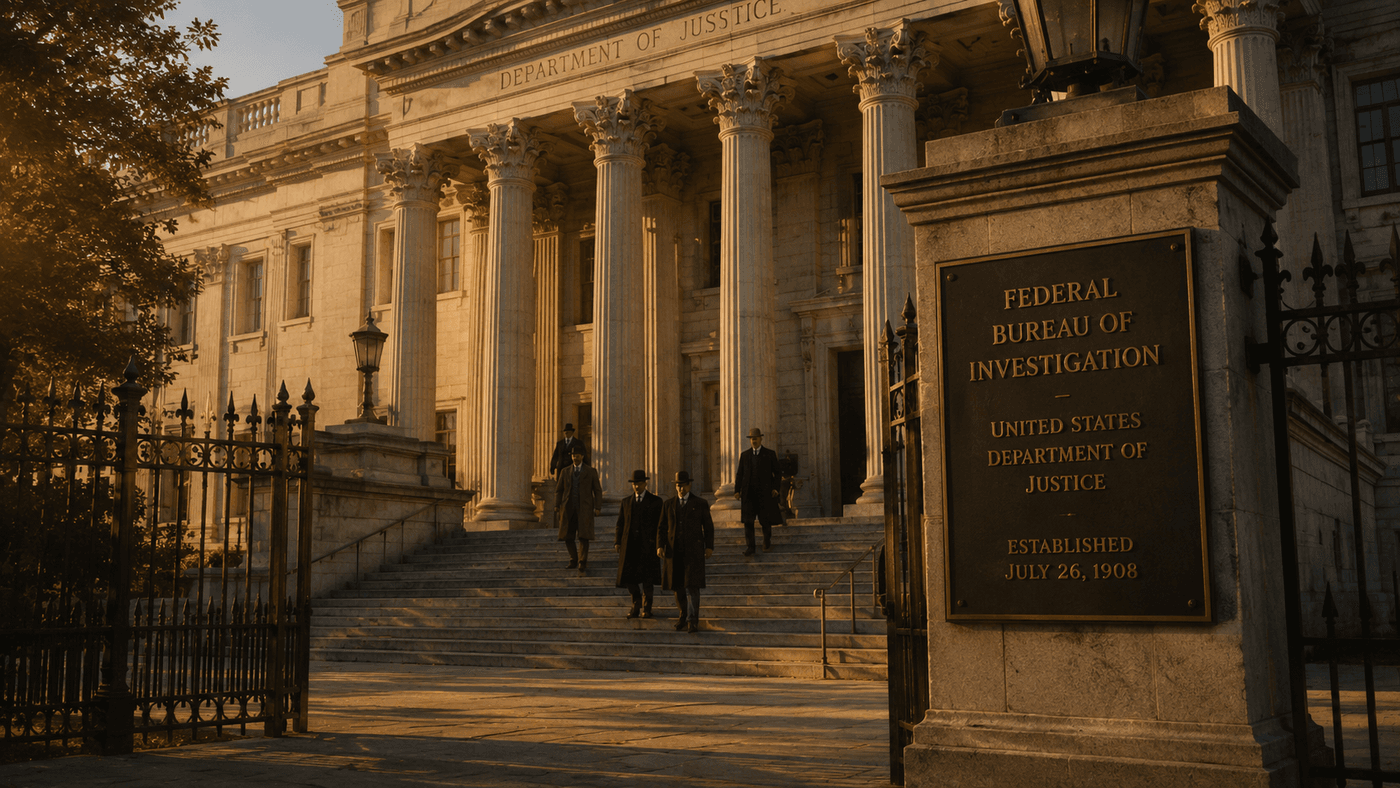
On July 26, 1908, Attorney General Charles J. Bonaparte — a grandson of Jerome Bonaparte, younger brother of Napoleon, and a notable Progressive Era reformer — issued an order directing that the Department of Justice's investigations would henceforth be handled by a permanent force of special agents under the department's direct control. The force began with 34 investigators, most of them former Secret Service agents, and had no official name. It was referred to simply as the Bureau of Investigation. The creation of this force was itself somewhat controversial: Congress had been skeptical of a centralized federal detective force, concerned about the implications for civil liberties of a national investigative agency with broad powers, and had specifically prohibited the Justice Department from borrowing agents from the Secret Service. Bonaparte created his own force as a workaround, and the congressional objections were eventually overcome by the sheer utility of what the bureau provided.
The Bureau of Investigation became the Federal Bureau of Investigation in 1935, by which point J. Edgar Hoover — who had taken over as director in 1924 — had already been reshaping it for a decade into the centralized, professional, and fiercely image-conscious organization that would define American federal law enforcement for the rest of the twentieth century. Hoover ran the FBI for 48 years, until his death in 1972, accumulating a power that drew on both the bureau's genuine effectiveness in fighting organized crime and his personal practice of maintaining secret files on politicians, journalists, and public figures — a form of institutional blackmail that kept successive presidents from removing him. The FBI Hoover built has been reformed, scrutinized, and debated in every decade since his death. The bureau that Bonaparte created on July 26, 1908, with 34 agents and no name, now employs roughly 35,000 people across 56 field offices and has jurisdiction over more than 200 categories of federal crime.
Neither Snow Nor Rain
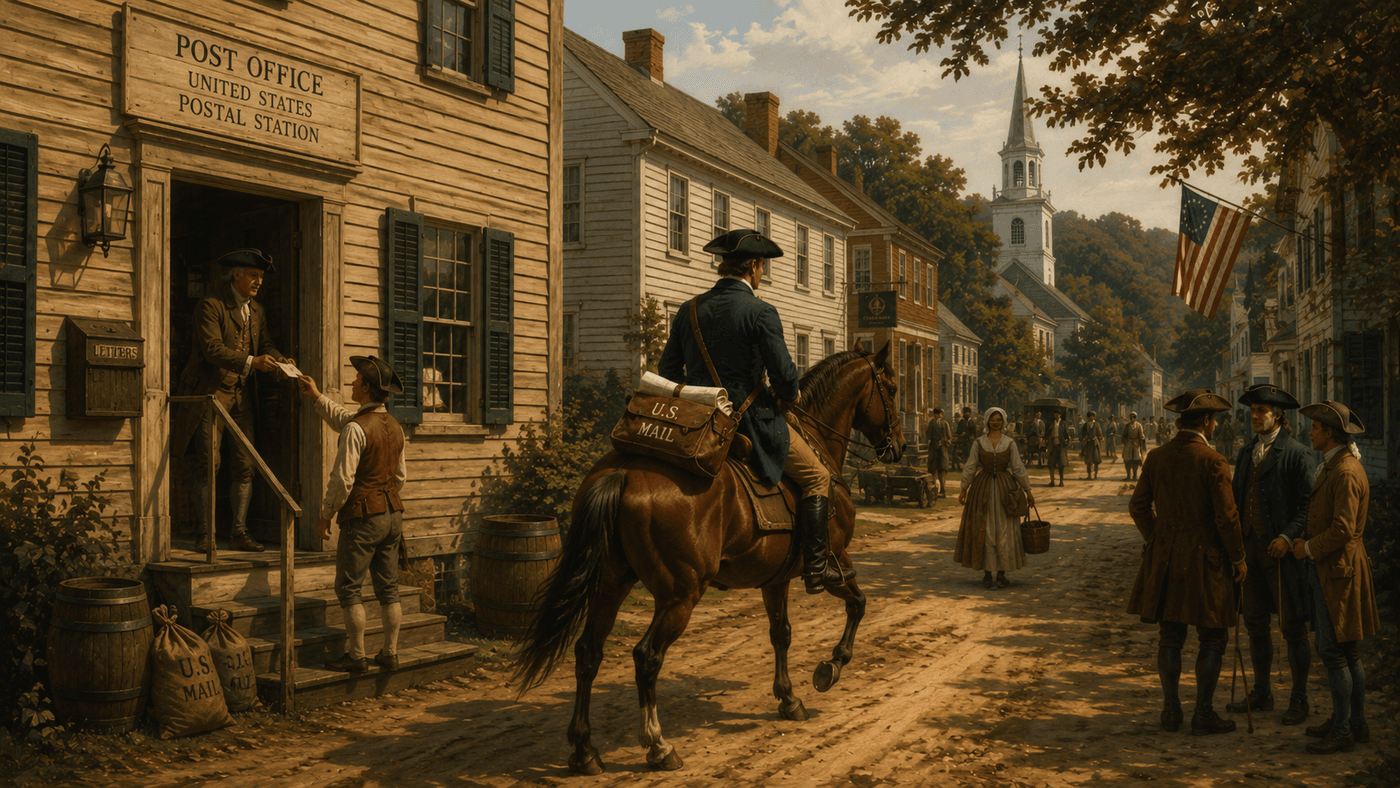
On July 26, 1775, the Second Continental Congress — meeting in Philadelphia just three months after the first shots of the Revolutionary War were fired at Lexington and Concord — established a unified postal system for the thirteen colonies and appointed Benjamin Franklin as its first Postmaster General. Franklin was the obvious choice: he had served as deputy postmaster general for the British Crown's colonial postal system since 1753, a position from which he had been dismissed in 1774 after being accused of leaking private correspondence. He understood the infrastructure intimately and had already improved it considerably during his tenure, reducing mail delivery times and expanding routes throughout the colonies. The postal system the Continental Congress was creating was not merely a convenience — it was an instrument of revolution, the communications network through which the coordinated resistance to British rule would be organized and sustained.
Franklin served as the first Postmaster General for only about a year before being dispatched to France as a diplomatic envoy, but the institution he launched on July 26, 1775, has operated continuously ever since — making it one of the oldest federal institutions in American history and predating the Constitution itself by more than a decade. The United States Postal Service processes approximately 425 million pieces of mail per day, maintains the largest civilian vehicle fleet in the world, and reaches every address in the United States six days a week — an infrastructure whose political and economic significance has been argued over in every generation but whose basic function has never been replaced. The decision made in a Philadelphia meeting room in 1775 to ensure that the colonies could communicate reliably created a system so fundamental to American civic life that the Founders enshrined it directly in the Constitution, charging Congress with establishing post offices and post roads. Franklin would have found that entirely reasonable.
Dartford
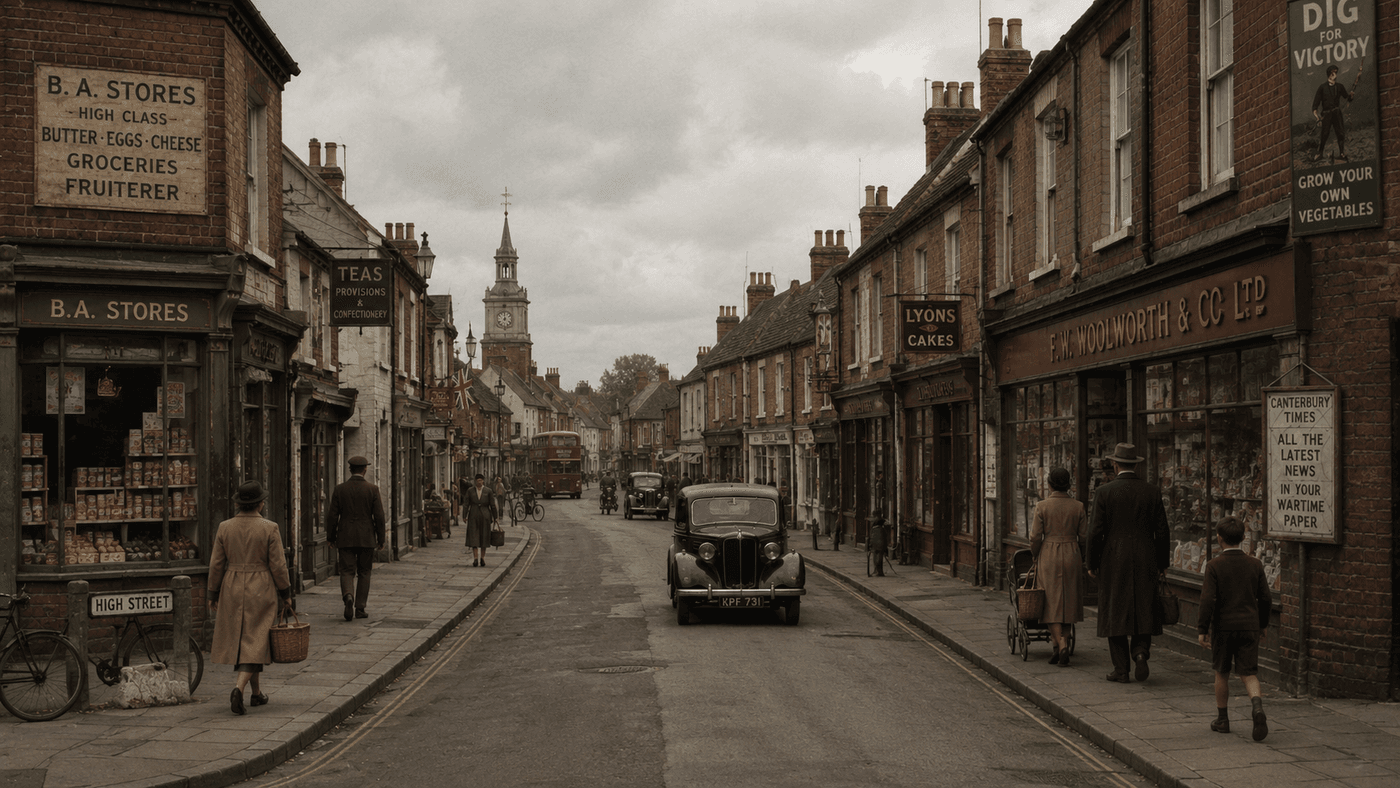
On July 26, 1943, Michael Philip Jagger was born in Dartford, Kent — a market town southeast of London — to a physical education teacher and his wife. The England he entered was in the middle of the Second World War, rationed, blacked-out, and entirely removed from anything that resembled the cultural landscape he would help create two decades later. Jagger grew up with conventional middle-class aspirations — he won a place at the London School of Economics in 1961 — before a chance encounter with his childhood acquaintance Keith Richards on a railway platform in 1961, where Richards noticed that Jagger was carrying records by Chuck Berry and Muddy Waters. The friendship that followed, and the band they built with Brian Jones, became the Rolling Stones. Within three years of their formation, the Stones were among the most famous acts in the world, positioned alongside the Beatles as the twin poles of the British Invasion of American popular music.
Jagger's specific contribution to the Rolling Stones — and to rock music more broadly — was the quality of his stage presence: a physical, theatrical performance style that owed something to the American blues singers he idolized, something to the traditions of British music hall, and something entirely original that critics and audiences spent decades trying to accurately describe. The Rolling Stones have been performing for more than sixty years, making them one of the longest-running acts in the history of popular music, their tours consistently among the highest-grossing in the concert industry even as Jagger approaches and passes his eightieth year. He has collaborated with virtually every significant figure in rock and pop music, survived the deaths of two bandmates, fathered eight children across five relationships, and been knighted — a fact that the Stones' early image as the bad boys of British rock makes slightly absurd and entirely appropriate. The baby born in Dartford on July 26, 1943, turned out to have an unusually long and consequential career ahead of him.