Six Thousand
On Monday, National Assembly President Jorge Rodríguez posted a message on Telegram confirming that the death toll from Venezuela's June 24 earthquakes had reached 6,125 people — with 61,000 more hospitalized, and only 16.5 percent of the debris generated by the disaster cleared. Six weeks after a 7.2-magnitude foreshock and a 7.5-magnitude mainshock struck 30 seconds apart in the late afternoon, killing people in Caracas, in La Guaira, in Yaracuy, in the neighborhoods and apartment towers and coastal towns of a country that was already in profound crisis before the ground moved — Venezuela is still in the middle of it. The recovery that follows a disaster of this scale is not measured in days or weeks. It is measured in years. On August 1, a surfer walked past a tent encampment on La Guaira's beach on his way to a Paddle Out ceremony — a surfing community's tribute to the dead. The tents are still there. The debris is still there. And the count, as assessment teams continue reaching areas not yet fully surveyed, may not be finished rising.
Among the Worst Disasters in Latin American History
To understand the scale of what happened in Venezuela on June 24, it helps to compare it to the worst earthquakes Latin America has endured in the modern era. The 1970 Ancash earthquake in Peru killed approximately 70,000 people — still the deadliest in the Western Hemisphere in the 20th century. The 1985 Mexico City earthquake killed between 5,000 and 40,000 people, depending on estimates, and reshaped the political and civic identity of a generation of Mexicans. The 2010 Haiti earthquake killed an estimated 160,000 to 316,000 people — the worst natural disaster in the recorded history of the Americas. At 6,125 confirmed dead, Venezuela's June earthquake now ranks among the deadliest in Latin American history in the past four decades, and the toll is still being counted. In La Guaira — the coastal state that serves as Caracas's gateway to the Caribbean and where 80 percent of buildings collapsed — entire neighborhoods were effectively erased. The main airport serving the capital sustained damage that disrupted aid flights for days. The structural vulnerability that made La Guaira's collapse so total is itself a story: buildings constructed in the 1960s and 1970s under Venezuela's oil-boom prosperity, built to standards that did not anticipate the specific combination of shallow depth and sequential mainshocks that struck on June 24, failed in ways that newer, code-compliant construction elsewhere in the region might not have.
The Venezuelan government's response has been the subject of sustained criticism since the earliest hours of the disaster. In the days immediately following the earthquakes, residents of affected neighborhoods described searching for missing family members with their bare hands while waiting for heavy equipment that did not arrive. Acting President Delcy Rodríguez has defended the government's handling of the disaster, pointing to the $200 million reconstruction fund announced in late June, the 1,600 international rescue workers who arrived in the critical first days, and the gradual clearing of debris now underway. Critics point to the 16.5 percent debris clearance rate as evidence of a pace that is not equal to the need — with 83.5 percent of the physical destruction of Venezuela's worst natural disaster still sitting where it fell, six weeks later. The New York Times, in a June 30 investigation, reported on what it called "the hidden dead" — the gap between official death tolls and the true scale of mortality in a country where record-keeping in remote and informal communities has been severely degraded by more than a decade of economic and political crisis. The confirmed count of 6,125 may itself be an undercount.
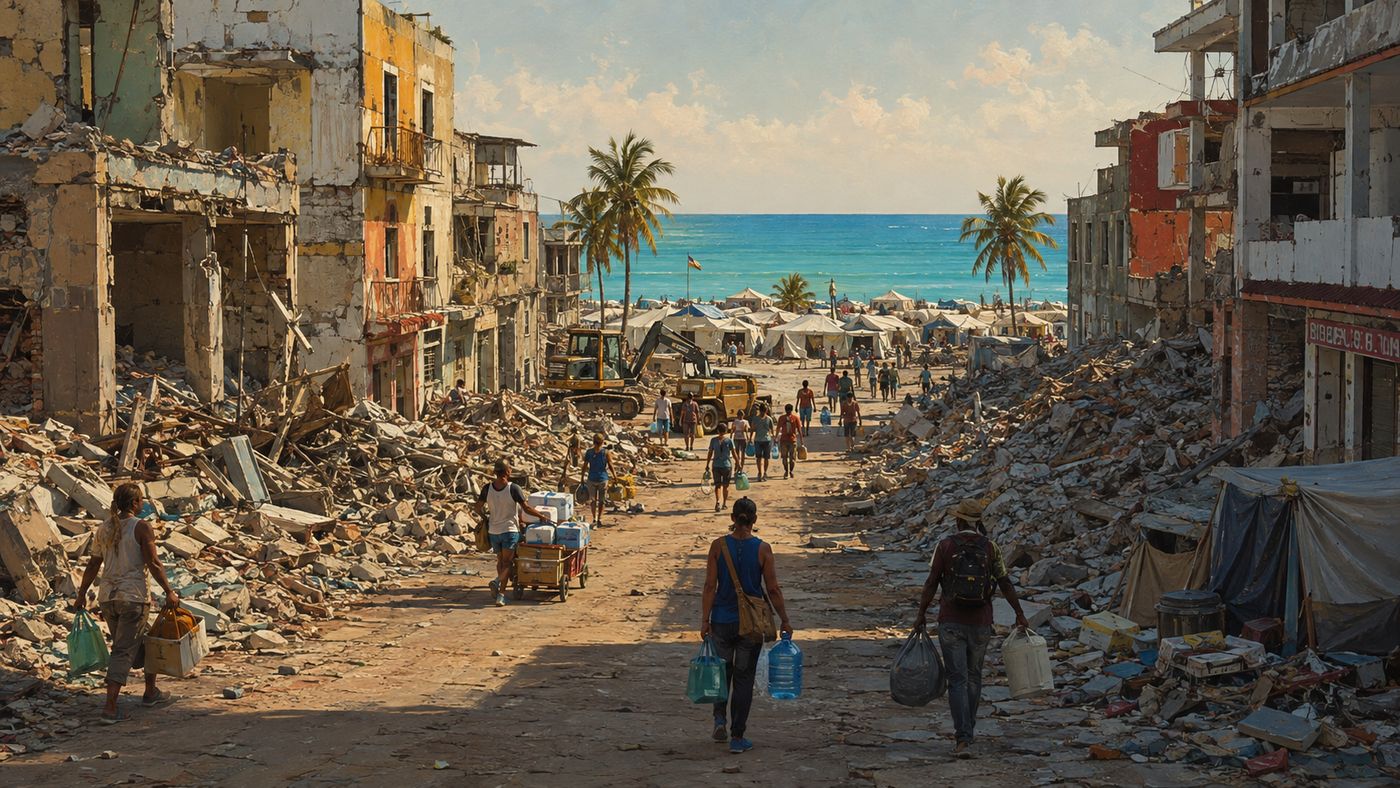
What the number 6,125 cannot fully convey is the specific texture of a country trying to recover from a catastrophic natural disaster while simultaneously managing the political, economic, and humanitarian crises that predated it. Venezuela entered June 24 already home to one of the largest displacement crises in the world — more than 7 million Venezuelans had emigrated in the previous decade — and already dependent on an international humanitarian system strained by the Iran war, the DRC Ebola outbreak, and simultaneous crises from Sudan to Myanmar. The earthquake did not happen to a country with reserves of resilience to draw on. It happened to a country that had been drawing down those reserves for years. Six weeks later, the Paddle Out ceremonies on La Guaira's beach, the Spanish volunteers packing medicines into boxes in Madrid, the international rescue dogs, the 18-day-old baby pulled from the rubble — these are the human details that persist alongside the number. Forty-two days after the earthquakes struck, 6,125 people are confirmed dead and 83.5 percent of the debris is still there. The country is rebuilding anyway, at the pace that the country can manage, in the way that countries always rebuild: slowly, imperfectly, and without stopping.