August 3: Under the Ice, Into the Arena, and onto the Dance Floor
August 3 has a gift for firsts. In 1958, a nuclear-powered submarine slipped beneath the Arctic ice cap and emerged on the other side of the North Pole, completing a voyage that reshaped Cold War naval strategy and proved that the waters beneath the polar ice were navigable in ways that would change warfare, exploration, and Arctic geopolitics permanently. Nine years earlier, two rival professional basketball leagues stopped fighting each other long enough to recognize that together they might actually survive — and built the institution that would become the most watched basketball league in the world. And in 1996, a song about a woman named Macarena hit number one on the American charts and proceeded to dominate every wedding reception, graduation party, and sporting event for the remainder of the decade. Three firsts. Three very different kinds of achievement. All of them, in their own way, impossible to ignore.
90 Degrees North
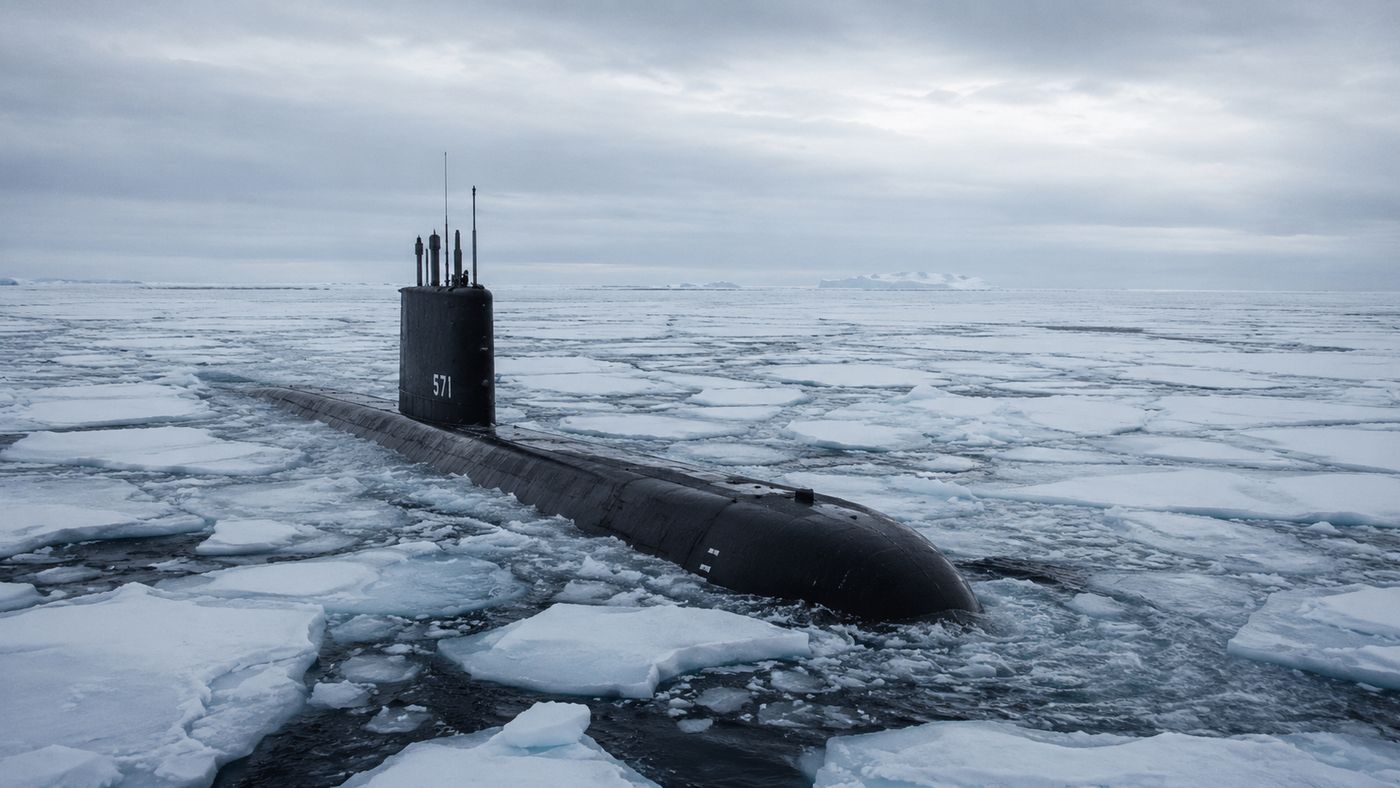
On August 3, 1958, at 11:15 p.m., the USS Nautilus — the world's first nuclear-powered submarine — passed beneath the geographic North Pole, becoming the first vessel in history to reach 90 degrees north latitude. The mission, classified and designated Operation Sunshine, had been planned and attempted once before, in the summer of 1957, when ice conditions forced a turn-back. The 1958 attempt took a different route, entering the Arctic Ocean through the Bering Strait and threading beneath the ice pack for 1,830 miles before passing under the Pole. The crew — 116 officers and enlisted men under the command of Commander William R. Anderson — marked the moment with a brief ceremony, the position confirmed by instruments since the ice overhead made any visual reference impossible. The entire submerged transit took ninety-six hours.
The voyage of the Nautilus on August 3, 1958, was a landmark achievement in several overlapping dimensions simultaneously. Militarily, it demonstrated that nuclear submarines could travel beneath the Arctic ice cap — a strategic revelation that immediately altered Cold War naval planning, since the route offered a direct path between the Atlantic and Pacific that surface ships and conventional submarines could not reliably use. Scientifically, it provided the first detailed measurements of Arctic Ocean depth and conditions beneath the ice, data that had been entirely unavailable before. Politically, it was announced by President Eisenhower as a demonstration of American technological capability at a moment of intense Cold War competition — just ten months after Sputnik had suggested Soviet technological supremacy. Commander Anderson flew to Washington to brief the president personally before the mission was declassified and announced to the public. The submarine that passed beneath the North Pole on August 3, 1958, is now a museum ship in Groton, Connecticut, where it was built. The route it pioneered remains strategically significant to this day.
The Merger
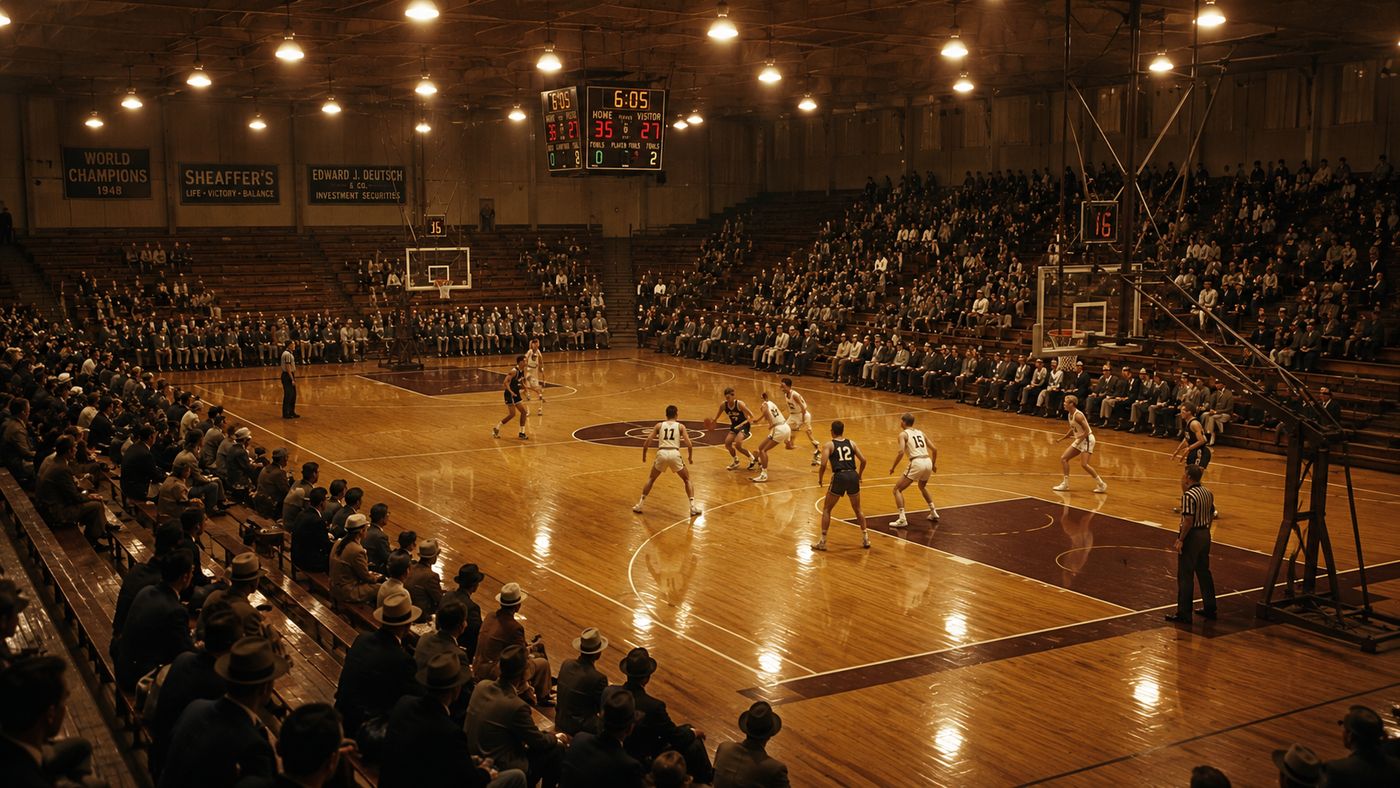
On August 3, 1949, the Basketball Association of America and the National Basketball League — two rival professional leagues that had been fighting over players, markets, and survival for three years — formally merged to create the National Basketball Association. The BAA had been formed in 1946 by the owners of major ice hockey arenas, who wanted to fill their venues during the off-season with another professional sport. The older NBL had been operating since 1937 and had stronger ties to Midwestern markets and a different economic model. Three seasons of competition had left both leagues financially strained, their rosters split, and their prospects uncertain. The merger that produced the NBA on August 3, 1949, brought seventeen teams from both leagues under one banner — far too many for the market to sustain, as it turned out, and the league contracted rapidly in its early years, but the organizational framework survived.
The NBA that emerged from the merger of August 3, 1949, was a modest and financially precarious organization in its early decades — a league whose stars were paid in the low thousands of dollars annually, whose games were sparsely attended in many cities, and whose long-term viability was genuinely uncertain. What transformed it was a series of rule changes that opened up the game, the arrival of players who redefined what basketball could look like, and the emergence of television as a medium that proved extraordinarily well-suited to the sport's pace and drama. By the 1980s, the rivalry between Magic Johnson's Los Angeles Lakers and Larry Bird's Boston Celtics had made the NBA appointment television; by the 1990s, Michael Jordan had made it a global cultural phenomenon. Today the league generates more than $10 billion in annual revenue and has franchises in markets that didn't exist when the merger was signed. None of it would have existed without the agreement reached on August 3, 1949, between two struggling leagues that decided survival together was better than failure alone.
Hey Macarena
On August 3, 1996, "Macarena" by the Spanish duo Los Del Río reached number one on the Billboard Hot 100 chart, completing an ascent that had begun when a remixed version of the song — originally released in Spain in 1993 — was picked up by American radio stations in late 1995 and early 1996. The song had been written by Antonio Romero Monge and Rafael Ruiz after they were inspired by a flamenco dancer named Diana Patricia Cubillan Herrera, whom Romero reportedly watched perform at a concert in Caracas, Venezuela. It told the story of a woman named Macarena who is unfaithful to her boyfriend while he is away being conscripted — not an obvious premise for a global phenomenon, but the lyrics were largely irrelevant to the song's extraordinary success. What mattered was the four-step arm movement that accompanied it, which was simple enough to be performed by anyone at any age in any setting.
"Macarena" spent fourteen weeks at number one on the Hot 100 — one of the longest runs in the chart's history — and was performed at the 1996 Democratic National Convention, which nominated Bill Clinton for a second term, in a moment that captured perfectly the song's ability to transcend any context that might otherwise seem incongruous. It sold more than eleven million copies in the United States alone and became a fixture of American popular culture that has proven remarkably resistant to fading entirely: it continues to appear at sporting events, school dances, and wedding receptions with a regularity that suggests it has achieved a kind of immortality that its creators could not have anticipated when they wrote a flamenco-inflected song about an unfaithful woman in the early 1990s. The Billboard chart has crowned many number one songs. Few have demonstrated the Macarena's particular combination of global reach, democratic accessibility, and sheer, inexplicable staying power.