August 2: An Invasion, a President Gone, and a Storm Over Dallas
August 2 is a day for things that happen before anyone is ready. In 1990, Iraqi tanks crossed the Kuwaiti border in the middle of the night and overran a nation in hours, setting in motion a sequence of events that would reshape the Middle East and define American foreign policy for a generation. Sixty-seven years earlier, a president died unexpectedly in a San Francisco hotel room during a cross-country tour, and the country woke up to news that no one had anticipated and that the circumstances surrounding it would complicate for decades. And in 1985, an airliner on final approach to Dallas/Fort Worth flew into a microburst — a sudden, invisible wall of descending air — and was driven into the ground in seconds, killing 137 people and forcing aviation safety to confront a meteorological threat it had not yet learned to reliably detect. Three August seconds. Three moments when the world didn't ask permission to change.
2 A.M., Kuwait City
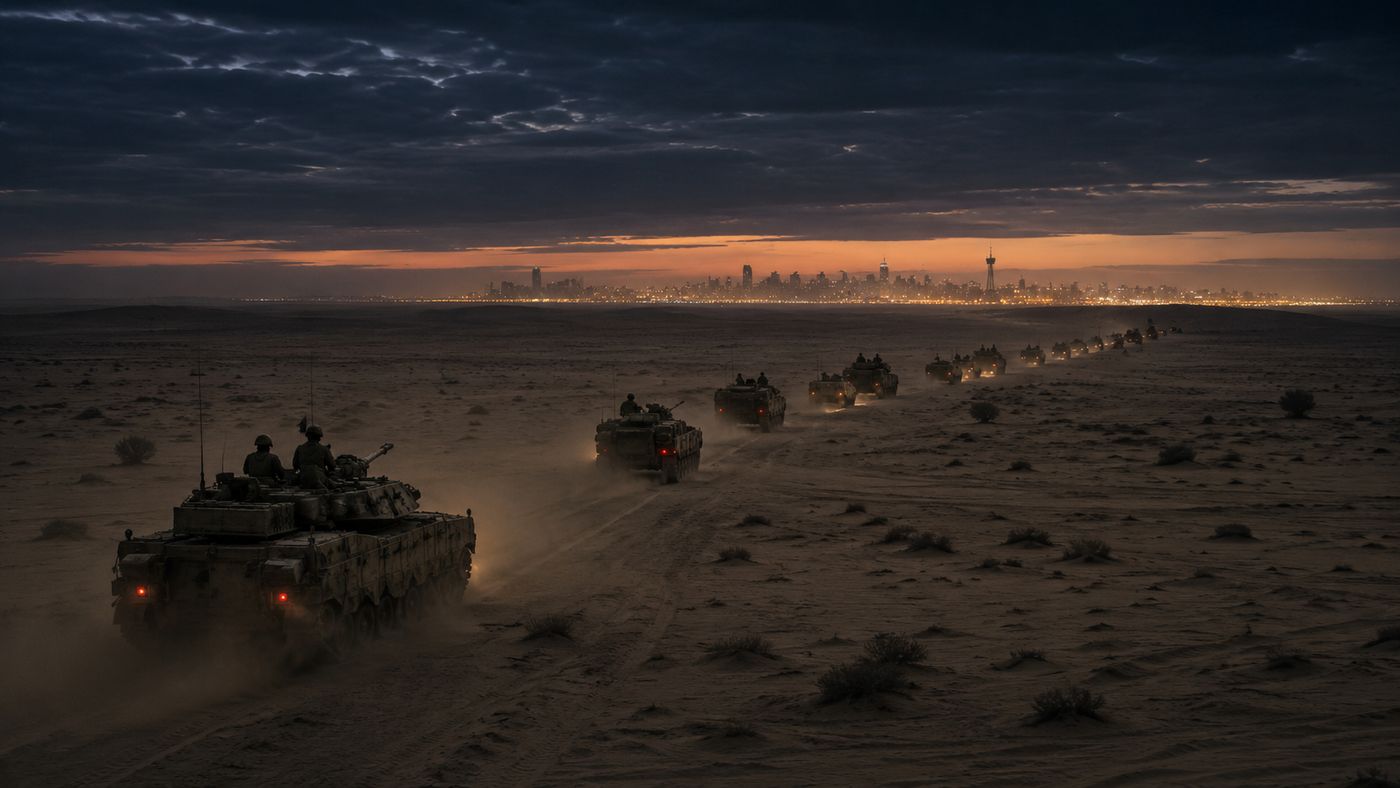
At approximately 2 a.m. on August 2, 1990, Iraqi forces crossed the border into Kuwait in a massive coordinated assault involving tanks, infantry, helicopter gunships, and special operations units targeting the Emir's palace and key government installations in Kuwait City. Kuwait's military, vastly outgunned and outnumbered, was overwhelmed within hours. The Emir, Sheikh Jaber Al-Ahmad Al-Sabah, escaped to Saudi Arabia; much of the Kuwaiti military that survived retreated south. By dawn, Iraq controlled Kuwait City. By the following day, the country had been effectively annexed. Saddam Hussein had been openly threatening Kuwait for weeks over disputed oil fields and Kuwait's alleged overproduction of oil in violation of OPEC quotas — a grievance that most Western intelligence services had assessed as bluster rather than a genuine prelude to invasion. They were wrong.
The invasion of August 2, 1990, triggered one of the most consequential international responses since the Korean War. The United Nations Security Council condemned the invasion and imposed sweeping sanctions within hours; the United States, under President George H.W. Bush, began assembling a coalition of more than thirty nations and deploying forces to Saudi Arabia in an operation called Desert Shield. After months of buildup and a January 1991 deadline for Iraqi withdrawal that Saddam Hussein ignored, the coalition launched Operation Desert Storm on January 17, 1991 — a six-week air campaign followed by a 100-hour ground offensive that liberated Kuwait and shattered the Iraqi military. Hussein remained in power in Baghdad, a decision that would define the unfinished business of the Gulf War and shape the debates that led to the 2003 invasion of Iraq. The pre-dawn crossing on August 2, 1990, set in motion a sequence that is still unfolding in the region today.
The Palace Hotel
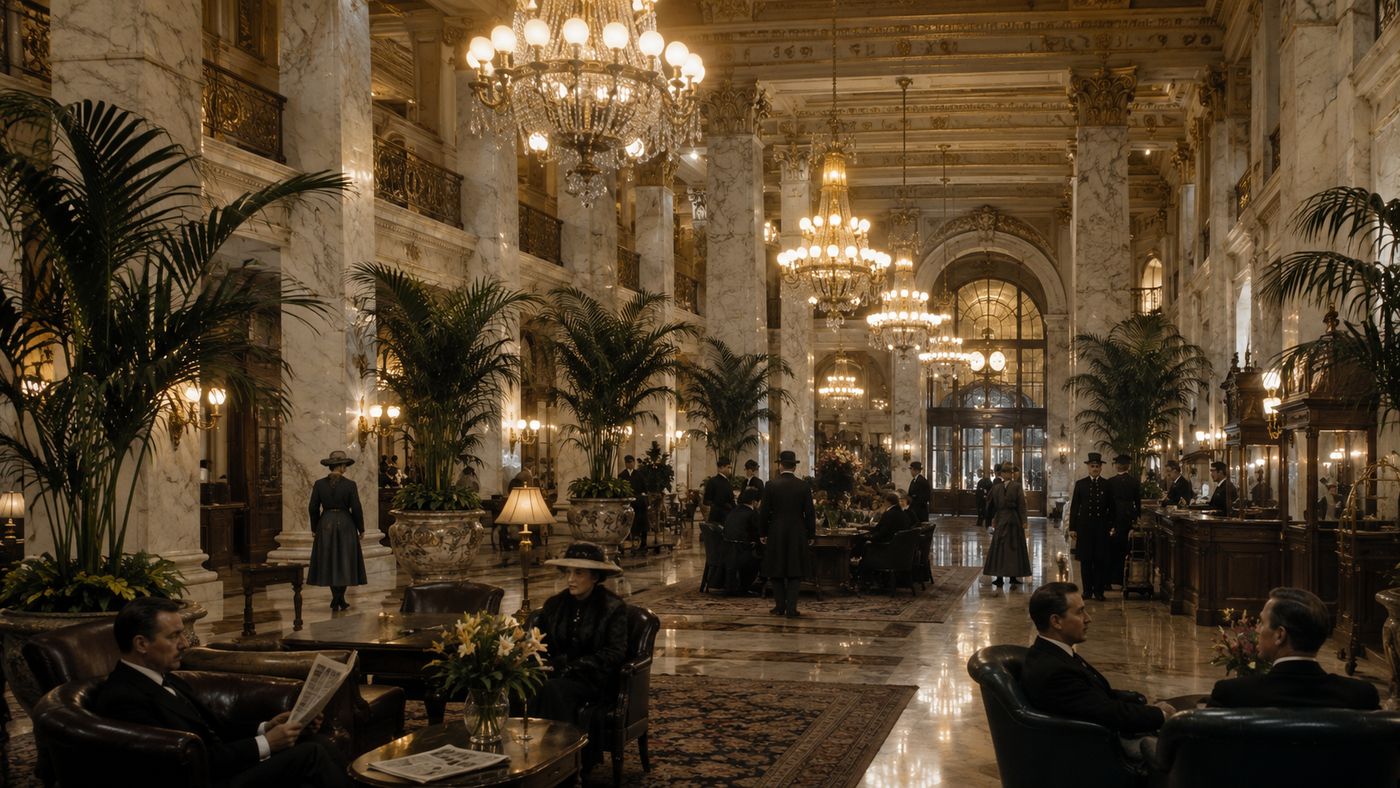
On the evening of August 2, 1923, President Warren G. Harding died in his suite at the Palace Hotel in San Francisco, at the age of fifty-eight. He had been in declining health for several weeks — the cross-country tour he was conducting, which he had called a "Voyage of Understanding" and which had taken him to Alaska and down the West Coast, had been marked by visible fatigue and what those around him described as increasing listlessness. He had fallen ill during the Alaska portion of the journey, reportedly from food poisoning, and his condition had not fully recovered by the time he reached San Francisco. On the evening of August 2, as his wife read to him in his hotel room, he collapsed. Physicians attending him listed the cause of death as a stroke or a heart attack — the medical understanding of the era did not clearly distinguish between them — and the nation woke the following morning to news of his unexpected death.
Harding's death in San Francisco on August 2, 1923, was almost immediately complicated by circumstances that refused to stay simple. His wife, Florence, declined an autopsy, fueling speculation that persisted for decades about the true cause of death — including, at various points, theories of poisoning, either by political enemies or, in some accounts, by Florence herself, who was aware of the scandals gathering around her husband's administration. The Teapot Dome scandal, in which members of Harding's cabinet had accepted bribes in exchange for leasing federal oil reserves to private companies, was already beginning to surface when he died and would explode into one of the defining political scandals of the 1920s in the months and years that followed. Harding himself had apparently been aware that his administration was in serious trouble. His vice president, Calvin Coolidge, was sworn in by his father, a notary public, in his Vermont farmhouse in the middle of the night — one of the more unusual scenes in the history of American presidential succession. Harding's historical reputation, initially high, has never fully recovered from the scandals that followed his death.
The Microburst
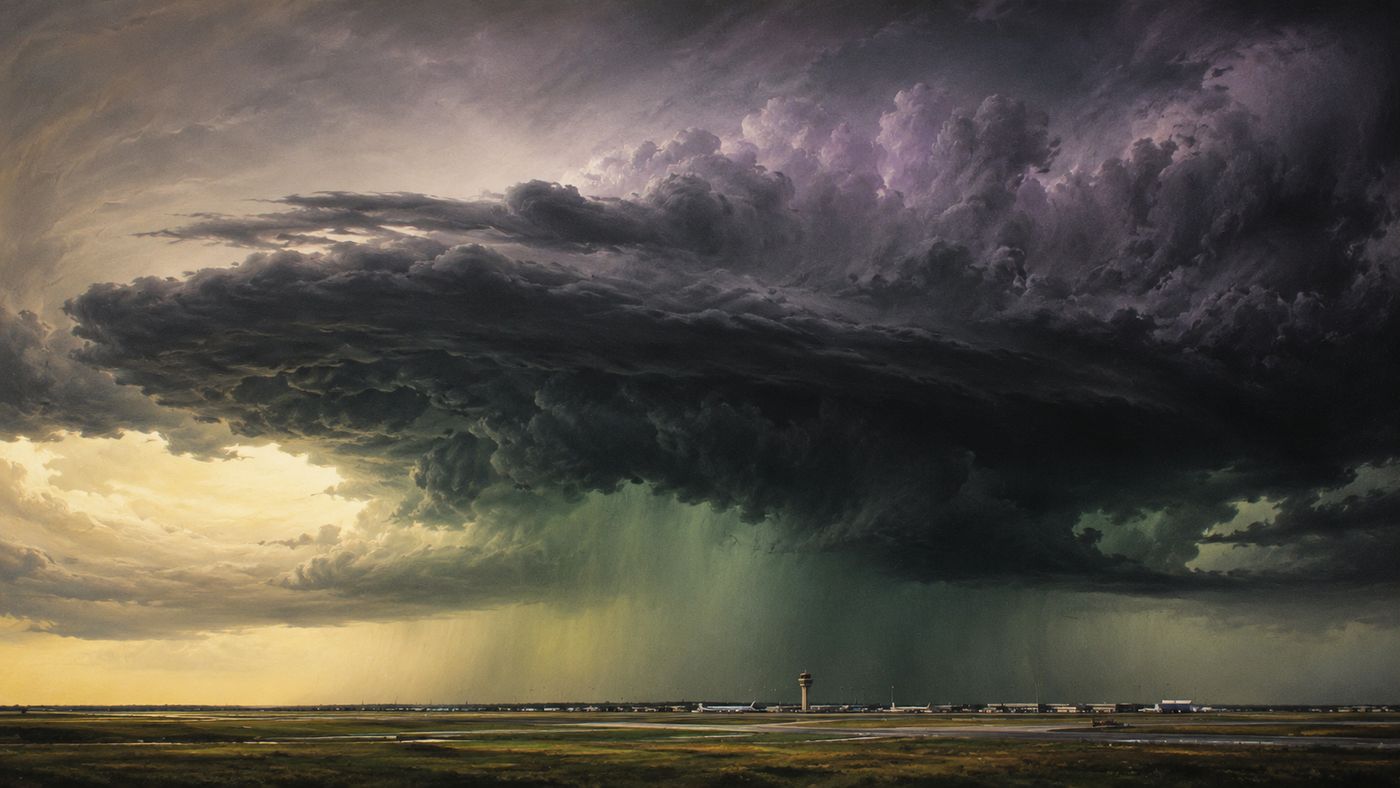
On the afternoon of August 2, 1985, Delta Air Lines Flight 191, a Lockheed L-1011 TriStar carrying 152 passengers and 11 crew members on a flight from Fort Lauderdale to Los Angeles with a scheduled stop in Dallas, encountered a microburst — a powerful localized column of sinking air associated with a thunderstorm — while on final approach to Dallas/Fort Worth International Airport. The aircraft flew into the leading edge of the weather system, experienced a sudden surge of airspeed as it entered the headwind ahead of the microburst, then lost that airspeed catastrophically as the headwind reversed into a tailwind and the downdraft drove the aircraft toward the ground. The crew was unable to recover. Flight 191 struck the ground more than a mile short of the runway, bouncing across a highway and into two water tanks before coming to rest. One hundred and thirty-seven of the 163 people on board were killed.
The crash of Delta Flight 191 on August 2, 1985, accelerated changes in aviation safety that had been under development since a series of similar accidents had begun revealing the deadly potential of wind shear and microbursts in the late 1970s. The National Transportation Safety Board's investigation confirmed that low-level wind shear had been the primary cause and cited the crew's decision to continue the approach in deteriorating weather as a contributing factor. In response, the FAA mandated the installation of Doppler weather radar systems — which can detect the wind velocity changes associated with microbursts — at major airports across the United States, a program that was substantially complete by the early 1990s. Wind shear alert systems were also installed in aircraft. The combination of ground-based radar and onboard detection technology has made microburst-related accidents dramatically rarer in the decades since. The 137 people who died on August 2, 1985, did not die without consequence — the safety systems that protect today's passengers were built, in significant part, on the lessons of what happened to their flight.