September 21: A Hobbit Sets Out, a Punk Band Gets Angry, and a Colony Becomes a Nation
September 21 is a day for unexpected journeys. In 1937, an Oxford professor published a story about a small creature who lived in comfortable obscurity and was dragged against his will into an adventure that changed him permanently — and in doing so created the template for modern fantasy literature and the foundation for one of the most widely read narratives in the history of the written word. Sixty-seven years later, a punk band from the East Bay that many critics had already written off released an album so ambitious and so politically engaged that it revived their career, redefined their genre, and produced a rock opera about American alienation that has outlasted the specific political moment that produced it. And in 1981, a small Central American nation that had been a British colony for a century and a half became the last British territory on the American mainland to achieve independence — concluding a process complicated by a longstanding territorial dispute with its neighbor that has still not been fully resolved. Three September twenty-firsts. Three departures that arrived somewhere nobody had quite anticipated.
In a Hole in the Ground
On September 21, 1937, the London publisher Allen & Unwin released The Hobbit, or There and Back Again by J.R.R. Tolkien — a professor of Anglo-Saxon at Oxford University who had been telling the story to his children for years and had been persuaded, through a chain of circumstances involving a manuscript reaching the publisher's chairman, to prepare it for publication. The book opens with what has become one of the most famous first sentences in English literature — "In a hole in the ground there lived a hobbit" — and follows Bilbo Baggins, a small, comfort-loving, entirely respectable creature, as he is recruited by the wizard Gandalf and a company of thirteen dwarves on a quest to reclaim a mountain stronghold from the dragon Smaug. Tolkien had invented the hobbits, the dwarves, and much of the underlying mythology for his own pleasure over the preceding years, drawing on his deep scholarly knowledge of Norse and Anglo-Saxon mythology, Old English and Old Norse literature, and the Finnish Kalevala.
The Hobbit was an immediate success, selling out its first print run of 1,500 copies before Christmas 1937 and prompting Allen & Unwin to request a sequel — a request that eventually produced The Lord of the Rings, which Tolkien spent seventeen years writing and which was published in three volumes between 1954 and 1955. Together, the two works have sold an estimated 300 million copies worldwide and established the template for the modern fantasy genre: the secondary world with its own consistent history and languages, the quest structure, the ensemble of distinct characters, the sense of ancient evil threatening an older order of things. Tolkien's influence on subsequent fantasy literature — from Terry Brooks and Raymond Feist to George R.R. Martin and Patrick Rothfuss — has been so comprehensive that it is now virtually impossible to write in the genre without engaging, consciously or not, with the conventions he established. The book published on September 21, 1937, began with a sentence about a hole in the ground. It has since become the foundation of an entire literary tradition.
American Idiot
On September 21, 2004, Green Day — Billie Joe Armstrong, Mike Dirnt, and Tré Cool, a California punk trio that had been releasing records since 1987 and whose commercial peak was widely considered to have been their 1994 breakthrough album Dookie — released American Idiot, their seventh studio album and one of the most ambitious punk records ever made. The album had been conceived in the aftermath of a studio break-in that destroyed material Green Day had been recording for a more conventional follow-up; rather than re-record what had been lost, Armstrong rebuilt the project from scratch as a concept album, a punk rock opera following the story of a character called the Jesus of Suburbia against the backdrop of the early 2000s American political landscape — the Iraq War, Fox News, post-9/11 anxiety, and the specific alienation of young Americans who felt their country had gone somewhere they hadn't agreed to go. The album was fifty-seven minutes of uninterrupted political punk, structured as a narrative and executed with a production ambition that the genre had never previously attempted.
American Idiot sold more than fifteen million copies worldwide, won the Grammy Award for Best Rock Album, and revived Green Day's commercial and critical standing so comprehensively that it made them one of the best-selling acts of the decade — a decade into which they had entered as relics of the 1990s alternative wave. The album's political anger has proved more durable than its specific targets: while the Bush administration that prompted the record has been replaced several times over, the songs about media manipulation, suburban alienation, and the gap between political rhetoric and lived experience have remained in circulation as a vocabulary for American discontent that has outlasted the moment that produced it. The album was adapted into a Broadway musical in 2010, which ran for more than 400 performances and won two Tony Awards. The band that released American Idiot on September 21, 2004, had been written off by a significant portion of the music press. The record they released in response is one of the most commercially and critically successful punk albums ever made.

The Last Colony
On September 21, 1981, Belize became independent from the United Kingdom, ending more than a century and a half of British colonial rule and becoming the last British colony on the American mainland to achieve sovereignty. The territory had been known as British Honduras since 1862, having been a British settlement — centered on logging, particularly mahogany — since the seventeenth century. The path to independence had been complicated by a longstanding territorial claim by Guatemala, which had maintained since its own independence from Spain in 1821 that it had inherited the Spanish claim to the entire territory of what is now Belize. Guatemala's refusal to recognize Belizean independence had led to a military standoff — British troops remained in Belize to deter any Guatemalan military action — that persisted well into the 1990s. The United Kingdom granted independence under Prime Minister George Price, the leader of the People's United Party who had dominated Belizean politics since the 1950s, on September 21, 1981, with British troops remaining as a security guarantee.
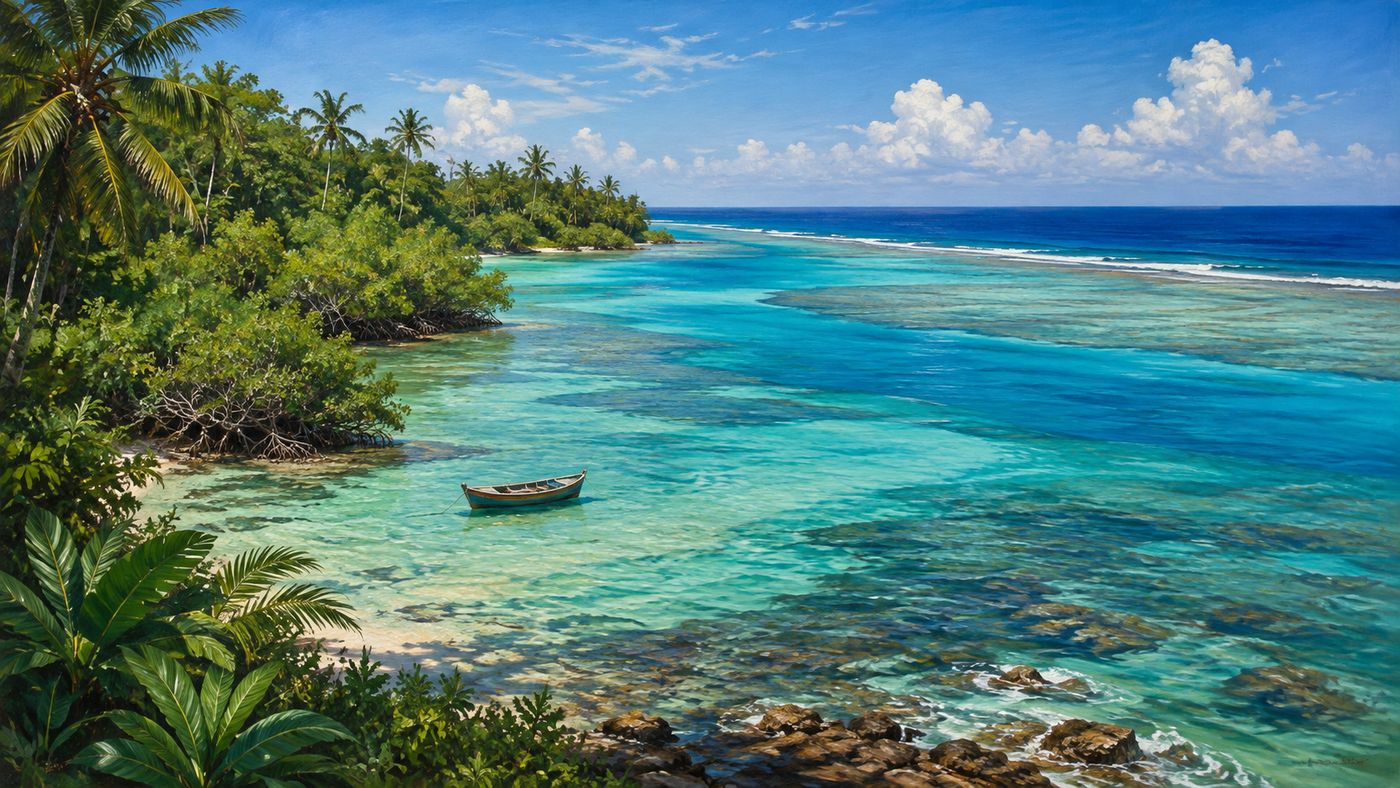
The Belize that became independent on September 21, 1981, is among the most biodiverse nations in the Americas — home to the second-largest barrier reef in the world, the largest jaguar preserve in the hemisphere, and an extraordinary range of Maya archaeological sites. It is also one of the smaller nations in Central America by population, with approximately 450,000 people living in a territory about the size of Massachusetts, speaking English as an official language alongside Spanish, Creole, Garifuna, and Maya languages. The territorial dispute with Guatemala that had delayed independence was not formally resolved until 2019, when Guatemala held a referendum in which its citizens voted to submit the claim to the International Court of Justice — a process that is ongoing. Belize voted in a simultaneous referendum to accept ICJ jurisdiction. The last British colony on the American mainland, which became independent on September 21, 1981, is still resolving the territorial question that has shadowed its existence from its first day as a nation.