September 19: A President's Final Words, a Glacier Gives Up Its Secret, and a Decision Two Newspapers Had to Make
September 19 is a day for things that had been waiting to be heard. In 1796, George Washington published the address that would define how the first president understood his obligations to the republic he was leaving — a document that warned against political parties, permanent alliances, and the ambitions of factions, and that has been invoked selectively ever since by virtually every tradition of American political thought. In 1991, a pair of German hikers found a body in an Alpine glacier that turned out to be 5,300 years old, still carrying its tools and clothing, preserved by ice that had kept a Copper Age man's secrets intact across fifty-three centuries. And in 1995, two of the most respected newspapers in the world published a 35,000-word manifesto from a man who had been sending bombs through the mail for eighteen years, gambling that someone who knew him would recognize his thinking and turn him in. Three September nineteenths. Three documents or discoveries that changed what we knew about where we had been and where we were going.
The Farewell Address
On September 19, 1796, George Washington's Farewell Address was published in the American Daily Advertiser in Philadelphia — not delivered as a speech, as is sometimes assumed, but released as a written document for newspaper publication, a form that ensured it would be read across the country rather than heard only by those present. Washington had been working on the address for months, with significant assistance from Alexander Hamilton, who drafted much of the final text based on an earlier draft Washington had prepared with James Madison in 1792, when he had first considered not seeking a second term. The address announced Washington's decision not to seek a third term — establishing a precedent that held until Franklin Roosevelt's 1940 election and was enshrined in the Twenty-Second Amendment in 1951 — and used the occasion to share his most considered reflections on the fragility of republican government and the threats most likely to undermine it.
The warnings Washington offered in the address of September 19, 1796, have been cited across the entire span of American political history, often by people with very different agendas. He warned against the "baneful effects of the spirit of party" — the rise of permanent political factions that would place partisan loyalty above national interest — a warning that has been invoked by nearly every political faction in American history as a critique of every other political faction. He warned against "permanent alliances" with foreign nations, a passage that became the foundation of isolationist foreign policy arguments in the nineteenth and early twentieth centuries. He warned against sectionalism, against the accumulation of public debt, and against allowing the military to gain undue influence over civilian government. Some of these warnings have aged better than others; the warning about partisan faction has aged better than almost any of them. The address published on September 19, 1796, was not simply a valediction but a sustained argument about what the republic's greatest dangers were — and many of the dangers Washington named are still recognizable by name.

The Iceman
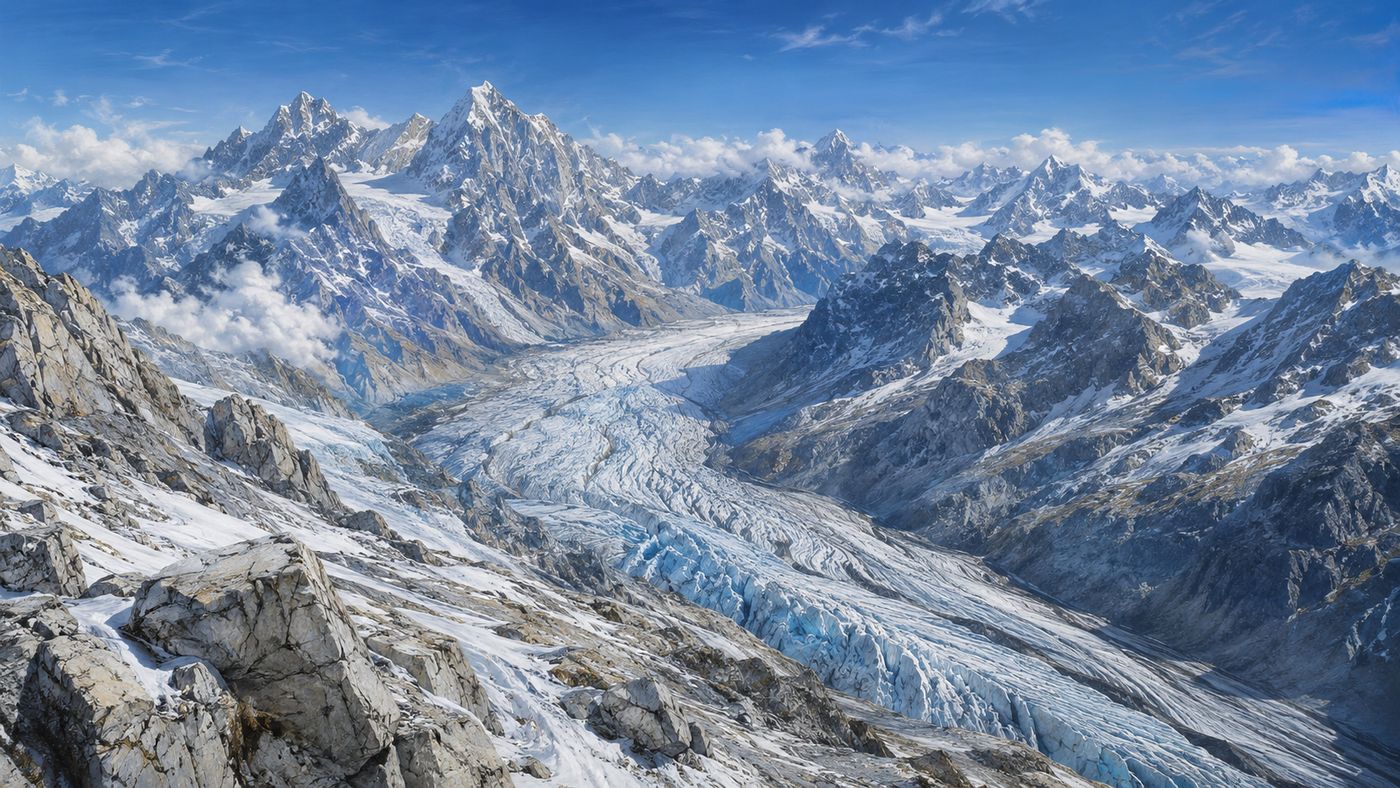
On September 19, 1991, Helmut and Erika Simon, German tourists hiking in the Ötztal Alps on the border between Austria and Italy, noticed what appeared to be the upper body of a human figure protruding from the melting surface of a glacier at an altitude of approximately 3,210 meters. Assuming they had found the remains of a recent mountaineering accident, they reported the discovery to authorities. What subsequent examination revealed was something that had not been seen before: a remarkably complete mummified human body, along with clothing and equipment, that carbon dating would establish as approximately 5,300 years old — making Ötzi, as he came to be called after the Ötztal valley where he was found, the oldest known natural human mummy and one of the most significant archaeological finds of the twentieth century. His body had been preserved by the specific conditions of the glacier — quickly covered by snow and ice after his death, kept frozen continuously for millennia before the late twentieth century's warming began exposing him at the surface.
The thirty-five years since the discovery of September 19, 1991, have produced an extraordinary accumulation of knowledge about Ötzi and, through him, about Copper Age European life. Analysis of his body, clothing, and equipment has revealed that he was approximately forty-five years old at death, stood about five feet five inches tall, had brown eyes, and was lactose intolerant. He carried a copper axe — a remarkably sophisticated tool for the era — a bow and quiver of arrows, a knife, and various other equipment. He was wearing clothing made from multiple different animal species, including a coat of mixed leather panels and a hat of bear fur. An arrowhead embedded in his left shoulder was discovered in 2001 and determined to be the likely cause of his death — Ötzi was murdered, probably ambushed from behind. His last meal, consumed within thirty minutes of his death, included red deer, ibex, einkorn wheat, and various plants. DNA analysis has identified living descendants of Ötzi's maternal genetic lineage in the Tyrol region today. The body found in a melting glacier on September 19, 1991, has become one of the most studied individuals in the history of archaeology — a Copper Age man whose story has been reconstructed in more detail than most people living two centuries ago.
The Decision
On September 19, 1995, The New York Times and The Washington Post jointly published the complete text of "Industrial Society and Its Future" — the 35,000-word manifesto written by Theodore John Kaczynski, the domestic terrorist known as the Unabomber, who had conducted a mail-bombing campaign targeting universities and airlines since 1978, killing three people and injuring twenty-three. Kaczynski had demanded that a major newspaper publish his manifesto in full, threatening to kill again if they refused. The decision to publish had been agonized over for months: FBI Director Louis Freeh and Attorney General Janet Reno had recommended publication, arguing that the risk of future violence outweighed the objections, and that someone who recognized Kaczynski's thinking might come forward. The editors of both papers found the logic compelling and the ethical objection — that they were capitulating to a terrorist's demands — genuinely troubling. They published anyway.
The gamble that produced the publication of September 19, 1995, paid off in the specific way the FBI had hoped: David Kaczynski recognized his brother's writing style and ideas in the published manifesto and contacted the authorities. Theodore Kaczynski was arrested at his Montana cabin in April 1996, ending an eighteen-year investigation that had been one of the longest and most expensive in FBI history. He pleaded guilty in 1998 and was sentenced to four life terms without the possibility of parole; he died in prison in June 2023. The manifesto itself — whatever its origins — has had a complicated afterlife: its critique of industrial technology and the ways in which it degrades human autonomy has attracted readers far outside the anarcho-primitivist movement it represents, and its arguments have been discussed seriously alongside those of mainstream environmental and technology critics. The newspapers that published it on September 19, 1995, made a decision that worked — by the narrow criterion of leading to the bomber's capture. Whether it was the right decision is a question about which thoughtful journalists still disagree.