June 24: Crashed, Conquered, and Collapsed
Some things fall suddenly and some things fall slowly, but June 24 has witnessed both. In 1997, the United States Air Force released a report declaring the Roswell mystery closed — a document that satisfied almost no one and ensured the story would live on for another generation at least. Three centuries earlier, in the forests of New England, a fragile peace between English settlers and Native nations finally gave way to one of the most devastating wars in colonial American history. And in the early hours of a Florida morning in 2021, a twelve-story building that had stood for forty years came down in seconds, killing ninety-eight people and raising urgent questions about what else might be quietly failing beneath the surface of American infrastructure. Three collapses, three sets of unanswered questions, three reminders that the ground beneath our feet is never quite as solid as we assume.
Case Closed. (Or Was It?)
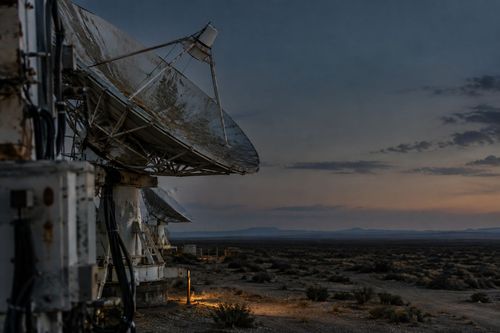
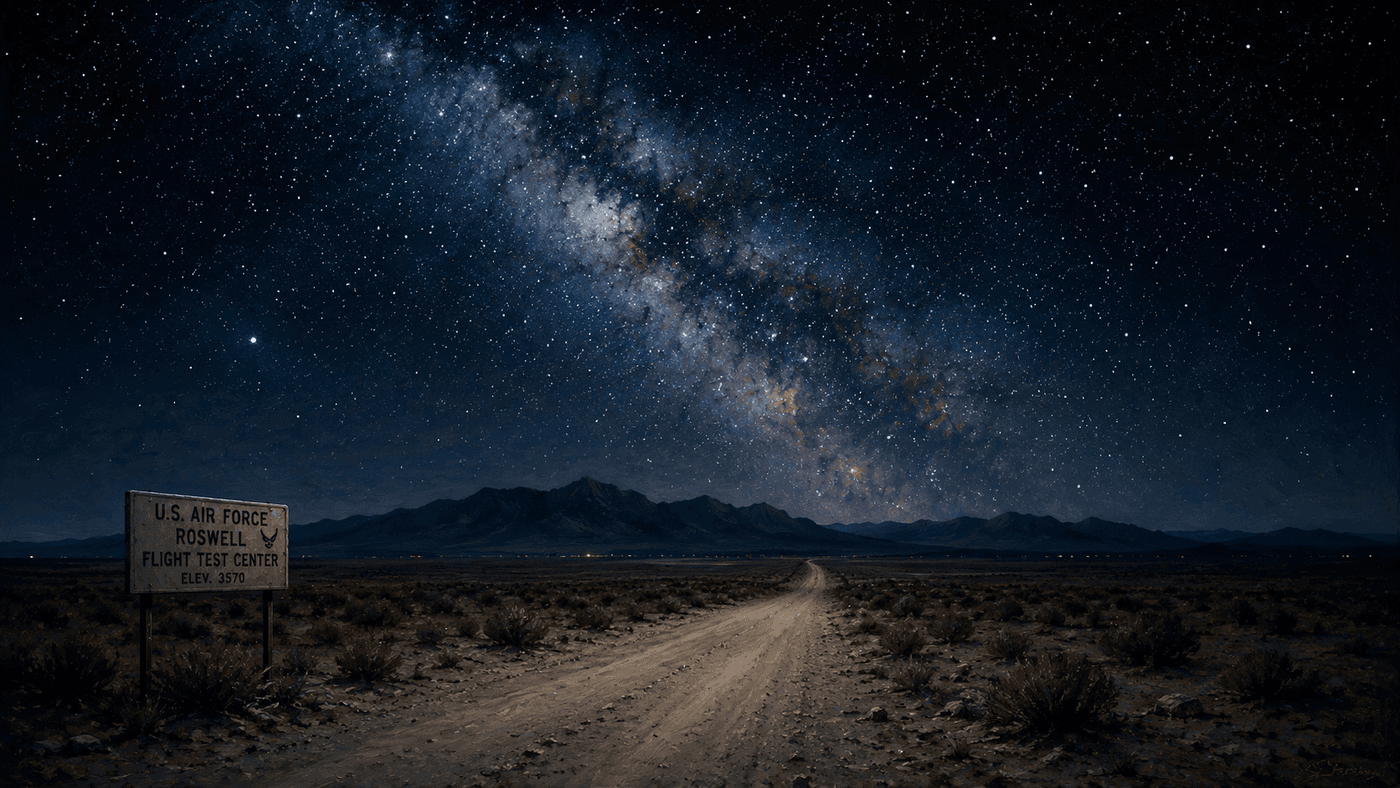
On June 24, 1997, the United States Air Force released a 231-page report titled "Case Closed: Final Report on the Roswell Incident," timed to coincide with the fiftieth anniversary of the alleged crash near Roswell, New Mexico, in July 1947. The report concluded that what witnesses had described — strange debris, unusual materials, and reports of recovered bodies — was entirely consistent with the crash of a classified high-altitude balloon project and the subsequent recovery of anthropomorphic test dummies used in parachute experiments during the 1950s. The Air Force was confident, thorough, and definitive. The American public was, by and large, unconvinced. UFO researchers pointed out that the test dummy program had begun years after the 1947 incident, making the explanation difficult to reconcile with the timeline. The report intended to close a chapter. It mostly added pages to it.
The Roswell incident had already spent fifty years becoming something larger than any government report could contain. What began as a brief press release from Roswell Army Air Field in July 1947 — announcing the recovery of a "flying disc" before being almost immediately walked back as a weather balloon — had grown into the foundational myth of American UFO culture. Books, documentaries, congressional hearings, and an entire tourist economy in southeastern New Mexico had accumulated around the question of what really happened in that desert. The 1997 report was the Air Force's second attempt to settle the matter; the first, in 1994, had attributed the debris to Project Mogul, a classified balloon program designed to monitor Soviet nuclear tests. That explanation hadn't stuck either. Whatever fell near Roswell in 1947, it landed in the American imagination in a way that no official account has ever been able to dislodge.
King Philip's War
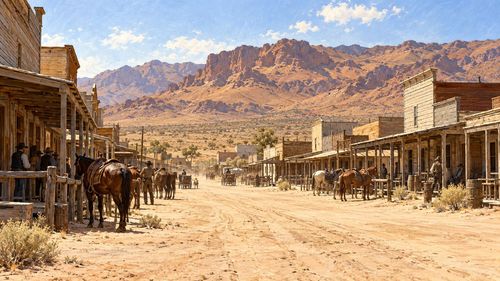
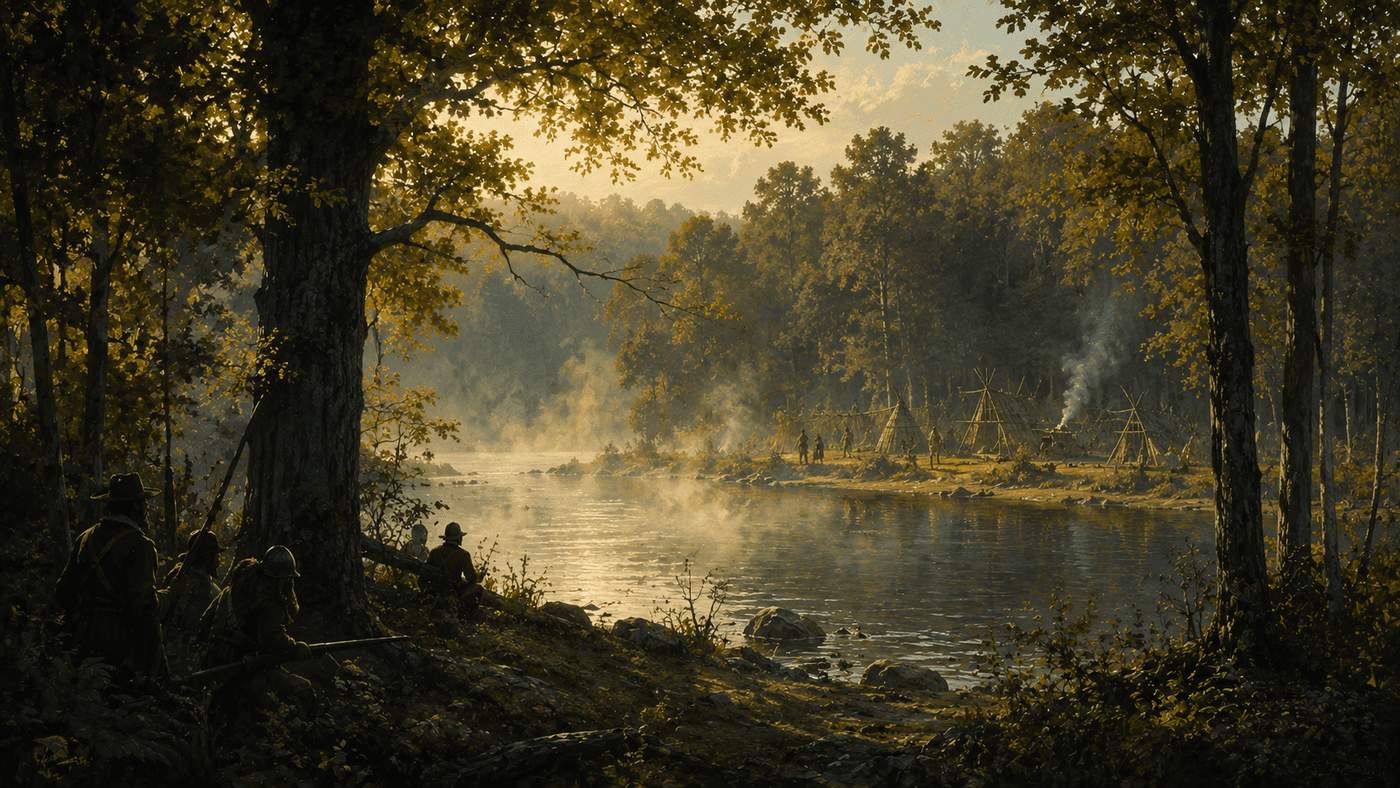
On June 24, 1675, a series of raids on the English settlement of Swansea, Massachusetts, marked the outbreak of King Philip's War — one of the deadliest conflicts, per capita, in American history. The war took its name from Metacomet, the sachem of the Wampanoag nation, whom the English had long called King Philip. Metacomet had watched for years as English expansion steadily encroached on Wampanoag land, as colonial courts asserted jurisdiction over Native people, and as the cultural and economic autonomy of his nation was steadily eroded. The execution of three Wampanoag men by Plymouth Colony authorities in January 1675 — on evidence provided by a Christian convert — brought long-simmering tensions to a breaking point. By June, the raids had begun. By summer's end, the war had spread across southern New England, drawing in the Nipmuc, Pocumtuc, and Narragansett nations alongside the Wampanoag.
The conflict that followed was catastrophic for both sides, but devastating above all for Native New England. Over fourteen months of fighting, roughly six hundred English colonists were killed and dozens of towns were attacked or destroyed. But the toll on Native nations was far greater: thousands were killed in battle or executed afterward, and thousands more were sold into slavery in the Caribbean — including, ultimately, Metacomet's wife and son after his death in August 1676. Metacomet himself was killed, drawn and quartered, and his head displayed on a pike in Plymouth for twenty-five years. The war effectively destroyed the political and military power of the Native nations of southern New England, accelerating the displacement that would push Indigenous peoples from their homelands across the continent in the centuries that followed. King Philip's War is among the least remembered major conflicts in American history — and among the most consequential.
Surfside
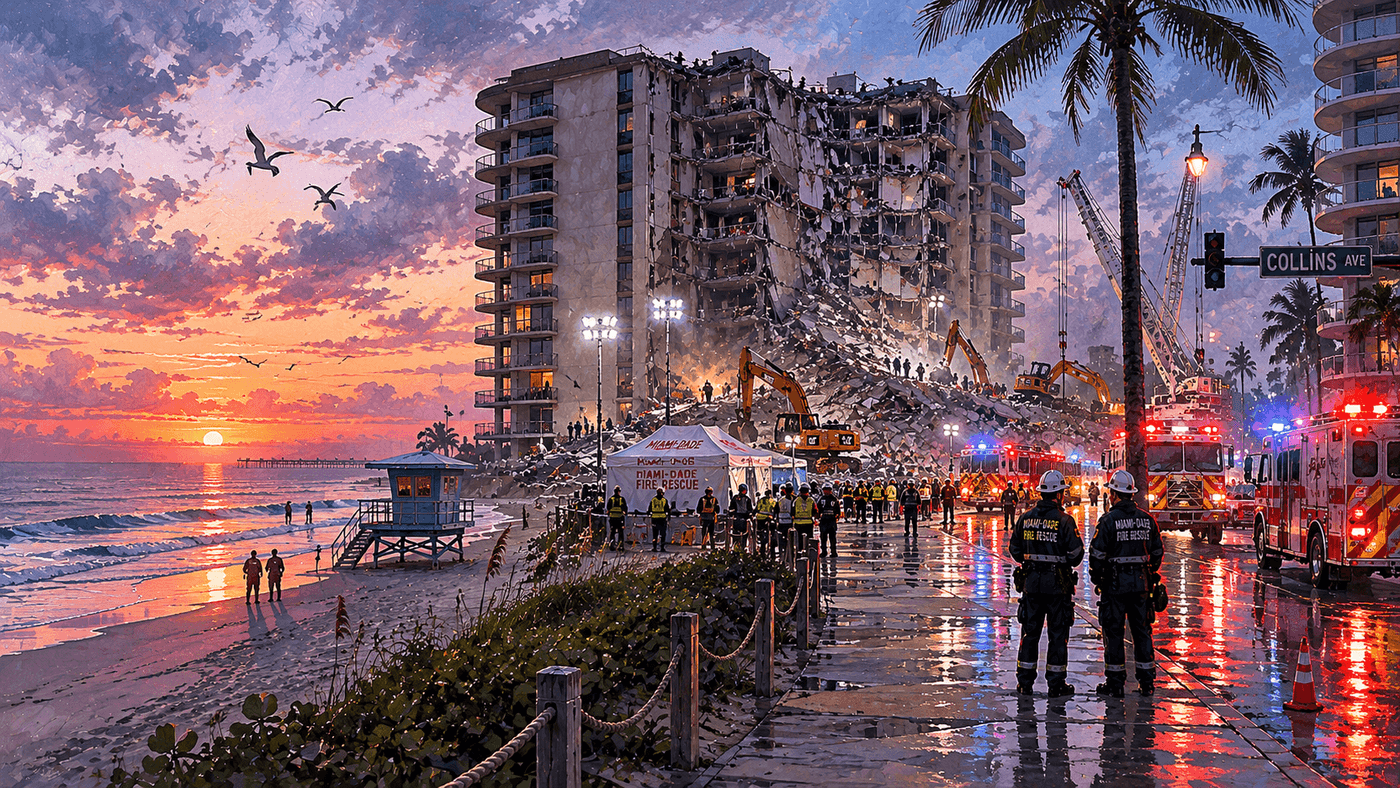
In the early hours of June 24, 2021, at approximately 1:22 in the morning, a large section of the Champlain Towers South condominium in Surfside, Florida, collapsed without warning. The twelve-story beachfront building had been home to 136 units; in seconds, roughly half of it fell, trapping residents in their beds as floors pancaked downward and the structure disintegrated into rubble. Rescue workers arrived within minutes and began a desperate search through the debris. For days, with the remainder of the building still standing and fires burning in the wreckage below, searchers worked around the clock looking for survivors. The search continued for weeks. When it ended, ninety-eight people were confirmed dead — one of the deadliest structural failures in American history not caused by terrorism or an act of nature.
The investigation that followed revealed a building that had been failing for years. A 2018 engineering report had identified significant structural damage to the concrete slab beneath the pool deck, warning that repairs were needed urgently. The report had been shared with building management and residents but had not prompted timely action. Saltwater corrosion, poor original construction, and years of deferred maintenance had compromised the structure in ways that were documented but not acted upon. The collapse prompted an immediate reckoning across Florida and beyond, as inspectors began reviewing aging condominium towers for similar vulnerabilities. New state legislation requiring structural inspections and mandatory reserve funds for repairs was enacted in response. Champlain Towers South was demolished in the weeks after the collapse, its site eventually deeded to the families of victims. The question it left behind — how many other buildings are quietly failing while reports gather dust — has not been fully answered.