June 21: Three Names, Nine Votes, and Two Vows
June 21 is a day that measures the distance between American ideals and American reality. In 1964, three young men were murdered in Mississippi for the act of helping Black citizens register to vote — killed by the very forces sworn to uphold the law, in a state that had made clear it intended to resist the Constitution's promises by any means necessary. One hundred and seventy-six years earlier, that Constitution had finally cleared the threshold for ratification, when New Hampshire cast the ninth and deciding vote to bring it into effect. And on two June 21sts a century apart, future presidents said their wedding vows — quiet, private moments that would anchor the public lives to follow. Three dates that together trace the long, unfinished arc of a nation still becoming what it promised to be.
Mississippi Burning
On the night of June 21, 1964, three civil rights workers disappeared in Neshoba County, Mississippi. James Chaney, twenty-one, was a Black Mississippian who had been working with the Congress of Racial Equality. Andrew Goodman, twenty, and Michael Schwerner, twenty-four, were white New Yorkers who had come south as part of Freedom Summer, a campaign to register Black voters across the state. They had driven to the town of Philadelphia, Mississippi, to investigate the burning of a church that had hosted a voter registration meeting. On their way back, they were stopped by a deputy sheriff, held in the county jail, released after dark, and then followed out of town. They were never seen alive again. Their station wagon was found burning in a swamp two days later. Their bodies were not recovered for forty-four days, buried beneath an earthen dam.
The murders were carried out by members of the Ku Klux Klan, including local law enforcement officers, with the knowledge of the county sheriff's office. The state of Mississippi refused to prosecute. The federal government charged eighteen men with civil rights violations — the only charges available under federal law at the time — and seven were convicted in 1967, receiving sentences of three to ten years. It was the first time an all-white Mississippi jury had convicted white men for crimes against Black people. The case was not fully resolved until 2005, when Edgar Ray Killen, identified as the organizer of the murders, was finally convicted of manslaughter at the age of eighty. He died in prison in 2018. The deaths of Chaney, Goodman, and Schwerner galvanized national support for the Civil Rights Act of 1964, signed into law just weeks after their disappearance, and helped build momentum for the Voting Rights Act of 1965. They had gone to Mississippi to help people vote. The country, finally, was beginning to listen.

The Ninth Vote
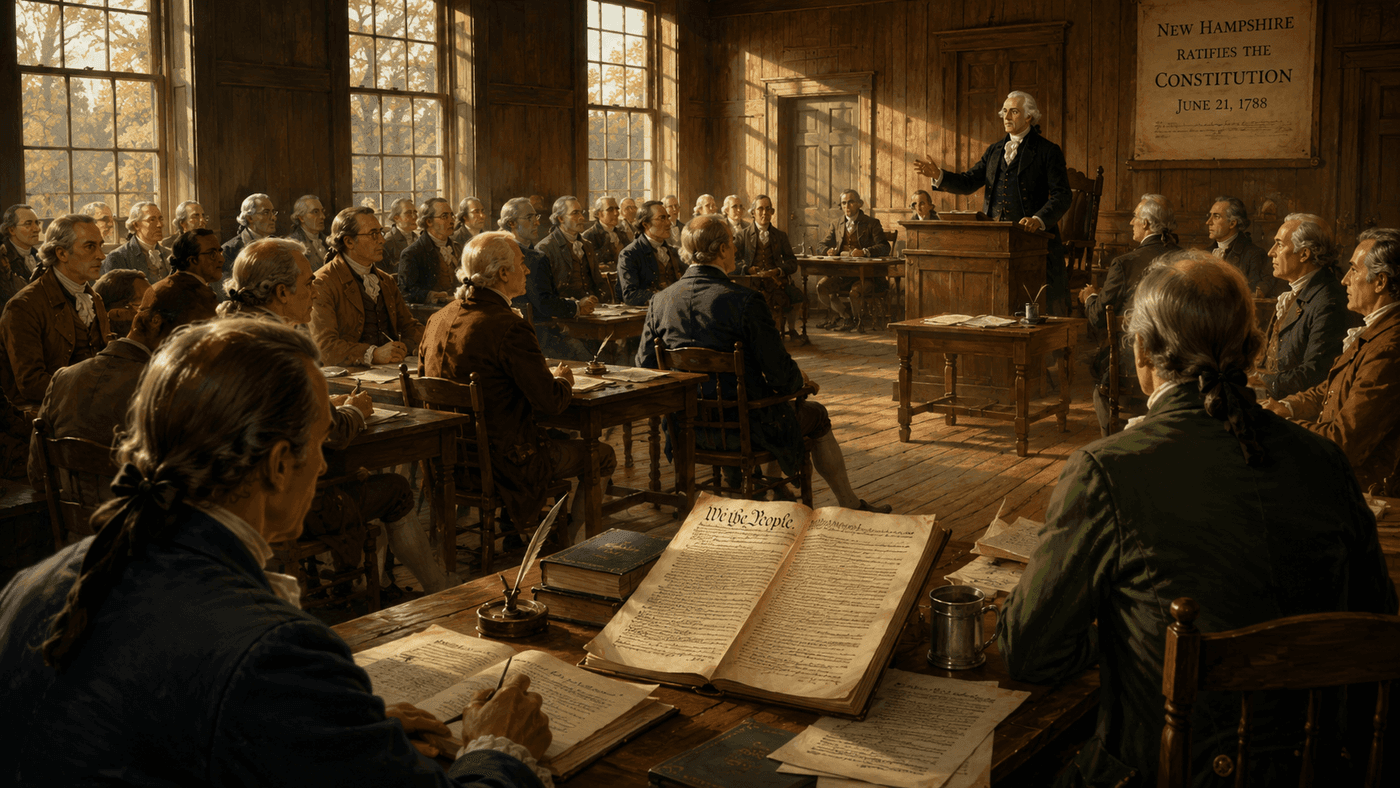
On June 21, 1788, delegates to the New Hampshire state ratifying convention voted 57 to 47 to approve the United States Constitution — and in doing so, made it the law of the land. The Constitution required ratification by nine of the thirteen original states to take effect, and New Hampshire's vote was the ninth. Eight states had already said yes; New Hampshire pushed the new framework of government over the threshold. It was not a foregone conclusion: opposition to the Constitution, led by Anti-Federalists who feared the concentration of power in a distant central government and objected to the document's lack of explicit protections for individual rights, was fierce and well-organized. New Hampshire's convention had actually been suspended earlier in the year when it became clear that ratification might fail, reconvening only after sentiment shifted.
The Constitution that New Hampshire ratified was, like all great political compromises, an imperfect document — one that its own framers understood would need to grow and change. It protected slavery without naming it. It restricted the vote to propertied white men. It left the question of federal supremacy unresolved in ways that would eventually require a civil war to settle. And yet the framework it established — separation of powers, checks and balances, a written guarantee of the rule of law — proved durable enough to outlast its contradictions, if only because each generation found within it the tools to challenge what the previous generation had left intact. New Hampshire's ninth vote on June 21, 1788, started a clock that is still running. The nation that James Chaney, Andrew Goodman, and Michael Schwerner died defending — 176 years later, almost to the day — was still, however painfully, becoming what that vote had promised.
A Date Shared by Presidents
June 21 holds a quiet distinction in American presidential history: it is the wedding anniversary of not one but two commanders in chief, separated by 130 years. On June 21, 1810, Zachary Taylor married Margaret Mackall Smith in Jefferson County, Kentucky. Taylor was a young Army officer at the time, a decade away from the Mexican-American War that would make him a national hero and nearly four decades from the presidency he would hold only briefly — dying in office in 1850, just sixteen months after his inauguration. Margaret, known as Peggy, was a planter's daughter who reportedly detested public life and largely withdrew from White House social duties, leaving them to her daughter. Their marriage lasted until Taylor's death, forty years after that Kentucky ceremony.
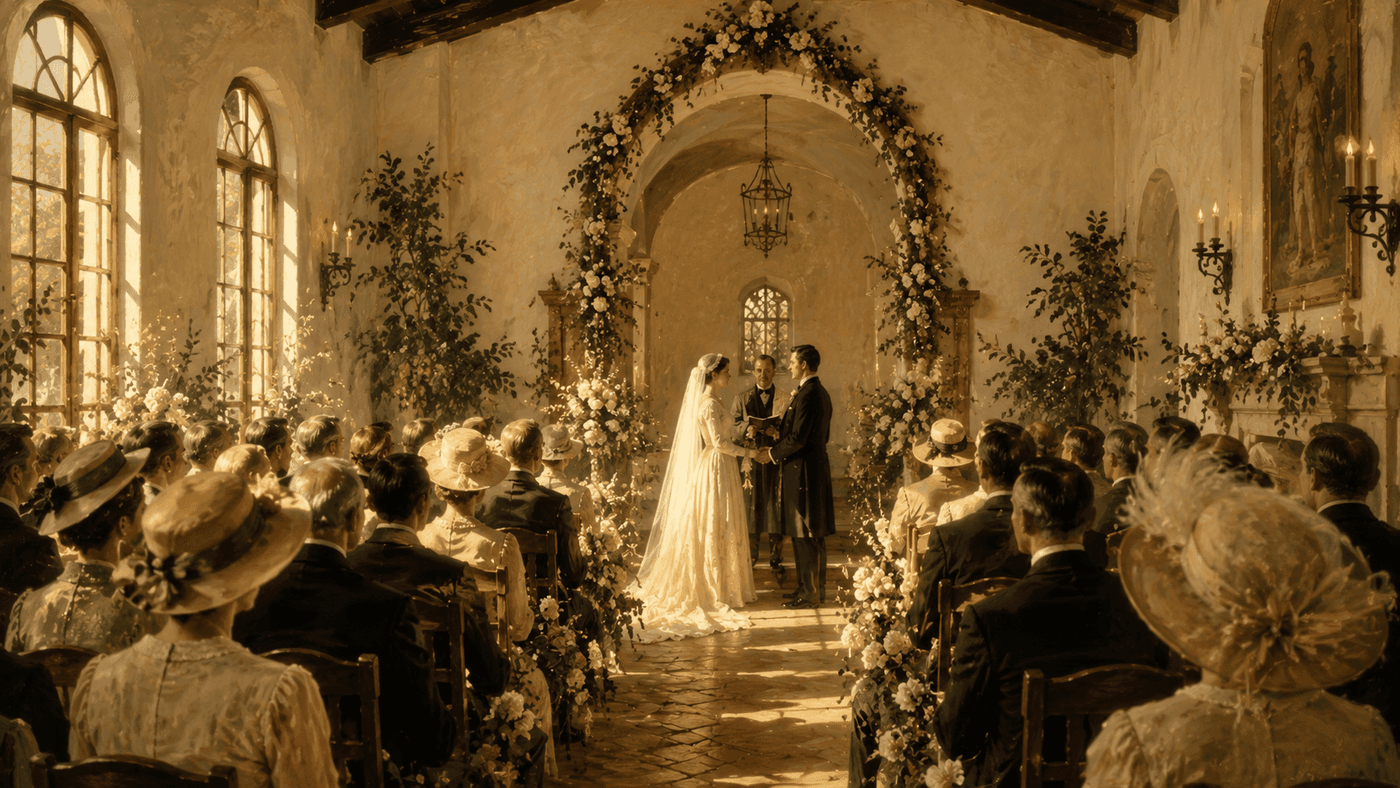
On June 21, 1940, Richard Nixon married Thelma Catherine Ryan — Pat Nixon — in a ceremony at the Mission Inn in Riverside, California. Nixon had pursued her persistently for two years after they met in a community theater production, reportedly offering to drive her on dates with other men just to be near her. Pat Nixon would become one of the most widely traveled First Ladies in American history, accompanying her husband on the historic 1972 trip to China and visiting more countries than any of her predecessors. Their marriage endured Watergate, resignation, exile, and rehabilitation, lasting until Pat's death in 1993. Nixon died ten months later. That two men who would each reach the highest office in the land chose the same date — across more than a century — to make their most personal commitments is one of those small coincidences history occasionally offers, signifying nothing and somehow lingering anyway.