June 20: The Deep End, the Divided State, and the Siege
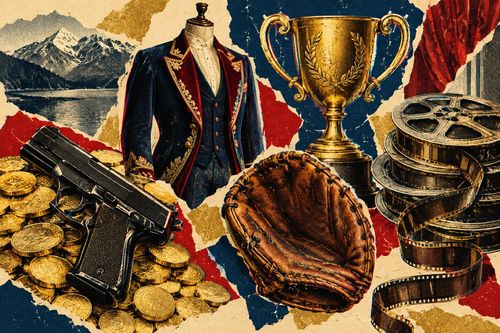
June 20 has a talent for rupture. In 1975, a single film opened in theaters across America and shattered the way Hollywood made movies, marketed them, and understood what audiences were willing to feel. One hundred and twelve years earlier, a state was born not from expansion or ambition but from fracture — a people splitting off from their own in the middle of a war, choosing a different loyalty and a different future. And in between, in the summer of 1900, a city under siege in China set in motion a crisis that would draw in eight nations, shake a dynasty from power, and force the world to reckon with the violent consequences of empire. Three stories about what happens when something breaks — and what gets built from the pieces.
You're Gonna Need a Bigger Boat
On June 20, 1975, Jaws opened in 409 theaters across the United States and fundamentally altered the motion picture industry — though no one quite knew it yet. Directed by twenty-eight-year-old Steven Spielberg, the film had been a production nightmare: the mechanical shark malfunctioned constantly on location off Martha's Vineyard, the shoot ran wildly over schedule and budget, and Universal Pictures was quietly bracing for a disaster. What Spielberg did with a shark that wouldn't work was make a film about what you couldn't see — building dread through suggestion, through John Williams's two-note score, through the terror on actors' faces rather than the creature itself. The result was something audiences had never quite experienced: a film that made them afraid to go into the water, afraid to look over the side of the boat, afraid in a way that felt almost personal.
Jaws became the first film in history to gross $100 million at the domestic box office, a milestone that transformed how Hollywood thought about movies. Its release strategy — opening wide across the country simultaneously, preceded by a saturation television advertising campaign — invented the modern blockbuster playbook. Before Jaws, studios released prestige films slowly, city by city, letting word of mouth build over months. After Jaws, the opening weekend became the main event, the wide release the standard model, and the summer the prime hunting ground for mass-audience entertainment. Every tentpole film that has dominated a summer since — every sequel, franchise, and event movie — is swimming in waters that Jaws opened. Spielberg went on to direct Close Encounters of the Third Kind, Raiders of the Lost Ark, and Schindler's List. But it was a malfunctioning rubber shark on a Massachusetts beach that made him.

A State Born from Fracture
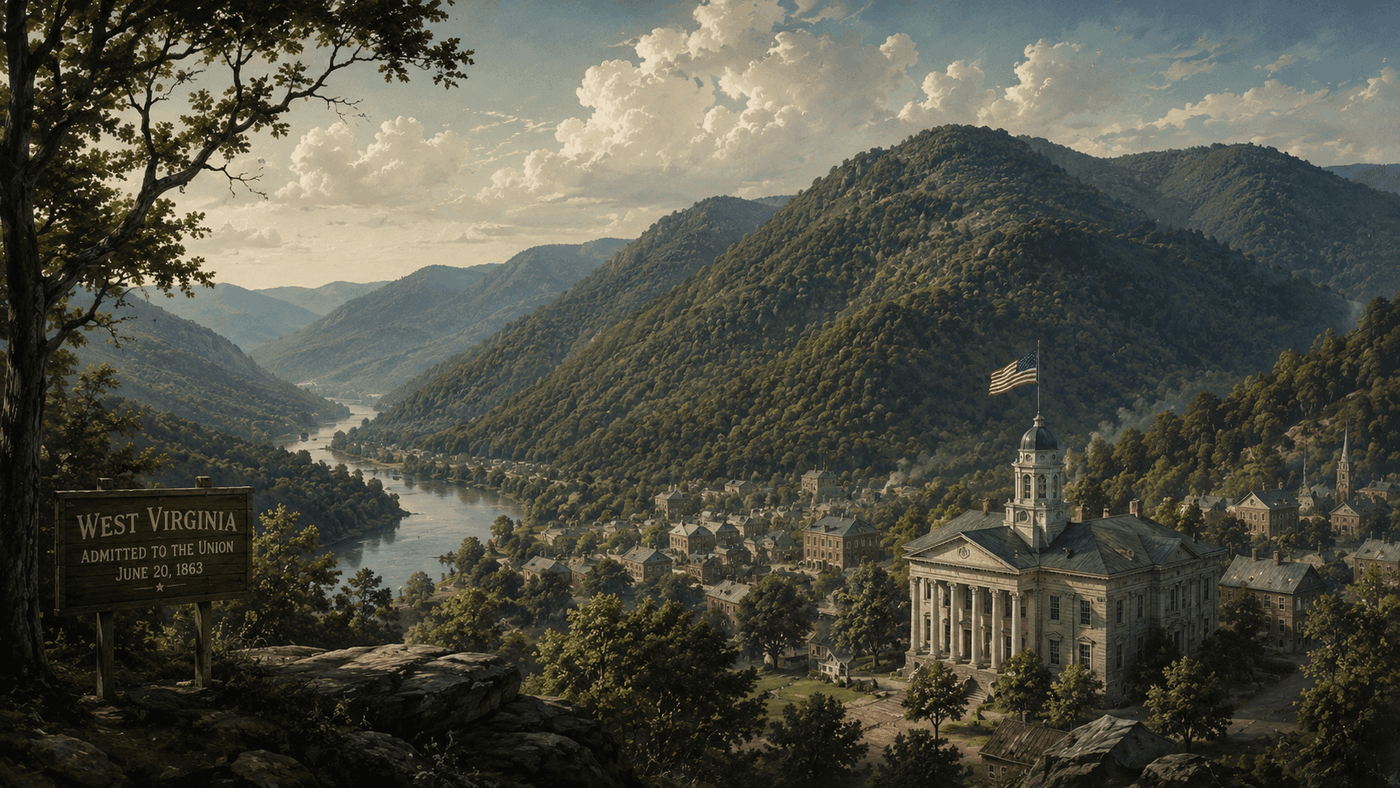
On June 20, 1863, President Abraham Lincoln signed the proclamation admitting West Virginia to the Union as the 35th state — making it the only state in American history to be formed by seceding from a Confederate state. When Virginia voted to leave the Union in April 1861, the counties in the state's mountainous western regions, economically and culturally distinct from the plantation-dominated Tidewater, refused to follow. Delegates from those counties convened their own government, declared Virginia's secession ordinance void, and petitioned Congress for recognition as a separate state. The legal questions were thorny — the Constitution requires a state's legislature to consent to the division of its territory, and the loyal Virginia government that gave that consent was itself a body of disputed legitimacy — but Lincoln signed anyway. The war had already made a casualty of many constitutional niceties.
West Virginia's birth was an act of loyalty and pragmatism in roughly equal measure. The region's residents had little stake in the institution of slavery that anchored Virginia's plantation economy, and strong economic ties to the North through the Baltimore and Ohio Railroad. Statehood gave the Union a strategically vital buffer and a new constellation of electoral votes. It also created a state whose identity has been defined ever since by the circumstances of its founding — a place shaped by the Appalachian mountains, by coal and industry, by a stubborn independence that traces directly to the moment its people looked at a secession vote and said no. West Virginia is the youngest state east of the Mississippi, and the most unusual: it came into being not by growing outward but by breaking away, in the middle of a war, from something it no longer recognized as home.
The Legation Quarter
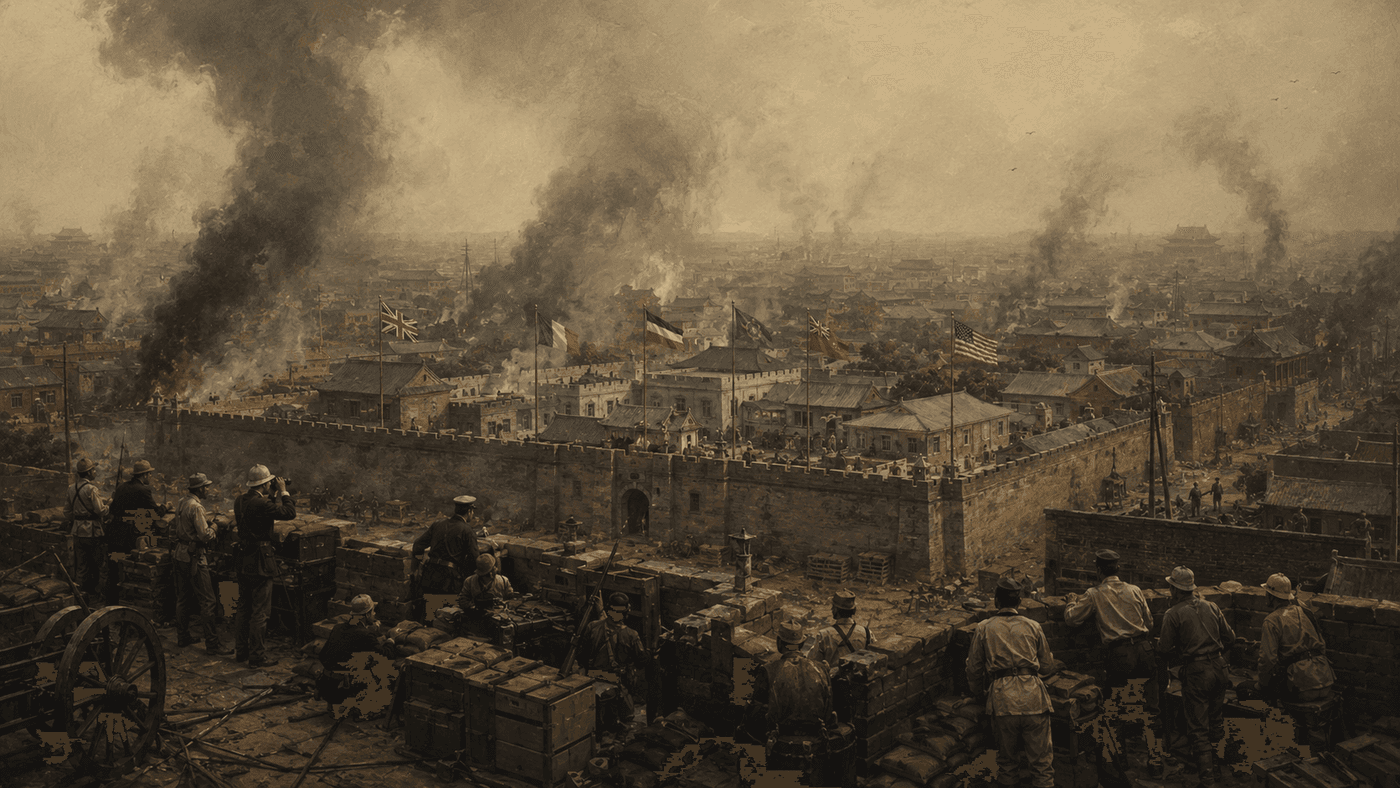
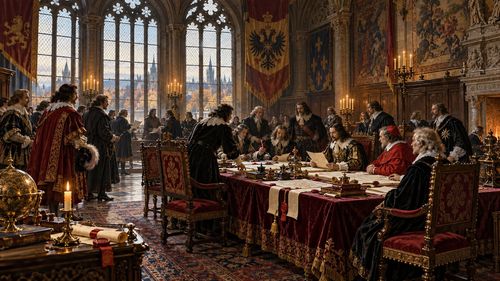
On June 20, 1900, members of the Yihetuan — known in the West as the Boxers, for the martial arts rituals at the heart of their practice — laid siege to the foreign Legation Quarter in Beijing, touching off an international crisis that would shake the Qing Dynasty to its foundations. The Boxers were a nationalist movement driven by fury at the foreign powers that had carved China into spheres of influence through a series of humiliating treaties, and at the Christian missionaries and Chinese converts whose presence they saw as a corrupting force. With tacit support from the Empress Dowager Cixi, they moved through the countryside burning churches and killing Chinese Christians before converging on Beijing. Inside the Legation Quarter, diplomats, missionaries, and foreign nationals from eleven countries — including the United States — barricaded themselves in and held out for fifty-five days.
The relief of the Legation Quarter in August 1900 by an Eight-Nation Alliance that included American troops ended the siege but inaugurated a new and deeply unequal chapter in China's relationship with the outside world. The Boxer Protocol of 1901, signed under duress, imposed crippling financial reparations on China and granted foreign powers the right to station troops in Beijing — terms that further inflamed Chinese nationalism and contributed to the eventual collapse of the Qing Dynasty in 1912. The United States, notably, used a portion of its Boxer Indemnity funds to establish a scholarship program that brought Chinese students to American universities — a gesture that complicated the period's legacy without erasing its fundamental violence. The Boxer Rebellion remains one of the pivotal events of the early twentieth century: a collision between nationalism and empire whose fault lines have never fully closed.