June 19: Freedom, Five Cents, and the End of the World
Some things arrive too late and still manage to change everything. On June 19, the calendar holds three such arrivals: a general rides into Galveston in 1865 and delivers news that is two and a half years overdue, and a people begin building a celebration that will outlast the century. Forty years later, a Pittsburgh storefront offers the working class a nickel's worth of wonder and accidentally invents an industry. And in 2006, deep inside an Arctic mountain, construction begins on a vault designed to outlast civilization itself — a quiet act of faith that someone, someday, will still be here to plant a seed. Three stories about what we choose to protect, and why it takes us so long to do it.
The News That Finally Came
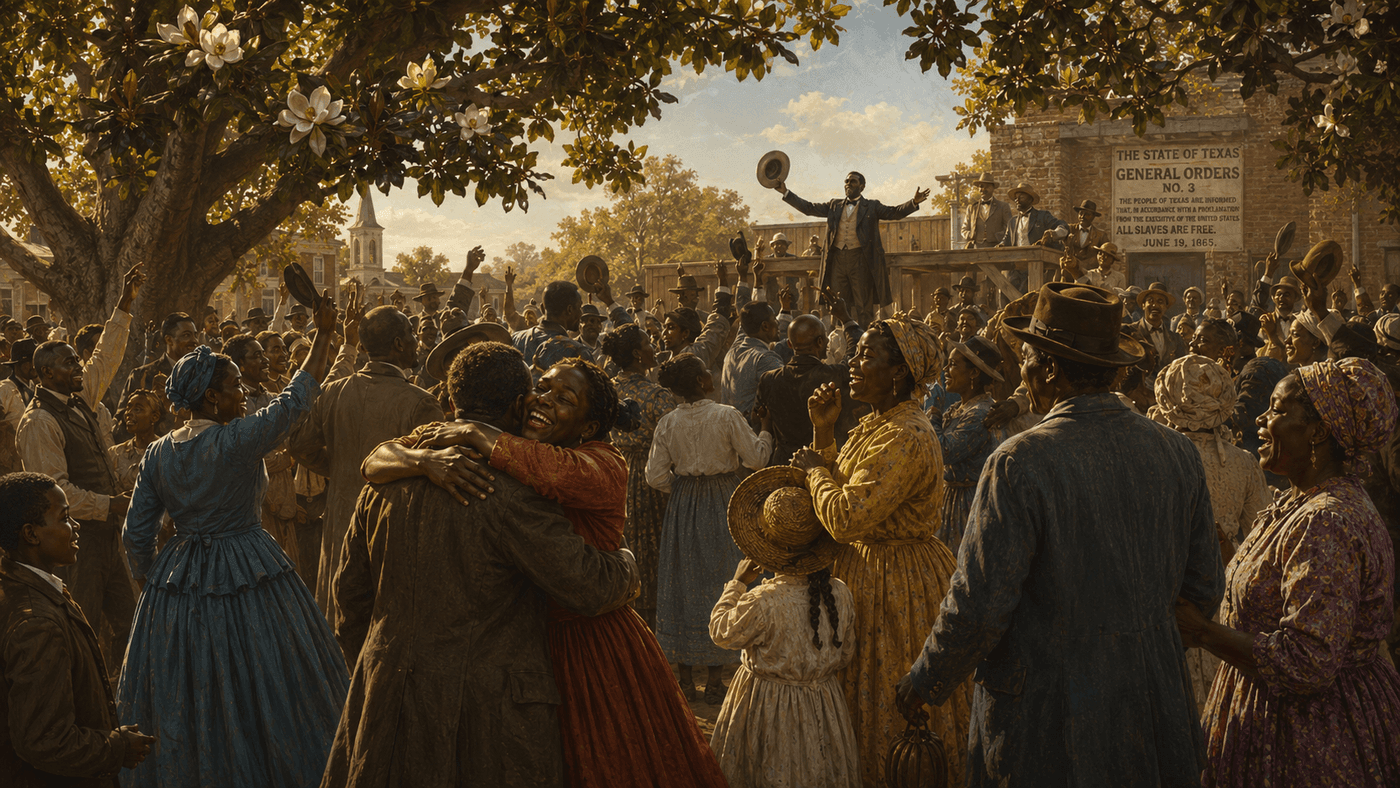
On June 19, 1865, Union General Gordon Granger arrived in Galveston, Texas, and read aloud General Order No. 3, informing the people of Texas that all enslaved persons were free. The Emancipation Proclamation had taken effect on January 1, 1863 — two and a half years earlier. The delay was not accidental. Texas, the most remote state of the former Confederacy, had seen little Union military presence during the war, and enslavers had kept the proclamation's existence from those it liberated, in some cases deliberately relocating enslaved people from other states to Texas to extend the institution's reach. When Granger's troops arrived in Galveston, the news rippled outward across the state with a force that no bureaucratic order could fully capture: people wept, prayed, gathered, and began to move.
The formerly enslaved people of Texas began commemorating June 19 almost immediately, gathering each year to mark the date with prayer, music, food, and the reading of the Emancipation Proclamation. The holiday spread with the Great Migration as Black Texans carried it to cities across the country, and it endured through generations as a community-held tradition even when it received no official recognition. Texas made Juneteenth a state holiday in 1980. On June 17, 2021, President Biden signed legislation making it a federal holiday — the first new federal holiday since Martin Luther King Jr. Day was established in 1983. Juneteenth is not a celebration of the Emancipation Proclamation, which Lincoln issued. It is a celebration of the moment freedom actually arrived — a distinction that has always carried its own kind of weight.
Five Cents a Dream
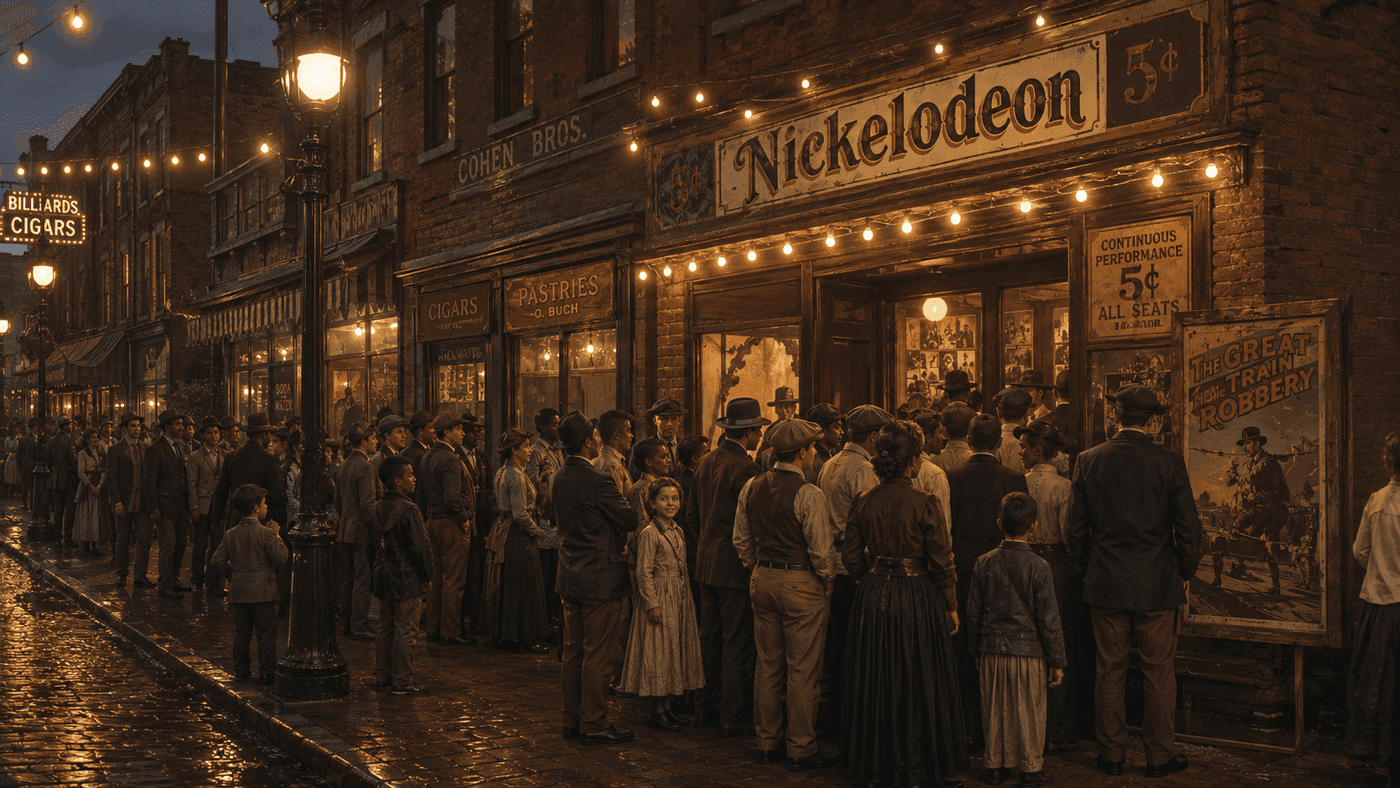
On June 19, 1905, Harry Davis and John P. Harris opened the doors of a converted Pittsburgh storefront and charged customers five cents to step inside and watch moving pictures. They called it a nickelodeon — a portmanteau of the coin and the Greek word for theater — and it was, by most accounts, the first commercially successful movie theater in the United States. The program ran for about twenty minutes and looped continuously, allowing patrons to wander in and out as they pleased. Within weeks, lines stretched around the block. Within two years, nickelodeons had spread to cities across the country by the thousands, drawing audiences of immigrants, factory workers, and families who had never before had access to a form of entertainment they could afford.
The nickelodeon did more than democratize entertainment — it invented the habits and expectations of modern moviegoing. The darkened room, the shared experience, the suspension of ordinary life for the duration of the program: these were the nickelodeon's gifts to the century that followed. Hollywood, the studio system, the blockbuster, the streaming era — every subsequent chapter in the story of cinema traces its roots to that Pittsburgh storefront and the simple, radical proposition that stories told in moving light were worth a nickel of anyone's time. Davis and Harris could not have imagined a future in which their humble loop of images would become a global industry generating hundreds of billions of dollars a year. They had simply noticed that people, given the chance, would always choose to dream together in the dark.
The Vault at the End of the World
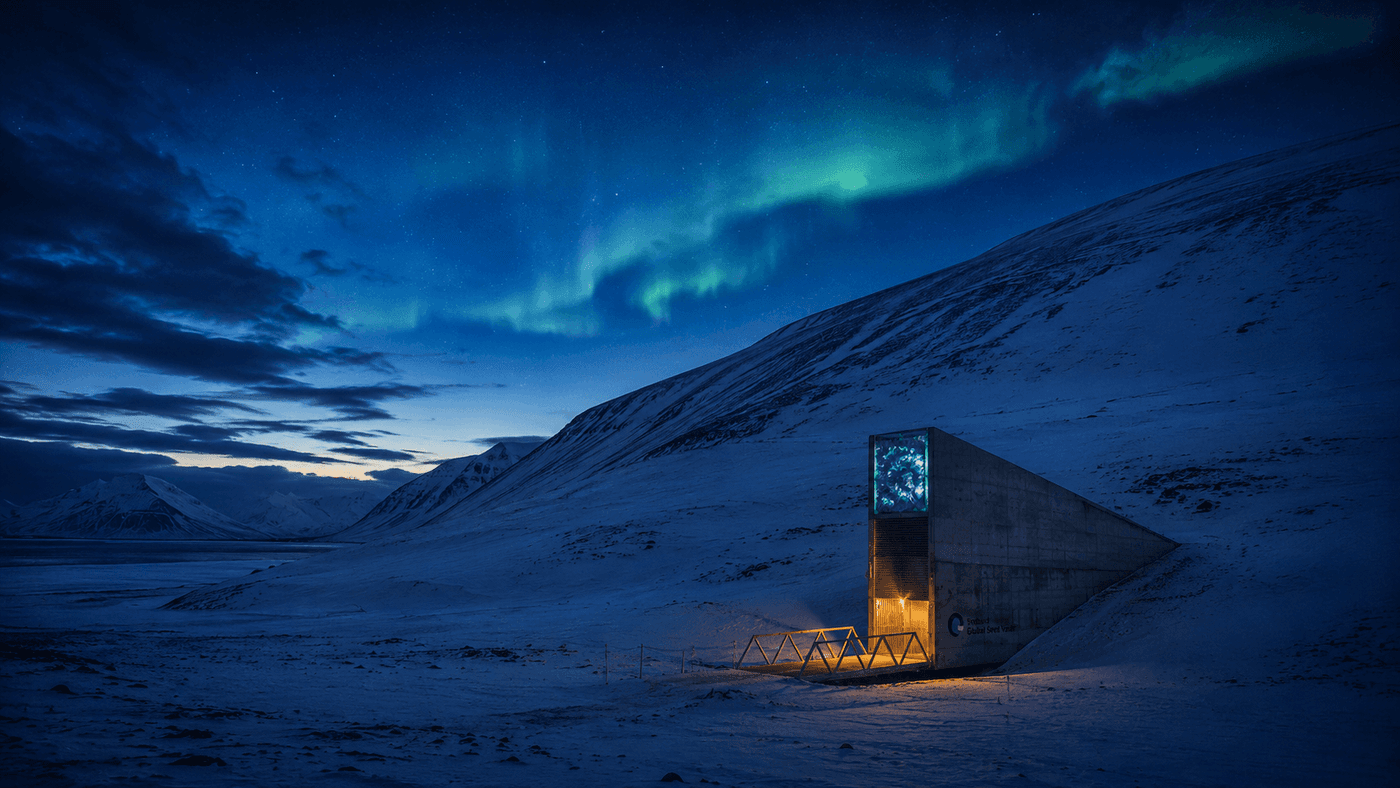
On June 19, 2006, construction began on a facility carved into the permafrost of a mountain on the Norwegian island of Spitsbergen, roughly 800 miles from the North Pole. The Svalbard Global Seed Vault — nicknamed, with some justification, the Doomsday Vault — was designed to serve as the world's backup drive for agricultural biodiversity: a repository where seeds from every nation's crop collections could be stored against the possibility of catastrophe. War, natural disaster, climate change, disease, simple institutional failure — any of these could erase a country's seed bank. The Svalbard vault, maintained at minus 18 degrees Celsius in a location geologically stable and far above projected sea levels, was conceived as the last line of defense. It opened in 2008 and has since received deposits from nations around the world.
The vault has already been called upon once in earnest: in 2015, the International Center for Agricultural Research in the Dry Areas withdrew seeds originally deposited from its Syrian gene bank, which had been damaged and disrupted by the country's civil war. The seeds — varieties of wheat, barley, and grasses developed over centuries of cultivation — were replanted in Morocco and Lebanon, the collection slowly rebuilt. The Svalbard vault currently holds more than 1.3 million seed varieties, representing the agricultural heritage of nearly every nation on earth, including thousands of American crop varieties developed by indigenous communities and farmers over generations. It is, in the most literal sense, a monument to the belief that the future is worth preparing for — a cold, quiet archive of everything humanity has learned to grow.