June 18: Orbits, Outrage, and a Final Stand
History has a habit of hinging on a single day. June 18 has done it three times. In 1983, a physicist from Los Angeles became the first American woman to leave the planet, breaking a barrier that had stood for twenty-two years of American spaceflight. One hundred and seventy-one years earlier, a young republic still finding its footing picked a fight with the world's most powerful navy and discovered — painfully, then triumphantly — that it could survive the encounter. And in the three days between those two declarations, on a rain-soaked field in Belgium in 1815, the most consequential military career in modern European history came to its final, catastrophic end. Three moments of reckoning. Three days that didn't go the way anyone expected.
Ride
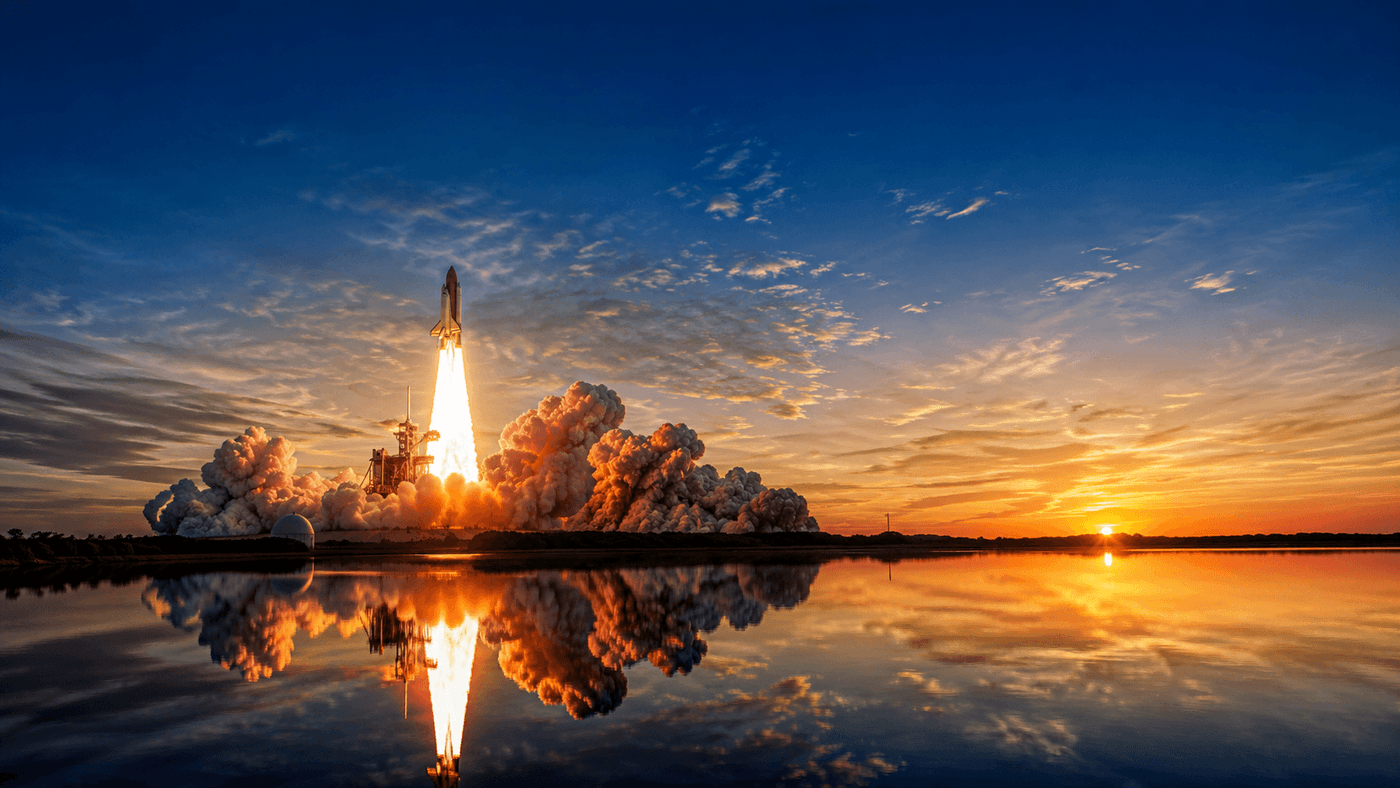
On June 18, 1983, the Space Shuttle Challenger lifted off from Kennedy Space Center in Florida carrying five astronauts, including thirty-two-year-old Sally Ride — and made history before it cleared the launchpad. Ride was the first American woman to travel to space, ending a twenty-two-year gap between the dawn of American human spaceflight and the moment women were finally included in it. She had been selected as an astronaut candidate in 1978, part of the first NASA class to admit women, and had beaten out more than a thousand applicants for a spot on mission STS-7. In the days before launch, the press had asked her questions no male astronaut was ever asked: Would she cry if things went wrong? Did she plan to wear a bra in space? She answered with a patience that said everything about what she was flying toward.
Ride spent six days in orbit, operating the shuttle's robotic arm to deploy and retrieve satellites — work that was technically demanding and operationally critical. She flew a second mission in 1984, and was training for a third when the Challenger disaster grounded the program in January 1986. She served on the commission investigating that tragedy and later on the board reviewing the Columbia accident — the only person to serve on both. After NASA, she returned to academia, eventually becoming a physics professor at UC San Diego and founding Sally Ride Science, an organization dedicated to inspiring young people — especially girls — to pursue careers in STEM. She died in 2012, having never made a large public matter of something her family revealed only in her obituary: she was also the first known LGBTQ+ astronaut. She had simply gone to space, done the work, and let that be enough.
The Second Revolution
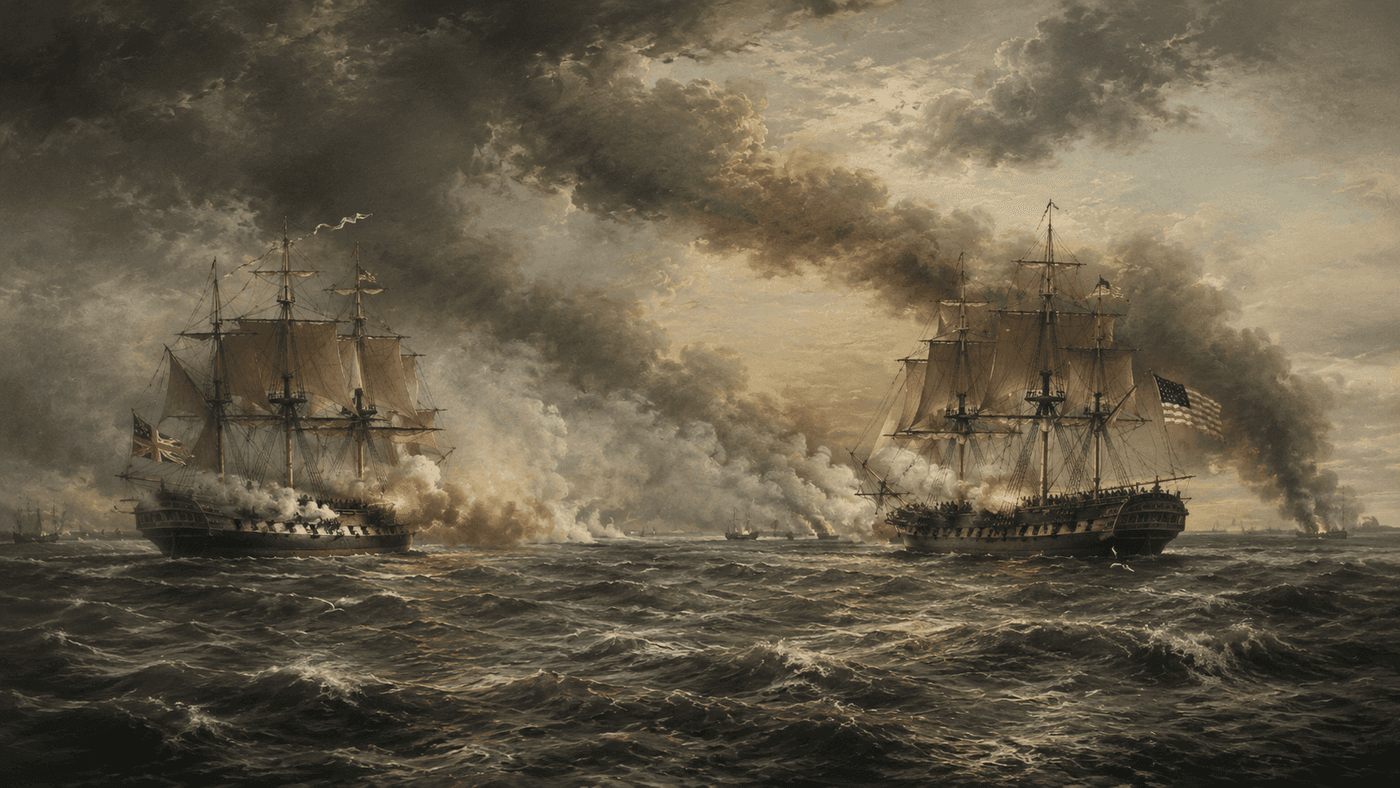
On June 18, 1812, President James Madison signed a declaration of war against Great Britain, launching a conflict that Americans would later call the Second War of Independence. The grievances had been building for years: British naval vessels were stopping American ships on the open seas and impressing sailors into Royal Navy service, claiming them as British subjects regardless of their citizenship. Britain was also restricting American trade with Napoleonic Europe and, many Americans suspected, encouraging Native American resistance to U.S. expansion on the frontier. Congress was divided — the vote was the closest declaration of war in American history — but Madison signed, and the young republic committed itself to a fight against the most powerful military force on earth.
The war that followed was ragged, inconclusive in many ways, and punctuated by humiliations — including the British burning of Washington, D.C., in 1814, the President and First Lady fleeing the White House as redcoats set it alight. But it also produced moments of unexpected triumph, including Andrew Jackson's victory at the Battle of New Orleans, fought after the peace treaty had already been signed but before word reached the front. The war ended in December 1814 with the Treaty of Ghent, which restored pre-war boundaries and resolved almost none of the original disputes. And yet something had shifted. Britain never again seriously threatened American sovereignty. The nation that emerged from the War of 1812 was more confident, more cohesive, and more certain of its right to exist on its own terms.
Waterloo
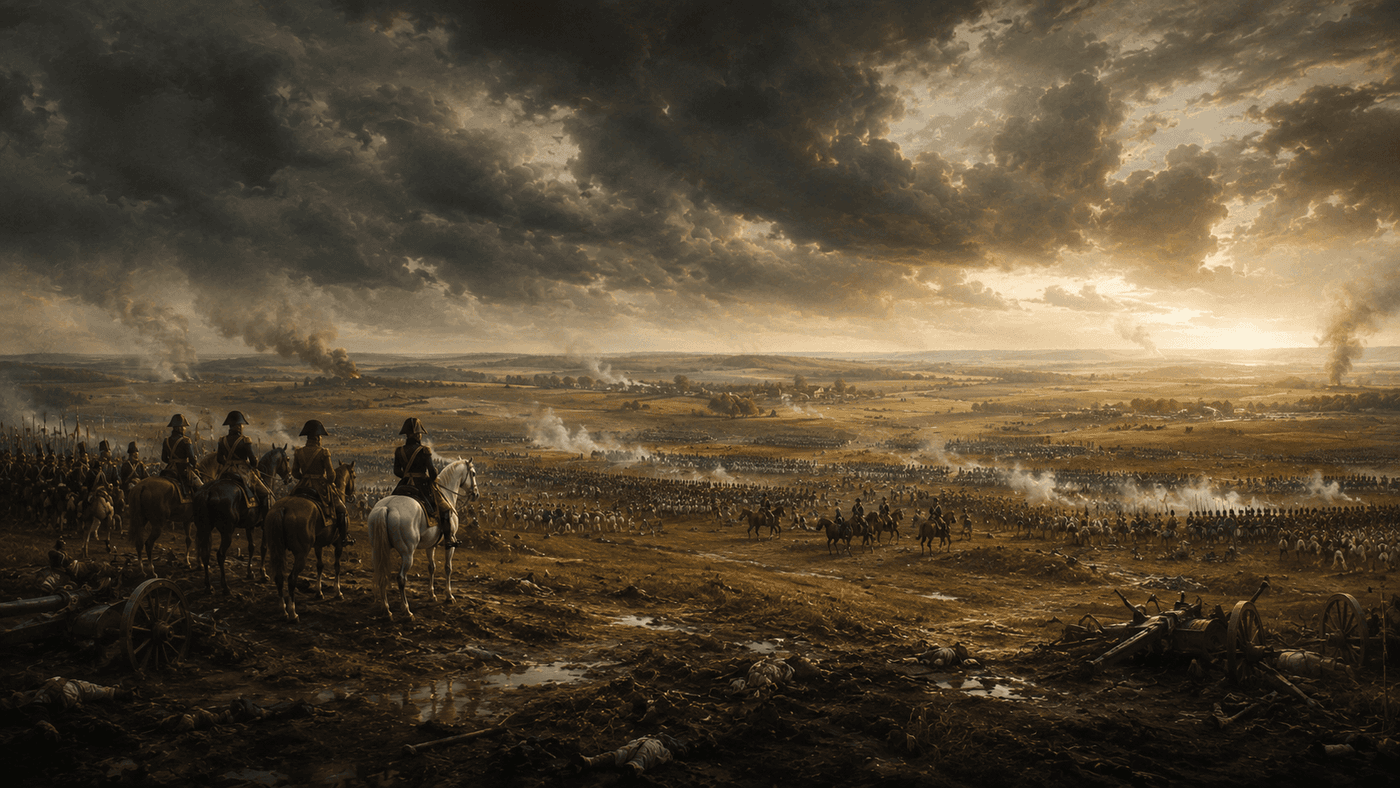
On June 18, 1815 — three years to the day after the United States declared war on Britain — Napoleon Bonaparte made his last gamble on a rain-soaked ridge near the Belgian village of Waterloo. He had returned from exile on the island of Elba just months earlier, reclaimed the French throne in a triumphant march through the countryside, and reassembled an army with startling speed. Europe's great powers, alarmed, had mobilized against him. At Waterloo, Napoleon faced the Duke of Wellington's Anglo-allied forces and, arriving late in the day, the Prussian army of Field Marshal Blücher. The battle lasted from late morning until evening. When the Prussians arrived in force on Napoleon's right flank, the French lines broke. The rout was total. Napoleon abdicated four days later and was exiled to Saint Helena, in the South Atlantic, where he died in 1821.
Waterloo's consequences reached far beyond the career of one general. The Congress of Vienna, which had been negotiating Europe's post-Napoleonic order while the battle was fought, finalized a settlement that redrew the continent's borders and established a balance of power that — with disruptions — held for nearly a century, until the summer of 1914. For Americans, Napoleon's final defeat was not without consequence: it removed the only European counterweight to British naval dominance, leaving the United States more exposed in the short term even as it cleared the way for a longer era of relative stability. His name became a byword for overreach, for the moment when ambition outruns the ground beneath it. The word Waterloo entered the language as its own definition: the defeat you don't come back from.