July 7: The Greatest, the Dam, and the Gallows
Some dates hold their events in uneasy company — a triumph alongside a tragedy, an engineering marvel beside a contested execution. July 7 is that kind of date. A Native American athlete stood before a Swedish king and received what many still consider the highest compliment in the history of sport. A nation broken by depression sunk its first shovel into a canyon wall and dared to believe it could build its way back. And a woman climbed a scaffold at a federal arsenal, maintaining her innocence to the last, and stepped into a legal and moral argument that has never fully been resolved. Three stories, one date, and the full complicated register of American history.
Thanks, King
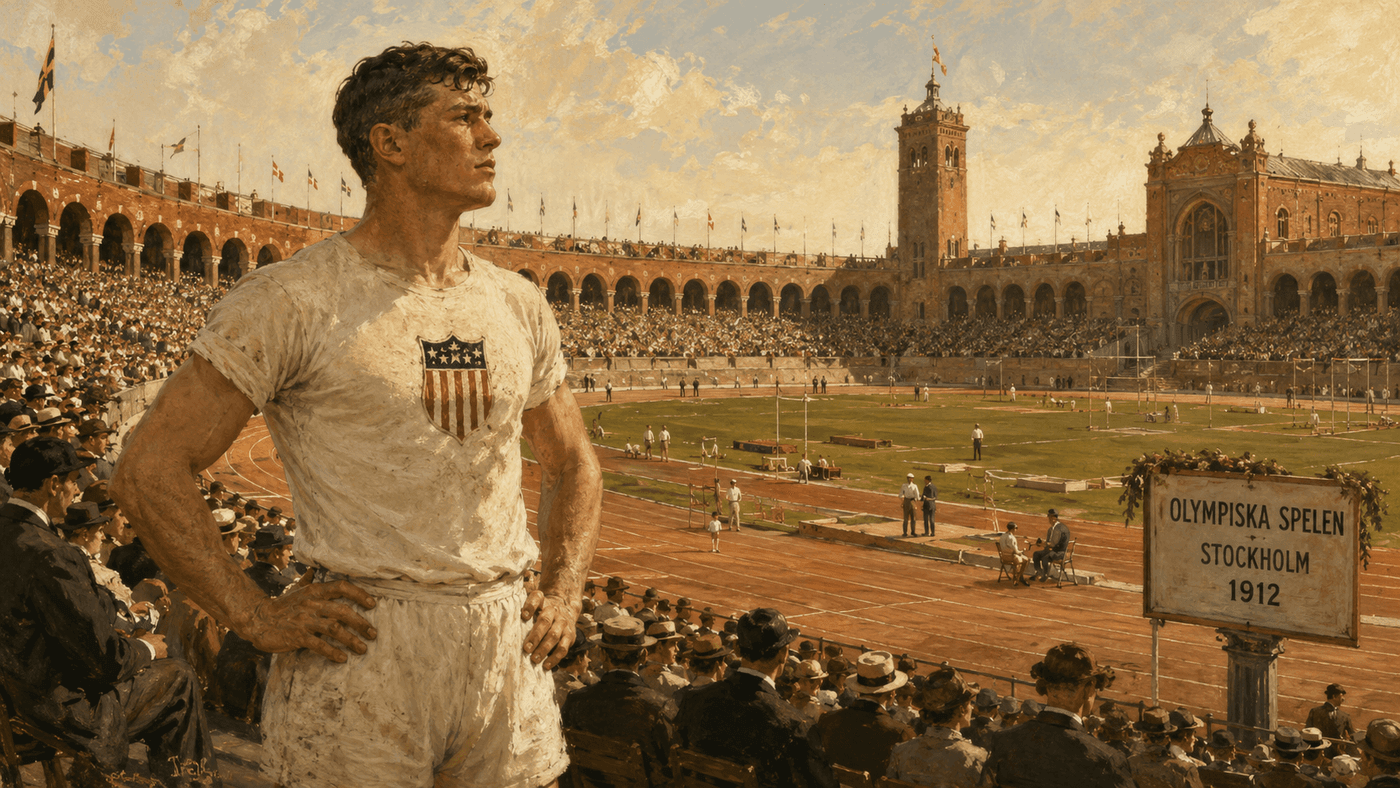
On July 7, 1912, Jim Thorpe began the Olympic performance that would define him — and that many still consider the greatest individual athletic achievement in the history of the Games. The twenty-four-year-old member of the Sac and Fox Nation, who had grown up in Oklahoma and honed his extraordinary abilities at the Carlisle Indian Industrial School in Pennsylvania, entered the Stockholm Olympics as a relatively unknown quantity outside of college football circles. Over the course of those summer days, he would compete in both the pentathlon and the decathlon — ten events spanning sprints, middle-distance running, jumping, throwing, and vaulting — and he would win both with margins so commanding that the results seemed almost implausible. King Gustav V of Sweden, presenting Thorpe with his medals, reportedly told him: "You, sir, are the greatest athlete in the world." Thorpe's reply has become legend: "Thanks, King."
The story that followed his triumph is one of American sport's most enduring injustices. In January 1913, it was revealed that Thorpe had been paid small sums to play minor league baseball prior to the Olympics — a technical violation of amateur rules that cost him both his gold medals and his place in the official record books. The Amateur Athletic Union stripped his titles and erased his marks, a punishment applied to Thorpe with a severity that many observers, then and now, attributed at least in part to his race. He went on to a celebrated professional career in both football and baseball, becoming one of the founding figures of the NFL. In 1983, thirty years after his death, the International Olympic Committee restored his gold medals and reinstated his records. The medals were presented to his family. He had been right all along.
Boulder Canyon
On July 7, 1930, construction officially began on what would become the Hoover Dam — a structure so audacious in its ambition that it strained the engineering knowledge of its era and required methods that had never been attempted at such scale. The project was sited on the Colorado River at the border of Arizona and Nevada, in a canyon so remote that workers first had to build the roads and infrastructure necessary to reach it. The dam was conceived in the 1920s to solve a set of interlocking problems: the Colorado's catastrophic flooding, the chronic water scarcity of the American Southwest, and the region's hunger for electrical power. By the time ground broke in 1930, the Great Depression had added a fourth imperative — the desperate need for jobs.
At its peak, the project employed more than five thousand workers, laboring in canyon temperatures that regularly exceeded 120 degrees Fahrenheit. The dam required the diversion of the entire Colorado River through four massive tunnels bored through the canyon walls before a single yard of concrete could be poured — and when the pouring began, it did not stop for two years. The finished structure contained enough concrete to pave a two-lane highway from New York to San Francisco. It was completed two years ahead of schedule in 1935, and at the time of its completion it was the largest dam and the largest hydroelectric installation in the world. It remains one of the most visited sites in the American West — a monument to what the country chose to build when it had almost nothing left.

The Boarding House Keeper
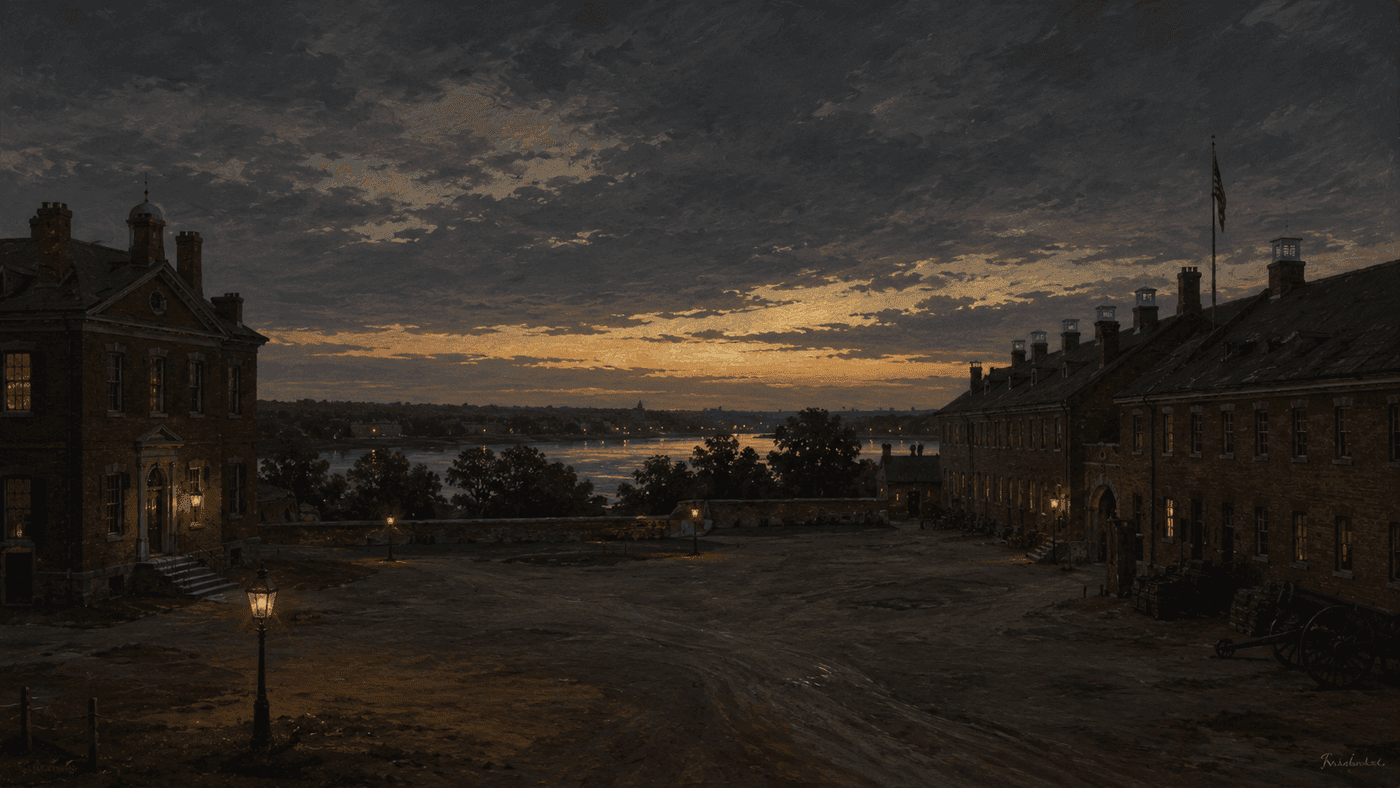
On July 7, 1865, Mary Surratt was hanged at the Washington Arsenal, becoming the first woman ever executed by the United States federal government. She was forty-two years old, a Catholic widow who operated a boarding house in Washington, D.C. — the same house where John Wilkes Booth and his co-conspirators had met to plot the assassination of President Abraham Lincoln. Convicted by a military tribunal of harboring and abetting the conspirators, Surratt was sentenced to death alongside three other men. She maintained her innocence until the end. Two of the tribunal's members petitioned President Andrew Johnson to commute her sentence to life imprisonment; Johnson later claimed he never received the petition. She was hanged on a sweltering July afternoon, less than three months after Lincoln's death.
The question of Mary Surratt's guilt has never been settled to universal satisfaction. Her son John — who was almost certainly more deeply involved in the conspiracy — escaped to Canada and was ultimately acquitted at a civilian trial two years later. Critics of her conviction have long argued that she was tried by the wrong court, with insufficient evidence, at a moment when the country's grief and rage demanded a reckoning that the legal system was too slow to provide. Defenders of the verdict point to testimony placing her in direct contact with Booth in the days before the assassination. What is not disputed is the legal precedent her execution set, the speed and secrecy of the tribunal that condemned her, and the fact that her son — by most accounts the more culpable of the two — lived to old age. History has never quite made peace with July 7, 1865.