July 4: The Day That Keeps Making History
Most dates are incidental — accidents of the calendar that happen to hold a notable event or two. July 4 is something else entirely. It is a date that seems to understand its own significance, returning again and again to the stage of history as if drawn by some gravitational pull. A nation announced itself to the world. Two of its founders departed it on the very anniversary of that announcement. And more than two centuries later, a small rover touched down on another planet and reminded a watching world that the spirit of exploration the founders embodied had not gone anywhere at all.
The Last Perfect Coincidence
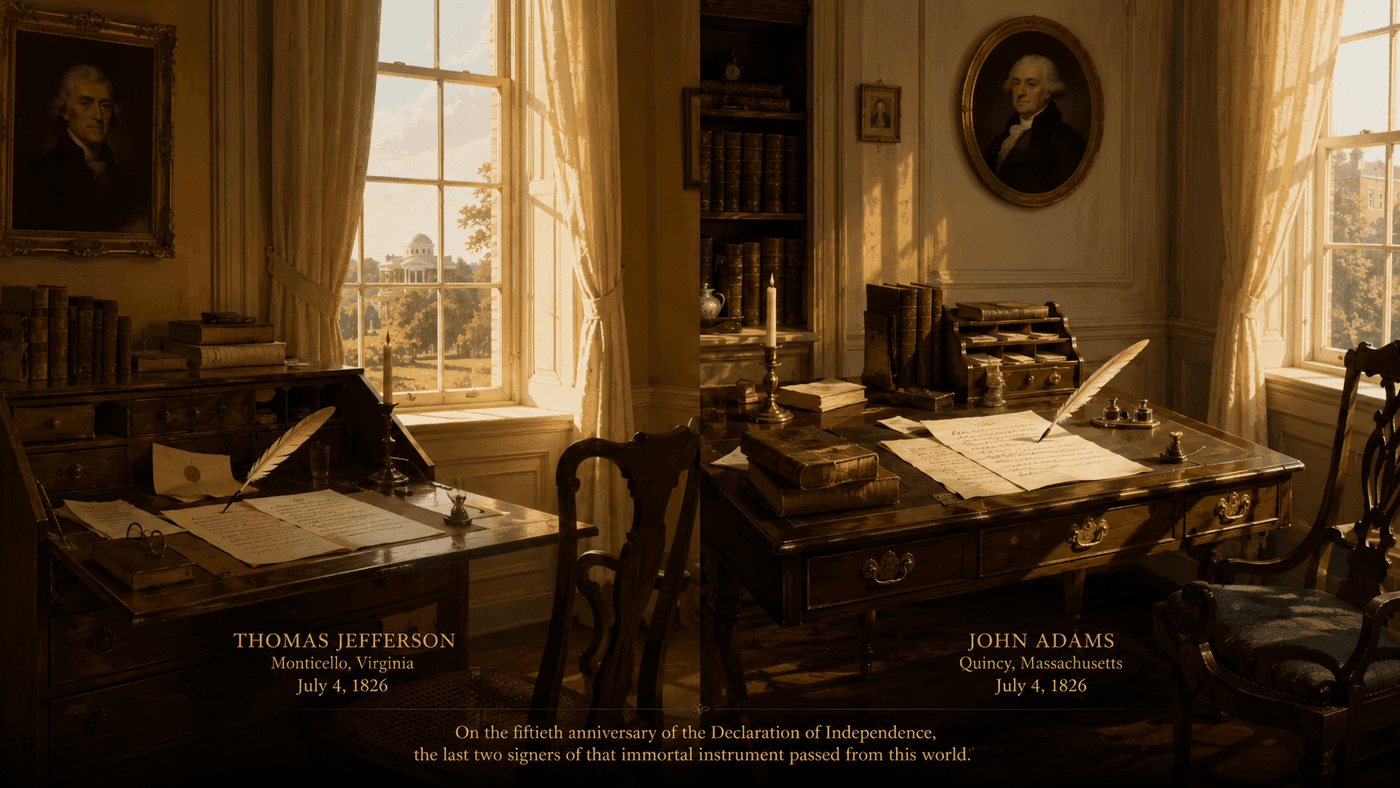
On July 4, 1826 — exactly fifty years after the Continental Congress adopted the Declaration of Independence — Thomas Jefferson died at Monticello, Virginia. Hours later, John Adams died at his home in Quincy, Massachusetts. That two men who had together forged the philosophical heart of the American republic should leave it on the same day, on the nation's semicentennial, strained the credulity of everyone who learned of it. Adams, reportedly unaware that Jefferson had already gone, is said to have whispered among his final words: "Thomas Jefferson survives." He did not. The coincidence was so perfect that many Americans received the news as something more than coincidence — as a sign, a benediction, a closing of a circle.
The relationship between the two men had been one of American history's great complicated partnerships. They had worked side by side in the Continental Congress and in the diplomatic courts of Europe. They had become bitter political enemies during the partisan wars of the 1790s, their friendship swallowed by the ferocity of the early republic's ideological battles. And then, in their final decade, they had reconciled — exchanging more than 150 letters that ranged across philosophy, memory, regret, and the uncertain legacy of the nation they had helped invent. Their deaths on July 4, 1826, felt less like coincidence than conclusion: two lives so thoroughly entangled with a single idea that they could not outlast its anniversary.
When Everything Changed
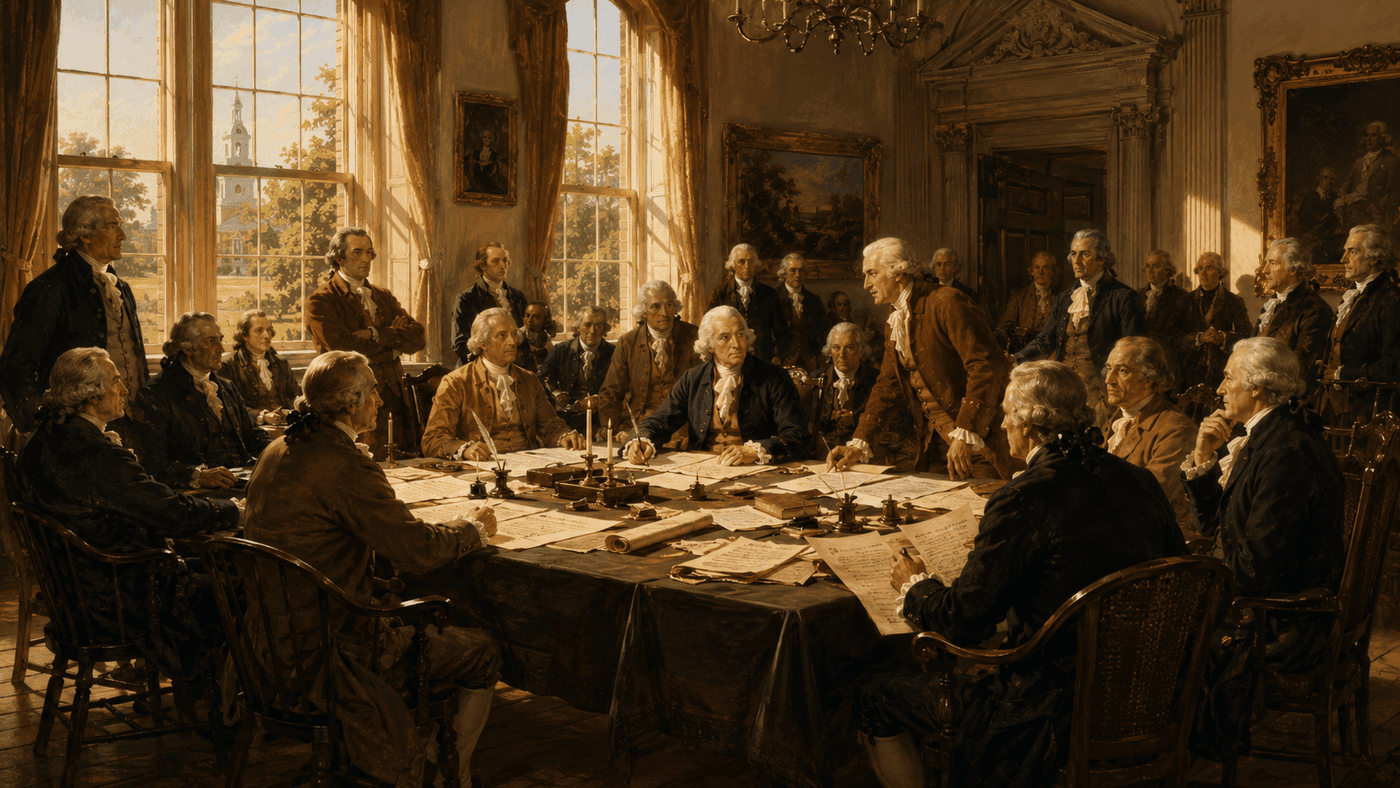
The document that Jefferson and Adams had helped bring into existence was formally adopted on July 4, 1776, when the Continental Congress voted to approve the Declaration of Independence — a 1,320-word argument for human freedom that remains one of the most consequential texts in the history of democratic governance. The declaration did not merely announce a political separation from Great Britain; it articulated a vision of human dignity and self-determination that would reverberate through every revolution, every liberation movement, every constitutional democracy that followed. Its second sentence — asserting that all men are created equal and endowed with unalienable rights — has been argued over, aspired to, fallen short of, and fought for ever since.
The document was the work of many hands and many compromises, but its primary author was Jefferson, who drafted it over seventeen days in a rented Philadelphia room. Congress debated and revised it, cutting roughly a quarter of Jefferson's original text — including, famously, a passage condemning the slave trade that Southern delegates refused to accept. What remained was still incendiary: a public break with the most powerful empire in the world, signed by fifty-six men who understood they were committing treason. July 4 became a national holiday almost immediately, celebrated with bonfires and cannon fire from the very first anniversary. Two hundred and fifty years later, the party has not stopped.
Six Wheels on Red Dirt
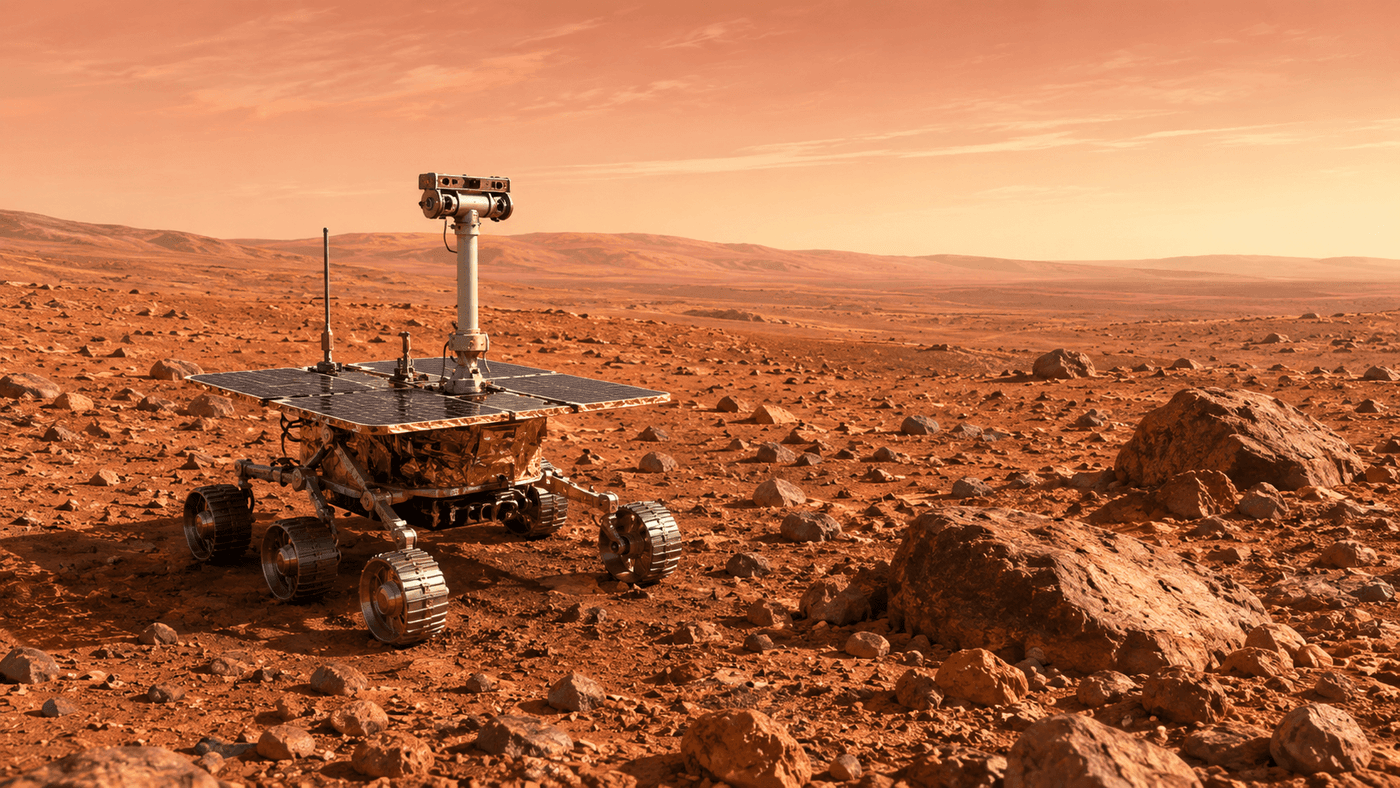
On July 4, 1997 — 221 years after the Declaration and 171 years after Adams and Jefferson drew their final breaths — NASA's Mars Pathfinder spacecraft bounced to a landing on the surface of the Red Planet, cushioned by airbags, and came to rest in the ancient flood plain known as Ares Vallis. The mission deployed a small six-wheeled rover named Sojourner — after abolitionist and suffragist Sojourner Truth — which rolled down a ramp and onto Martian soil to become the first wheeled vehicle ever to operate on another planet. The landing was a triumph of ingenuity and economy: Pathfinder had been built in three years for roughly $265 million, a fraction of the cost of earlier Mars missions.
The mission captivated the public in ways that NASA had not managed in years. The Pathfinder website received 47 million hits in its first month — a record for the early internet — as people around the world tracked Sojourner's slow, methodical progress across the rocky surface. The rover operated for eighty-three days, transmitting more than 550 images and conducting chemical analyses of Martian rocks with names like Barnacle Bill and Yogi. More than its scientific findings, Pathfinder's legacy was strategic: it proved that smaller, faster, cheaper missions could succeed, and it laid the philosophical groundwork for the Spirit, Opportunity, and Curiosity rovers that followed. The spirit of exploration that a Philadelphia assembly had embodied in 1776 had found, it seemed, a new frontier.