"I Will Not Answer" — Fauci, Paul, and the Pandemic's Last Fight
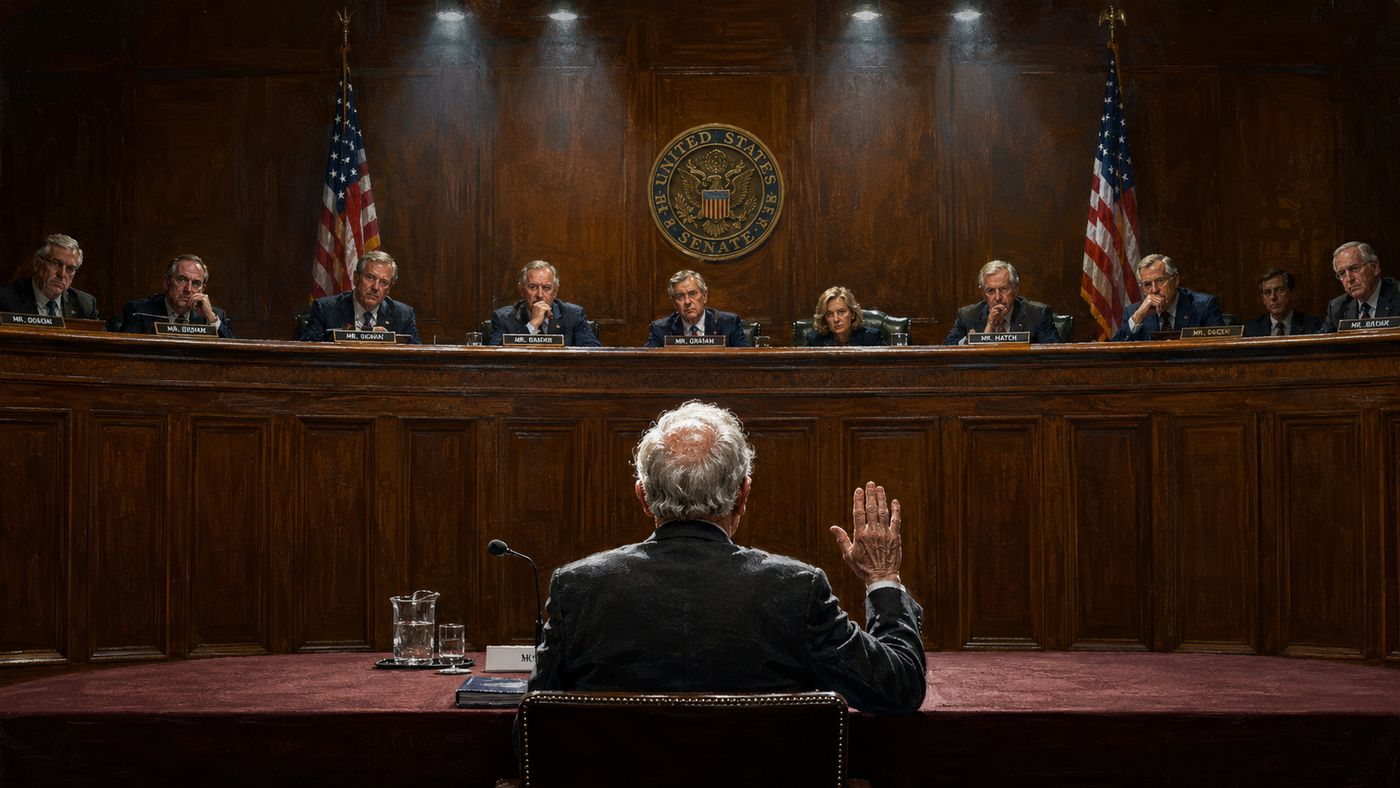
Yesterday morning at 8:30 a.m. in a Senate hearing room, Anthony Fauci opened his testimony before Rand Paul's committee by reading a prepared statement accusing the senator of having "an unhinged obsession with calling for my prosecution" and making "repeated slanderous comments." Then, in words he said "pained" him, the 85-year-old former director of the National Institute of Allergy and Infectious Diseases told the committee that on the advice of his attorneys, he would invoke his Fifth Amendment right to remain silent in response to their questions. He did so more than 100 times over the course of the hearing — declining to answer every substantive question about COVID origins, gain-of-function research, his private diary entries, and his communications with colleagues. His attorney, David Schertler, was removed from the hearing room by Capitol Police after a dispute with committee staff over his client's right to consult with counsel between questions. By the end of the day, Paul had announced that the committee would vote next week on whether to hold Fauci in contempt of Congress — and had raised the novel legal question of whether a presidential pardon, which Fauci received from President Biden in January 2025, eliminates the Fifth Amendment protections a witness can claim before Congress.
The Fifth Amendment, the Pardon, and a Constitutional Argument That Has No Clear Answer
The Fifth Amendment to the United States Constitution guarantees that no person "shall be compelled in any criminal case to be a witness against himself." The privilege applies not just in criminal trials but in any setting — including congressional hearings — where a witness reasonably believes their answers could be used to incriminate them. It is one of the bedrock protections of the American legal system, rooted in the English common law tradition that predates the Constitution itself, and it has been invoked before Congress by witnesses ranging from organized crime figures before the Kefauver Committee in 1951 to executives from the tobacco industry in 1994, who famously raised their right hands and testified in unison that they did not believe nicotine was addictive before later invoking the amendment in response to specific questions. What makes the Fauci situation constitutionally unusual is the pardon question Paul raised. A presidential pardon, legal scholars have argued in both directions, can eliminate the basis for a Fifth Amendment claim by removing the threat of prosecution for pardoned conduct — meaning that if Fauci was pardoned for actions related to his pandemic response, he theoretically cannot be prosecuted for them, and therefore theoretically cannot claim a Fifth Amendment privilege in refusing to discuss them. Fauci's legal team has maintained that the pardon's scope does not cover the full range of questions Paul's committee is asking, and that significant Fifth Amendment grounds remain. The contempt vote next week will force the legal question into the open.
Democrats on the committee offered a starkly different reading of the day's events. They called the hearing a "politically motivated circus" and praised Fauci for his service during the pandemic. Senator Gary Peters of Michigan said Paul had "turned this committee into a personal vendetta machine." The underlying substantive questions — about COVID's origins, about whether American-funded research at the Wuhan Institute of Virology contributed to the pandemic, about whether public health officials were fully candid with the public during the emergency — remain, as they have for five years, genuinely unresolved. No investigation, including yesterday's, has produced a definitive answer. The FBI and Department of Energy assess that a lab leak is the more likely origin; other intelligence agencies disagree or are unable to determine the answer. What yesterday's hearing produced instead of answers was spectacle: an 85-year-old scientist invoking the Fifth Amendment more than 100 times, his lawyer hauled out by Capitol Police, the senator who subpoenaed him threatening consequences, and a watching country that has never stopped arguing about 2020 still not knowing what to make of any of it.
The contempt process, if Paul pursues it, is itself a constitutional exercise with deep historical roots. Congress has held witnesses in contempt since 1795, when the House cited a witness in a land fraud investigation. In the modern era, contempt of Congress has been used against figures ranging from Attorney General Eric Holder — over the Fast and Furious operation in 2012 — to former Trump adviser Steve Bannon, who was convicted of criminal contempt in 2022 for defying a January 6th committee subpoena before receiving a presidential pardon. The proceedings are slow, legally contested, and rarely produce the decisive resolution their architects promise. Paul has not yet said whether he would pursue criminal contempt — which would require a referral to the Justice Department — or civil contempt, which proceeds through the courts. Either path is likely to take months. The pandemic that killed more than one million Americans, reshaped the global economy, and made Anthony Fauci simultaneously one of the most celebrated and most vilified scientists in modern history is not, it appears, finished being argued about. It may never be.