July 3: Blood at Gettysburg, a State Is Born, a Tunnel Mourns
July 3 is a date that knows something about crowds — about what it means when massive numbers of human beings move together toward a single moment, and about what those moments cost. A nation tore itself apart on a Pennsylvania ridge. A territory became a state on the strength of its mountains and promise. And a pilgrimage of faith turned to tragedy in a darkened tunnel. Each story belongs to a different world, but all three ask the same quiet question: what do we owe the people who stand beside us?
The Third Day
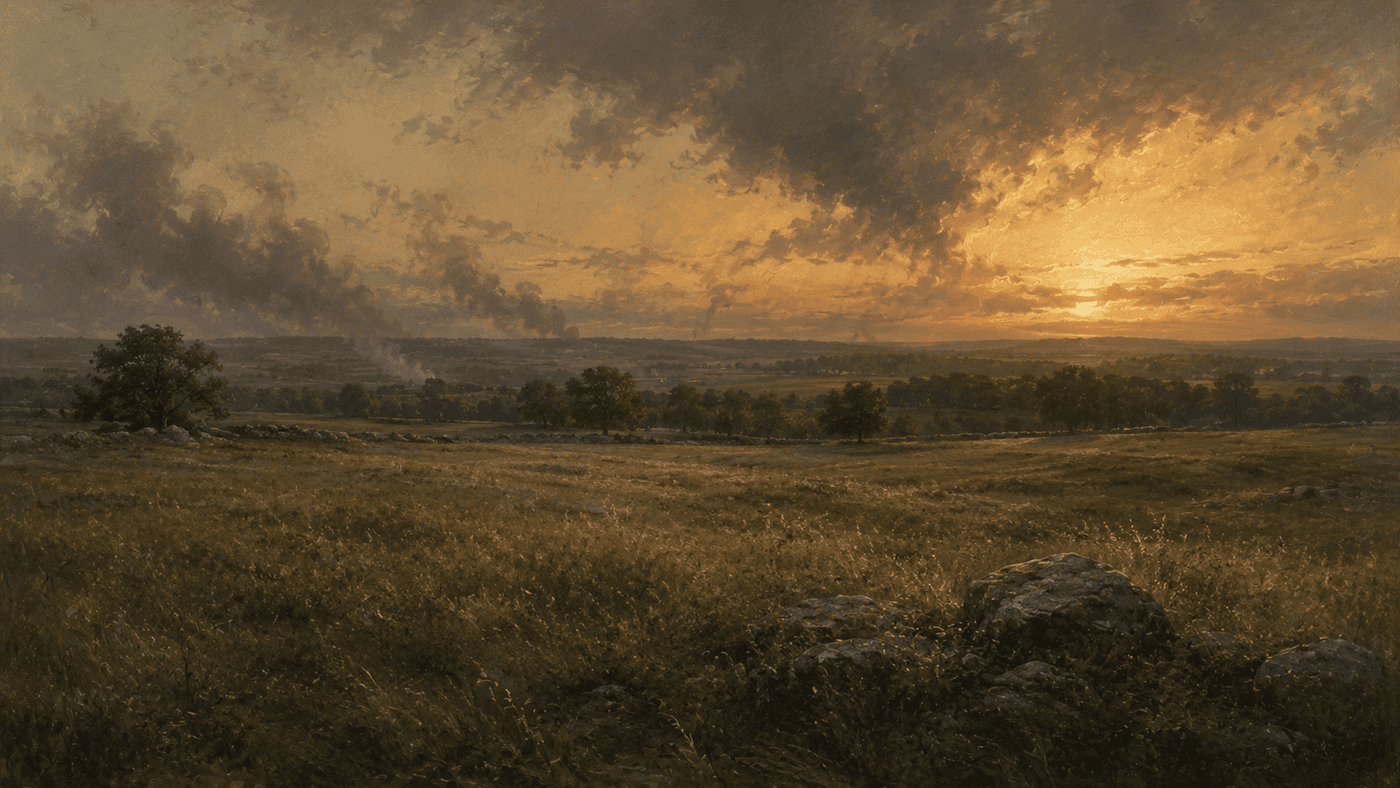
On July 3, 1863, the Battle of Gettysburg reached its devastating conclusion after three days of fighting that would leave more than 50,000 soldiers dead, wounded, or missing across the rolling Pennsylvania farmland. The day's defining moment came that afternoon, when General Robert E. Lee ordered roughly 12,500 Confederate troops to advance nearly a mile across open ground toward the heavily fortified Union center on Cemetery Ridge. The charge — led in part by General George Pickett and forever after bearing his name — was met with withering artillery and rifle fire. It collapsed in minutes. Lee rode out to meet the survivors himself, telling them the failure was his alone.
Pickett's Charge marked the high-water mark of the Confederacy — the closest the rebellion ever came to breaking the Union line, and the moment the tide turned irrevocably. Lee's Army of Northern Virginia retreated to Virginia the following day, never again mounting a major offensive into the North. The Union victory at Gettysburg, arriving alongside the fall of Vicksburg on July 4, gave President Lincoln cause to believe the war could be won. Four months later, he returned to this ground to dedicate a cemetery — and to deliver 272 words that redefined what America was fighting for.
The 43rd Star
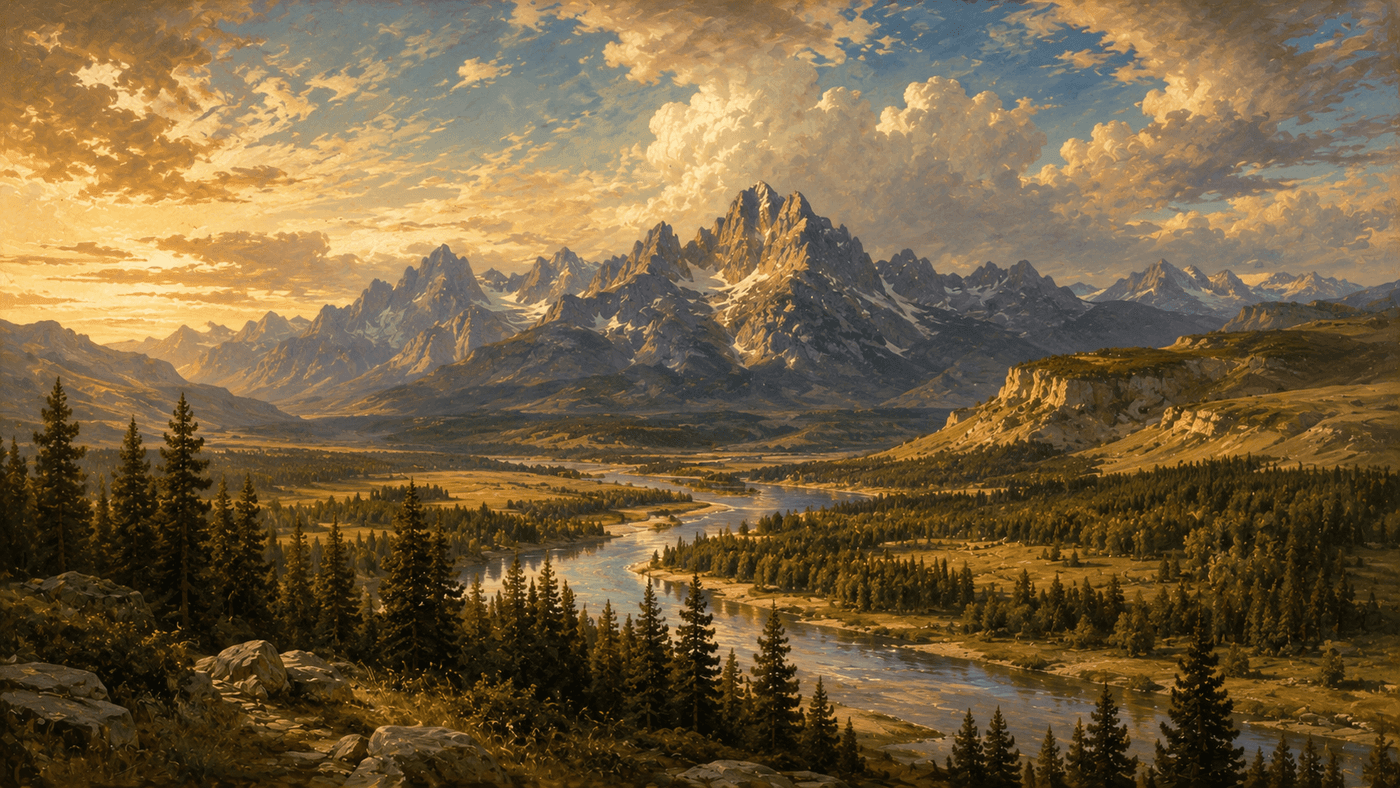
Twenty-seven years after Gettysburg, on July 3, 1890, Idaho was admitted to the Union as the 43rd state — a moment of quieter but no less consequential nation-building. The territory had been organized in 1863, the same year as the battle, carved from a vast stretch of the Northwest that offered extraordinary natural abundance: silver and gold in the mountains, timber blanketing the hillsides, rivers threading through some of the most dramatic terrain on the continent. By 1890, a population swelled by miners, missionaries, Mormon settlers, and homesteaders had grown large enough — and vocal enough — to demand a seat at the national table.
Idaho's admission came as part of an extraordinary burst of statehood that reshaped the American map in a single generation. North Dakota, South Dakota, Montana, and Washington had all entered the Union in 1889; Wyoming would follow Idaho just one week later. Together they completed the continental mosaic that American expansionists had long imagined, binding the Pacific Northwest to the republic with the same constitutional thread that ran back to the original thirteen. The Gem State, as it came to be known, would grow into one of the nation's most distinctive landscapes — its mountains, rivers, and vast lava plains a testament to the wild country that settlers chose to call home.
The Tunnel
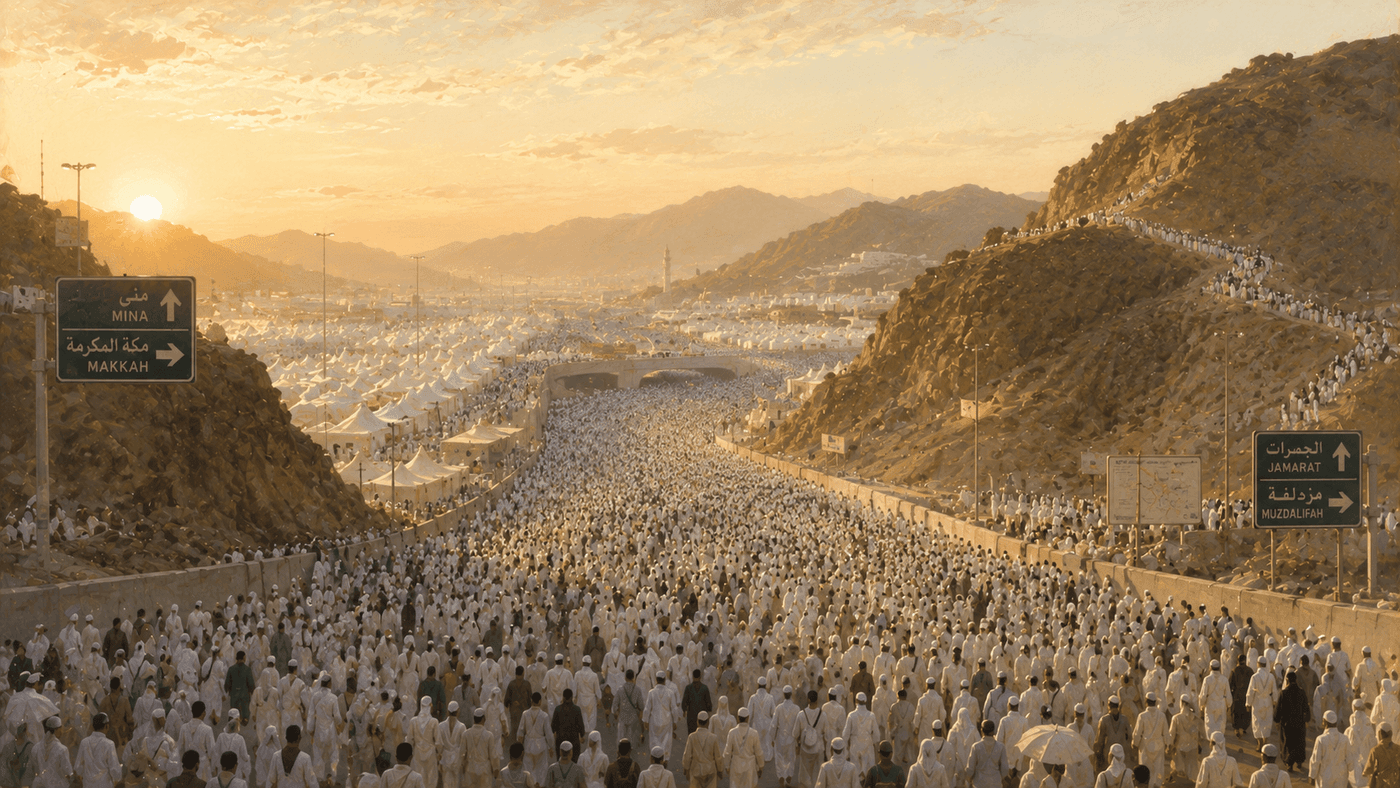
On July 3, 1990, one of the deadliest disasters in the history of the Hajj unfolded inside the Al-Ma'aisim pedestrian tunnel near Mecca, Saudi Arabia. The tunnel served as a critical passageway for pilgrims traveling between the holy sites of Mecca and Mina — and on that day, with more than two million faithful converging for one of Islam's most sacred obligations, the passage became overwhelmed. A ventilation failure sent temperatures soaring inside the enclosed space. Panic spread. In the crush that followed, approximately 1,400 pilgrims lost their lives — trampled or asphyxiated in the chaos before the crowd could be dispersed.
The tragedy laid bare the immense logistical burden of the Hajj, which by 1990 had grown into one of the largest annual human gatherings on earth. Saudi authorities faced immediate and intense scrutiny over crowd management, ventilation infrastructure, and emergency response. In the years that followed, the kingdom undertook sweeping reforms: expanded tunnels, sophisticated crowd-flow monitoring, staggered movement schedules, and massive investment in pilgrimage infrastructure. The Al-Ma'aisim disaster remains a solemn reminder that the duty of care owed to those who gather in faith is as profound as any other obligation — and that the cost of failing it cannot be measured only in stone and steel.