The Outbreak the World Isn't Watching
On May 5, 2026, the World Health Organization was alerted to a cluster of deaths from an unknown illness in Mongbwalu, a remote gold-mining town in Ituri Province, northeastern Democratic Republic of Congo. Laboratory tests initially came back negative — because the standard tests used to detect Ebola only screen for the Zaire strain, not the rarer Bundibugyo strain responsible for this outbreak. By the time the correct tests confirmed Bundibugyo virus disease on May 14, the virus had already been spreading undetected for weeks. In the eighty-two days since the outbreak was formally declared on May 15, it has killed 1,707 people across 3,802 confirmed cases — making it the second-deadliest Ebola outbreak in history, behind only the catastrophic 2014–2016 West Africa epidemic that killed more than 11,000. It is the fastest-growing Ebola outbreak ever documented. There is no approved vaccine. There is no approved treatment. Healthcare workers are walking off the job over unpaid wages. And sixty-three percent of recent deaths are occurring outside treatment centers — in homes, in communities — where the bodies of the dead remain highly infectious to the people who mourn them.
Why This Outbreak Is Different — and Why It's Winning
The Bundibugyo strain of Ebola is rare — only the third time it has caused a major outbreak, after Uganda in 2007 and DRC in 2012 — and it has properties that make it more difficult to contain than the Zaire strain that causes most Ebola outbreaks. Unlike the Zaire strain, there is no approved vaccine for Bundibugyo. The experimental vaccines and therapeutic antibody treatments that helped bring the 2018–2020 DRC Ebola outbreak under control — the worst in Congo's history at the time — do not work against the Bundibugyo virus. Clinical trials of two promising treatments, the monoclonal antibody MBP134 and the antiviral remdesivir, began on July 2 — but results take time, and people are dying now. The outbreak is concentrated in Ituri Province, one of the most remote and conflict-affected regions on the planet, where armed groups have repeatedly attacked health workers in past outbreaks and where distrust of outside medical intervention runs deep. In May, residents in Mongbwalu set fire to part of an Ebola treatment centre and chased health workers out of town in trucks. The WHo has reported that 80 percent of new cases are emerging from unknown chains of transmission — meaning contact tracers cannot identify how most new patients were infected, a sign the virus is spreading through channels that public health responders cannot see or reach. The case fatality rate stands at approximately 45 percent, meaning nearly half of everyone diagnosed with this outbreak has died.
The human infrastructure meant to stop this outbreak is fracturing under the pressure of stopping it. More than 100 health workers have been infected since May and approximately 35 have died — among the highest rates of healthcare worker infection in any Ebola outbreak on record. Those who survive face the same conditions that have driven their colleagues to the picket line: unpaid wages stretching back months in some facilities, shortages of protective equipment, hostility from communities that question whether the disease is real, and the daily psychological toll of working without protective treatment in a ward full of patients with a 45 percent fatality rate. In Bunia, the provincial capital, staff at the Elikya Ebola Treatment Centre went on strike. In Rwampara, workers at the General Hospital abandoned a major treatment centre. WHO's representative to the DRC, Dr. Anne Ancia, told reporters last month: "We would like to say it is stabilizing, but frankly, we cannot say it yet." She said that in early July, when the death toll was approximately 500. It has since more than tripled.
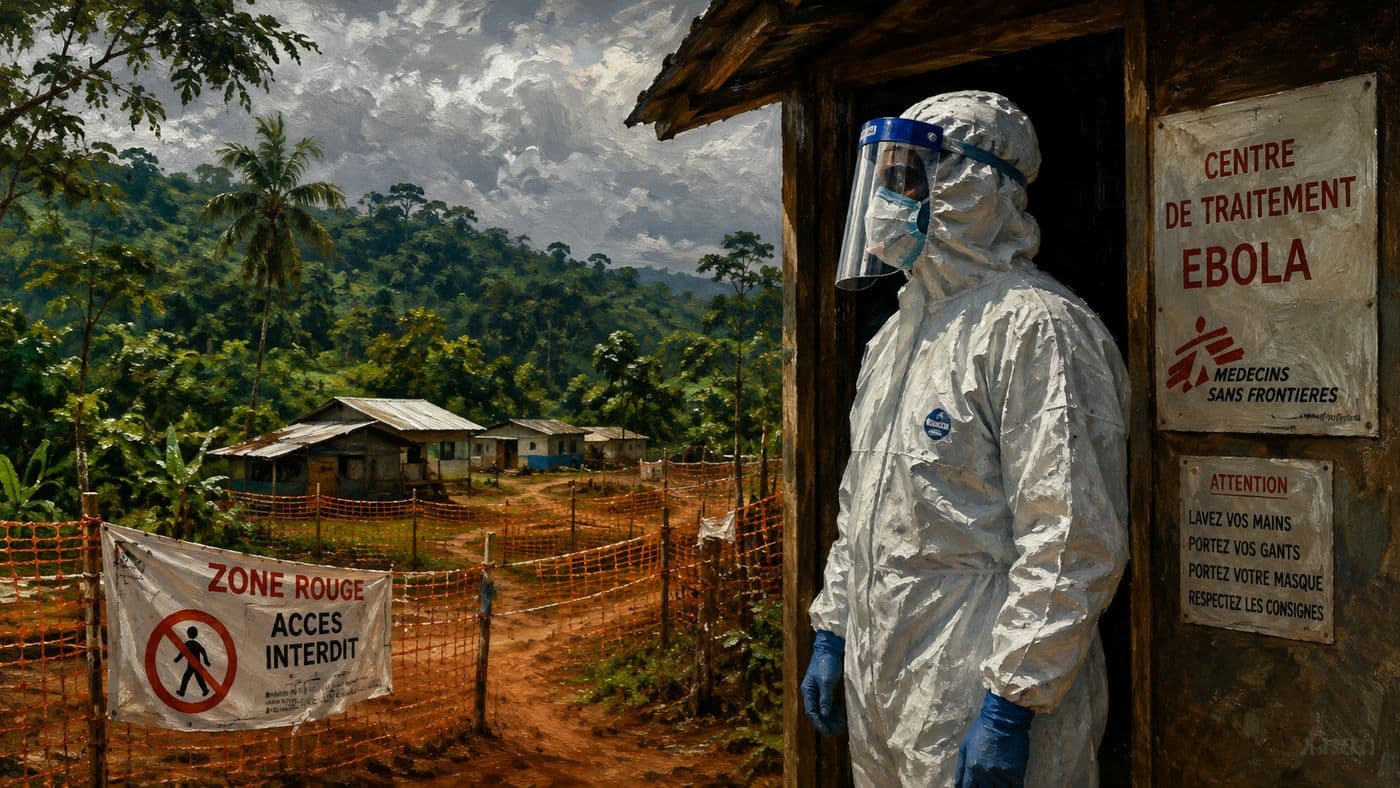
During the 2014–2016 West Africa Ebola outbreak — the worst in the virus's history — it took approximately eight months for the death toll to reach 1,000. The current DRC outbreak reached 1,000 deaths in roughly eleven weeks. The WHO declared this outbreak a Public Health Emergency of International Concern on May 17, two days after it was formally identified — one of the fastest such declarations in the organization's history, a recognition that this virus in this environment, with no approved countermeasures, represented an acute global risk. Uganda declared itself Ebola-free on July 28 after containing a smaller spillover outbreak of 20 cases. An American citizen who contracted the virus in DRC was medically evacuated to Germany for treatment in May; a case was reported in France in June. Both were isolated and contained. The risk of spread beyond Central Africa remains, in the WHO's assessment, low — but contingent on the outbreak being brought under control in Ituri, where it is not yet under control, where treatment centers are understaffed, where bodies are being handled unsafely in communities that do not trust the people trying to help, and where the death toll is rising by more than 100 per week. The world's attention is elsewhere. The virus does not care.