August 31: Workers Win in Gdańsk, a Princess Dies in Paris, and the Sun Powers a Car
August 31 is a day for things that seemed improbable until they happened. In 1980, striking workers at a Polish shipyard won concessions from a communist government that had never voluntarily granted them before — an agreement that gave birth to Solidarity, the trade union that became the engine of Polish democracy and that played a central role in unraveling Soviet power across Eastern Europe over the following decade. In 1997, the most famous woman in the world died in a car crash in Paris, and the grief that followed was unlike anything the modern media age had produced — global, instantaneous, and in some respects inexplicable even to those who experienced it. And in 1955, an inventor unveiled a small car powered entirely by sunlight at a General Motors event in Chicago, demonstrating a technology that would spend the next seven decades slowly becoming something the world actually needed. Three August thirty-firsts. Three moments that were, each in its way, ahead of their time.
The Gdańsk Accords
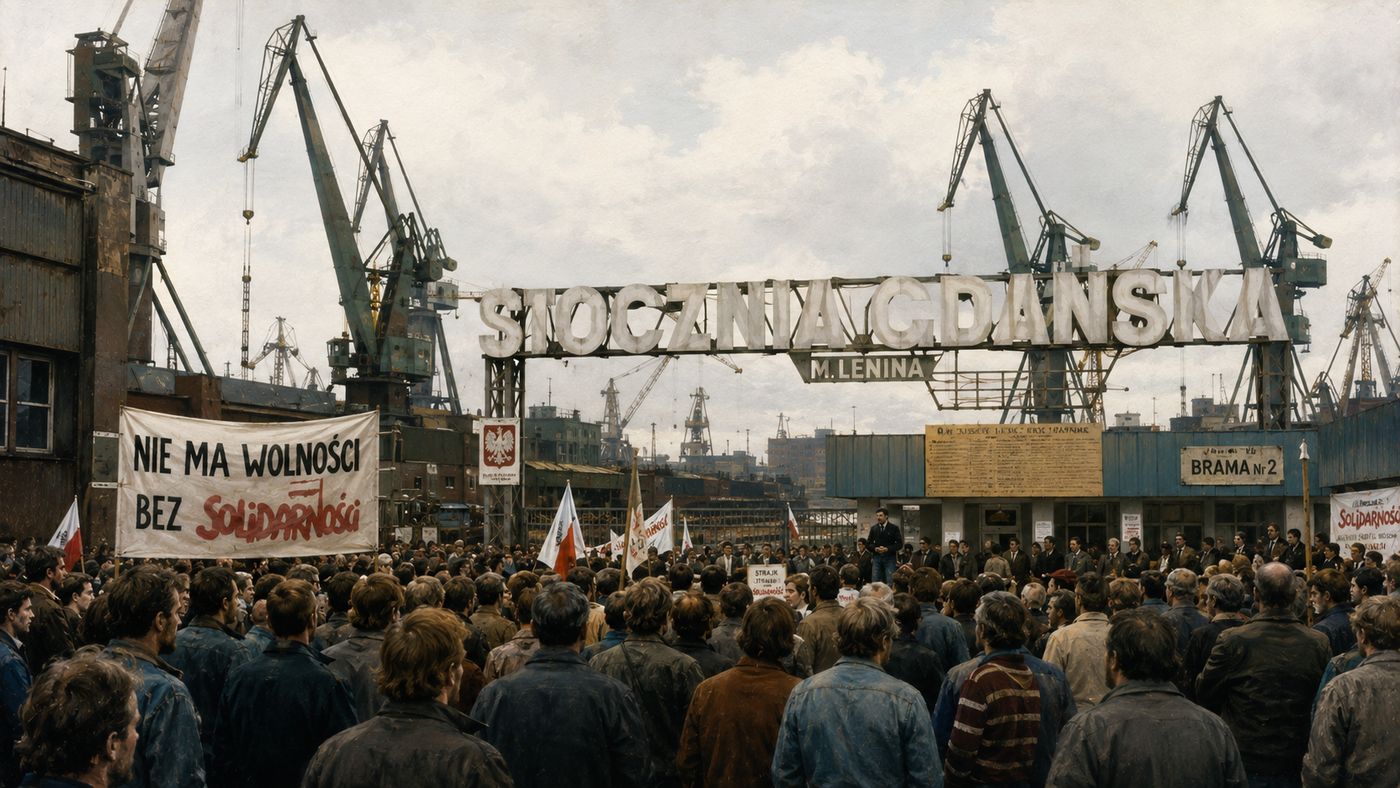
On August 31, 1980, representatives of the Polish communist government signed an agreement with striking workers at the Lenin Shipyard in Gdańsk — an accord that granted, for the first time in the Soviet bloc, the right of workers to form independent trade unions and to strike. The strike that produced the agreement had begun on August 14, when workers walked off the job to protest the dismissal of a crane operator who had been active in labor organizing. Under the leadership of Lech Wałęsa, an unemployed electrician who had himself been dismissed from the shipyard for union activity, the strike spread rapidly to other enterprises along the Baltic coast and became the most significant challenge to communist authority in Poland since the workers' uprisings of 1956 and 1970 had been suppressed by force. The government negotiated rather than suppressed — a decision that reflected both the weakness of the Polish economy and the international attention the strike had attracted. The Gdańsk Accords signed on August 31 were the result.
The agreement reached on August 31, 1980, produced Solidarity — Solidarność — the independent trade union that grew within months to ten million members, nearly a third of Poland's adult population, and became the organizational framework for Polish civil society's resistance to communist rule. The Polish government declared martial law in December 1981 and suspended Solidarity, imprisoning Wałęsa and other leaders, but the movement survived underground and in exile. By 1989, as the Soviet empire's capacity to sustain its satellite states collapsed under the weight of economic failure and Mikhail Gorbachev's reform program, Solidarity was legalized again and participated in elections that produced the first non-communist prime minister in Eastern Europe since the late 1940s. Wałęsa won the Nobel Peace Prize in 1983 and was elected President of Poland in 1990. The accords signed in a Baltic shipyard on August 31, 1980, set in motion a sequence of events that contributed directly to the fall of the Berlin Wall nine years later and the dissolution of the Soviet Union eleven years after that.
The Pont de l'Alma
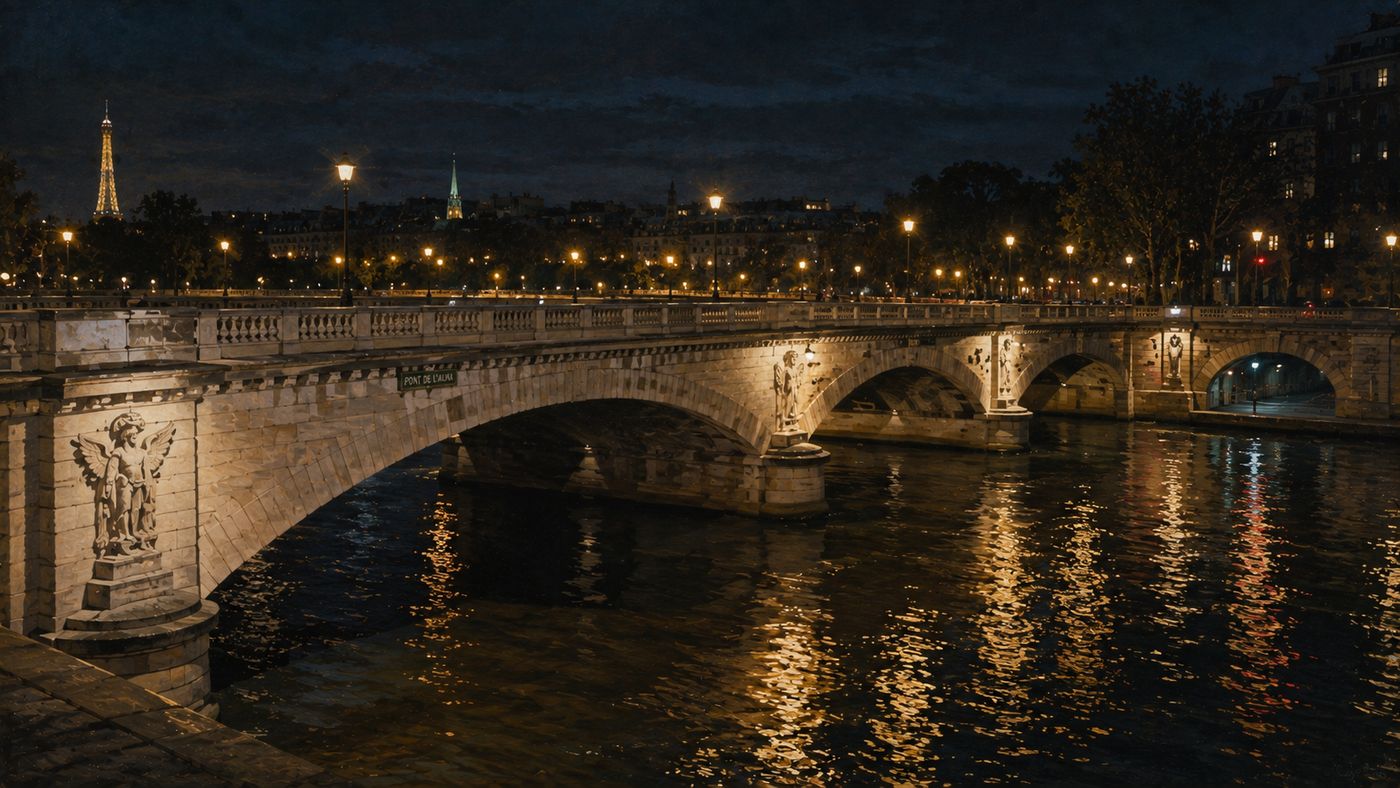
In the early hours of August 31, 1997 — just after midnight, Paris time — the Mercedes-Benz carrying Diana, Princess of Wales, crashed in the Pont de l'Alma tunnel in Paris, killing Diana at the age of thirty-six, along with her companion Dodi Fayed and the driver Henri Paul. Diana and Fayed had been pursued through Paris by paparazzi photographers; Henri Paul, who was later found to have been significantly over the legal alcohol limit and to have had prescription drugs in his system, lost control of the vehicle in the tunnel at high speed. The sole survivor was Diana's bodyguard, Trevor Rees-Jones. Diana was taken to the Pitié-Salpêtrière Hospital, where she died at approximately 4 a.m. local time from internal bleeding caused by injuries to the pulmonary vein and surrounding structures. The news reached the world within hours and the response was unlike almost anything the modern media age had produced.
The grief that followed Diana's death on August 31, 1997, has been described by sociologists, cultural critics, and participants as one of the most extraordinary collective emotional events of the late twentieth century. Flowers were laid outside Kensington Palace by the tens of thousands; the queue to sign condolence books stretched for miles. Her funeral on September 6 was watched by an estimated 2.5 billion people worldwide. The British royal family's response — Queen Elizabeth remained at Balmoral in Scotland, and the palace flew no flag at half-mast, per protocol — generated fierce public criticism that forced a reconsideration of how the monarchy engaged with public emotion. Diana had been divorced from Prince Charles for little more than a year at the time of her death; the complication of her legal and royal status added another layer to the public's grief, which was directed as much at the institution that had cast her out as at the accident itself. The inquiry into her death concluded that it was caused by the grossly negligent driving of Henri Paul and the pursuit of the paparazzi, and found no evidence of conspiracy. Conspiracy theories have persisted regardless. August 31, 1997, marked the moment when the culture of celebrity and the culture of grief collided with a force that has not been matched since.
The Solar Vehicle, 1955
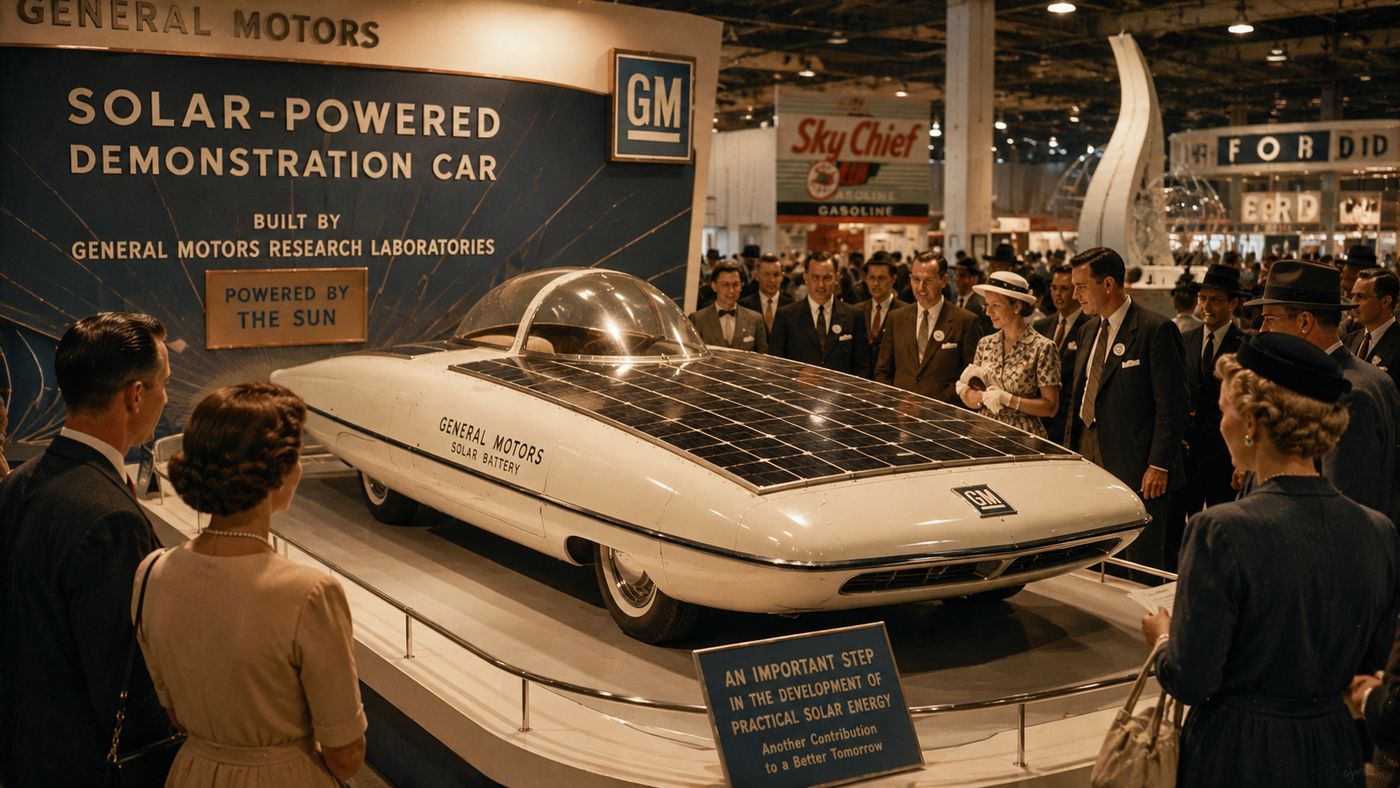
On August 31, 1955, inventor William G. Cobb demonstrated what he called the "Solar Vehicle" at the General Motors Powerama exposition in Chicago — a small car, approximately fifteen inches long, powered entirely by twelve photovoltaic selenium cells that converted sunlight directly into electrical current to drive a tiny electric motor. Cobb's vehicle was not a road car in any practical sense; it was a proof-of-concept demonstration that sunlight could, in principle, be used to power vehicular motion without any intermediate fuel conversion. The technology available to Cobb in 1955 — the silicon photovoltaic cell had itself only been developed by Bell Laboratories that same year — was far too primitive to produce anything that could carry a human being, and the demonstration vehicle required direct bright sunlight to function. But the principle it demonstrated was sound, and the demonstration attracted significant attention from engineers and journalists who saw in it the outlines of something that might one day be practical.
The seven decades between Cobb's demonstration on August 31, 1955, and the present have been the story of that principle slowly becoming practical — through improvements in photovoltaic efficiency, battery storage, electric motor technology, and the accumulated engineering refinements that have made solar-assisted and fully electric vehicles commercially viable for the first time. The solar car races that began in the 1980s — including the World Solar Challenge in Australia, which has been running since 1987 — pushed the technology further each cycle, demonstrating that student and amateur engineering teams could build vehicles capable of crossing a continent on sunlight alone. Commercial electric vehicles powered in part by solar generation are now on roads in every major market. The small demonstration vehicle that William Cobb rolled across a stage in Chicago on August 31, 1955, was too early and too small to change anything immediately. What it did was establish that the idea was not impossible — which, for the history of technology, is often the necessary first step.