Six Hours to Change a Season
Saturday night, the two-time defending World Series champion Los Angeles Dodgers acquired Tarik Skubal — the two-time AL Cy Young Award winner, the best pitcher available at this year's trade deadline, the man with a 2.79 ERA and 116 strikeouts over his first 16 starts — from the Detroit Tigers for outfielder Zyhir Hope and right-handers River Ryan and Brady Smith. It was the kind of deal that recalibrates an entire league's ambitions in a single transaction: the Dodgers, already the consensus favorites to win a third consecutive championship, just added the best starter in the American League to a rotation that already included Yoshinobu Yamamoto, Tyler Glasnow, and Jack Flaherty. The question every other contender is waking up to this morning is no longer who can beat the Dodgers — it is whether any of the moves made before today's 6 p.m. ET deadline can close the gap. The Yankees, Brewers, Phillies, Braves, and Cubs are all still in the market. The clock is running.
The July 31 Deadline That Moved to August — and Never Slowed Down
Baseball's trade deadline was not always the spectacle it has become. For most of the sport's history, players could be traded at any point during the season, and the mid-summer deadline was a relatively routine administrative boundary rather than a media event. The waiver trade system — in which players could be moved after the deadline through a cumbersome process involving other teams claiming or waiving players — kept roster movement possible through August and into September. In 2019, MLB eliminated the waiver trade system and moved to a single hard deadline, instantly transforming the August 1 cutoff into the annual high-drama event it now is: a single day on which every contending team must finalize its roster for the postseason run, every seller must extract maximum value, and the sport's most aggressive general managers earn their reputations. The deadline has since moved to August 3 in the current calendar, but the fever it generates has only intensified. Some of the most consequential trades in recent baseball history have been executed within hours of the cutoff — Max Scherzer to the Mets in 2021, Juan Soto to the Yankees in 2022, Noah Syndergaard to the Angels with hours to spare in 2022 — deadline moves that altered pennant races and, in some cases, shaped dynasties.
This year's deadline has been notable for both its biggest deal and its biggest holdout. The Skubal trade to the Dodgers was the most anticipated transaction of the summer — a deal that had been telegraphed for weeks as the Tigers weighed whether to trade their franchise ace with one year remaining on his contract or let him reach free agency. The Dodgers' haul represents a high but not catastrophic prospect cost for a team that has the organizational depth to absorb it. Mason Miller, the other marquee name entering the deadline period, now appears likely to stay in San Diego: the Padres have won four straight games and sit 1.5 games back of a National League wild card spot, changing their calculus entirely. The remainder of today's market belongs to the second tier — closers, platoon bats, rotation depth — the moves that rarely generate headlines in isolation but collectively determine whether a team's October run extends to the World Series or ends in the Division Series. The Yankees acquired Luis García Jr. from Washington over the weekend for rotation depth. The Rays got Freddy Peralta from the Mets. The Cubs sent Jameson Taillon to Toronto. By 6 p.m. ET tonight, the 2026 playoff field will be set in everything but name.
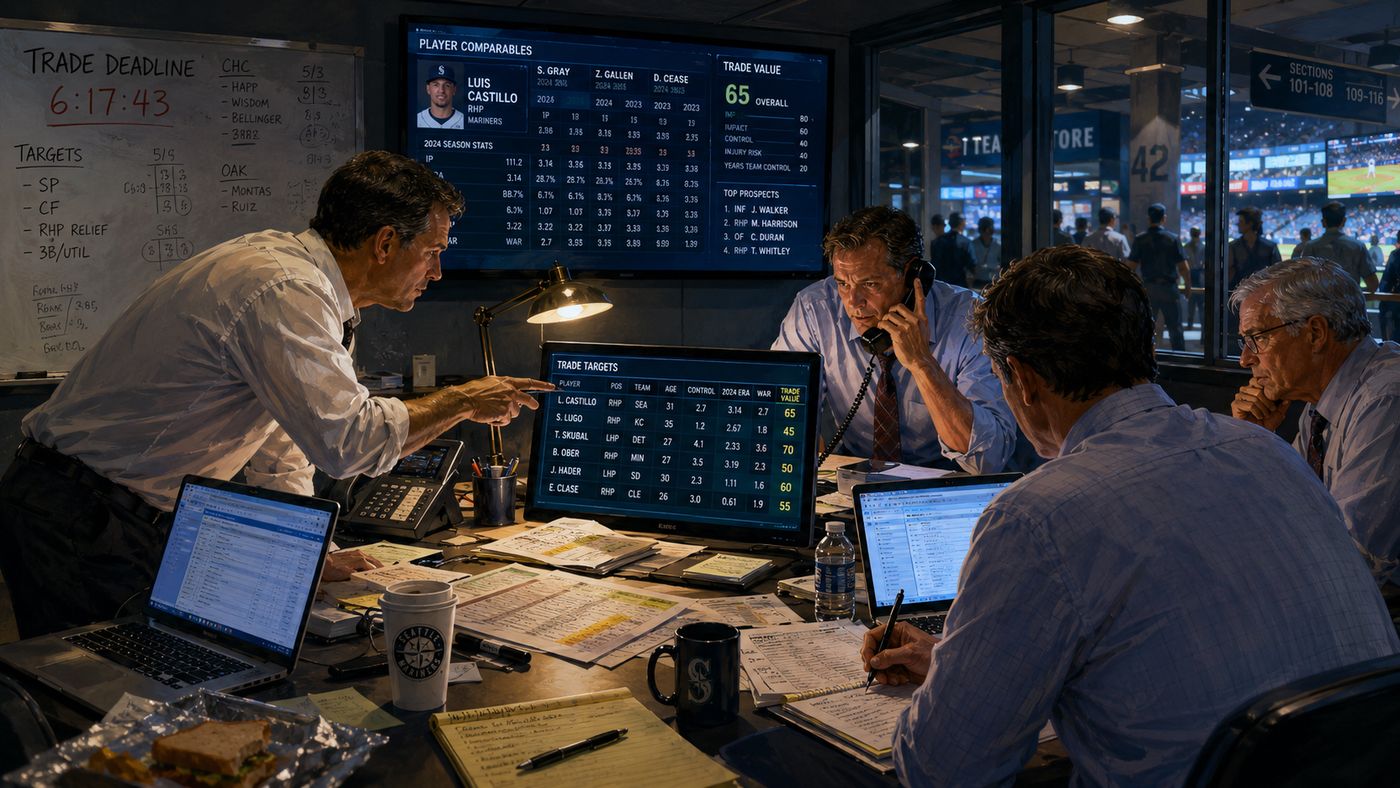
The Skubal deal is a rental — he becomes a free agent after this season and is expected to command a contract in the $200 million range — meaning the Dodgers are paying a prospect cost today for the right to use him in October and then re-sign him or watch him leave. The Tigers, for their part, received a package that restocks a farm system that will be building toward a competitive window in 2028 or 2029. This is how baseball's deadline works at its most efficient: a seller trades future stars for present wins, a buyer trades present prospects for present wins, and everyone places their bets before 6 p.m. on a Monday in August and then watches the rest of the season determine who bet correctly. For the Dodgers, the bet is that Skubal plus everything they already have is enough to win a third straight title. For every other team still in the market this morning, the bet is that whatever move they make in the next six hours will be the one that tips the scales. The clock is running. The phones are ringing. Baseball's most frantic day has begun.