August 28: A Dream Declared, a Child Murdered, and a Marriage Ended
August 28 holds one of those dates where the calendar's coincidences feel almost too pointed. In 1963, Martin Luther King Jr. stood at the Lincoln Memorial before a quarter million people and articulated a vision of American racial equality that became the most famous speech of the twentieth century — a vision whose urgency was inseparable from the violence and injustice it was demanding an end to. Eight years earlier, on the same date, a fourteen-year-old Black child named Emmett Till was abducted from his uncle's home in Mississippi by two white men and murdered — a killing whose brutality, and whose subsequent acquittal of the perpetrators, had helped galvanize the Civil Rights Movement that would eventually produce the March on Washington. The dream of August 28, 1963, and the murder of August 28, 1955, are not separate stories. They are the same story, told eight years apart. And in 1996, on the same date in a very different register, the most public marriage of the modern era was formally dissolved, and the monarchy it had briefly glamourized was left to reckon with what it had become. Three August twenty-eighths. Three moments that each meant something larger than themselves.
The Lincoln Memorial, 1963
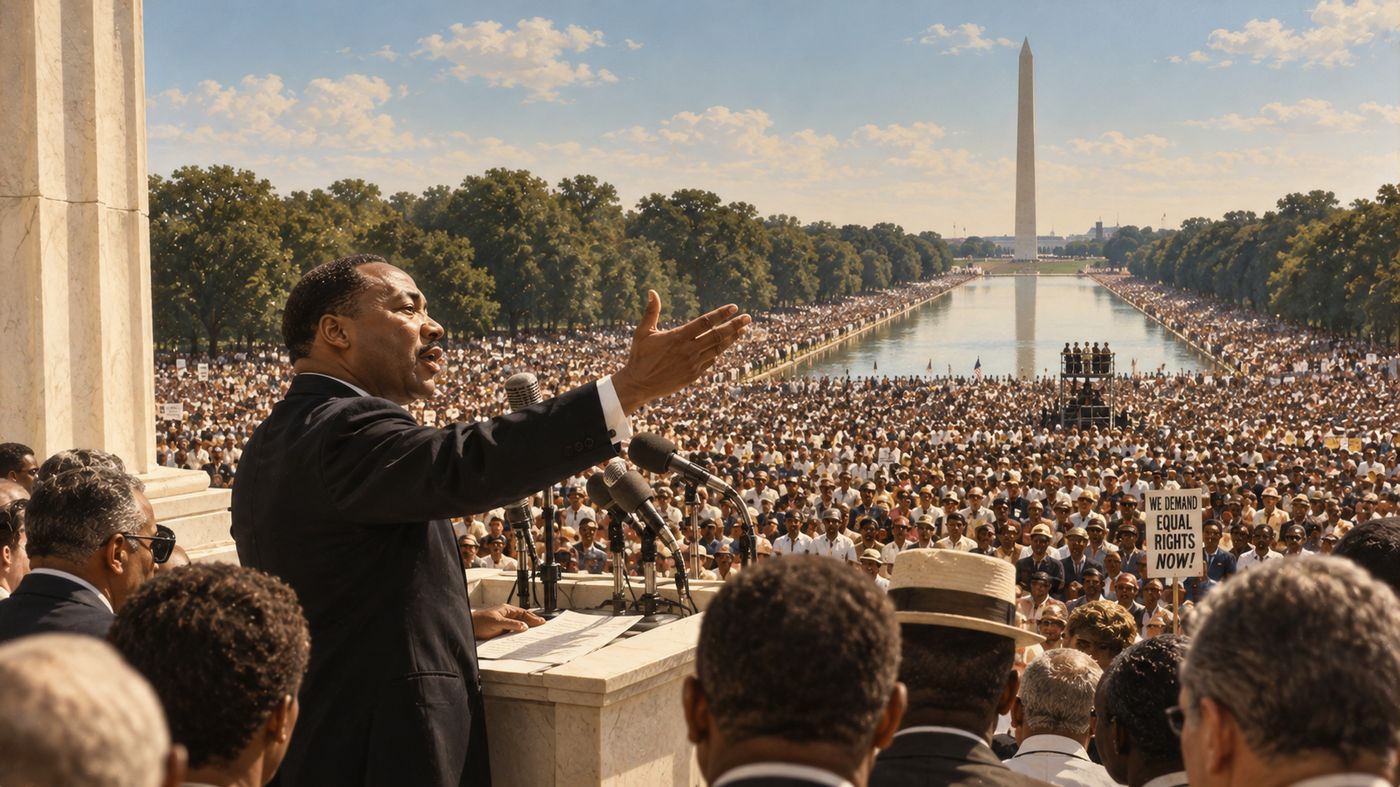
On August 28, 1963, Dr. Martin Luther King Jr. stood on the steps of the Lincoln Memorial in Washington, D.C., before an audience of approximately 250,000 people gathered for the March on Washington for Jobs and Freedom, and delivered the speech that would become the defining public address of the American Civil Rights Movement. King was the final speaker of the day, and his prepared remarks — the ones his staff had reviewed and which he had largely delivered before in other forms — were not, initially, the "I Have a Dream" passage. He had nearly finished his prepared text when gospel singer Mahalia Jackson, standing nearby, called out: "Tell them about the dream, Martin." King set aside his prepared text and spoke from memory and from the accumulated force of years of preaching, articulating a vision of a nation in which his four children would be judged not by the color of their skin but by the content of their character — a sentence that has been quoted, debated, and invoked in almost every subsequent conversation about race in America.
The speech King delivered on August 28, 1963, was the rhetorical peak of a movement that had been building for years and that would achieve its most significant legislative victories in the months and years that followed: the Civil Rights Act of 1964, which outlawed discrimination based on race, color, religion, sex, or national origin; the Voting Rights Act of 1965, which prohibited discriminatory voting practices; and the Fair Housing Act of 1968, passed six days after King's assassination in Memphis. The march that brought 250,000 people to Washington on August 28 was the largest political demonstration in American history at that point, organized around demands for jobs and freedom that were as economic as they were civil — a fact that the speech's transcendence has sometimes obscured. King was thirty-four years old when he stood at the Lincoln Memorial. He would be dead in four and a half years. The speech of August 28, 1963, was received as a statement of aspiration. It has since become a document of judgment, against which every subsequent generation of Americans has been measured.
Money, Mississippi
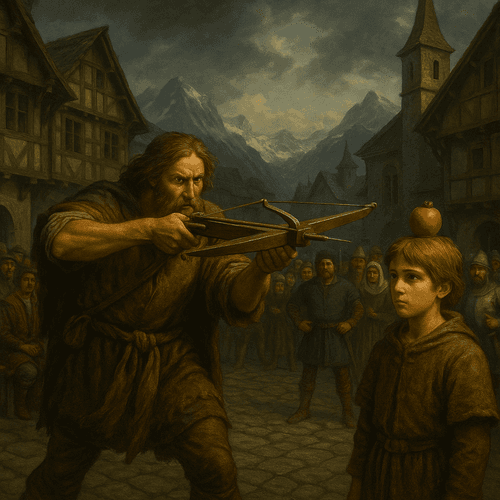
On August 28, 1955, Emmett Till — a fourteen-year-old Black teenager from Chicago who was visiting his great-uncle Moses Wright in the small Delta town of Money, Mississippi — was abducted from Wright's home in the middle of the night by Roy Bryant and his half-brother J.W. Milam. The two white men had come for Till because of a reported interaction at Bryant's grocery store a few days earlier, in which Till had allegedly whistled at or otherwise offended Carolyn Bryant, Roy's wife — an account that Carolyn Bryant later partially recanted in an interview for a 2017 book, telling the author that the most inflammatory part of her original testimony was not true. Till was taken from the house, beaten savagely, shot in the head, and thrown into the Tallahatchie River with a 75-pound cotton gin fan tied around his neck with barbed wire. His body was found three days later.
Mamie Till, Emmett's mother, made a decision of extraordinary courage and consequence: she insisted on an open-casket funeral in Chicago, so that the world could see what had been done to her son. The photographs of Emmett Till's body, published in Jet magazine and the Chicago Defender, were seen by millions of people and produced a wave of outrage that became one of the most significant catalysts for the Civil Rights Movement. Rosa Parks later said that she was thinking of Emmett Till when she refused to give up her seat on a Montgomery bus in December 1955 — four months after his death. Bryant and Milam were tried for murder by an all-white jury in Mississippi, acquitted after sixty-seven minutes of deliberation, and subsequently admitted to the killing in a magazine interview, protected from further prosecution by double jeopardy. Neither was ever punished. In 2022, a grand jury in Mississippi declined to indict Carolyn Bryant, who was still alive, on any charge. Emmett Till was posthumously awarded the Congressional Gold Medal in 2022. The murder of August 28, 1955, is one of the reasons that the speech of August 28, 1963, needed to be given.

The Decree Absolute
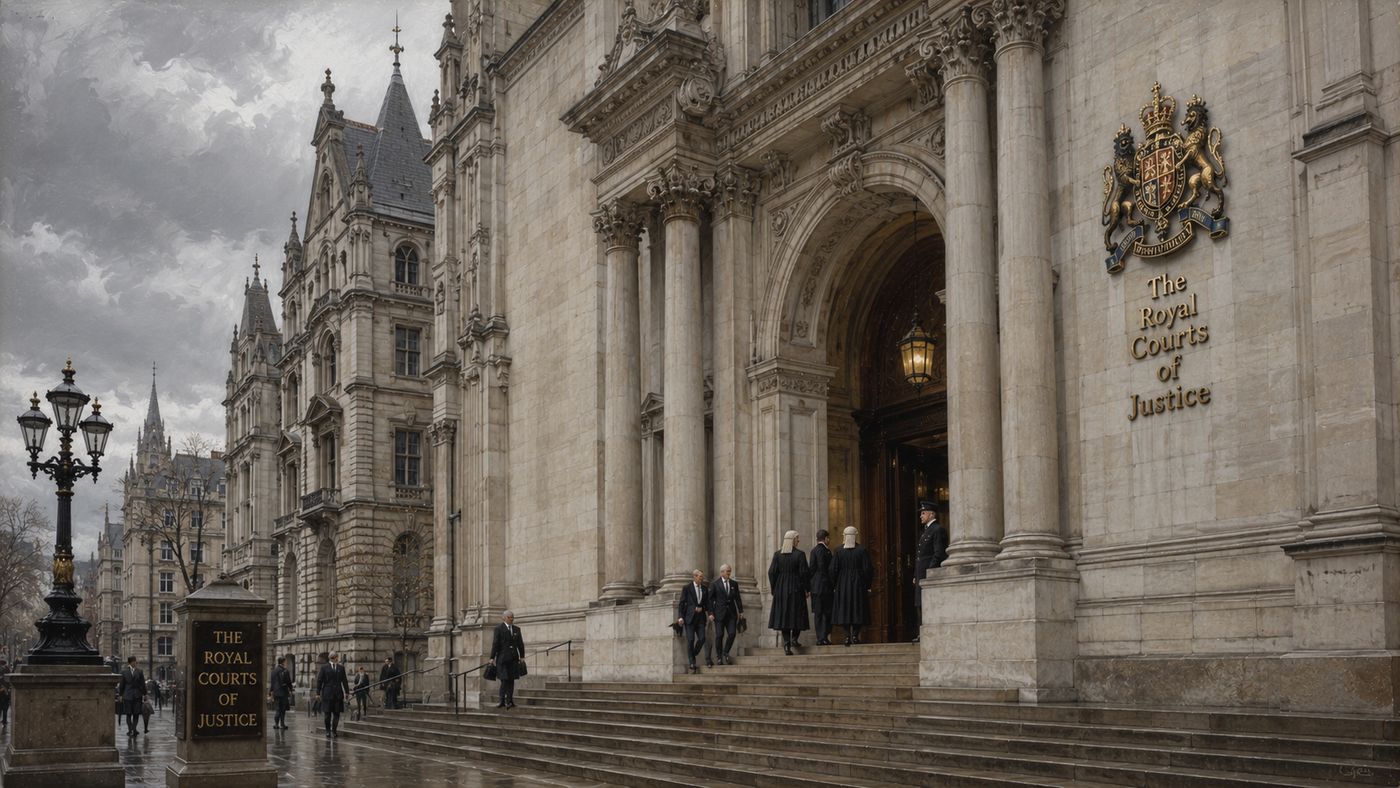
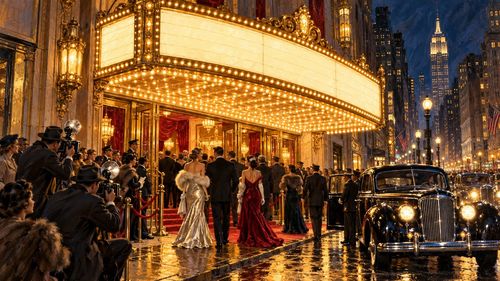
On August 28, 1996, the divorce between Charles, Prince of Wales, and Diana, Princess of Wales, was finalized — a decree absolute that formally ended a marriage celebrated fifteen years earlier as a fairy tale and dissected, in the intervening years, as one of the most thoroughly examined private failures in the history of public life. The couple had separated in December 1992, and in the years that followed, both had participated in candid television interviews that had revealed the extent of the marriage's breakdown — Charles in a 1994 documentary in which he confirmed his relationship with Camilla Parker Bowles, Diana in a 1995 BBC interview in which she described the marriage as "crowded" and spoke with painful directness about her struggles with bulimia, self-harm, and depression. The institution of the monarchy, which had managed its image with careful reserve for decades, found itself unable to control a story that both principals seemed almost compelled to tell.
The decree absolute of August 28, 1996, dissolved a union that had been watched by an estimated 750 million television viewers at its wedding in July 1981, making it one of the most witnessed marriages in human history and its ending proportionally one of the most discussed. Diana retained the title Princess of Wales but lost the designation "Her Royal Highness" — a stripping of status that generated considerable public controversy. She died in a car crash in Paris on August 31, 1997 — barely a year after the divorce was finalized — under circumstances that prompted conspiracy theories and an outpouring of public grief that surprised even those who had been observing the public's attachment to her closely. Charles married Camilla Parker Bowles in 2005 and became King Charles III upon the death of Queen Elizabeth II in 2022. The marriage that ended on August 28, 1996, had been, whatever else it was, the most consequential love story in modern British public life — and its dissolution reshaped the relationship between the royal family and the people who were watching it in ways that the institution is still working through.