August 27: A Volcano Heard Round the World, a Book Born from a Bar Bet, and a Court Case That Changed Sports
August 27 holds three stories about the record books — one that rewrote what we thought volcanoes were capable of, one that created the institution of the record book itself, and one that forced the record books of sport to reckon with who was allowed to compete. In 1883, an island in the Sunda Strait between Java and Sumatra exploded with a force that was heard in Australia and felt in the English Channel, sending tsunamis that killed more than 36,000 people and ejecting enough material into the upper atmosphere to cool the global climate for years. Seventy-two years later, an argument about game birds in an Irish pub produced a slim reference volume that would eventually become one of the best-selling copyrighted books in history. And in 1976, a tennis player who had transitioned from male to female was barred from the U.S. Open, forcing a legal battle that produced a landmark ruling — and a conversation about inclusion in sport that continues today. Three August twenty-sevenths. Three encounters with the extreme, the unexpected, and the stubbornly contested.
Krakatoa
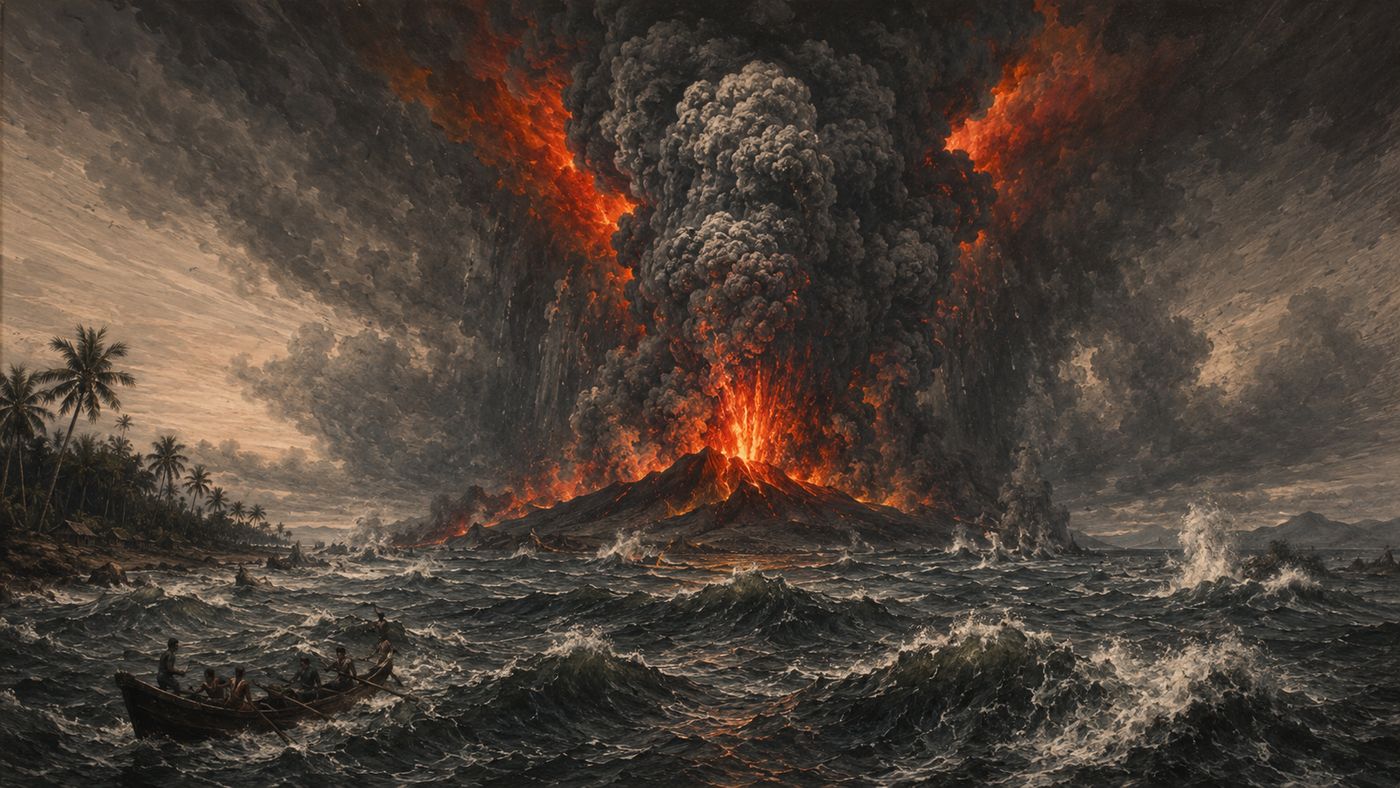
On August 27, 1883, the volcanic island of Krakatoa — located in the Sunda Strait between Java and Sumatra in what is now Indonesia — erupted in one of the most violent geological events in recorded history. The eruption had been building for several months, and warning explosions on August 26 had already sent local populations into a state of alarm. The climactic explosion of August 27, at approximately 10:02 in the morning local time, was caused by the collapse of the volcanic cone into the empty magma chamber below — a caldera collapse that triggered tsunamis reaching heights of up to 30 meters and traveling at speeds of hundreds of miles per hour across the Sunda Strait and beyond. The sound of the explosion was heard in Australia, nearly 5,000 kilometers away, in Rodrigues Island near Mauritius in the Indian Ocean, and in the Andaman Islands. It is widely regarded as the loudest sound in recorded human history.
The human death toll from the Krakatoa eruption of August 27, 1883, was catastrophic: more than 36,000 people were killed, the vast majority of them by the tsunamis rather than the eruption itself, as the waves struck the coastlines of Java and Sumatra with little warning and no evacuation infrastructure. Entire coastal towns were destroyed. The eruption also had profound global effects: it ejected an estimated 21 cubic kilometers of rock and ash into the atmosphere, enough to lower global temperatures by approximately 1.2 degrees Celsius over the following year and produce vivid red sunsets around the world that artists including Edvard Munch later said inspired their work. The eruption was extensively documented by the scientific community — it occurred at a time when global telegraph networks could transmit reports rapidly, making Krakatoa the first major volcanic event to be tracked and reported internationally in near-real time. A new island, Anak Krakatau — "Child of Krakatoa" — has grown from the caldera since 1927 and remains active today.
The Record Book
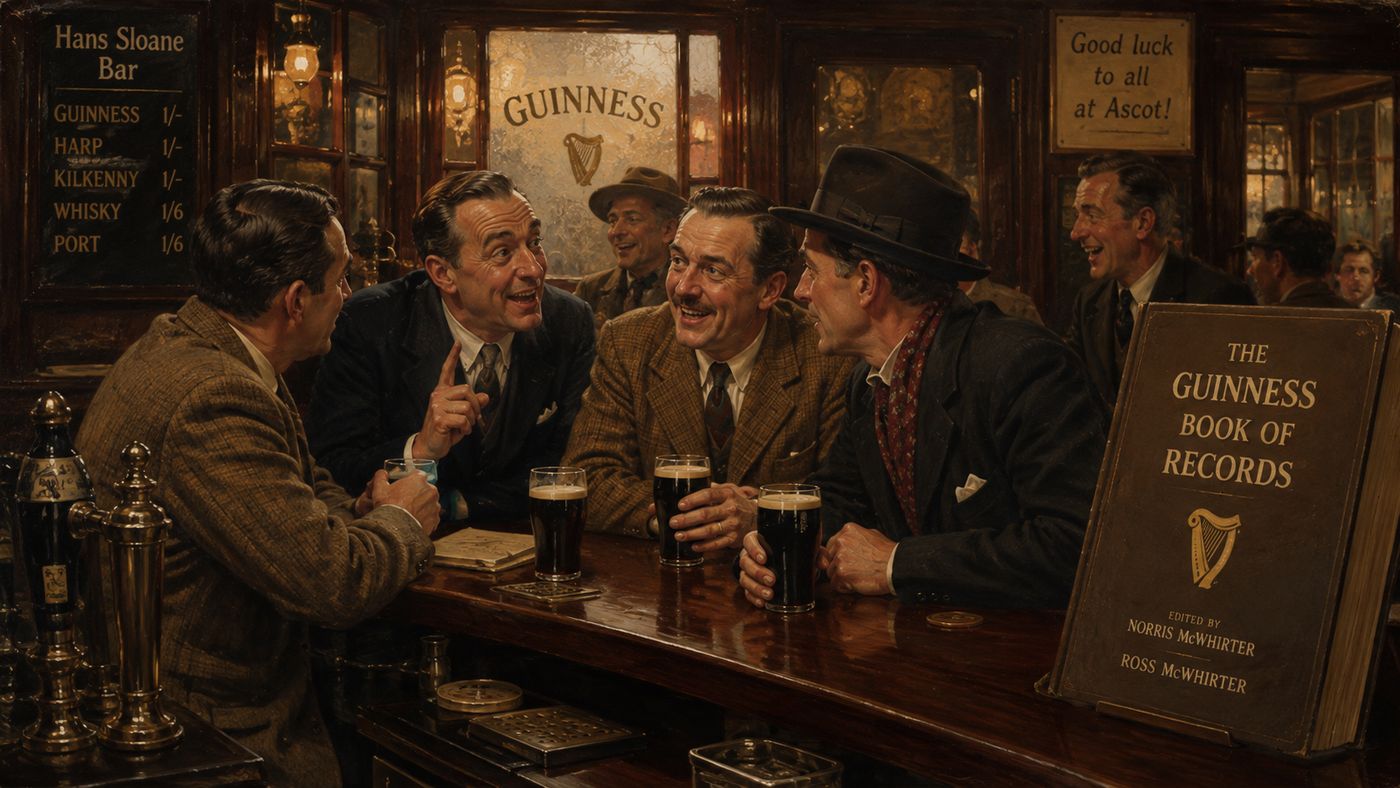
On August 27, 1955, the first edition of The Guinness Book of Records was published in London — a 198-page reference volume that had emerged from a conversation at a hunting party in County Wexford, Ireland, in 1951, when Sir Hugh Beaver, managing director of the Guinness Brewery, found himself unable to settle an argument about whether the golden plover or the grouse was Europe's fastest game bird. Beaver recognized that such disputes — unanswerable by the reference books then available — must occur regularly in pubs across Britain, and commissioned brothers Norris and Ross McWhirter, twin fact-checkers and researchers, to compile a reference book of records and superlatives that could settle them. The result, published four years later on August 27, was immediately successful: it sold out its first print run before Christmas 1955 and became the United Kingdom's bestselling book of 1955.
The book published on August 27, 1955, has grown into one of the most recognizable reference works in the world. Now known as the Guinness World Records, it has been published annually since its first edition and has sold more than 143 million copies in more than 100 countries, making it one of the best-selling copyrighted books in history — outsold only by the Bible and the Koran among non-fiction works. The records it tracks have evolved considerably from the original compendium of natural and human superlatives: today's editions include intentionally bizarre human achievement records alongside the geographical, biological, and athletic records that formed the original core. The institution of the Guinness World Record has also created a global infrastructure of record-setting attempts, certification procedures, and adjudicators that has given millions of people a framework for competing at the extreme edges of human possibility. The pub argument that started on an Irish estate in 1951 has become, in its way, one of the more consequential publishing ideas of the twentieth century.
The Right to Compete
On August 27, 1976, Renée Richards — a forty-one-year-old ophthalmologist and tennis player who had transitioned from male to female and established a competitive record on the women's professional circuit — was barred from competing in the U.S. Open after the United States Tennis Association adopted a chromosome test requirement that she, with XY chromosomes, could not pass. Richards had already competed in women's tournaments following her transition and had qualified for the U.S. Open on the basis of her results; the chromosome policy was adopted specifically in response to her application to compete, effectively creating a new barrier that had not previously existed in American professional tennis. She challenged the exclusion legally, filing suit in New York State Supreme Court on the grounds that the USTA's chromosome policy constituted discrimination.
The legal battle that followed the exclusion of August 27, 1976, produced a landmark ruling in 1977: the New York State Supreme Court found in Richards's favor, holding that the requirement that she pass a chromosome test as a condition of competing in the U.S. Open was grossly unfair, discriminatory, and inequitable, and ordering that she be allowed to compete. Richards competed in the 1977 U.S. Open and reached the doubles final with partner Betty Ann Stuart. Her case is widely cited as the first significant legal ruling on transgender rights in the United States and helped establish the principle that sex reassignment surgery constituted sufficient basis for recognition of a new gender identity for legal purposes. The debate about transgender athletes in competitive sport that her case initiated in 1976 has not been resolved in the decades since — it has, if anything, intensified as the number of openly transgender athletes has grown and the competitive implications have been contested across multiple sports and jurisdictions. Renée Richards opened a conversation that the sports world is still having.