August 25: Paris Is Free, a Cold War Begins, and a Storm Finds Its Name
August 25 is a day for transitions — for the moment when one chapter closes and another, not yet fully legible, begins to take shape. In 1944, the German garrison in Paris surrendered and a city that had been under occupation for four years erupted in celebration, in a liberation that was as much an act of restoration for France's sense of itself as it was a military event. One year and ten days later, with the formal peace not yet a fortnight old, an American soldier was killed by Chinese Communist forces in a confrontation that historians would later call the first American casualty of the Cold War — a reminder that the end of one conflict does not mean the beginning of peace. And in 1979, a tropical disturbance over the Atlantic organized itself into a named storm that would become one of the most powerful hurricanes of the century, rewriting the protocols for how the United States prepares for and responds to major hurricanes. Three August twenty-fifths. Three transitions, each one marking the start of something that had not been there before.
Paris, August 25
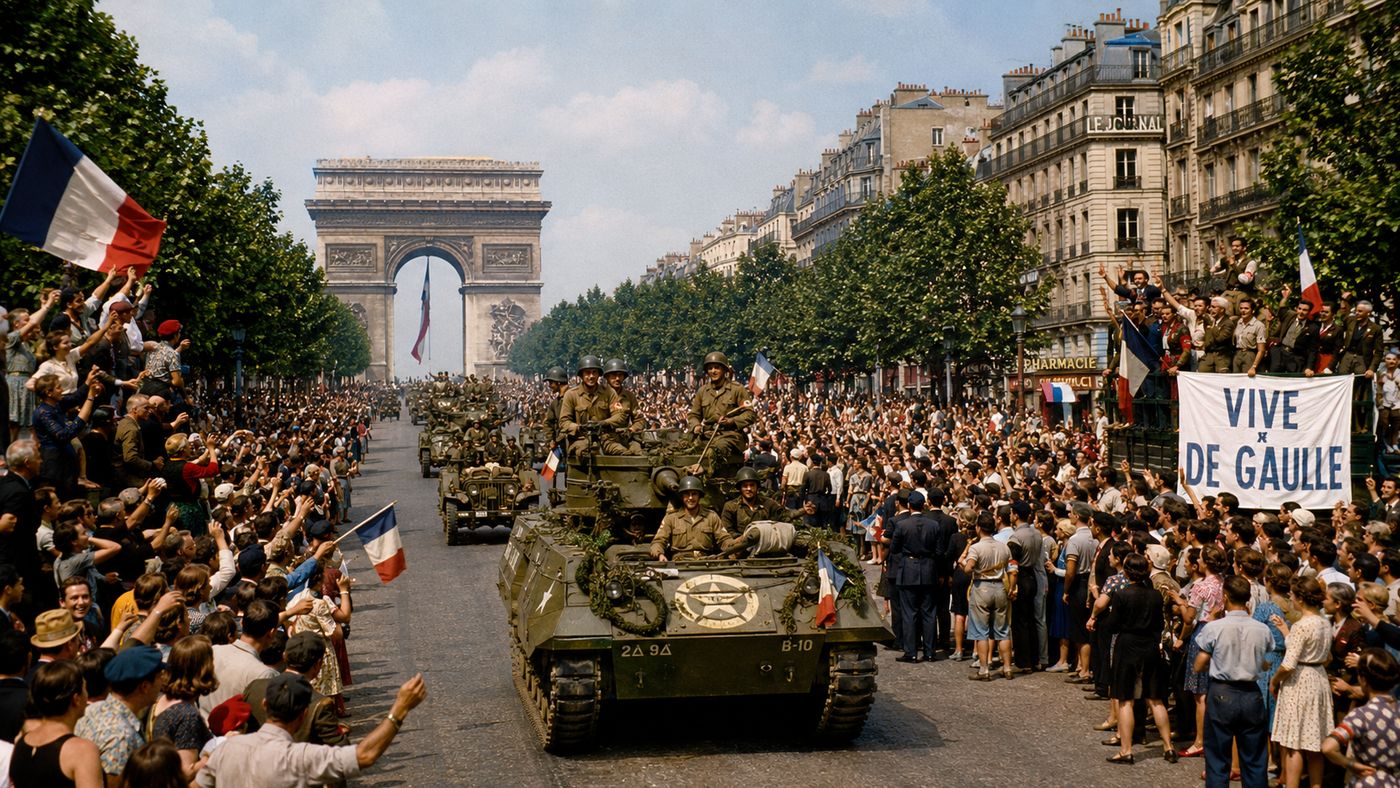
On August 25, 1944, German General Dietrich von Choltitz — commander of the Paris garrison and the man who had received orders from Adolf Hitler to destroy the city rather than surrender it — signed the capitulation of German forces in Paris, ending four years of occupation and bringing Free French forces and the Allied armies into the city in one of the most emotionally charged moments of the entire war. The liberation had been building for days: the French Resistance had risen in insurrection on August 19, French forces of the 2nd Armored Division had entered the city on August 24, and street fighting had continued through the night. Von Choltitz's decision not to carry out Hitler's order to demolish Paris's bridges, flood its sewers, and destroy its monuments before surrendering has been the subject of historical debate — whether it was moral conscience, military pragmatism, or disillusionment with a cause he believed lost — but the result was a city that survived its occupation largely intact.
The scenes that followed the surrender on August 25, 1944, are among the most documented of the entire war: Parisians flooding the streets, French General Charles de Gaulle leading a triumphant march down the Champs-Élysées on August 26, the ringing of bells across the city, and the overwhelming emotional release of a population that had lived under occupation for 1,500 days. The liberation of Paris was not merely a military event — it was a performance of national identity, a declaration that France existed and had not been extinguished, that carried weight far beyond the city itself. The collaborators, the resisters, the vast middle of Parisians who had simply tried to survive — all of them walked into a city that was suddenly, spectacularly free, and all of them had to reckon with what they had done and not done during the years it had not been. The liberation was a beginning as much as an ending — the beginning of France's long and unfinished accounting with its own conduct under occupation.
The First Casualty
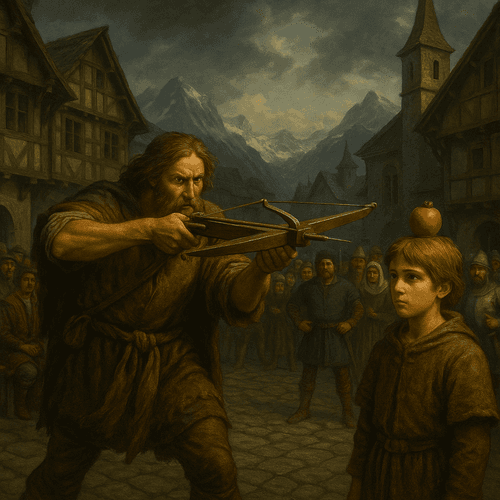
On August 25, 1945 — ten days after Japan's formal surrender ended the Second World War — American Army Air Forces Captain John Birch was killed by Chinese Communist soldiers in Shandong Province, China, during a confrontation in the chaotic transition period following the war's end. Birch was a Baptist missionary from Georgia who had joined the Army Air Forces and worked as an intelligence officer and interpreter, becoming a skilled operative in the China-Burma-India theater because of his fluency in Chinese. He and his small patrol encountered a group of Communist Chinese soldiers near the city of Suxian; an argument erupted over the patrol's refusal to surrender their weapons, and Birch was shot and killed. He was twenty-seven years old, and had survived the entire war only to be killed in the ten days between Japan's surrender and the formal signing of the peace.
John Birch is primarily remembered today not for his own history but for the organization that took his name thirteen years after his death: the John Birch Society, founded in 1958 by Robert Welch and other conservative activists who chose Birch as a symbol of anti-Communist martyrdom. Welch argued that the American government had been infiltrated by Communists at the highest levels and that Birch's death had been deliberately covered up — claims that were widely disputed and that placed the Society at the outer edge of the American conservative movement. The organization's anti-Communist activism and conspiracy theories about internal subversion made it both influential and controversial through the 1960s. Birch himself, by most historical accounts, would likely have been uncomfortable with the use made of his memory — he was a sincere missionary and soldier, not a political symbol, and the confrontation in which he died was more the product of chaotic post-war conditions than of Cold War ideology. The death of August 25, 1945, has been claimed by a larger story than the one John Birch was actually living.
Hurricane David
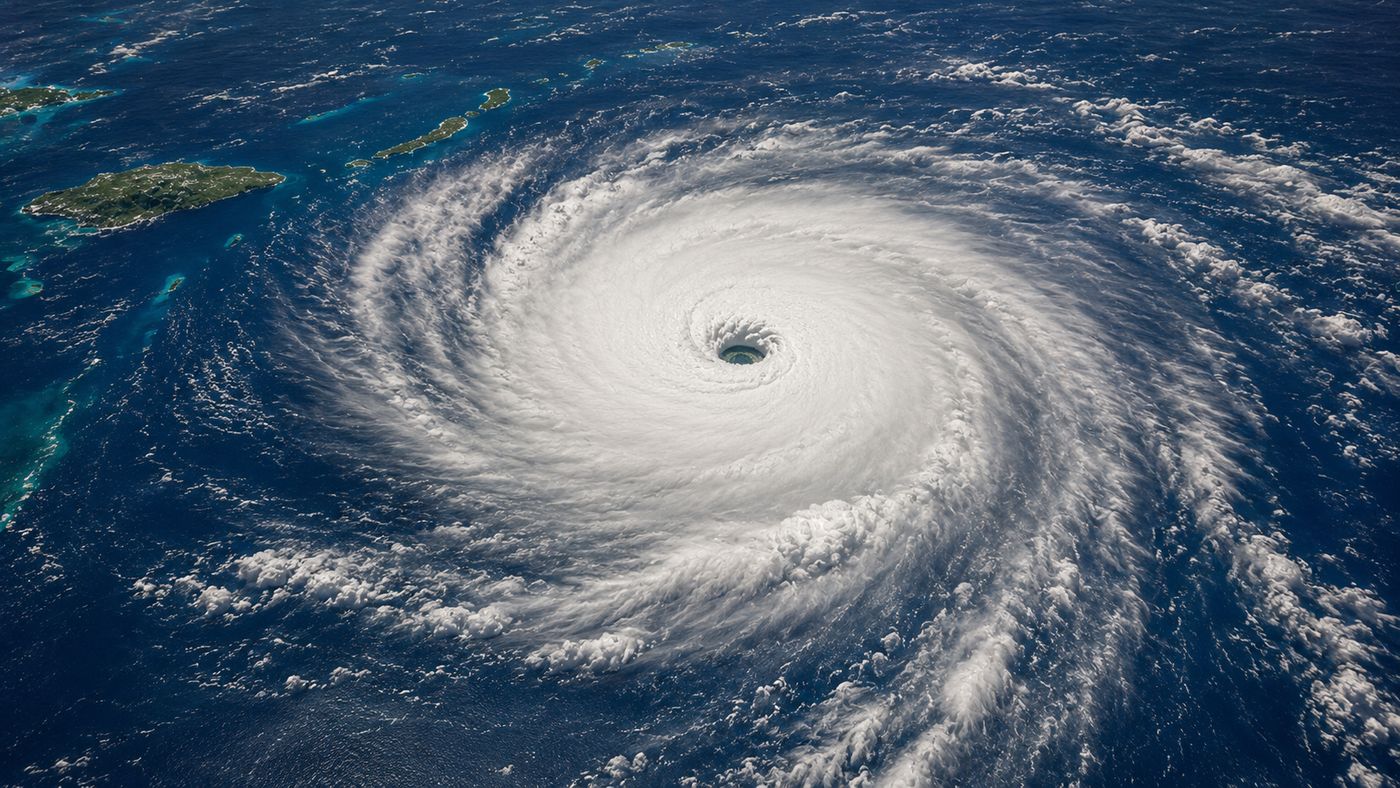
On August 25, 1979, a tropical disturbance over the Atlantic Ocean was officially classified as Tropical Storm David — the beginning of the meteorological organization that would transform it into one of the most powerful and destructive Atlantic hurricanes of the twentieth century. David intensified rapidly as it moved westward through the Caribbean, reaching Category 5 status with sustained winds of 175 miles per hour before making landfall in Dominica on August 29, devastating the island so thoroughly that it took years to recover. The storm then struck the Dominican Republic on August 31, causing catastrophic flooding and killing an estimated 2,000 people. By the time David made landfall in Florida on September 3 and moved up the Eastern Seaboard, it had weakened somewhat but remained dangerous, causing additional deaths and damage from Florida to New England.
Hurricane David's total death toll is estimated at more than 2,000 people, making it one of the deadliest Atlantic hurricanes of the late twentieth century. In the Dominican Republic alone, approximately 200,000 people were left homeless. The storm's rapid intensification and the inadequacy of the emergency response in both the Caribbean and the United States prompted significant reviews of hurricane preparedness protocols — reviews that led, over the following decade, to improvements in storm tracking technology, evacuation planning, and the public communication of hurricane risk that became the foundation of modern American hurricane emergency management. The tropical storm that was named David on August 25, 1979, was not yet the disaster it would become — it was still organizing, still gathering strength over warm Atlantic water, still becoming the thing that would reshape the systems designed to respond to it.