The Strait Is Opening and Closing at the Same Time
Over the weekend, Iran quietly granted permission for a number of Iraqi oil tankers to transit the Strait of Hormuz — the first significant easing of shipping restrictions through the world's most critical oil passage since the war began 178 days ago. Iran's state news agency IRNA reported the decision was made following repeated requests from Baghdad, with Iranian parliament speaker Mohammad Baqer Qalibaf's visit to Iraq providing the diplomatic channel. Iraq, which exports roughly 3.3 million barrels of oil per day and has suffered enormous economic damage from the strait's closure, had long been pressing Tehran for an exemption. Iran's military confirmed the exemption applies specifically to "brotherly Iraq." Today, simultaneously, new U.S. Treasury sanctions targeting Iranian crude oil, petrochemical products, and petroleum products take effect — revoking an earlier oil-sale waiver and tightening the economic noose around a country whose inflation is running above 300 percent and whose oil revenues have been dramatically curtailed for six months. The strait is, in a narrow technical sense, slightly more open than it was last week. The economic walls around Iran are simultaneously higher. Both things are true. Neither resolves anything.
A War of Contradictions in Its Seventh Month
The 2026 Iran conflict has been characterized throughout its 178 days by a pattern of simultaneous escalation and partial de-escalation that has made it extraordinarily difficult to assess. The June 15 MOU declared the war over; the U.S. reinstated its blockade in July. Trump declared "total control" of the strait in August; the transit rate at that moment was eight ships per day. The economic warfare announcement on August 19 was framed as the most devastating economic operation in history; within days Iran was selectively reopening the strait to friendly nations. Iranian President Pezeshkian said publicly over the weekend that Tehran "cannot continue with war forever" and defended the June agreement with the U.S. — a striking break from the maximalist rhetoric of his own supreme leader's camp, and a sign of genuine internal fracture within Iranian leadership. Iran's military warned simultaneously that any neighboring countries joining the U.S. economic crackdown would be treated as enemies. The strait carries roughly 20 percent of the world's seaborne oil; it is currently handling about 20 percent of its pre-war traffic — approximately 236 ships over the past 19 days, compared to 130 per day before February 28. U.S. gas prices stand at $4.11 per gallon, up nearly a dollar from this time last year. The global economy has been absorbing this disruption for six months and is showing signs of the strain: Asian manufacturing indexes are contracting, European energy costs have risen sharply, and Saudi Arabia — whose oil revenues must transit the strait — is drawing down financial reserves at an accelerating rate.
The Iraqi tanker exemption is meaningful but narrow. Iraq is Iran's most important Arab neighbor, a country that shares a long and complicated border, hosts significant Iranian-backed militia forces, and has walked a careful line between its American security relationship and its Iranian economic and cultural ties throughout the conflict. Baghdad's success in extracting a strait exemption from Tehran reflects the depth of that relationship — and Iran's interest in keeping Iraq, which did not join the U.S. economic pressure campaign, in the "friendly" column. The exemption does not extend to Saudi Arabia, the UAE, Qatar, or Kuwait — the Gulf states whose oil dominates global markets and whose strait access would be economically transformative if restored. Iran warned separately that any countries joining U.S. sanctions would face consequences including potential detention or confiscation of their vessels. The Treasury's new sanctions, taking effect today, revoke the general license that had allowed limited Iranian oil sales under the now-collapsed MOU framework. Bessent has described the package as "Economic D-Day." Iranian officials have described it as an act of desperation by a country with $40 trillion in national debt. Both descriptions reflect the same underlying reality: six months in, neither side has achieved its stated objectives, and the costs to both — and to the global economy that sits between them — keep rising.
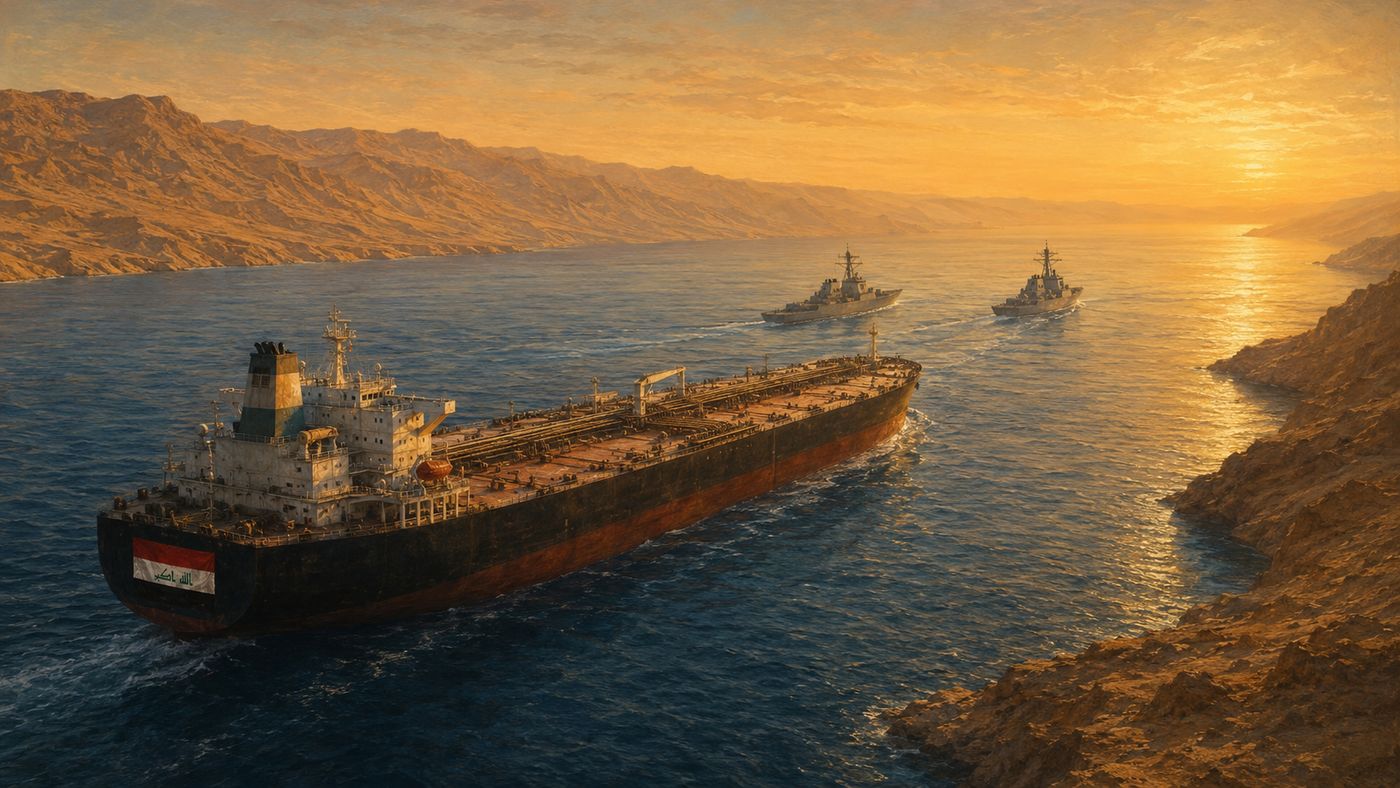
The clearest signal that the conflict's trajectory may be shifting came from Pezeshkian's weekend remarks — the first time a senior Iranian official has publicly acknowledged that the war cannot continue indefinitely, in terms that directly contradicted the hardline position of the supreme leader's camp. Whether that represents a genuine opening or a tactical maneuver designed to relieve domestic pressure is unclear; Iran's leadership has spoken with multiple voices throughout the conflict, making it difficult to identify which faction's position reflects actual policy. What is clear is that the economic pressure campaign announced by Trump last week is already having a measurable effect: the UAE's swift suspension of trade with Iran after the August 19 announcement demonstrated that secondary sanctions threats can move Gulf states, and the Treasury's new measures today remove the legal pathway that had allowed limited Iranian oil sales to continue. The strait remains the central pressure point. Iraqi tankers are moving through it today, for the first time in months, in a narrow corridor of Iranian-granted permission. American warships are still there. The sanctions are still tightening. The war, by any reasonable definition, continues. The shape it takes in the weeks ahead may depend on which of today's contradictory signals — the open door for Iraq, the closed door of sanctions — Iran chooses to build on.