August 24: A Mountain Buries a City, a Capital Burns, and a Nation Is Born
August 24 is a day for catastrophes that became, in time, something else entirely. In 79 AD, a volcano that the people living beneath it had not understood to be a volcano erupted without warning and buried four Roman cities under ash and pumice — a disaster of the ancient world so complete that those cities lay undisturbed for nearly seventeen centuries before excavation revealed them as one of the most extraordinary archaeological sites in history. Seventeen hundred and thirty-five years later, British soldiers marched into Washington and set fire to the White House and the Capitol — the only time in American history a foreign power has occupied and burned the seat of the federal government, an event so humiliating that it galvanized a nation's sense of itself. And in 1821, after eleven years of revolution, Spain formally acknowledged that Mexico was a country it no longer owned. Three August twenty-fourths. Three fires, each one leaving something very different in its wake.
79 AD
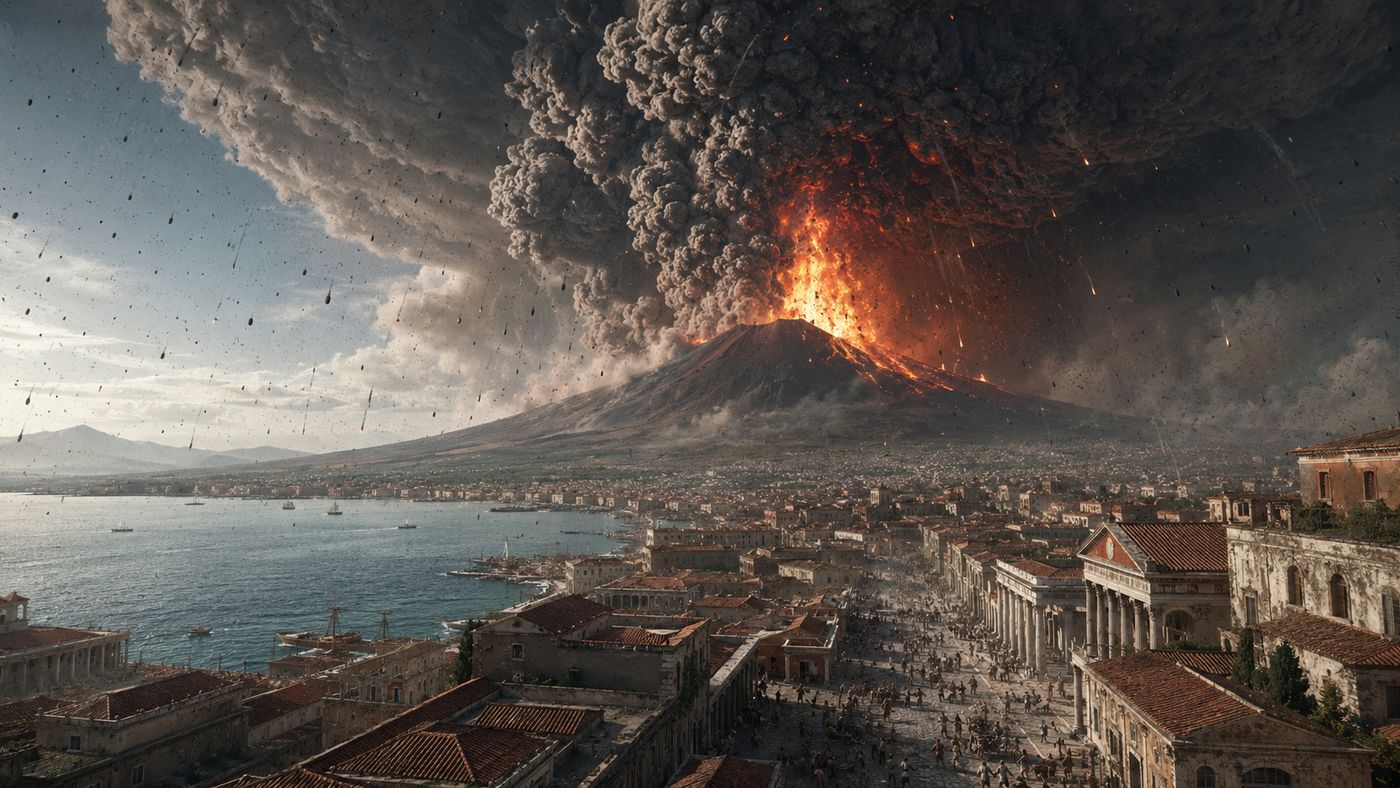
On August 24, 79 AD, Mount Vesuvius erupted in one of the most catastrophic volcanic events in the recorded history of the ancient world, sending a column of ash and pumice 33 kilometers into the sky and burying the Roman cities of Pompeii, Herculaneum, Oplontis, and Stabiae under meters of volcanic material. The eruption came without meaningful warning to the populations living in the shadow of the mountain — Vesuvius had been dormant for centuries, and the region around the Bay of Naples was among the most prosperous and densely settled in the Roman world. The people of Pompeii, a commercial city of approximately 11,000 inhabitants, had no understanding that the mountain above them was a volcano; prior tremors in the region had been attributed to other causes. When the eruption began, some fled and survived; those who sheltered in place or tried to flee too late were overtaken by pyroclastic surges — superheated clouds of gas and ash moving at catastrophic speed — that killed nearly everyone they reached. An estimated 2,000 people died in Pompeii alone.
The catastrophe of August 24, 79 AD, became, across nearly two millennia, one of the most important archaeological events in human history. The ash that buried Pompeii sealed it — preserving buildings, artwork, food, furniture, graffiti, and the plaster casts of the bodies of those who died — in a condition that has provided an extraordinarily detailed picture of daily life in a Roman city of the first century. Excavations began in the 18th century and have continued ever since; as of this writing, approximately a third of the site remains unexcavated. The letters of Pliny the Younger, who witnessed the eruption from across the bay and described it in vivid detail in two letters to the historian Tacitus, constitute the only eyewitness account of a volcanic eruption in the ancient literary record and gave the world the word "Plinian" for eruptions of this type. Vesuvius has erupted many times since 79 AD and is considered one of the most dangerous volcanoes in the world — it overlooks a metropolitan area now inhabited by approximately three million people who live, as the Romans did, in the shadow of a mountain they know very well is there.
The White House Burns
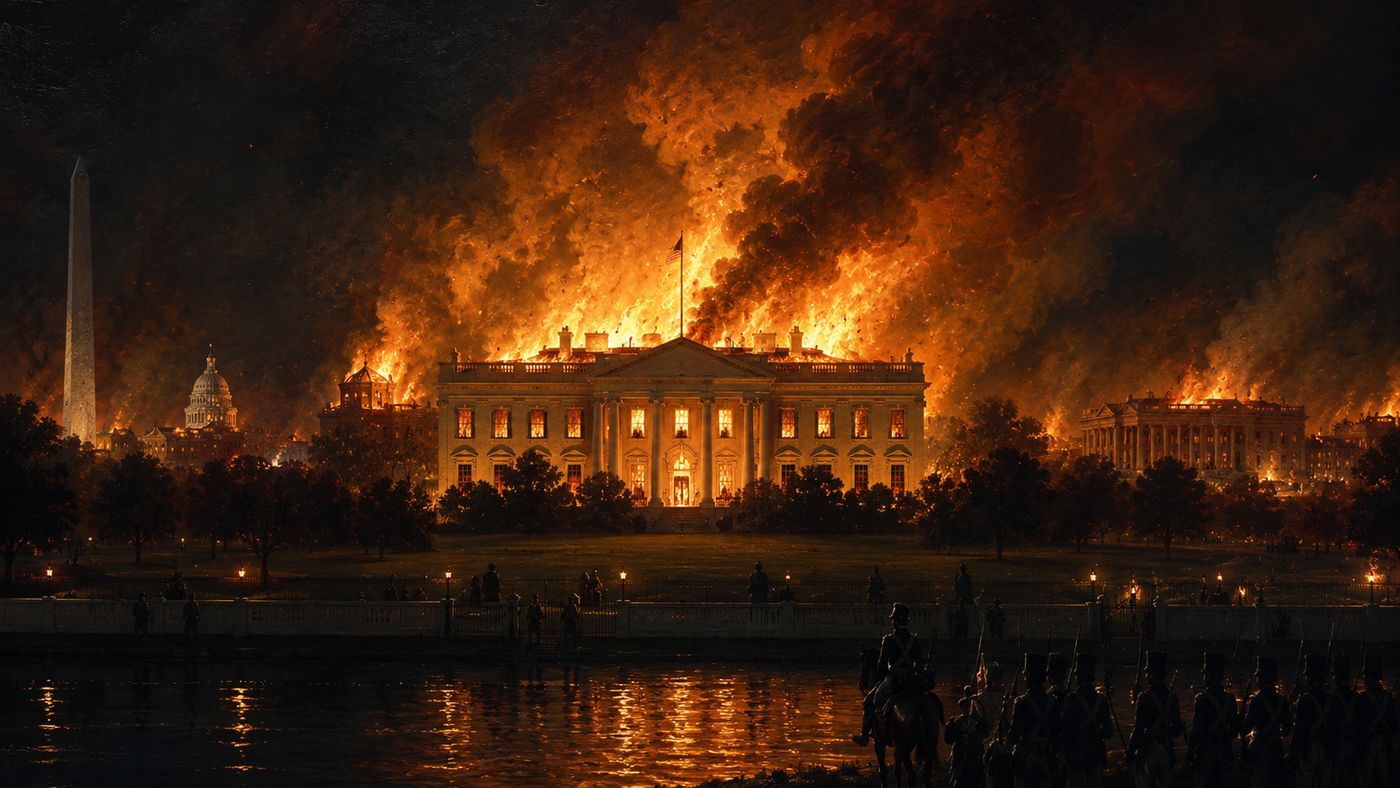
On August 24, 1814, British forces under Major General Robert Ross marched into Washington, D.C., and set fire to the White House, the Capitol building, the Treasury, and several other federal structures — the only time in American history that a foreign power has successfully occupied and destroyed the seat of the federal government. The attack came as part of the War of 1812's broader campaign in the Chesapeake region, following the American sack of York — present-day Toronto — the previous year, which the British cited as partial justification for the Washington raid. President James Madison and most of his cabinet had fled the city before the British arrived; Dolley Madison famously supervised the rescue of a portrait of George Washington and other valuables before departing the White House with hours to spare. When Ross and his troops arrived, they found the dinner table in the White House still set — reportedly sitting down to eat before putting it to the torch.
The burning of Washington on August 24, 1814, was a profound national humiliation for a republic that had declared itself independent of Britain barely three decades earlier. The news shocked American public opinion and contributed to a surge of nationalism that transformed the war's political dynamics — the same war that, two months later, would produce Francis Scott Key's poem about the flag still flying over Fort McHenry, which became "The Star-Spangled Banner." The British occupation of Washington lasted only about a day; a severe thunderstorm on the night of August 25 — some accounts describe a tornado — damaged British equipment and dampened fires, and the British withdrew, having accomplished their objective. Reconstruction of the White House and Capitol began relatively quickly, though the White House was not fully habitable again until 1817. The event that produced this crisis also contributed, ultimately, to the end of the War of 1812 — the destruction of Washington shocked British public opinion as well, and peace negotiations that had been stalled accelerated, producing the Treaty of Ghent in December 1814. The fire of August 24, 1814, was the low point. It did not stay the low point for long.
Three Centuries Over
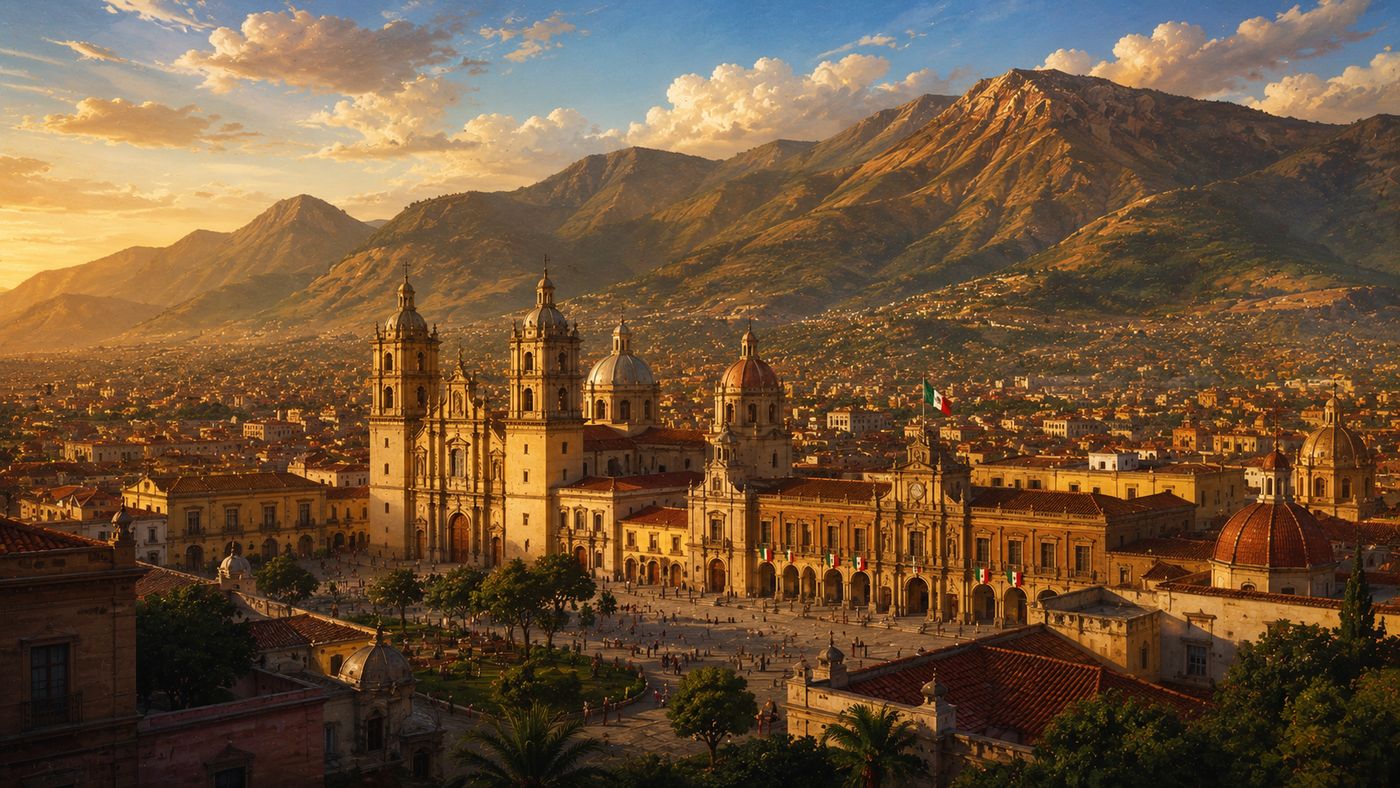
On August 24, 1821, Spain signed the Treaty of Córdoba, formally recognizing the independence of Mexico and ending more than three centuries of colonial rule over a territory that had once been the wealthiest and most populous in the Spanish Empire. The independence that Spain recognized on August 24 had been in contest for eleven years, beginning with the Grito de Dolores — the cry for independence issued by Father Miguel Hidalgo on September 16, 1810 — and passing through multiple phases of armed conflict, political upheaval, and shifting alliances. Hidalgo himself was captured and executed in 1811. The revolution he had started was carried forward by José María Morelos, who was also captured and executed in 1815, and by a succession of other leaders fighting a Spanish colonial government that proved more durable than any of them had anticipated. The final phase of the independence movement involved an unlikely alliance between the royalist general Agustín de Iturbide and the insurgent leader Vicente Guerrero, whose combined force compelled the newly arrived Spanish viceroy Juan O'Donojú to sign the recognition treaty on August 24.
The independence recognized on August 24, 1821, was the beginning of a long and difficult process of constructing a stable Mexican state. Iturbide briefly declared himself Emperor Agustín I before being overthrown in 1823; the republic that followed was destabilized by regional conflicts, foreign interventions, and the loss of roughly half its territory to the United States in the Mexican-American War of 1846–1848. But the date recognized in the Treaty of Córdoba — the formal end of Spanish sovereignty over a civilization that had existed in various forms for thousands of years before the conquest — is one of the most significant in the history of the Americas. Mexico celebrates its independence not on August 24, the date of Spain's formal recognition, but on September 16, the anniversary of Hidalgo's Grito de Dolores — honoring the moment when the people first declared their intention rather than the moment when their former colonizer finally acknowledged it. The distinction reflects a national judgment about where independence actually began.