August 20: A Ship Arrives at Point Comfort, a Rocket Heads to Mars, and a Teenager Hits a Home Run
August 20 carries three very different kinds of historical weight. In 1619, a ship carrying approximately twenty enslaved Africans anchored near the English settlement at Jamestown and introduced to North America the institution that would define, deform, and ultimately nearly destroy the republic that grew up in its shadow — a moment of such foundational consequence that its reverberations have not ceased after four centuries. Three hundred and fifty-six years later, a rocket lifted off from Cape Canaveral carrying a spacecraft bound for Mars, beginning an eleven-month journey that would produce the first sustained scientific investigation of another planet's surface. And in 1945, in the middle of all that history, a seventeen-year-old left-handed pitcher for the Cincinnati Reds hit a home run off a major league pitcher, becoming the youngest player in the history of baseball to accomplish the feat. Three August twentieths. Three arrivals at different edges of what human beings are capable of — the worst, the most aspirational, and the unexpectedly delightful.
Point Comfort, 1619
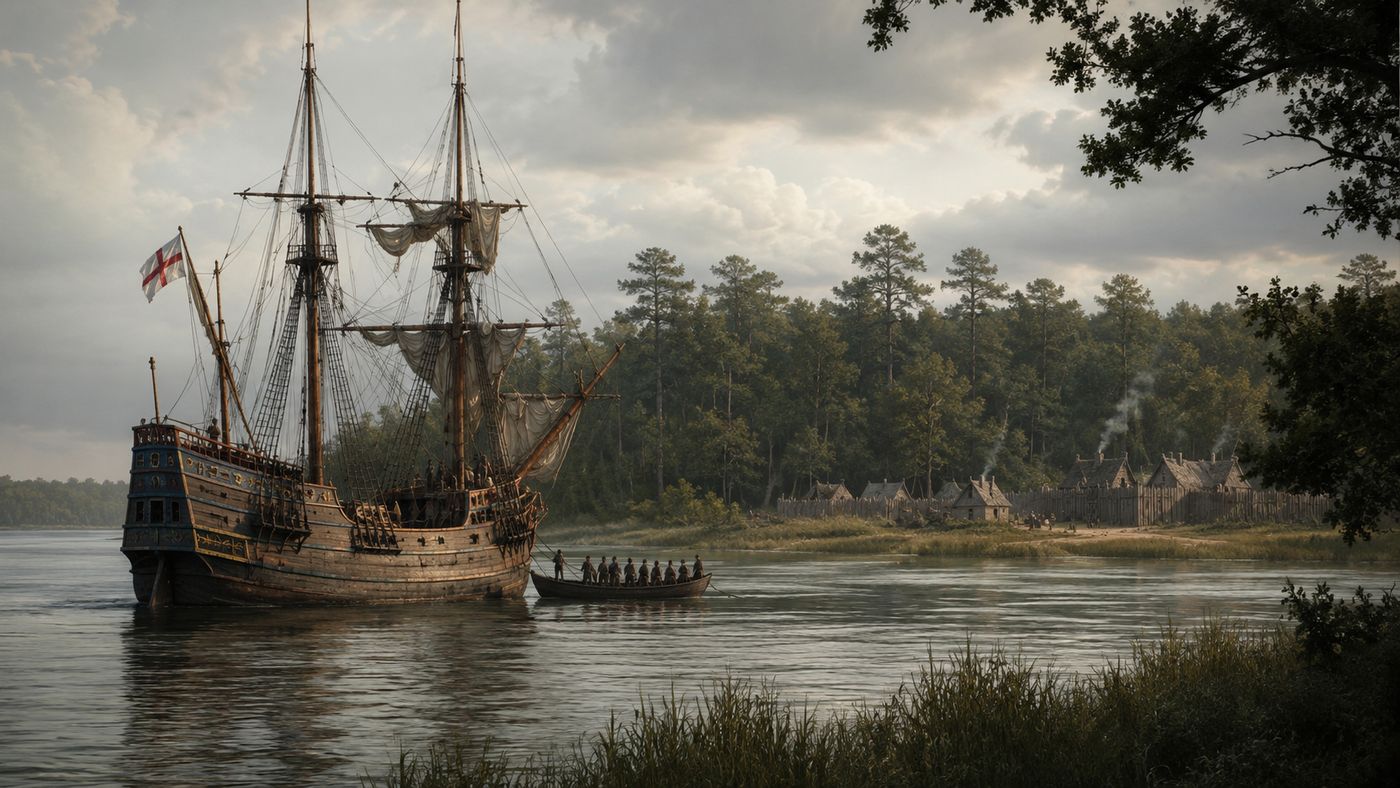
In late August 1619 — the date recorded as "about the latter end of August" by John Rolfe, one of the Jamestown colonists who documented the event — the English privateer ship White Lion arrived at Point Comfort, near the English settlement at Jamestown, Virginia, carrying approximately twenty Africans who were sold to the colony's governor and other settlers in exchange for food. The Africans had been captured from the Portuguese slave ship São João Bautista, which had been carrying more than 350 enslaved people from Luanda, Angola, to Veracruz, Mexico, when it was attacked by the White Lion and a second English privateer vessel. Of those captured and brought to Virginia, we know with certainty the names of only a few: among them, Antoney and Mary, who later married and whose son William Tucker became the first recorded African American child born in English North America. The twenty who arrived at Point Comfort in 1619 were, in the records of the colony, not immediately classified as slaves in the legal sense that would later apply — some were treated as indentured servants who could earn their freedom. The legal architecture of race-based chattel slavery in Virginia would be built over the following decades. But August 1619 was where it started.
The arrival at Point Comfort on August 20, 1619, was the beginning of a system that would shape the next 246 years of American history and whose consequences extend to the present day. The enslaved population of the American colonies and then the United States grew from approximately twenty people in 1619 to nearly four million by 1860, when the Civil War began. The institution of slavery was embedded in the Constitution's three-fifths compromise, in the Missouri Compromise, in the Kansas-Nebraska Act, and in every major political crisis the republic faced from its founding until Appomattox. The wealth generated by enslaved labor funded the growth of the American economy and shaped the development of its banking, insurance, and real estate systems. The New York Times's 1619 Project, published in 2019 on the four hundredth anniversary of the arrival at Point Comfort, argued that the institution of slavery — and the resistance to it — should be understood as central rather than peripheral to the American founding story. The argument generated fierce debate. The history that generated the argument has not.
Bound for Mars
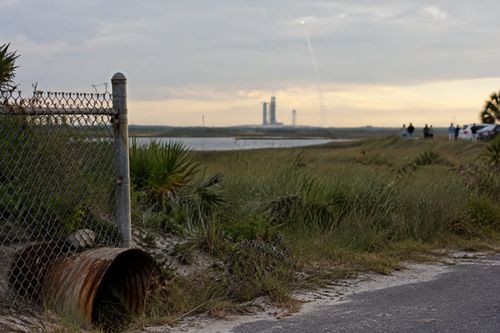
On August 20, 1975, NASA's Viking 1 spacecraft lifted off from Cape Canaveral, Florida, aboard a Titan III-E Centaur rocket, beginning an eleven-month journey to Mars. The Viking program represented the most ambitious and expensive planetary exploration effort the United States had undertaken to that point — a total cost of more than $1 billion, involving thousands of engineers and scientists, and producing two identical spacecraft each consisting of an orbiter to study Mars from above and a lander designed to touch down on the surface and conduct scientific experiments. Viking 1 was followed by Viking 2, which launched two weeks later. The dual mission was conceived to provide redundancy and to allow simultaneous investigation of two different locations on the Martian surface, maximizing the scientific return from an investment of this scale.
Viking 1 arrived at Mars in June 1976, spent several weeks in orbit searching for a safe landing site, and touched down on the Martian surface on July 20, 1976 — the seventh anniversary of the Apollo 11 moon landing — in Chryse Planitia, as we covered in the July 20 post. The lander that descended from the spacecraft launched on August 20, 1975, operated on the Martian surface for more than six years, transmitting thousands of images of the Martian landscape, measuring weather data, and conducting soil experiments that produced results that were — and remain — ambiguous on the question of whether microbial life might be present in the Martian soil. The Viking program's data shaped Mars exploration for the half century that followed, informing every subsequent rover and lander mission through to Perseverance. The spacecraft that left Earth on August 20, 1975, was the beginning of a conversation with Mars that humanity is still having.

The Kid
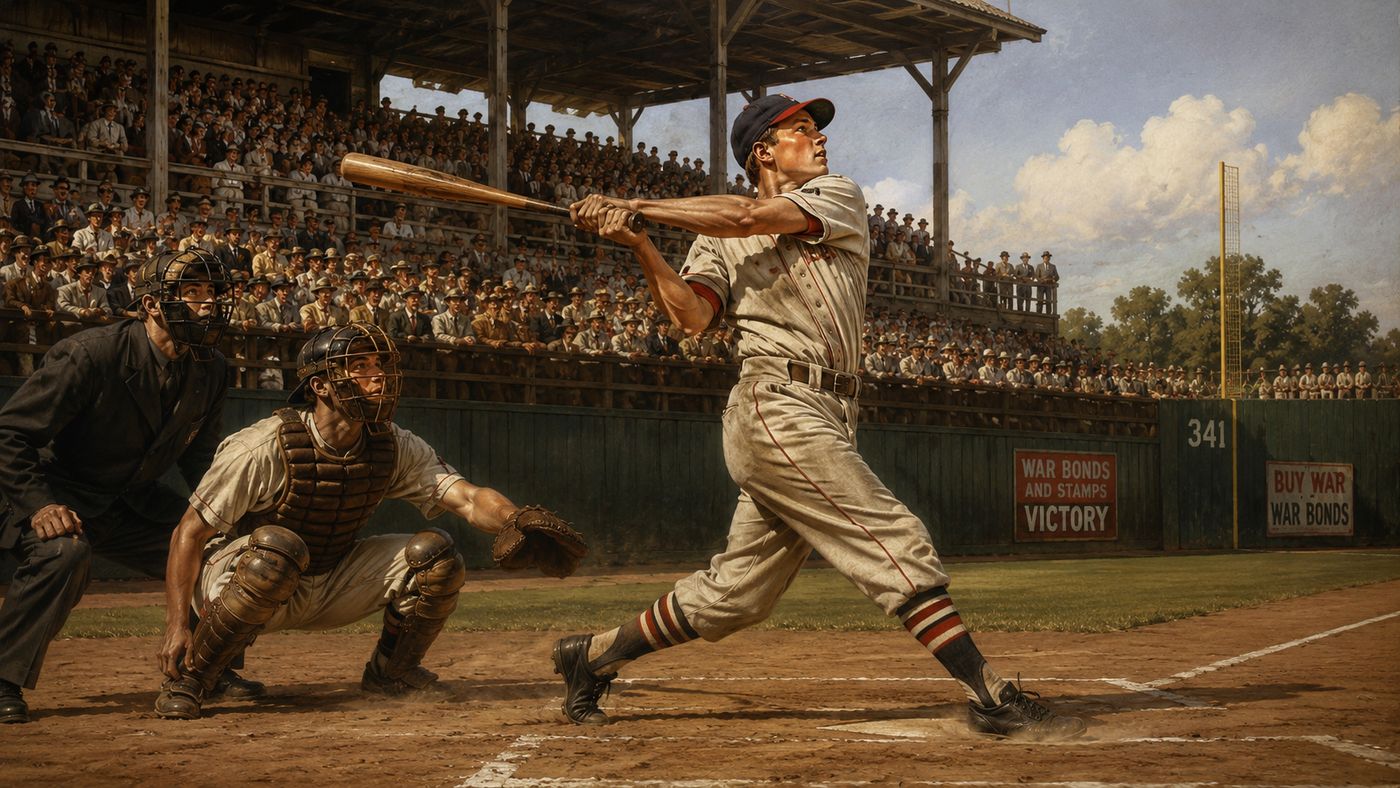
On August 20, 1945, seventeen-year-old Joe Nuxhall of the Cincinnati Reds hit a home run off Philadelphia Phillies pitcher Bucky Walters, becoming the youngest player in major league history to hit a home run at the time. Nuxhall had already made history the previous year, in June 1944, when he had become the youngest player to appear in a major league game at the age of fifteen years and ten months — a wartime statistic that reflected the depletion of rosters as players entered military service. His 1944 appearance had lasted only two-thirds of an inning, during which he allowed five runs and walked five batters before being removed. He had then spent time in the minor leagues developing his skills before returning to the majors in 1945. The home run of August 20 demonstrated that his continued presence in professional baseball was not merely a wartime curiosity but a genuine talent finding its footing.
Joe Nuxhall went on to have a long and distinguished career with the Cincinnati Reds as a left-handed pitcher — not a home run hitter — and later became one of the most beloved broadcasters in Cincinnati sports history, spending more than sixty years in and around professional baseball. His signature sign-off from Reds radio broadcasts — "This is the old lefthander, rounding third and heading for home" — became one of the most recognized phrases in Ohio sports. He retired from broadcasting in 2004 and died in 2007. His record as the youngest player to appear in a major league game has stood since 1944 and is almost certain never to be broken, as no team in the modern era would put a fifteen-year-old on a major league mound. The home run he hit on August 20, 1945, was not his most important achievement, but it was the one that proved the kid could play.