



logo
  • Introduction

  • Lessons From The Past

  • Cultural Awareness and Diversity

  • Appreciation for Progress

  • Understanding Political and Social Dynamics

  • Preserving Cultural Heritage

  • Conclusion

Terms and ConditionsDo Not Sell or Share My Personal InformationPrivacy PolicyPrivacy NoticeAccessibility NoticeUnsubscribe
Copyright © 2026 Day In History
October 30: War of the Worlds Turns 88, Winkler at 81

Today, October 30th

October 30: War of the Worlds Turns 88, Winkler at 81

■  The Pop Edition
October 30: War of the Worlds Turns 88, Winkler at 81
Oct. 30, 2010: Stewart & Colbert's Mall Rally

Today, October 30th

Oct. 30, 2010: Stewart & Colbert's Mall Rally

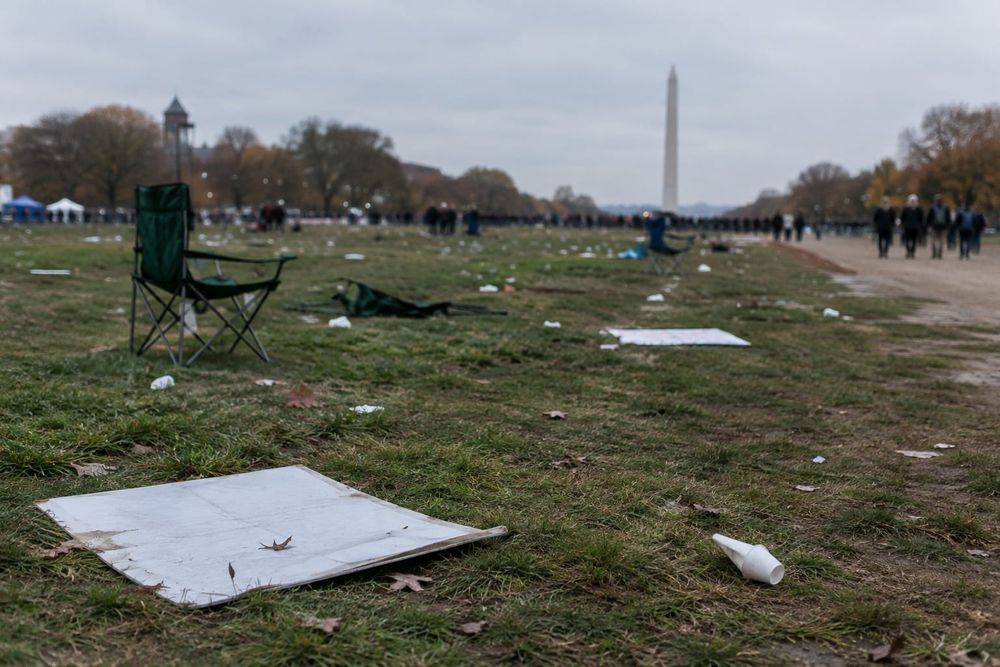
On a crisp Saturday in late October 2010, the National Mall filled with a crowd more accustomed to watching cable news than making it. Jon Stewart and Stephen Colbert, hosts of Comedy Central's 'The Daily Show' and 'The Colbert Report,' had spent weeks teasing a dueling rally — one for sanity, one for fear — and on October 30, the bit became a bona fide event, drawing an estimated 215,000 people just days before a tense midterm election.
Oct. 30, 2010: Stewart & Colbert's Mall Rally
October 30: The Broadcast, the Crown, the Last Chance Gulch

Today, October 30th

October 30: The Broadcast, the Crown, the Last Chance Gulch

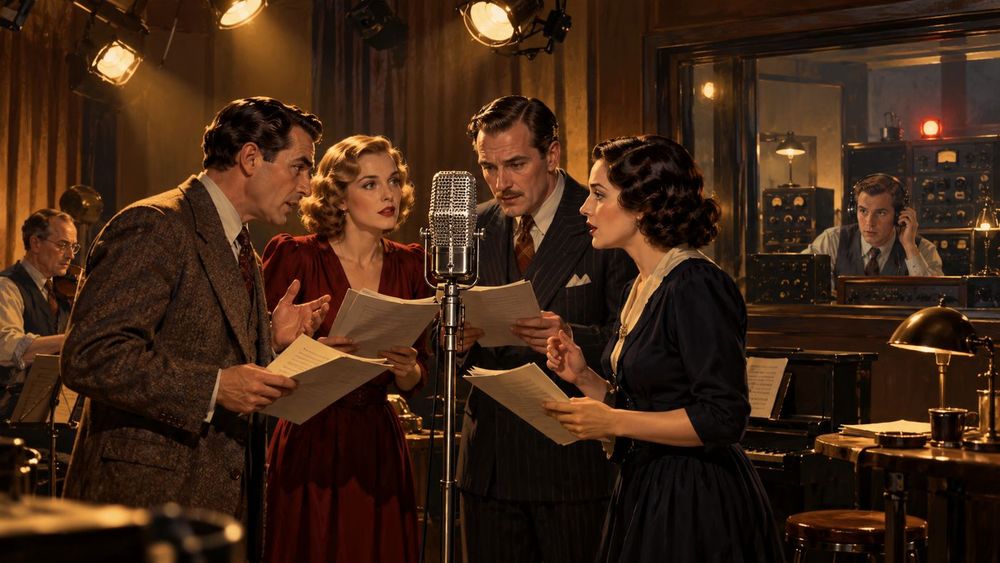
Last chances have a particular energy. The prospector who decides this is the final pan before heading home. The young director who bets everything on a format no one has tried before. The military commander who has spent thirty years watching his country tear itself apart and sees, at the end of a battle in a field in Leicestershire, a chance to make it stop. October 30 has seen all three kinds of last chance pay off — in a radio studio in New York, on a field near Bosworth, and in a Montana gulch that four exhausted men named for the desperation they felt when they made the decision to try it one more time.
October 30: The Broadcast, the Crown, the Last Chance Gulch

29 October

October 29: 96 Tears Tops Chart, Saw Turns 22

■  The Pop Edition October 29: 96 Tears Tops Chart, Saw Turns 22 A garage-rock snarl from Michigan hits #1 sixty years back, and a low-budget horror movie about a bathtub trap turns 22. Garage rock, a Jigsaw puppet, and a handful of birthdays define October 29 in pop culture history. Some days in pop culture history split neatly between eras — a 1966 garage-band fluke and a 2004 horror franchise that reshaped the genre for a decade. October 29 also hands us a cluster of birthdays running from classic Hollywood to '90s indie darlings. No festivals, no scandals today — just the steady churn of charts, screens, and calendars doing what they do. Here's the full rundown, with the receipts. Winona RyderBORN 1971 · TURNS 55She went from Beetlejuice and Heathers to Reality Bites before a well-documented career wobble in the 2000s. Stranger Things brought her back to the center of the cultural conversation as Joyce Byers, a role that reintroduced her to a generation that knew her only by reputation.Richard DreyfussBORN 1947 · TURNS 79He was the shark hunter in Jaws and the obsessive sculptor of mashed potatoes in Close Encounters, two 1970s performances that helped define Spielberg's early run. He won the Best Actor Oscar for The Goodbye Girl and has worked steadily in film and TV ever since.Kate JacksonBORN 1948 · TURNS 78As Sabrina Duncan on Charlie's Angels, she was the grounded one among three glamorous investigators, and the show made her a household name through the late '70s. She later starred in Scarecrow and Mrs. King, another long-running hit.Gabrielle UnionBORN 1972 · TURNS 54She became a late-'90s and early-2000s fixture with Bring It On and Bad Boys II before transitioning into producing with America's Got Talent and her own L.A.'s Finest. Her memoir writing added another dimension to a career built on range.Joely FisherBORN 1967 · TURNS 59Daughter of Eddie Fisher and Connie Stevens, half-sister of Carrie Fisher, she carved her own path with Ellen in the mid-'90s playing Paige Clark. She's since worked steadily in TV and voice acting, including SAG-AFTRA leadership.  ON THE CHARTSOn October 29, 1966, Billboard's Hot 100 crowned a one-hit wonder that still shows up on every garage-rock mixtape sixty years later. 96 Tears by ? and the Mysterians rode a cheap Vox Continental organ riff and a lead singer who went by a question mark on the record label, a stunt that was half mystery and half necessity since the band couldn't agree on how he wanted his name printed.The song had started as a regional single pressed on a tiny Michigan label called Pa-Go-Go before a national deal with Cameo-Parkway got it in front of the whole country. It knocked off slicker, more polished acts to reach the top, and its success became a touchstone for the garage-rock revival decades later — bands from the Cramps to the White Stripes have cited it as foundational. It's one of the purest examples of a regional fluke becoming a permanent fixture of the American songbook, outlasting the label that released it and the chart competition it beat.    OPENING WEEKENDSaw opened in US theaters on October 29, 2004, and it changed what a horror franchise could look like on a shoestring budget. Director James Wan and writer Leigh Whannell shot the thing for a fraction of what a studio horror picture usually costs, built around a single puzzle-box premise: two strangers chained in a filthy bathroom, forced to make an impossible choice by an unseen tormentor.It landed right before Halloween, a scheduling decision that paid off as word of mouth around its twist ending spread fast. Critics at the time were split — some called it gratuitous, others praised its ingenuity — but audiences kept coming back, and the film spawned a sequel almost every year for the rest of the decade. The Jigsaw killer, with his reverse-bear-trap and tricycle-riding puppet, became one of horror's most recognizable villains, and the series' blend of moral tests and elaborate traps influenced a whole subgenre that critics eventually dubbed torture porn, whether the filmmakers liked the label or not.   MEANWHILE...1969The first message is transmitted over ARPANET between UCLA and Stanford, the network that would eventually become the internet.1994Pulp Fiction continues its theatrical run, still expanding into wider release and climbing toward its eventual box office haul.1998John Glenn returns to space aboard the shuttle Discovery at age 77, briefly dominating pop-culture conversation as the oldest person to fly.2004Saw's modest opening weekend proves strong enough to greenlight a sequel almost immediately.2012Hurricane Sandy makes landfall, disrupting live TV broadcasts and award events across the East Coast.2015Streaming numbers for Halloween-adjacent horror content spike, a pattern that's become an annual late-October ritual. From a question-mark-branded garage band to a bathtub full of dread, October 29 has a way of producing things that outlast their origins. Sixty years on, 96 Tears still gets the organ riff right. Twenty-two years on, nobody's forgotten the reverse bear trap.

29 October

Oct. 29, 2004: Cassini's First Close Titan Flyby

On October 29, 2004, NASA's Cassini Spacecraft Made Its First Close Flyby of Saturn's Mysterious Moon Titan Peering beneath an orange haze that had hidden a world for centuries, Cassini revealed a landscape unlike anything else in the solar system. On October 29, 2004, the Cassini spacecraft swept to within about 745 miles of Titan, Saturn's largest moon, in the first of dozens of close encounters that would define its 13-year mission. For decades, Titan's thick nitrogen-methane atmosphere had hidden its surface from every telescope and passing probe, turning the moon into one of the solar system's great blank spots. Cassini's instruments, built to pierce that orange shroud, were about to change that. Behind the Haze   Cassini's radar and imaging instruments cut through Titan's dense atmosphere in ways visible light cameras never could, returning the sharpest views of the moon's surface humanity had ever seen. Scientists spotted bright and dark regions suggesting complex geology, along with hints of the methane lakes and dune fields that later missions would confirm in detail. Mission scientists at NASA's Jet Propulsion Laboratory described the data as immediately reshaping assumptions about Titan's surface, which some had expected to be smooth or ocean-covered. Instead, the flyby revealed a moon carved by processes eerily similar to Earth's own, just built from entirely different chemistry. It was a reminder that familiar shapes don't require familiar materials. The October 29 pass was a prelude to Cassini's most dramatic achievement regarding Titan: the release of the European Space Agency's Huygens probe, which would land on the moon's surface just months later in January 2005. That descent, made possible by the orbital groundwork laid during early flybys like this one, delivered the first images ever taken from the surface of a world in the outer solar system. Cassini would go on to make more than 120 targeted Titan flybys before its mission ended with a deliberate plunge into Saturn in 2017. The moon it helped reveal, with its rivers and seas of liquid methane, remains one of the strongest candidates for exotic life beyond Earth, a possibility this single flyby helped bring into focus.  

29 October

October 29: The Autobiography, the Debut, the End of One Child

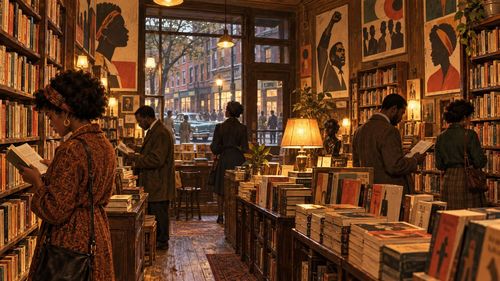
October 29: The Autobiography, the Debut, the End of One Child Three October 29ths defined by transformation — a voice that changed how America understood race, a player who changed what basketball could be, and a policy that changed an entire civilization's relationship with family Some October 29ths carry the weight of things that have been building for years. A book eight months in the making — or really a life — finally reached the hands of readers who needed it. A teenager from Akron, Ohio, stepped onto an NBA court in Sacramento with the full weight of a city's hope and a sport's expectation on his shoulders, and immediately proved that neither burden was too heavy. And a government in Beijing, after thirty-six years, finally acknowledged that the policy it had imposed on more than a billion people had produced consequences it could no longer ignore. Three transformations. Three October 29ths. Three things that, once set in motion, could not be reversed. By Any Means Necessary   On October 29, 1965, Grove Press published The Autobiography of Malcolm X, bringing to print one of the most consequential books in twentieth-century American literature just eight months after Malcolm X was assassinated at the Audubon Ballroom in Manhattan on February 21, 1965. The book had been assembled through two years of interviews between Malcolm and journalist Alex Haley, conducted as Malcolm's public role was itself in rapid transformation — from Nation of Islam minister to independent activist to something more complex and less categorizable than either. Malcolm had approved a manuscript before his death but had not seen the final text. What Haley shaped from those interviews was a narrative of radical self-reinvention: from a childhood fractured by racism and poverty in Lansing, Michigan, through petty crime and prison, through the disciplined intellectual awakening of his years with the Nation of Islam, through a pilgrimage to Mecca that shattered his prior certainties, and toward a vision of human rights that transcended the racial boundaries he had previously insisted upon. The Autobiography arrived in a United States still raw from Malcolm's murder, still processing the Civil Rights Act of 1964, still debating what the movement for Black equality was actually demanding and what it was willing to do to get it. The book did not provide comfortable answers. It provided Malcolm's answers — direct, unsparing, and delivered in a voice so distinctive that readers who encountered it decades later still described the experience as being spoken to rather than read at. It sold six million copies in its first decade. It has been continuously in print since 1965, translated into dozens of languages, assigned in high schools and universities, and cited by writers, activists, and politicians across the ideological spectrum. Time magazine named it one of the ten most important nonfiction books of the twentieth century. The man who narrated it was thirty-nine years old when he was killed. The book that carries his voice has now outlasted him by sixty years.   The independent bookshops and community spaces where The Autobiography of Malcolm X first circulated — reaching readers who found in it a voice that addressed them directly and without apology. Game One On October 29, 2003, LeBron James walked into ARCO Arena in Sacramento, California, for his first NBA regular season game, and the basketball world held its breath. He was eighteen years old, a teenager from Akron who had been on the cover of Sports Illustrated at sixteen with the headline "The Chosen One," who had been the first overall pick in the 2003 NBA Draft, who had signed a $90 million shoe deal with Nike before playing a single professional minute, and upon whom the Cleveland Cavaliers — one of the worst teams in basketball — were placing the entirety of their hopes for revival. The pressure was unlike anything the sport had placed on a debut before. James responded to it by scoring 25 points, grabbing 6 rebounds, distributing 9 assists, and recording 4 steals — a performance so complete across so many dimensions of the game that veteran observers reached for comparisons they didn't quite have precedent for. The career that debut opened became one of the most sustained periods of excellence in professional sports history. LeBron James played in ten NBA Finals across four different franchises — Cleveland, Miami, Cleveland again, and Los Angeles — winning four championships and four Finals MVP awards. He surpassed Kareem Abdul-Jabbar's all-time NBA scoring record in 2023. He played alongside his own son in the NBA, becoming the first father-son duo to compete simultaneously in the league. The teenager who scored 25 in his debut was still playing at forty, still productive, still among the best players in a league full of players who had grown up watching him. The Cavaliers lost that first game 106-92. Cleveland, and basketball, never really minded. An NBA arena in the early 2000s — the setting where LeBron James made his professional debut on October 29, 2003, and began one of the most sustained careers of excellence in the history of sport. ❦ The Second Child   On October 29, 2015, the Chinese Communist Party announced that it was ending its one-child policy — the sweeping population control program implemented in 1979 that had, for thirty-six years, regulated the most intimate decisions of more than a billion people. Under the policy, most urban couples were restricted to a single child, with violations punishable by heavy fines, loss of employment, and in some cases forced sterilization or abortion. The policy had achieved its primary demographic objective: China's birth rate fell dramatically, and the population growth that had alarmed party planners in the 1970s was curtailed. It had also produced consequences that the party had either not anticipated or had chosen not to acknowledge — a pronounced preference for male children that led to selective abortions and a severe gender imbalance, an aging population whose retirement needs a shrinking workforce would struggle to meet, and a generation of only children navigating family structures that Chinese culture had never previously produced at scale. The announcement that couples would be permitted two children — effective January 1, 2016 — was followed in subsequent years by further relaxations: a three-child limit announced in 2021, and then the effective abandonment of numerical limits entirely as Chinese authorities grew alarmed by birth rates that had fallen far below replacement level. The demographic consequences of thirty-six years of the one-child policy will take decades to fully manifest and longer still to reverse. China today is aging faster than almost any other major nation, facing the particular economic challenge of supporting an enormous elderly population with a workforce that the policy deliberately shrank. The announcement of October 29, 2015, was not a reversal of consequences — it was an acknowledgment that consequences exist, and that even the most powerful government on earth cannot entirely control what it has set in motion.   A modern Chinese city — the landscape of a nation whose demographics were shaped by thirty-six years of one-child policy, and whose consequences will take decades more to fully unfold.

Get Daily Historical Facts!