The War That Became a Trade War
Yesterday evening on Truth Social, President Trump announced what he called "the MOST CRUSHING ECONOMIC OPERATION EVER TAKEN AGAINST ANY COUNTRY." The post spelled out, in unusually specific terms, what the new pressure campaign would target: oil smuggling, swap lines, cash transfers, exchange houses, ship registries, and front companies — the specific financial infrastructure that has allowed Iran to survive six months of military strikes, a naval blockade, and previous rounds of sanctions. Any country whose financial institutions, businesses, airports, or government entities provide "any type of lifeline to Iran," Trump warned, will face "TREMENDOUS Economic Consequences" from the United States. Within hours, the United Arab Emirates — historically one of Iran's most significant unofficial trading partners, a conduit through which billions of dollars in Iranian commerce have flowed for decades — announced it was suspending all trade and financial dealings with Tehran. "Economic D-Day," Trump called it. The war that began with nearly 900 military strikes on February 28 has entered a new phase.
When Bombs Give Way to Sanctions — and Why That's Not Simpler
Economic sanctions against Iran are not new — the United States has maintained sanctions on Iran in various forms since the 1979 Islamic Revolution and hostage crisis, with the most comprehensive regime introduced after the failure of nuclear negotiations and tightened progressively under the Obama, Trump, Biden, and second Trump administrations. What is new is the explicit framing of economic pressure as a substitute for continued military escalation — and the scale of what is being threatened. Trump's announcement yesterday extends a pressure campaign his administration has been running since April under the banner "Operation Economic Fury," which sought to reduce Iran's oil exports to zero and cut off its access to the international financial system. Iran's economy was already in severe crisis before yesterday's announcement: inflation running above 300 percent, the rial having lost the majority of its value since the war began, oil exports reduced to a fraction of pre-war levels, and the kind of economic desperation that prompted the nationwide protests of late 2025 — protests that ultimately contributed to the political climate in which the February 28 strikes were launched. The question the new operation must answer is whether a country that has already endured all of that has a breaking point that economic pressure can reach before its leadership concludes that accepting American terms is worse than continuing to endure.
The UAE's rapid compliance is both the operation's first and most significant early victory — and a measure of how uncertain the path ahead is. Dubai and Abu Dhabi have served for decades as Iran's financial safety valve, a place where Iranian money could move through the international banking system with relative ease despite U.S. sanctions. The UAE's suspension of trade with Iran is not unprecedented — the country complied with U.S. secondary sanctions pressure before — but the speed of yesterday's announcement suggests that the Trump administration had been working the diplomatic phones before the public Truth Social post, and that the Gulf states have calculated that their economic relationship with the United States is more valuable than their longstanding, complicated relationship with Iran. China and Russia are the harder cases: both have consistently defied American secondary sanctions in the past and both have deep economic ties to Iran that are less easily abandoned. Chinese and Russian state media have called Trump's announcement "coercion" and "illegal." Iran's Foreign Ministry dismissed the economic operation as a "diversion from America's own crisis," noting that the U.S. national debt has hit $40 trillion. Iran's armed forces commander renewed warnings to Persian Gulf states that any assistance to U.S. military operations constitutes an act of war against the Islamic Republic. The strait remains closed. The bombs have largely stopped. The war continues by other means.
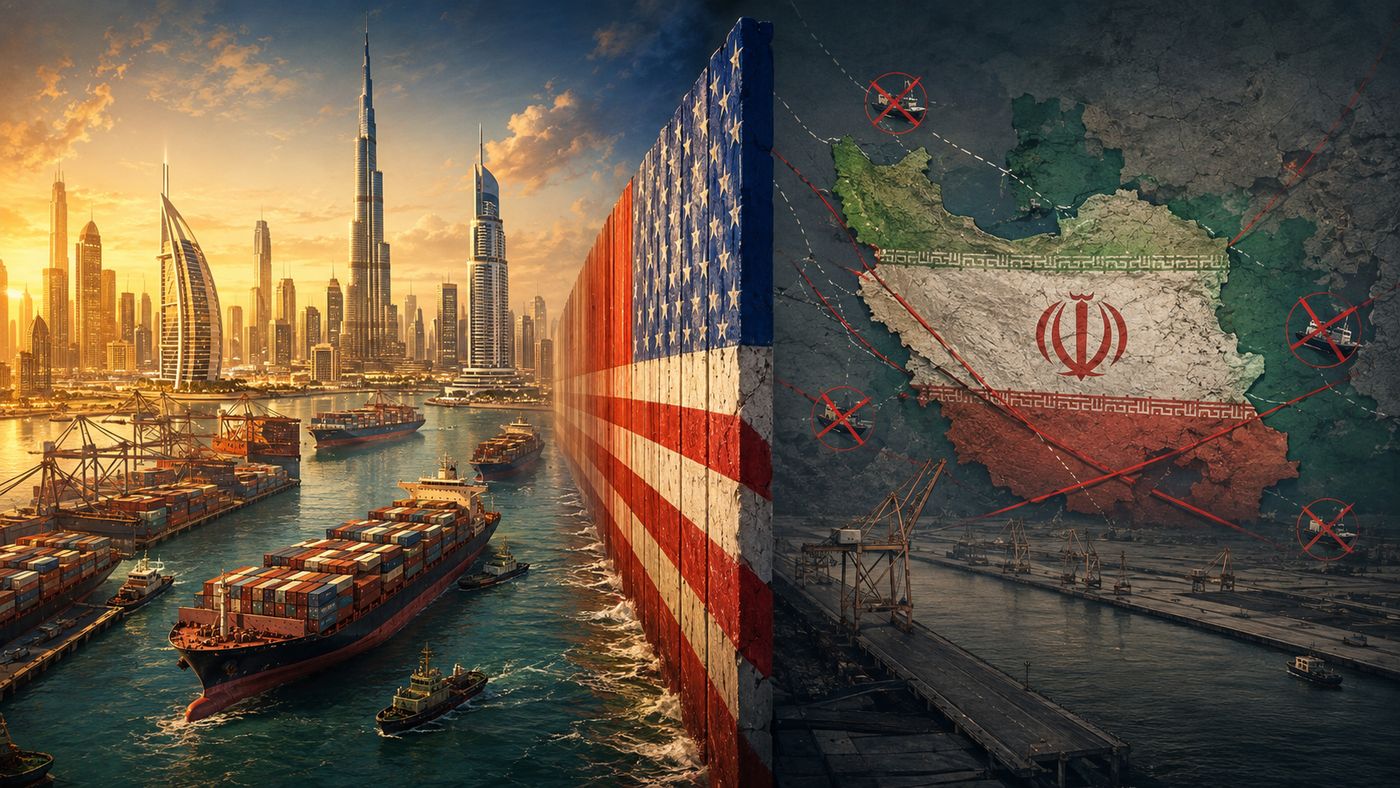
The historical parallel that analysts are reaching for is the economic pressure campaign that preceded the 2015 Iran nuclear deal — the JCPOA — under which the United States, European Union, and United Nations coordinated sanctions that reduced Iran's oil exports by more than 50 percent and cut off much of its banking system from global markets. That pressure produced negotiations and, eventually, the deal that Trump withdrew from in 2018. Whether yesterday's announcement represents the opening move of a similar process — maximum pressure leading to a negotiated settlement — or a genuine strategic shift away from the diplomatic track is unclear. Trump said yesterday the United States might "eventually" return to negotiations, but that currently "the situation is so good." CNN's analysis described the new approach as "something of a face-saver" after both the military campaign and the June 15 MOU failed to produce Iran's acquiescence. Whatever its strategic logic, what is certain is that the 174-day conflict is now being fought on a new front — the global financial system — and that the countries and companies caught between American pressure and their existing Iranian relationships will spend the coming days determining which side of that line they stand on. The war has entered a new phase. It is not obvious that this one will be shorter than the last.