
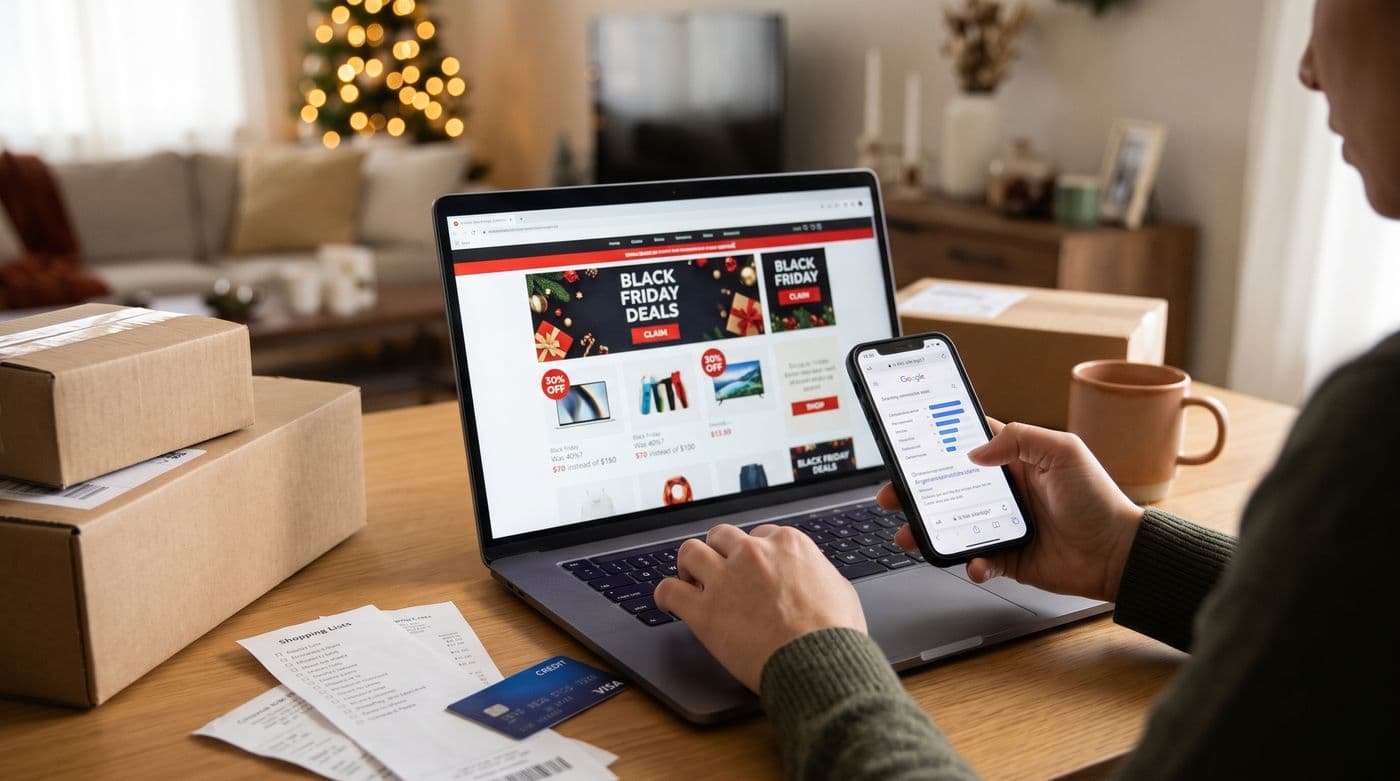
Black Friday is here, but the deals you're seeing may not be as big as you expect, and some of them may not be real at all.
Artificial intelligence is changing the biggest shopping day of the year in two ways. Retailers are using it to decide how small a discount they can get away with. And scammers are using it to create fake stores, fake products and fake reviews that are harder than ever to spot.
Here's what to know before you check out.
Why Your Discount May Be Smaller
Retailers are using AI to predict demand and figure out when they actually need to put something on sale for people to buy it.
In some cases, the answer is: not as much as they thought.
In one example reported by Reuters, AI recommended that an unnamed skincare brand cut its planned Black Friday discount from 40% to 30%. On a $100 product, that means paying $70 instead of $60.
The software looks at things like inventory, competitors' prices, past sales and customer demand. Often, the data suggests shorter sales, fewer promotions and discounts on fewer items.
Gap uses technology from Impact Analytics to help make markdown decisions, according to Reuters. Other companies, including Under Armour and Family Dollar, use AI tools from First Insight to inform pricing and product decisions, though that company noted that using AI doesn't necessarily mean a retailer has cut its Black Friday deals.
For retailers, the math is simple. If a product costs $40 to make and sell, a 40% discount leaves $20 in profit. A 30% discount leaves $30. If sales stay about the same, that's 50% more profit per item.
The Stakes Are Huge
The National Retail Federation forecasts that November and December retail sales will grow 4.2% this year to about $1.013 trillion.
And many shoppers have been waiting for this weekend. In an October survey, the NRF found 64% of consumers planned to wait until Thanksgiving weekend to do much of their shopping.
The most useful number isn't the percentage on the sale sign. It's how much the price actually dropped compared with what the item cost before Black Friday.
AI Is Also Powering Scams
About 1 in 3 U.S. adults say they've been hit by an online shopping scam, either buying a counterfeit item or one that never arrived and was never refunded, according to a 2025 Pew Research Center survey.
Now scammers are using AI to make fake deals look more convincing than ever, PolitiFact reported.
AI can help scammers copy real brands' websites and create realistic product photos, promotional videos and even fake models. Online security company McAfee found that fake offers often impersonated brands including Amazon, Temu, Nike, Apple and Shein.
Scam ads are everywhere. Meta alone shows its users around 15 billion scam ads every day, Reuters reported last year.
How to Protect Yourself
Make sure the store is real. Shop on a product's official website or a trusted retail platform. Check the web address for typos or extra characters, and be wary of sites with no contact information or return policy.
Don't click social media ads. Instead, type the store's web address into your browser or search for it yourself.
Double-check AI shopping tools. If you use a chatbot or AI agent to find deals, verify the results. They might link to fake stores.
Watch for prices that seem too good to be true. An unrealistically low price can be a sign the product is an AI-generated fake, or that what arrives will be much lower quality. Try a reverse-image search to see where else a product photo appears.
Be skeptical of perfect reviews. If every review is five stars and sounds the same, something is off. "Every product, no matter how good, will have somebody that's dissatisfied with it," said Alice Marwick, director of research at the nonprofit Data & Society.
Protect your data. Use strong, unique passwords, turn on multifactor authentication, and only enter your credit card on sites you trust.
Compare before you buy. The Federal Trade Commission recommends comparing prices across sellers and checking return policies.
If you think you've been scammed, contact your bank and report it to the FTC.