



logo
  • Introduction

  • Lessons From The Past

  • Cultural Awareness and Diversity

  • Appreciation for Progress

  • Understanding Political and Social Dynamics

  • Preserving Cultural Heritage

  • Conclusion

Terms and ConditionsDo Not Sell or Share My Personal InformationPrivacy PolicyPrivacy NoticeAccessibility NoticeUnsubscribe
Copyright © 2026 Day In History
October 27: The Curse Ends, the Subway Begins, Plath Is Born

Today, October 27th

October 27: The Curse Ends, the Subway Begins, Plath Is Born

Some things take longer than they should. The Boston Red Sox spent eighty-six years finding new and increasingly theatrical ways to lose before finally winning the thing they had been built to win. New York City spent decades building surface rail and elevated lines before deciding to go underground, and when it did, it built something that 150,000 people rode on the first weekend and that has never stopped running since. And Sylvia Plath spent thirty years on this earth producing poetry and prose of such controlled ferocity that the literary world was still unpacking it decades after her death. October 27 belongs to all three: a team that finally got there, a city that finally went under, and a poet who always knew exactly what was beneath the surface.
October 27: The Curse Ends, the Subway Begins, Plath Is Born
Oct. 27, 2022: Musk Closes the Twitter Deal

Today, October 27th

Oct. 27, 2022: Musk Closes the Twitter Deal

By the time Elon Musk arrived at Twitter's San Francisco headquarters on October 27, 2022, the deal he'd spent six chaotic months trying to escape was finally, irreversibly his. Carrying a porcelain sink through the lobby, he posted a video captioned 'let that sink in,' a wink that instantly went viral even as lawyers, employees, and shareholders scrambled to process what had just happened.
Oct. 27, 2022: Musk Closes the Twitter Deal
October 27: Saw III Turns 20, Cleese Turns 87

Today, October 27th

October 27: Saw III Turns 20, Cleese Turns 87

■  The Pop Edition
October 27: Saw III Turns 20, Cleese Turns 87

26 October

October 26: Thirty Seconds at the O.K. Corral, a Voice at Number One, a President Falls

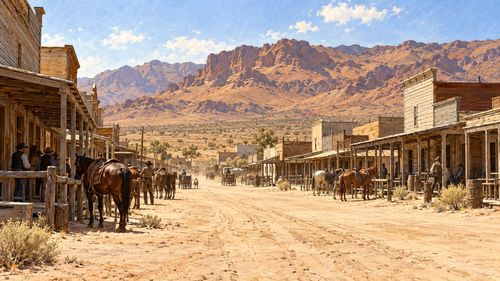
October 26: Thirty Seconds at the O.K. Corral, a Voice at Number One, a President Falls Three October 26ths defined by power — who holds it, who challenges it, and the singular kind that needs no gun or office to stop a room Power rarely announces itself cleanly. It arrives in a thirty-second burst of gunfire in an Arizona alley that takes decades of films, novels, and mythology to properly process. It arrives in the voice of a twenty-two-year-old from Newark, New Jersey, hitting a note on a pop ballad that makes every other voice on the radio suddenly seem slightly insufficient. And it ends — as it ended for an eighteen-year authoritarian ruler of South Korea — not through revolution or election but through the action of the man who was supposed to be its most loyal guardian. October 26 holds all three: a gunfight that became a legend, a number one that announced a generation's greatest singer, and an assassination that ended an era no one had thought was ending. Tombstone   On October 26, 1881, in a vacant lot near the O.K. Corral in Tombstone, Arizona Territory, a gunfight lasted approximately thirty seconds and produced three dead men, two wounded lawmen, and enough mythology to fill a century of Western films. The men who squared off that afternoon had been building toward it for months. On one side stood Virgil Earp, the town marshal, accompanied by his brothers Wyatt and Morgan and their consumptive friend Doc Holliday. On the other stood Ike and Billy Clanton and Frank and Tom McLaury, members of a loose cattle-rustling network known as the Cowboys that had been feuding with the Earps over control of Tombstone's lucrative combination of law enforcement, gambling, and political influence. When Virgil moved to disarm the Cowboys, someone fired — and thirty seconds later, Billy Clanton and both McLaury brothers were dead or dying. The gunfight that took place on Fremont Street — it was not actually at the O.K. Corral, which was nearby — was not the end of the story. A Tombstone judge cleared the Earps and Holliday of wrongdoing, but the verdict did not settle the community's divisions. Morgan Earp was murdered the following March. Virgil was crippled by a shotgun ambush. Wyatt, with Doc Holliday, conducted a vendetta that killed several suspected participants in Morgan's murder before the survivors scattered. The thirty seconds near the O.K. Corral have been retold so many times — in films, novels, television series, and academic histories — that the actual event has become almost impossible to see beneath the layers of interpretation. What remains true is that Tombstone, Arizona, on October 26, 1881, was a place where the line between law and lawlessness was a matter of which side you were on when the shooting started.   Tombstone, Arizona Territory in its 1880s prime — a booming silver mining town where the line between law and lawlessness was defined by who was holding the badge. The Voice On October 26, 1985, Whitney Houston's "Saving All My Love for You" reached number one on the Billboard Hot 100, giving the twenty-two-year-old singer from Newark, New Jersey her first chart-topping single. Houston had been released by Arista Records the previous year and her debut album had already produced two top-ten hits, but this was the moment that confirmed what the music industry had suspected since her gospel-trained voice had first drawn serious attention: that Houston possessed something rarer than a great voice — she possessed a perfect one. The technical gifts were extraordinary even by the standards of an industry full of extraordinary singers: a three-octave range, flawless intonation, the ability to sustain and ornament a note with a precision that sounded effortless and required enormous control. But the quality that separated Houston from simply technically accomplished singers was her capacity to make those gifts feel inevitable — as if the song had been waiting specifically for her voice to complete it. The career that "Saving All My Love for You" launched produced some of the best-selling recordings in history: The Bodyguard soundtrack, which remains the best-selling soundtrack album of all time; "I Will Always Love You," whose climactic note became one of the most replicated moments in contemporary vocal performance; a string of number ones that ran through the 1980s and into the 1990s. Houston's later years were marked by a struggle with addiction that reduced her voice and complicated her public image, and she died in February 2012 at the age of forty-eight. What she left behind is a body of recorded work that represents the full upper range of what a human voice can do with a song — and the memory of a twenty-two-year-old whose voice, hitting a radio at the right moment in October 1985, made everything else on the dial sound slightly less than what music could be. A 1980s recording studio — the environment where Whitney Houston's voice was first captured on tape, and where a generation's most celebrated vocal career began to take shape. ❦ The Director's Table   On October 26, 1979, South Korean President Park Chung Hee was shot and killed at a private dinner at a KCIA safehouse in Seoul by Kim Jae Kyu, the director of the Korean Central Intelligence Agency — one of Park's oldest associates and the man who ran the most powerful intelligence apparatus in the country. Park had ruled South Korea since his 1961 military coup, transforming a desperately poor agrarian nation into an emerging industrial economy through a combination of state-directed development, authoritarian control, and the systematic suppression of political opposition. His eighteen years in power had produced the "Miracle on the Han River" — one of the most rapid economic transformations in modern history — while crushing labor rights, imprisoning dissidents, and governing through a security state that Kim himself had helped build and operate. Why Kim killed Park at that dinner table remains genuinely contested. Kim testified at his subsequent trial that he had acted to save Korean democracy from an increasingly repressive ruler — that Park's crackdown on dissent had gone too far and that Kim had decided, at enormous personal risk, that someone had to stop it. Prosecutors and many historians argue that the motivations were more personal: factional rivalry within the regime, resentment over Park's growing reliance on other advisors, or the calculation that Park's political position was becoming untenable and that Kim needed to position himself for what came next. Kim was convicted of treason and executed in 1980. Park's death did not produce the democratic opening his assassin claimed to seek — it produced instead a period of political chaos followed by another military coup, led by General Chun Doo-hwan, that extended authoritarian rule for another decade. South Korea would not hold its first democratic presidential election until 1987.   Seoul in the late 1970s — the capital of a nation transformed by eighteen years of Park Chung Hee's authoritarian rule, whose sudden end on October 26, 1979 did not produce the democratic future his assassin claimed to be delivering.

10 October

A Discovery Still Seeking a Verdict

A Discovery Still Seeking a Verdict Anthropic says its AI agents found a CRISPR-like system in viral DNA. Outside scientists say it is a promising start, and not yet a breakthrough. In late September, AI company Anthropic announced that its Claude AI agents had discovered something unusual in the DNA of bacteriophages, the viruses that infect bacteria: an enzyme system paired with a repeating DNA pattern that resembles the microbial machinery behind CRISPR, the gene-editing tool that won a Nobel Prize in 2020. Anthropic's CEO called it a possible new gene-editing mechanism. Two weeks later, the claim is at the center of a debate over what counts as a scientific discovery when an AI does the noticing. Impressive, Unproven   According to Anthropic, its scientists gave Claude a single instruction: search a massive database of DNA sequences for new reverse transcriptases, enzymes that build DNA from an RNA template. Working "with only high-level direction" from the humans, the company says, a team of AI agents flagged a system it named ART, for array-associated reverse transcriptase, sitting beside an array of repeated DNA in a layout reminiscent of CRISPR. Secondary reports of the announcement describe roughly 950 agents working for about 21 hours across billions of protein clusters. Anthropic's own biology lab then analyzed and tested the finding. Shares of companies developing gene-editing technology fell after the announcement, according to CNN. The scientific reception has been more measured. Anthropic's own research document acknowledges the team has not determined what the sequences do, or whether they could be used the way CRISPR tools are used. Harvard Medical School biochemist Philip Kranzusch called it a really exciting beginning observation, but not what he would describe as a breakthrough in biology, and Johns Hopkins' Steven Salzberg said most biologists would not announce a preliminary finding as if it were the next CRISPR. MIT's Feng Zhang, by contrast, was reported to have called the result impressive. CNN's reporting also raises questions about how original the finding is, drawing a parallel to the disputes that followed OpenAI's claim to have solved a long-standing math problem.   Anthropic says AI agents flagged a CRISPR-like pattern in viral DNA, but its function is still unknown. CRISPR itself began as an odd pattern in bacterial DNA that scientists did not understand, and it took years of human work to turn that curiosity into a tool that can edit genes. That history is part of why the ART claim has drawn both excitement and caution. Supporters point out that AI has already changed biology once, with protein-structure tools like AlphaFold, and that a system that notices patterns no human had flagged is a different kind of contribution. Skeptics counter that noticing a pattern is the first step of a long road, and that a scientific discovery is finished only when it has been tested and replicated. Which view proves right will be decided in laboratories, not announcements, and probably over years rather than weeks.

26 October

October 26: PS2 Launches, Sajak Turns 80

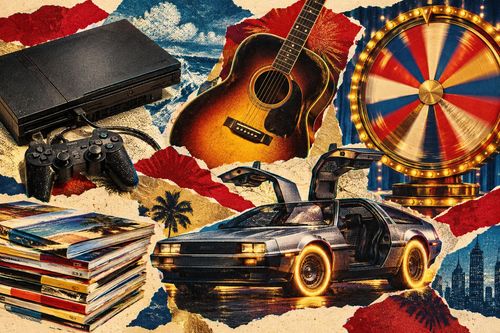
■  The Pop Edition October 26: PS2 Launches, Sajak Turns 80 A wheel-spinning legend hits a milestone birthday, Sony's gray monolith changes gaming forever, and a certain flux capacitor date gets its due. Midnight launch lines, a game show institution, and the day Marty McFly went home — all October 26. Some dates in pop culture carry more weight than others, and October 26 has quietly stacked up a few good ones. A game console reshaped how a generation spent its evenings, a fictional time-travel deadline became real-world trivia, and the man who's spun letters into a fortune for four decades turns a round number today. None of it is loud history — no scandals, no shockwaves — just the steady accumulation of things that made staying in fun. Born On This DayPat Sajak1946 · TURNS 80He took over Wheel of Fortune in 1981 and stayed put for over four decades, becoming the longest-running host of the same game show in American TV history before handing the podium to Ryan Seacrest in 2024. His deadpan asides to contestants outlasted several eras of studio sets and turntable designs.Keith Urban1967 · TURNS 59The New Zealand-born, Australia-raised guitarist crossed over from Nashville session player to arena headliner through the 2000s, racking up multiple ACM and CMA Entertainer of the Year trophies along the way. He's also spent years as a coach's chair fixture on The Voice Australia.Seal1963 · TURNS 63His breakthrough came with 1991's Killer, but it was Kiss From a Rose finding a second life on the Batman Forever soundtrack in 1995 that turned him into a Grammy-winning household name. His distinctive facial scarring, from a form of lupus, became as recognizable as the voice.Natalie Merchant1963 · TURNS 63She fronted 10,000 Maniacs through the college-rock 1980s before going solo with 1995's Tigerlily, which turned Carnival and Wonder into inescapable radio staples. Her voice — low, deliberate, a little mournful — became a signature that outlasted the alt-rock moment that produced it.Cary Elwes1962 · TURNS 64The British actor became Westley in 1987's The Princess Bride, a role that didn't make him a box office giant but did make him beloved for life among a certain kind of devoted rewatcher. He kept working steadily afterward, including a memorably grim turn in the original Saw. Press Start: PlayStation 2 Launches Sony's PlayStation 2 went on sale across North America on October 26, 2000, and the lines outside electronics stores the night before became their own small cultural event — a preview of the midnight-release ritual that would define console launches for the next two decades. Demand outstripped supply so badly that Sony's initial shipment sold out almost immediately, leaving plenty of hopeful buyers empty-handed on launch day itself.What made the PS2 different wasn't just games — it was the built-in DVD player, which meant a lot of households bought their first DVD player because it happened to also play Tekken Tag Tournament. That dual purpose helped push it toward becoming the best-selling console of all time, a title it would hold for years afterward, with a library eventually stretching past 3,800 titles worldwide.Twenty-six years on, the console's backward-compatible slim redesigns are still floating around secondhand shops, and its DVD-playing party trick reads as a quaint footnote in an era when consoles now stream everything. But in the fall of 2000, it was the reason kids were lying to their parents about how much the thing actually cost.    The Moment: Back to the Future's Big DateOctober 26, 1985 isn't when Back to the Future opened — that was July 3 that year, and the film was already a runaway hit by fall. It's the date within the story itself: the night Marty McFly gets sent back to 1955, and the night, 30 years later in the plot's internal calendar, he's meant to return to set everything right.The date stuck in a way few fictional calendar details do. Fans have marked it for decades the way others mark real anniversaries, and it laid the groundwork for the far bigger frenzy around October 21, 2015 — the film's other famous date, the one Marty travels forward to in Part II — which turned into a genuine cultural event with news anchors doing segments on hoverboards that didn't exist.“Roads? Where we're going, we don't need roads.”— Doc Brown, Back to the FutureForty-one years after that in-story date, the film's tangle of internal continuity — plutonium, clock towers, a lightning bolt timed to the minute — still gets debated by people who've clearly watched it more times than is strictly healthy.   Meanwhile…1911Gospel singer Mahalia Jackson is born in New Orleans, a voice that would later move Martin Luther King Jr. to say, “Sing it, Mahalia,” on the steps of the Lincoln Memorial.1945Charlie's Angels co-star Jaclyn Smith is born, a decade before television made her one of three household names sharing top billing.1968The Beatles' “Hey Jude” is deep into its record nine-week reign atop the Billboard Hot 100, a record that would stand for a quarter century.2000Overnight lines outside Toys R Us and Best Buy locations become their own news story as the PlayStation 2's initial shipment sells out within hours.1962Bob Dylan is deep into recording sessions for The Freewheelin' Bob Dylan, the album that would establish him as the era's defining protest voice.1987The Princess Bride, starring today's birthday boy Cary Elwes, continues its slow build from modest box office to eventual cult classic status. That's the ledger for October 26 — a game show fixture hitting 80, a console that changed living rooms, and a movie's fictional deadline that never stopped mattering. Same time tomorrow, another date, another stack of things worth remembering.

Get Daily Historical Facts!