On June 11, 1963, one of the most significant events of the American Civil Rights Movement unfolded at the University of Alabama. Governor George Wallace, in a dramatic attempt to resist federally mandated desegregation, stood in the doorway of Foster Auditorium to block the enrollment of two African American students, Vivian Malone and James Hood. This confrontation was resolved when President John F. Kennedy federalized the Alabama National Guard, allowing the students to enter. The event became a defining symbol of federal authority confronting state resistance and marked a pivotal moment in the ongoing fight for civil rights in America.
The Defiant Governor
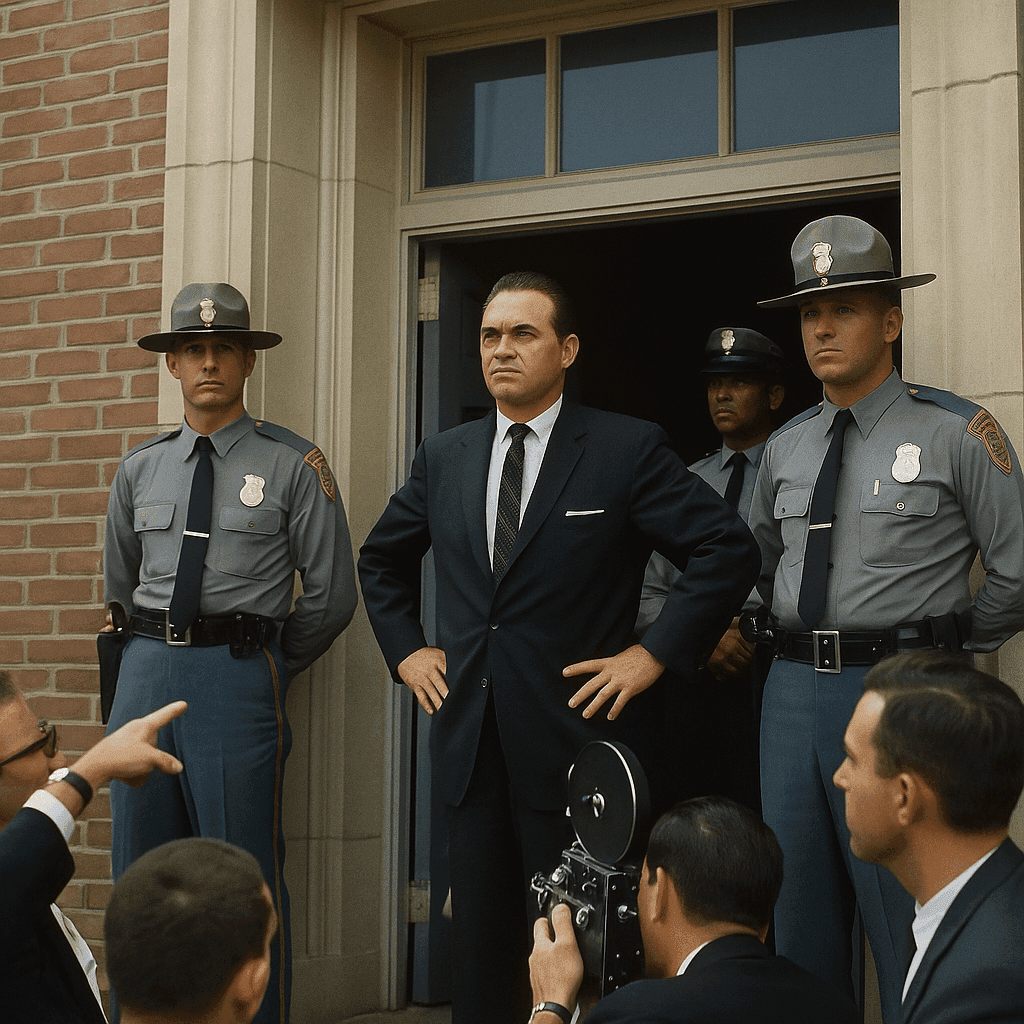
George Wallace’s rise to political prominence was built on a platform of staunch segregationism, and he had vowed during his inaugural address to defend “segregation now, segregation tomorrow, segregation forever.” When the courts ordered the University of Alabama to admit Black students, Wallace seized the opportunity to fulfill his campaign promise and assert his political brand before a national audience.
On the day of the standoff, Wallace physically placed himself at the university entrance, flanked by state troopers and media cameras. His act was largely symbolic—he knew he could not stop federal law—but it resonated with segregationist supporters and secured his place as a defiant figure in the battle over civil rights. The spectacle underscored the deep divisions between state leaders and the federal government over integration.
Federal Power Steps In
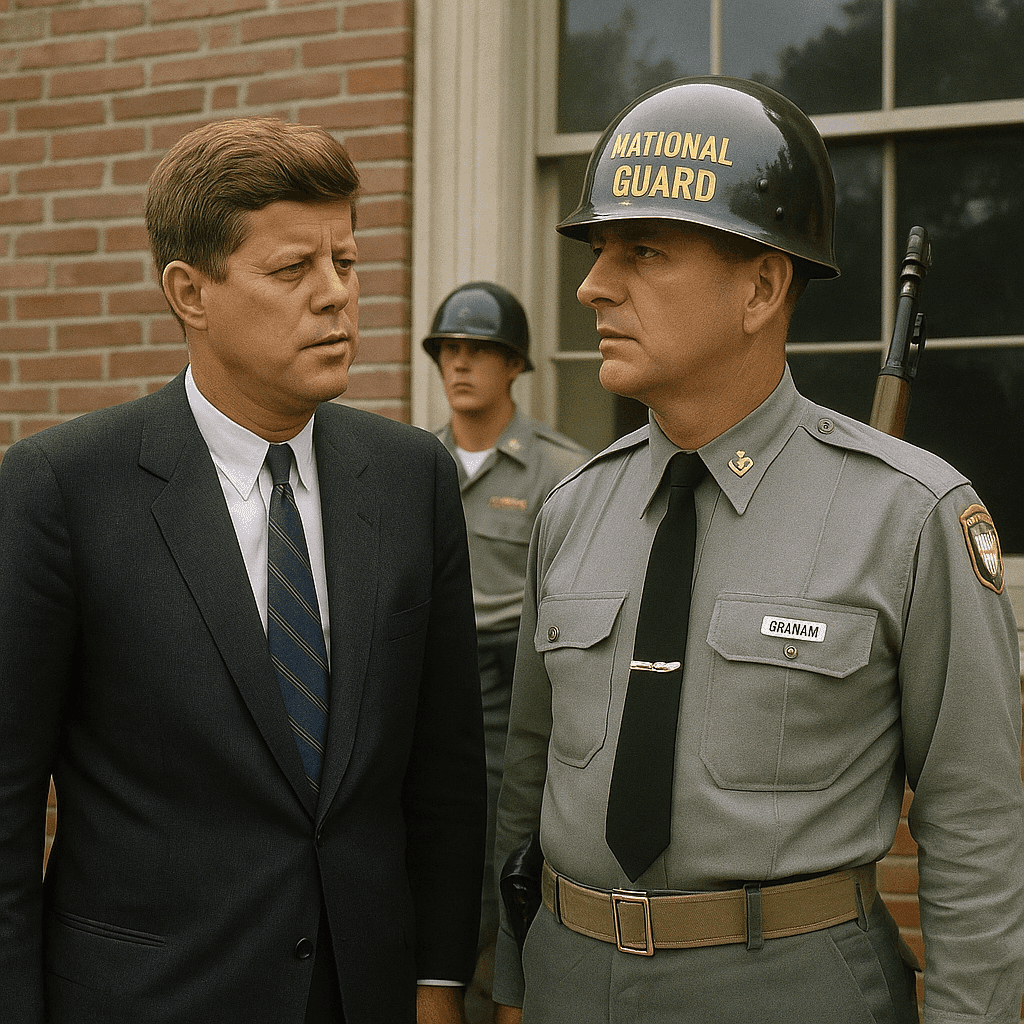
President John F. Kennedy had been reluctant to use federal force in domestic affairs but recognized that Wallace’s actions required a firm response. He issued an executive order placing the Alabama National Guard under federal control, authorizing them to enforce the court's desegregation order and ensure the students’ safety.
Under the command of General Henry Graham, the National Guard approached Wallace later that day and instructed him to step aside. Though he made a brief speech about states’ rights, Wallace complied, and Vivian Malone and James Hood walked through the doors to complete their registration. The peaceful resolution was a visible and decisive demonstration of federal authority supporting civil rights.
A Moment That Moved a Nation
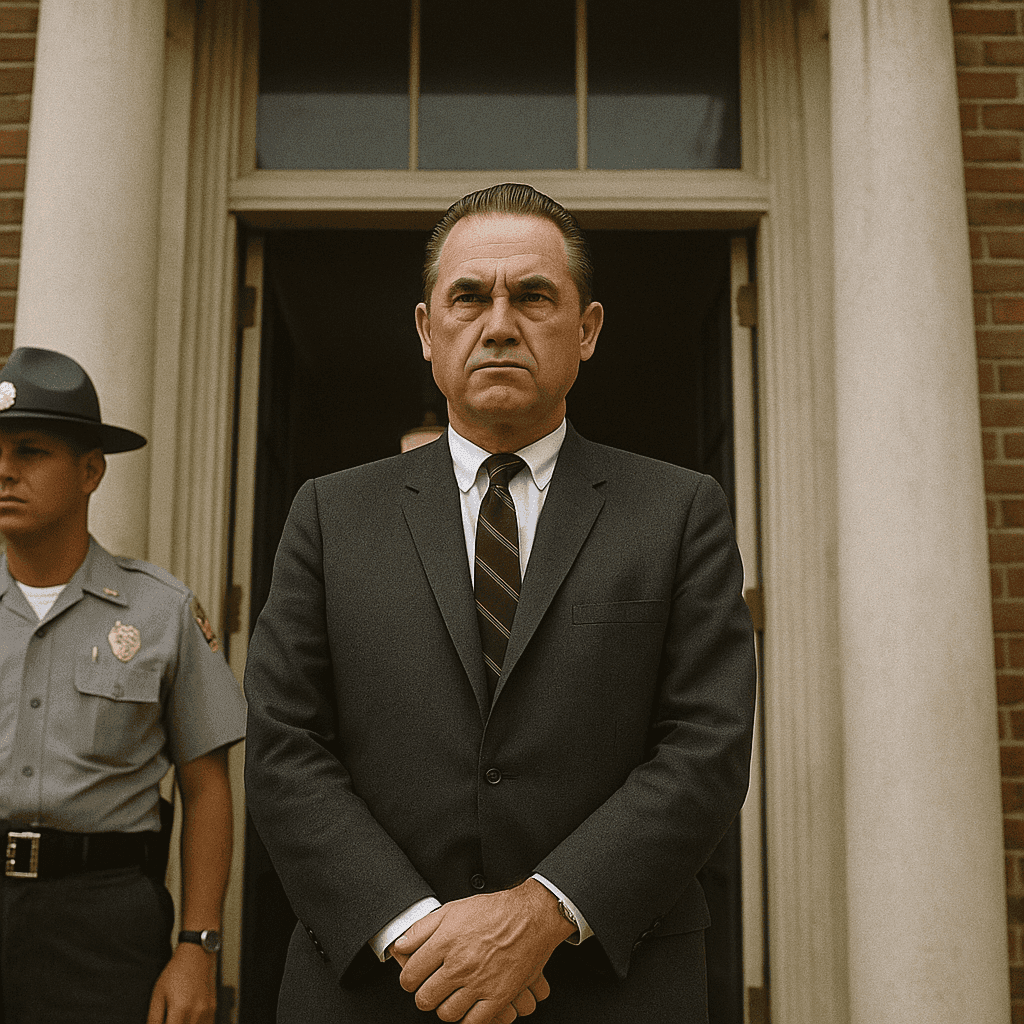
The integration of the University of Alabama sent shockwaves through the South and the rest of the nation. It showed that the federal government was willing to act decisively to enforce civil rights laws and court decisions. For civil rights activists, the moment was both a victory and a sign of momentum building toward greater change.
Vivian Malone later became the first African American graduate of the university, and both she and James Hood became symbols of dignity and perseverance. The university, once a site of bitter resistance, now recognizes the bravery of those who helped change its history. The legacy of that day lives on as a reminder of how leadership, law, and activism can reshape a nation.