
On April 19, 1775, the quiet village green of Lexington, Massachusetts, became the stage for a world-changing moment. In the early morning light, colonial militiamen stood their ground against advancing British troops—sparking the first military engagement of the American Revolutionary War. Known as the Battle of Lexington, this clash, followed shortly by the confrontation at Concord, marked the ignition of the American colonies' fight for independence from British rule.
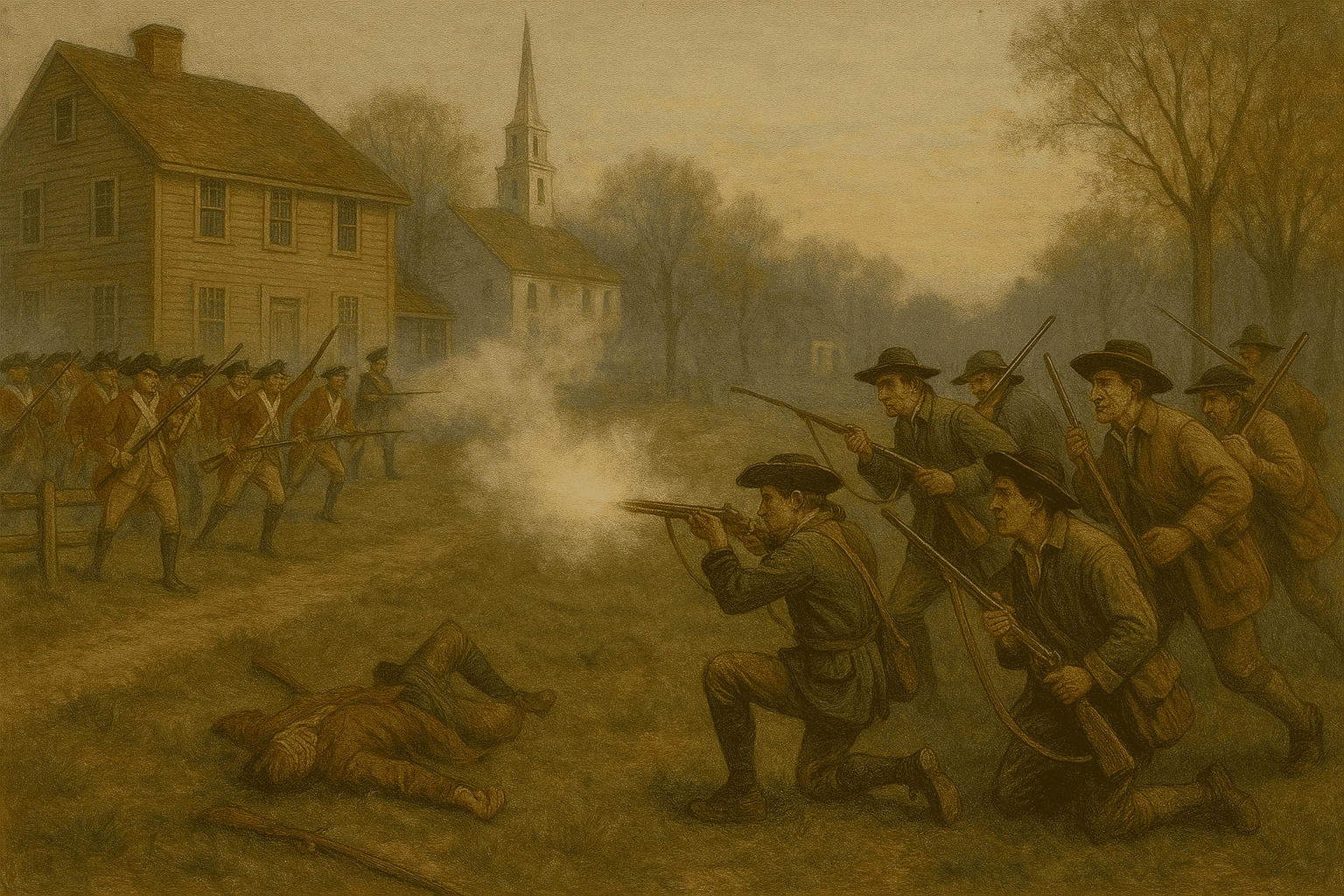
Tensions Boil Over
The roots of the conflict ran deep. Years of mounting grievances over British taxation, lack of colonial representation in Parliament, and increasingly harsh measures—such as the Intolerable Acts—had pushed the colonies to the brink. When British General Thomas Gage ordered troops to march on Concord to seize a cache of colonial weapons, local militias, alerted by riders like Paul Revere and William Dawes, mobilized to defend their towns.
At dawn in Lexington, around 70 militiamen faced nearly 700 British soldiers. A single shot rang out—its origin still debated—but it unleashed a volley of gunfire that left eight colonists dead and several others wounded. The British continued to Concord, where they encountered stiffer resistance. As they retreated to Boston later that day, colonial militias harassed them along the route, turning a swift mission into a grueling battle and proving that the colonies would not back down easily.
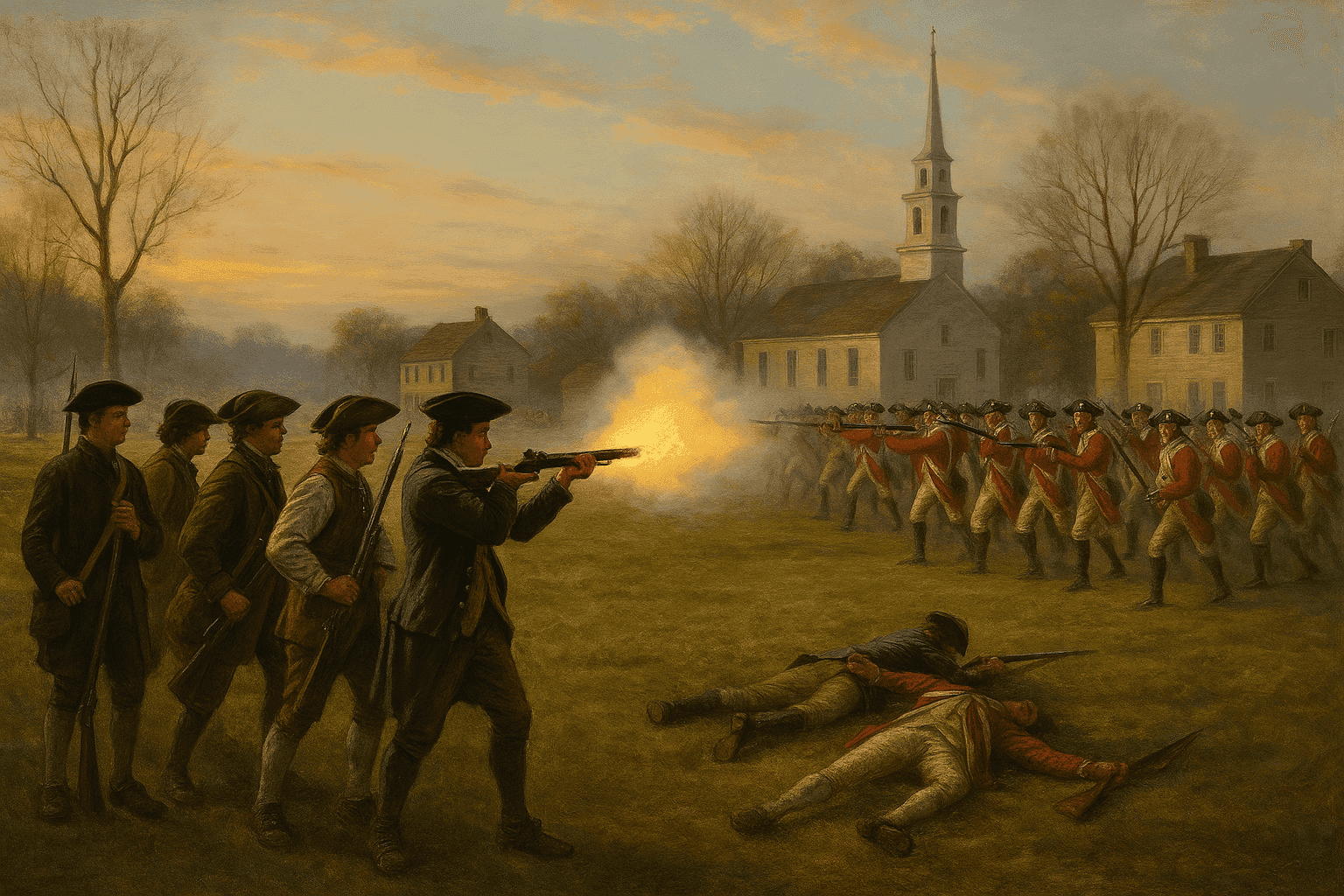
A Spark for Revolution
Though small in scale compared to later battles, Lexington and Concord became legendary as the "shot heard 'round the world." These skirmishes signaled that armed resistance to British authority was no longer a threat—it was a reality. The battles galvanized the colonies, leading to the formation of the Continental Army and the convening of the Second Continental Congress. What began as a confrontation over military supplies quickly evolved into a full-fledged war for independence.
The courage displayed by the militiamen—mostly farmers and tradesmen—captured the imagination of a people yearning for freedom. Their willingness to stand up to one of the most powerful armies in the world marked a defining moment in the American struggle for self-determination.
Legacy of April 19, 1775
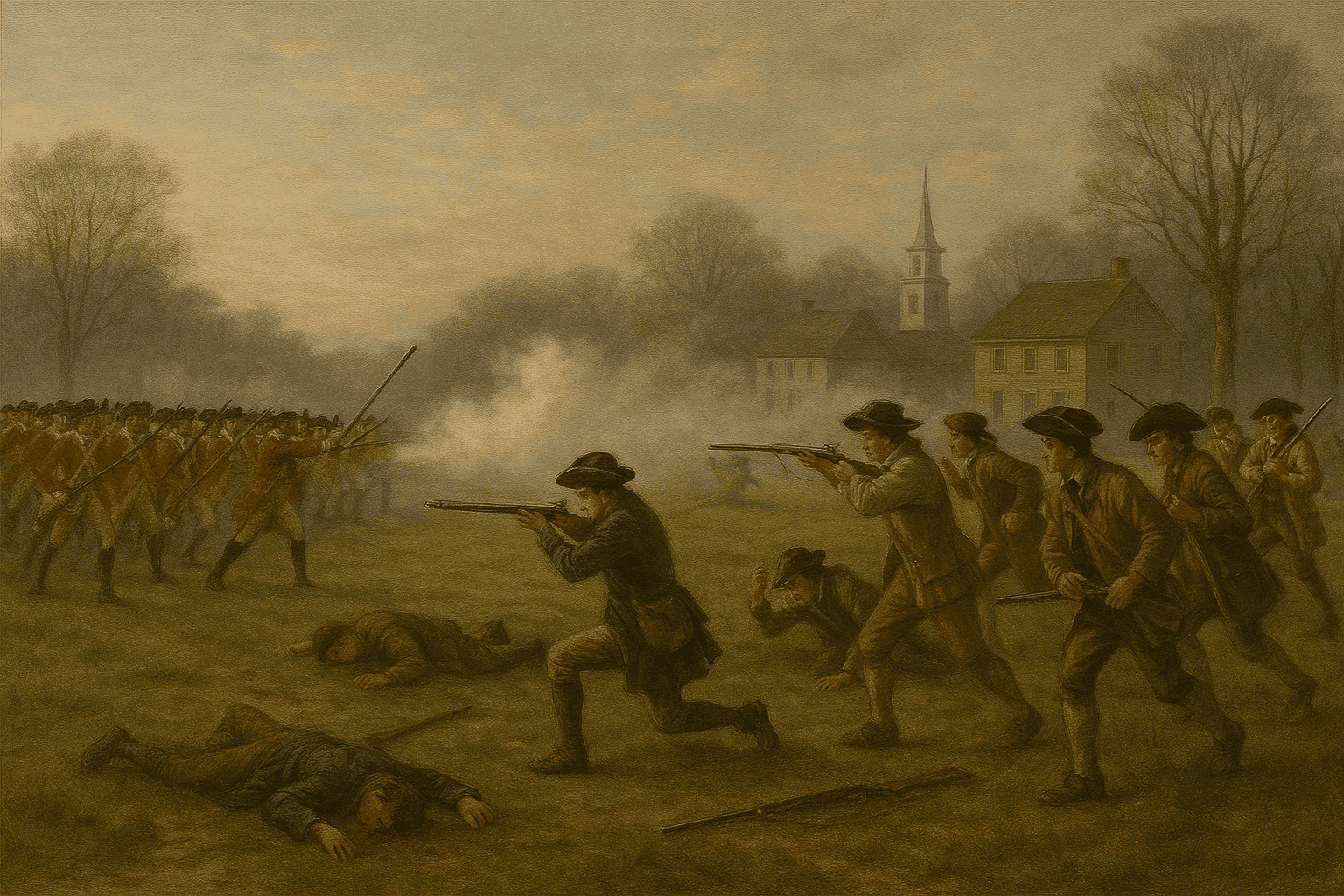
The events of that day are commemorated annually as Patriots' Day in Massachusetts and Maine, honoring the bravery and sacrifice of those who stood for liberty. The route from Lexington to Concord has become a symbol of American resilience, with reenactments and ceremonies held each year to remember the dawn of revolution.
April 19, 1775, did more than start a war—it sparked a movement. The battles of Lexington and Concord lit the fire of independence that would eventually lead to the founding of the United States. The actions of those early patriots continue to inspire generations, reminding us that the pursuit of liberty often begins with ordinary people making extraordinary stands.
The Battle of Lexington remains a powerful reminder that the courage to resist injustice can change the course of history—and that freedom, once kindled, can never be easily extinguished.