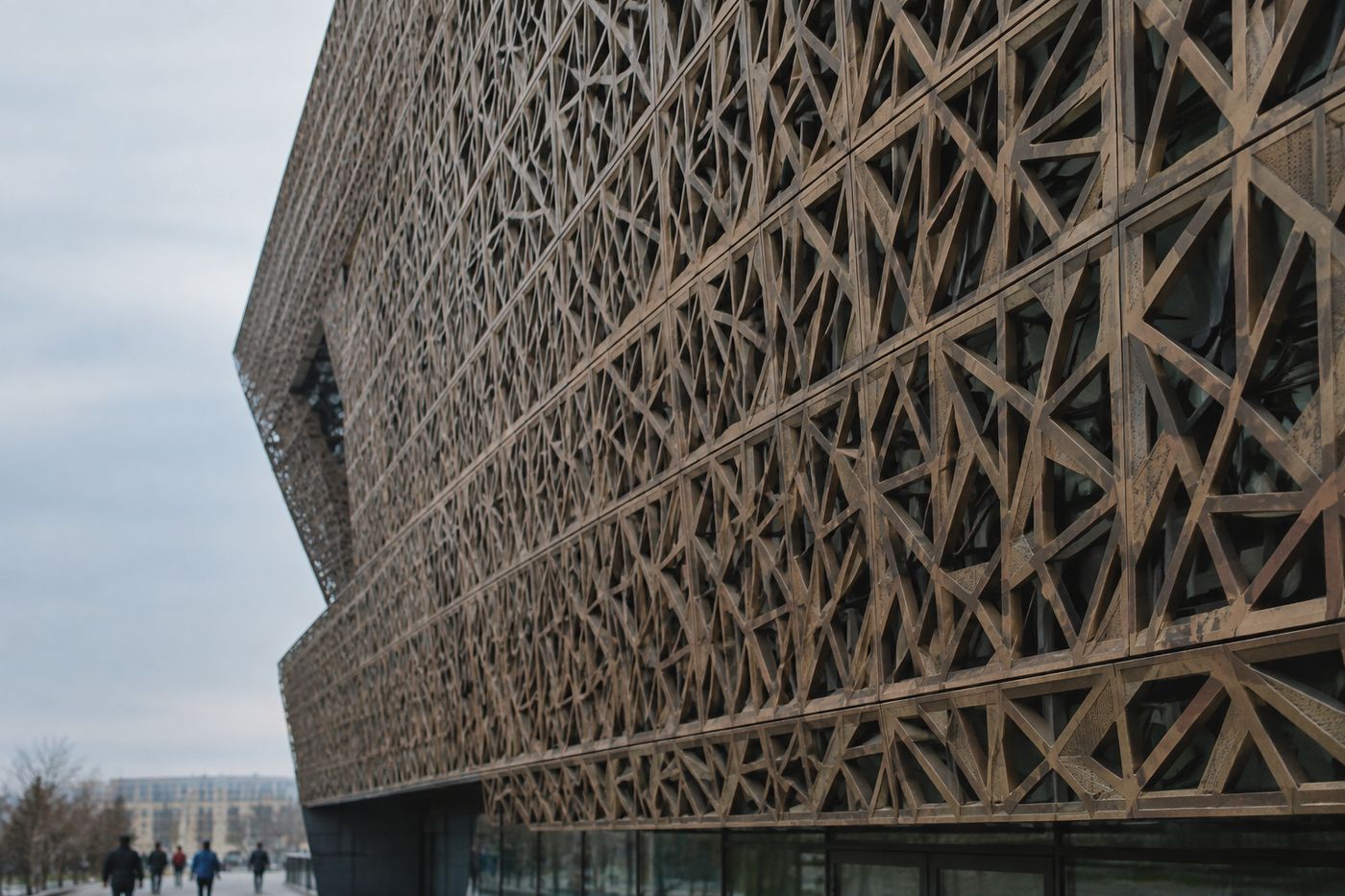
On September 24, 2016, the National Museum of African American History and Culture Opened Its Doors on the National Mall
On September 24, 2016, a bronze-latticed building rose against the Washington Monument's shadow as the National Museum of African American History and Culture officially opened to the public. The Smithsonian's nineteenth museum had been more than a century in the making, first proposed by Black Civil War veterans in 1915 and finally signed into law by President George W. Bush in 2003. Thousands lined the Mall before dawn for the dedication, turning a government ribbon-cutting into something closer to a homecoming.
A Long-Delayed Homecoming
The ceremony drew President Barack Obama, former President George W. Bush, and civil rights figures including Congressman John Lewis, who had introduced legislation for the museum every year for fifteen years before it passed. Obama rang a bell from Virginia's First Baptist Church, one of the nation's oldest Black congregations, to formally open the building. Inside, the museum's design deliberately inverted the visitor's journey: guests descended first into darkened underground galleries chronicling slavery and segregation before rising, floor by floor, toward exhibits celebrating music, sports, and culture. Architect David Adjaye's corona-shaped facade, inspired by Yoruban art and wrought-iron work made by enslaved craftsmen, became an instant Mall landmark. Nearly 3,000 workers had built it in just under four years, racing to meet a date that felt, to many in attendance, impossibly overdue.
By the end of its opening day, museum staff estimated tens of thousands had passed through, and timed-entry passes for the following months vanished within hours of release. The collection held more than 36,000 artifacts, from Harriet Tubman's shawl to a slave cabin transported from South Carolina to Nat Turner's Bible, gathered largely through public donation drives that turned ordinary families into unlikely archivists. Bush, whose administration authorized the museum's creation, told the crowd that a great nation does not hide its history, it faces it. The building he'd signed into being now stood exactly where its earliest advocates had once been denied a place at all.