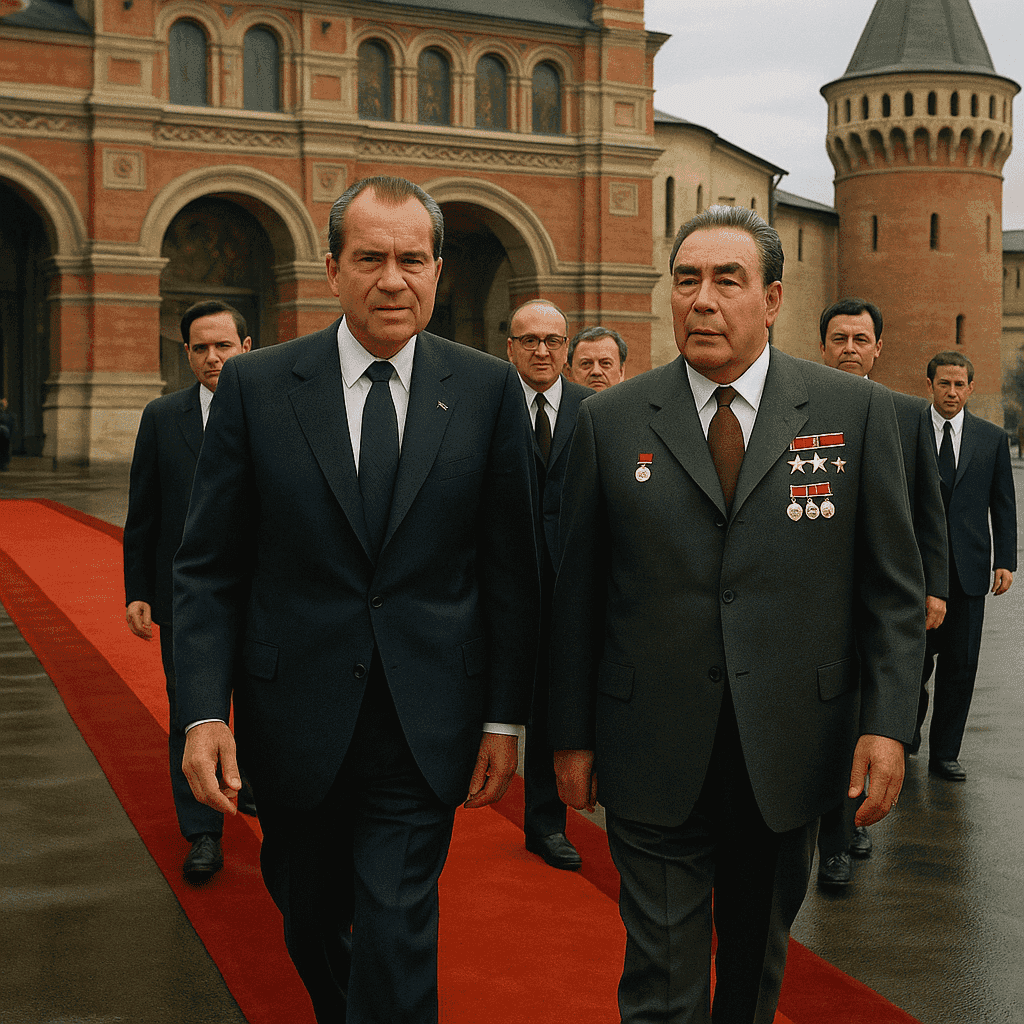
On May 22, 1972, President Richard Nixon arrived in Moscow for a landmark summit with Soviet leader Leonid Brezhnev, marking a pivotal moment in Cold War history. The visit was part of Nixon’s broader strategy of détente—a policy aimed at reducing geopolitical tensions between the United States and the Soviet Union through dialogue and diplomacy rather than confrontation. The summit resulted in significant arms control agreements and signaled a new phase in U.S.-Soviet relations.
A New Approach to the Cold War
By the early 1970s, both superpowers had accumulated vast nuclear arsenals, and the threat of mutually assured destruction loomed large. Nixon and his National Security Advisor, Henry Kissinger, sought to recalibrate U.S. foreign policy by pursuing détente—a strategic effort to stabilize relations with the Soviet Union and China while maintaining American strength.
Nixon’s Moscow visit was historic: it was the first time a sitting U.S. president had visited the Soviet capital. It followed his equally groundbreaking trip to China just months earlier and was seen as a diplomatic coup that positioned the United States as a key player in reshaping global power dynamics.
Strategic Arms Agreements and Lasting Impacts
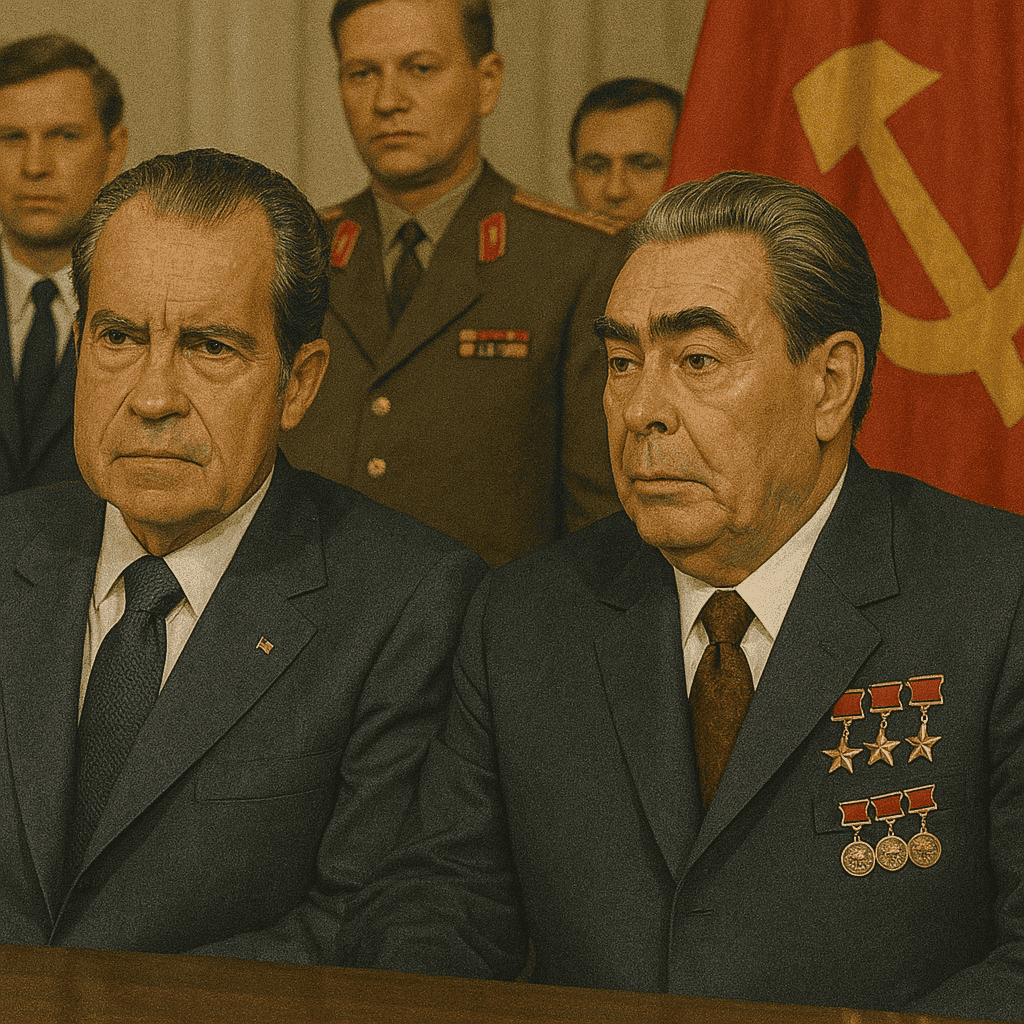
The most significant outcome of the summit was the signing of two critical arms control agreements:
The Strategic Arms Limitation Talks (SALT I) agreement, which froze the number of strategic ballistic missile launchers at existing levels and marked the first formal restraint on nuclear weapons development between the two nations.
The Anti-Ballistic Missile (ABM) Treaty, which limited each country to two ABM sites, later reduced to one, thereby curbing the development of systems that could potentially trigger a new arms race.
These agreements didn’t end the Cold War, but they were vital first steps in establishing rules and norms to reduce the risk of nuclear conflict and promote a more stable strategic balance.
Beyond Arms Control: Expanding Cooperation
The summit also included agreements on space exploration, scientific collaboration, and trade. The U.S. and Soviet Union agreed to work together on future space missions, paving the way for the 1975 Apollo-Soyuz joint mission. These moves were seen as confidence-building measures that expanded the scope of cooperation beyond military issues.
A Diplomatic Turning Point
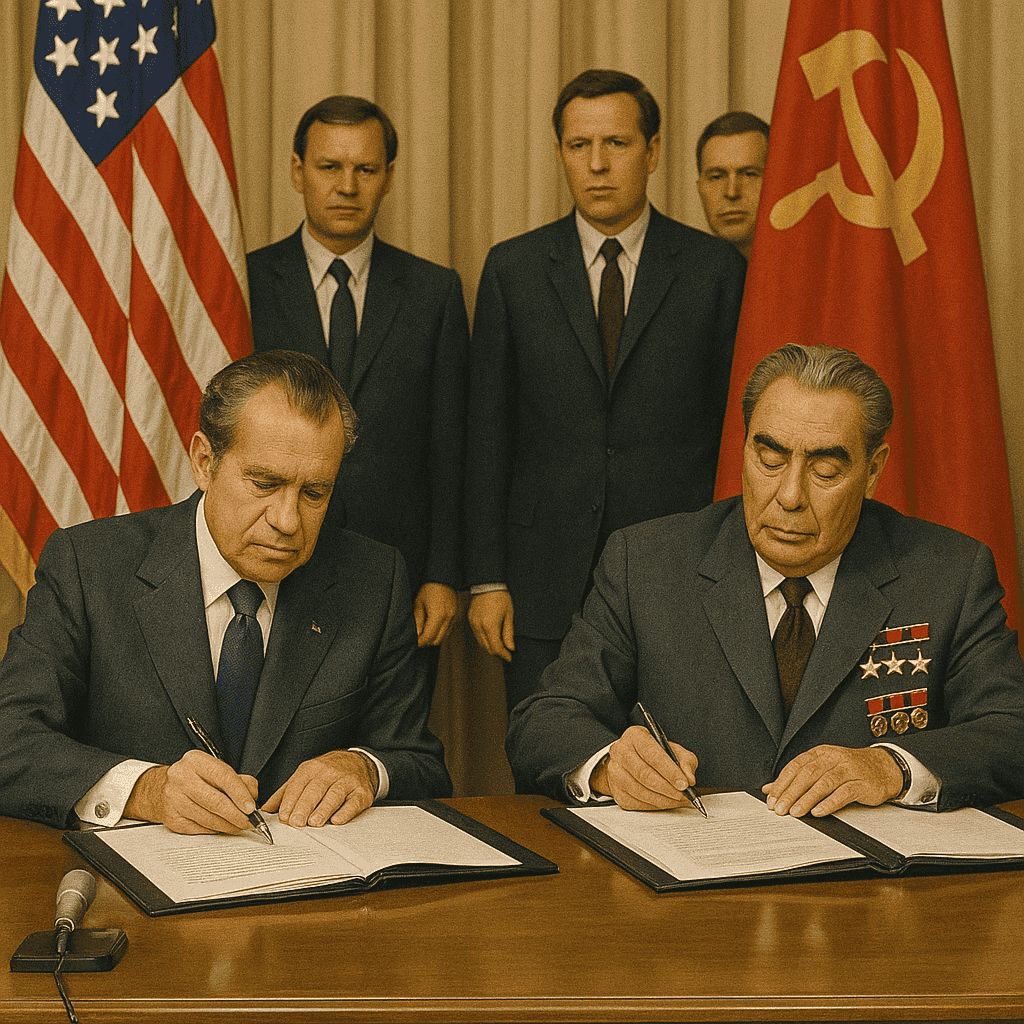
Nixon’s 1972 summit in Moscow was a major milestone in international diplomacy. It demonstrated that even deeply entrenched adversaries could find common ground through careful negotiation. While tensions would flare again later in the decade and beyond, the summit laid the groundwork for future arms control efforts and opened new channels of communication.
May 22, 1972, remains a symbol of diplomacy’s potential to temper rivalry, reduce the risks of war, and create space for dialogue in even the most polarized global environments. Nixon’s visit to Moscow marked not just a thaw in the Cold War—but a moment when diplomacy prevailed over discord.