February 22: Borders Redrawn, Miracles on Ice, Life from a Cell
February 22 has witnessed humanity pushing past what seemed like fixed boundaries—whether territorial lines on a map, the expected outcome of a hockey game, or the very limits of biological possibility. From a treaty that redrew a nation's borders, to an underdog victory that defied all odds, to a scientific breakthrough that challenged our understanding of life itself, this date reminds us that boundaries exist to be questioned, exceeded, and sometimes entirely reimagined.
The Price of Empire's Retreat
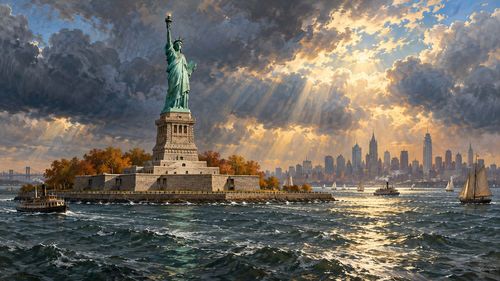
On February 22, 1819, Spain and the United States signed the Adams-Onís Treaty in Washington, formally transferring Florida to American control. For Spain, this wasn't generosity but necessity—its empire was collapsing under the weight of Latin American independence movements, and Florida had become an expensive liability it could no longer defend. For the United States, the treaty represented a diplomatic triumph engineered by Secretary of State John Quincy Adams, who had skillfully leveraged Spain's weakness to secure not just Florida but also Spain's claims to the Pacific Northwest.
The human cost of this territorial transfer often goes unmentioned in celebrations of American expansion. Florida's Seminole people and the Black communities who had found refuge among them would soon face Andrew Jackson's brutal campaigns of removal. Spanish-speaking Floridians saw their property rights challenged and their influence diminish. Yet the treaty did bring one thing Adams promised: it established a clear transcontinental boundary stretching to the Pacific, replacing decades of ambiguity with a defined line. It was nation-building through negotiation rather than war—though the people already living on the land might question whether the difference mattered much in the end.

Do You Believe in Miracles
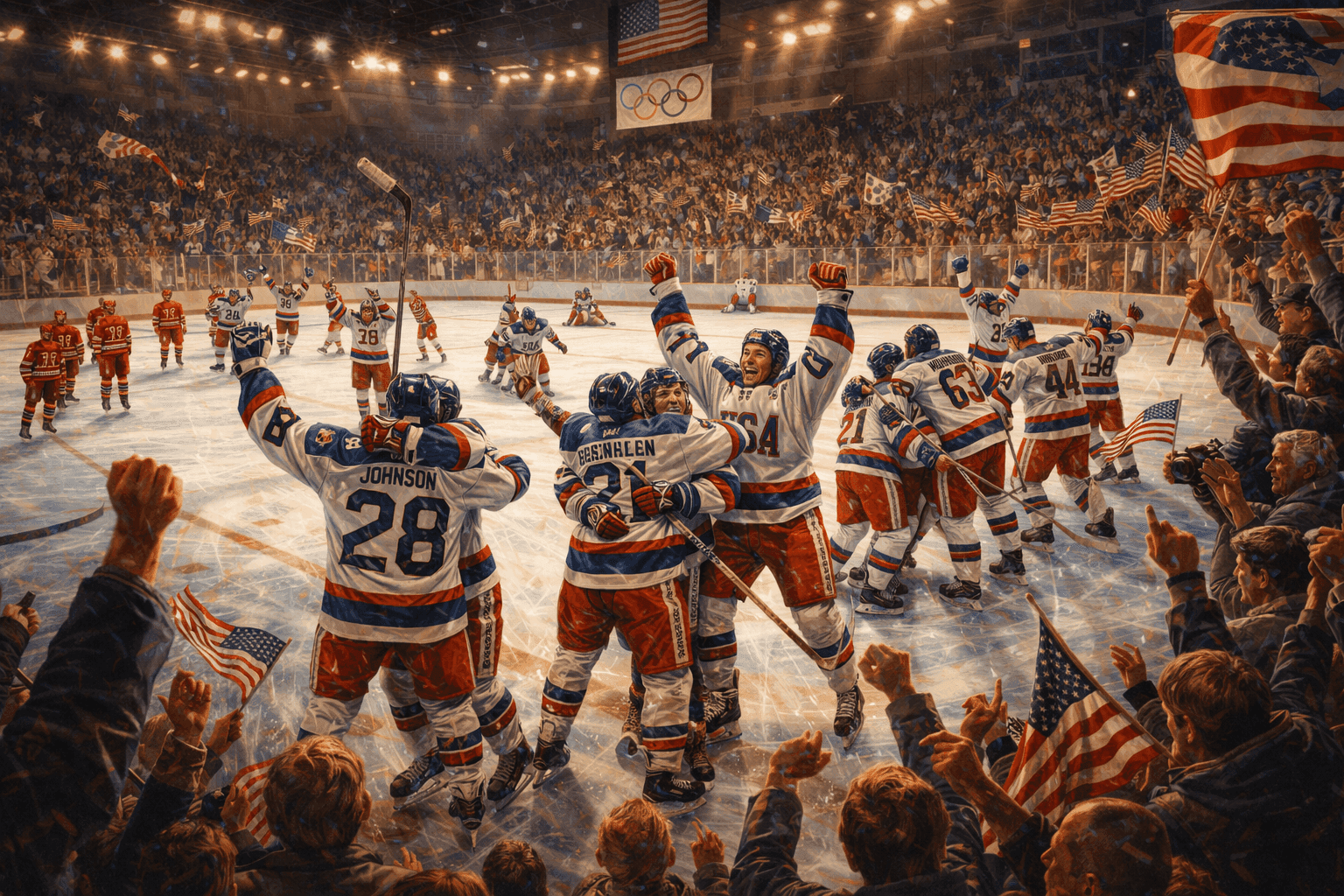
One hundred sixty-one years later, on February 22, 1980, a group of American college hockey players faced the Soviet Union's national team at the Lake Placid Olympics. The matchup was absurd on paper. The Soviets had won nearly every international tournament for two decades, fielding what was essentially a professional team disguised as amateurs. The Americans were college kids—average age twenty-one—hastily assembled just months before. Oddsmakers wouldn't even set a line. The Soviets had crushed the Americans 10-3 in an exhibition game just days before the Olympics began.
What happened over the next sixty minutes transcended sports. The Americans fell behind, fought back, fell behind again, and with exactly ten minutes remaining, team captain Mike Eruzione scored to give the U.S. a 4-3 lead. As the clock wound down, broadcaster Al Michaels asked the question that would define the moment: "Do you believe in miracles?" The final seconds ticked away, and yes—suddenly, impossibly—America did. The victory didn't win the gold medal (that required beating Finland two days later, which they did), but the Soviet game became the "Miracle on Ice." It arrived during the Iranian hostage crisis, economic malaise, and Cold War anxiety, offering a moment of pure, uncomplicated triumph when the country desperately needed one.
Hello Dolly
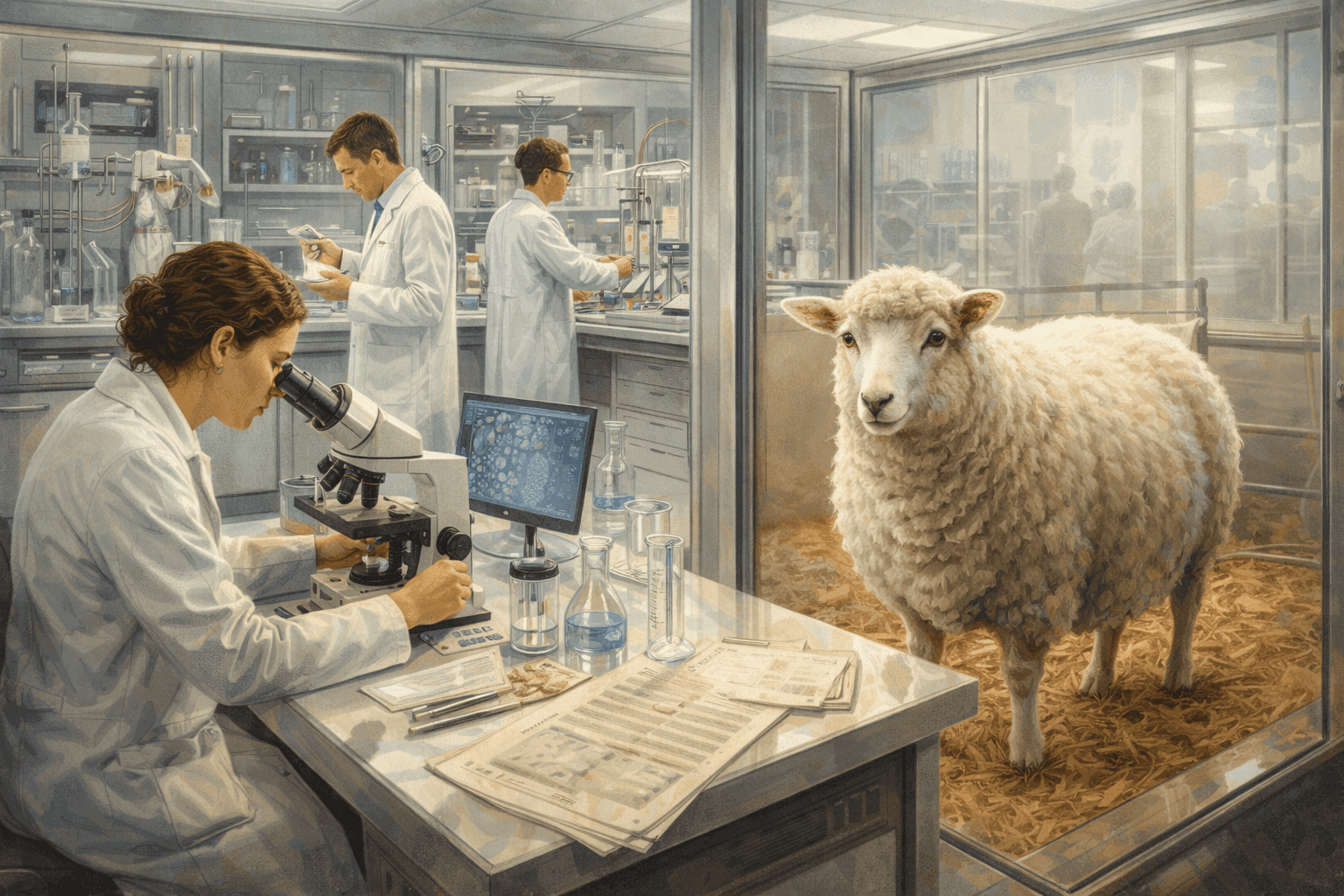
On February 22, 1997, scientists at Scotland's Roslin Institute announced what many had thought biologically impossible: they had cloned a mammal from an adult cell. Dolly the sheep, born the previous July, was genetically identical to her "mother"—or rather, to the six-year-old ewe whose mammary cell had been used to create her. The breakthrough shattered the scientific consensus that adult cells, already specialized into specific types, could never be reprogrammed to create an entirely new organism. Ian Wilmut and his team had proven otherwise, opening a door that couldn't be closed.
The announcement triggered immediate fascination and fear. If scientists could clone a sheep, could they clone humans? Should they? Dolly became an instant celebrity, photographed more than any sheep in history, while ethicists, theologians, and policymakers grappled with implications that seemed ripped from science fiction. The research itself promised revolutionary applications: creating organs for transplant, preserving endangered species, advancing our understanding of aging and disease. Dolly lived until 2003, developing arthritis and lung disease that raised questions about whether clones aged prematurely. Her taxidermied body now resides in Edinburgh's National Museum of Scotland, a monument to the moment when humanity proved it could, at least in principle, copy life itself—leaving us to wrestle with whether we should.