February 19: Survivors Rescued, Sound Captured, and Citizens Imprisoned
February 19 connects three moments that tested human limits and choices. When the last survivors of a snowbound wagon train were finally rescued after months of starvation and desperation, when Thomas Edison patented a machine that could capture sound and play it back, and when a president signed an order imprisoning tens of thousands of American citizens because of their ancestry. These stories remind us that survival sometimes requires crossing moral boundaries, that revolutionary inventions can seem like magic, and that fear can make democracies betray their own principles.
What the Rescuers Found
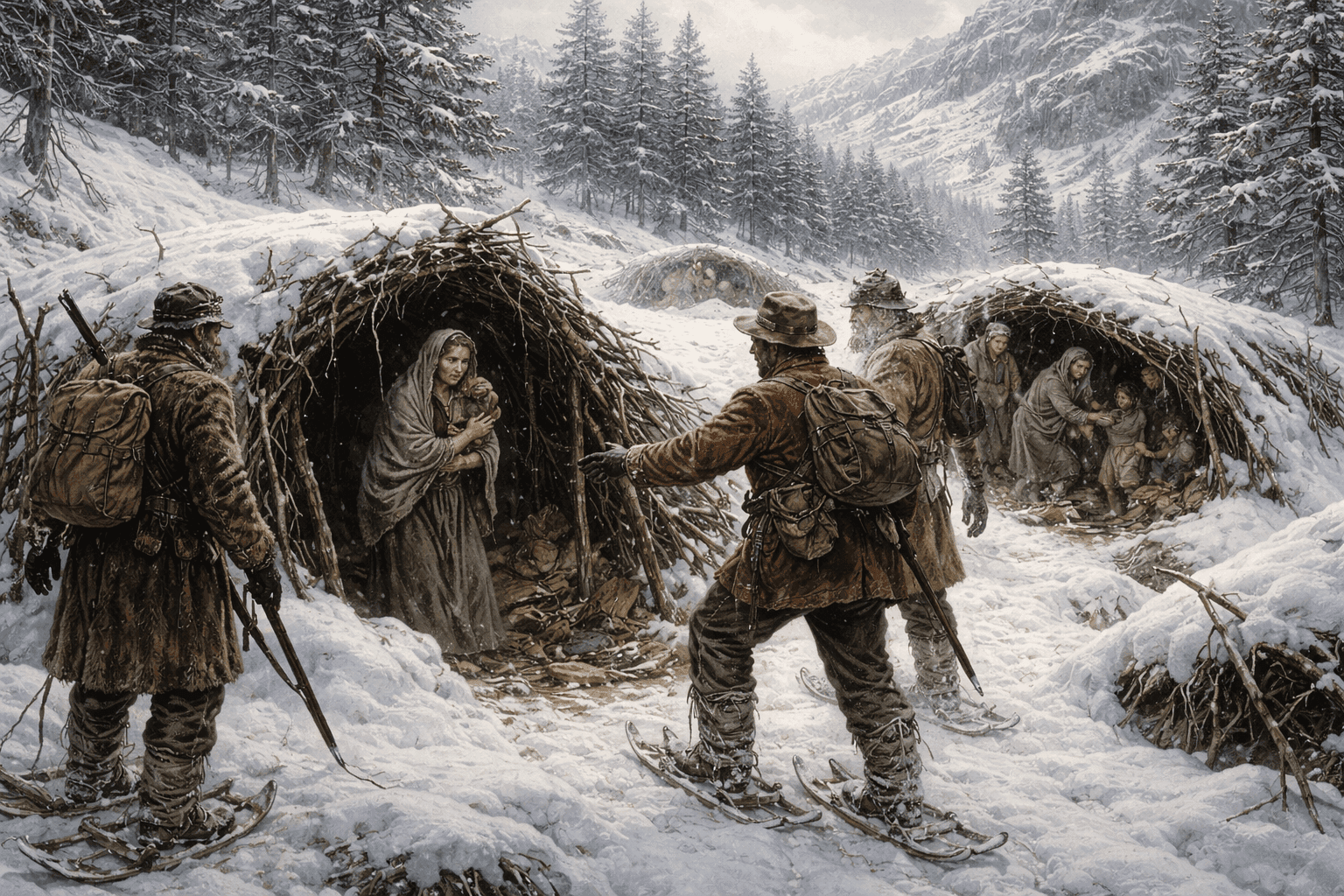
On February 19, 1847, the final rescue party reached what remained of the Donner Party, finding survivors who had endured four months trapped in the Sierra Nevada mountains during one of California's worst winters. The wagon train of 87 pioneers had left Illinois in April 1846, seeking new lives in California. They made the fatal decision to take an untested shortcut called the Hastings Cutoff, which cost them precious weeks. When early snows trapped them near what became known as Donner Lake, they were unprepared for winter. As food ran out, some resorted to eating their oxen, then boiled hides for sustenance. When that wasn't enough, some survivors consumed the flesh of those who had died.
Of the 87 members of the Donner Party, only 48 survived. Rescue attempts had begun in January, but deep snow and brutal conditions meant multiple trips were required. Rescuers found survivors in horrific conditions, living in crude shelters, weakened by starvation, some having lost their minds. The evidence of cannibalism shocked the nation, though it had been necessary for survival. The Donner Party became a cautionary tale about the dangers of westward expansion, the cost of taking shortcuts, and the extreme measures humans will embrace to survive. The tragedy demonstrated that manifest destiny came with terrible risks, that pioneer optimism could meet brutal natural reality, and that survival sometimes requires crossing moral lines that peacetime would forbid. The last survivors rescued on this day carried psychological scars for life, many refusing to speak about their ordeal. The Donner Party proved that the conquest of the West was built on suffering as well as courage, that nature respects no ambitions, and that the American frontier's promise of opportunity came with no guarantee of survival.
The Machine That Remembered Sound
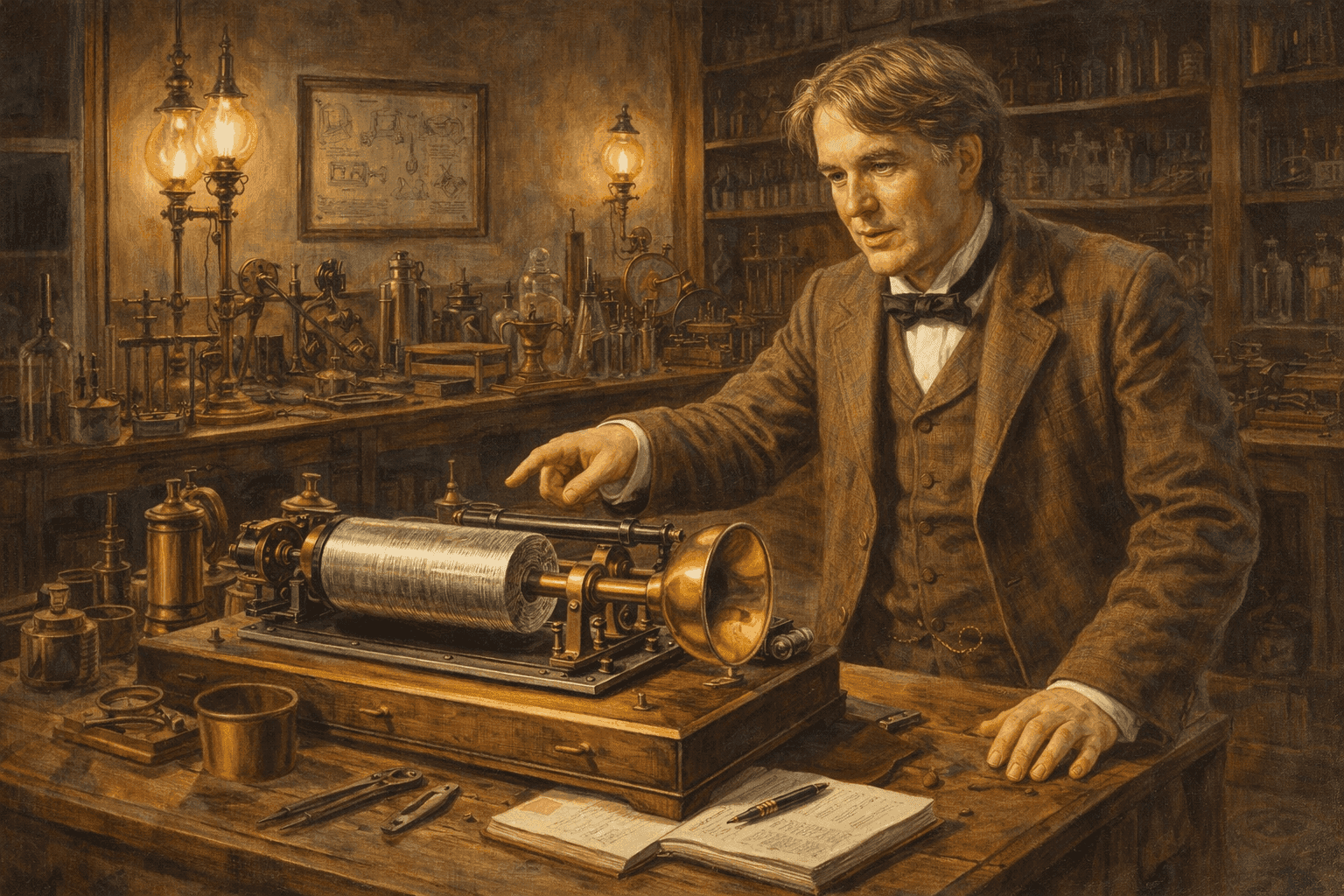
On February 19, 1878, Thomas Edison received a patent for the phonograph, a device that could record sound on a tinfoil-wrapped cylinder and play it back. Edison had invented it the previous year, famously recording himself reciting "Mary Had a Little Lamb" as the first captured human voice. The invention seemed like magic to those who witnessed it. For the first time in human history, sound could be preserved and replicated. Voices of the dead could be heard by the living. Music performed once could be experienced again. The phonograph amazed even Edison, who called it his favorite invention and initially envisioned it as a business tool for recording dictation rather than playing music.
The phonograph revolutionized human culture by making music reproducible and portable. Before the phonograph, hearing music required live performance. Afterward, recorded music could reach anyone who owned a player. The music industry as we know it was born. The technology evolved from tinfoil cylinders to wax cylinders to flat discs to vinyl records to digital formats, but Edison's basic insight remained: sound waves could be mechanically captured and reproduced. The phonograph transformed entertainment, created the recording industry, preserved voices and music that would otherwise be lost, and demonstrated that seemingly ephemeral phenomena like sound could be made permanent. The patent granted on this day proved that inventors could achieve the seemingly impossible, that capturing the intangible could become tangible through clever engineering, and that revolutionary technologies often find their greatest uses in ways their inventors never imagined. Edison thought he'd created a dictation machine; instead, he'd given humanity the ability to freeze time and replay it, to preserve performances and speeches, and ultimately to transform how people experienced music and communication.
When Fear Became Policy
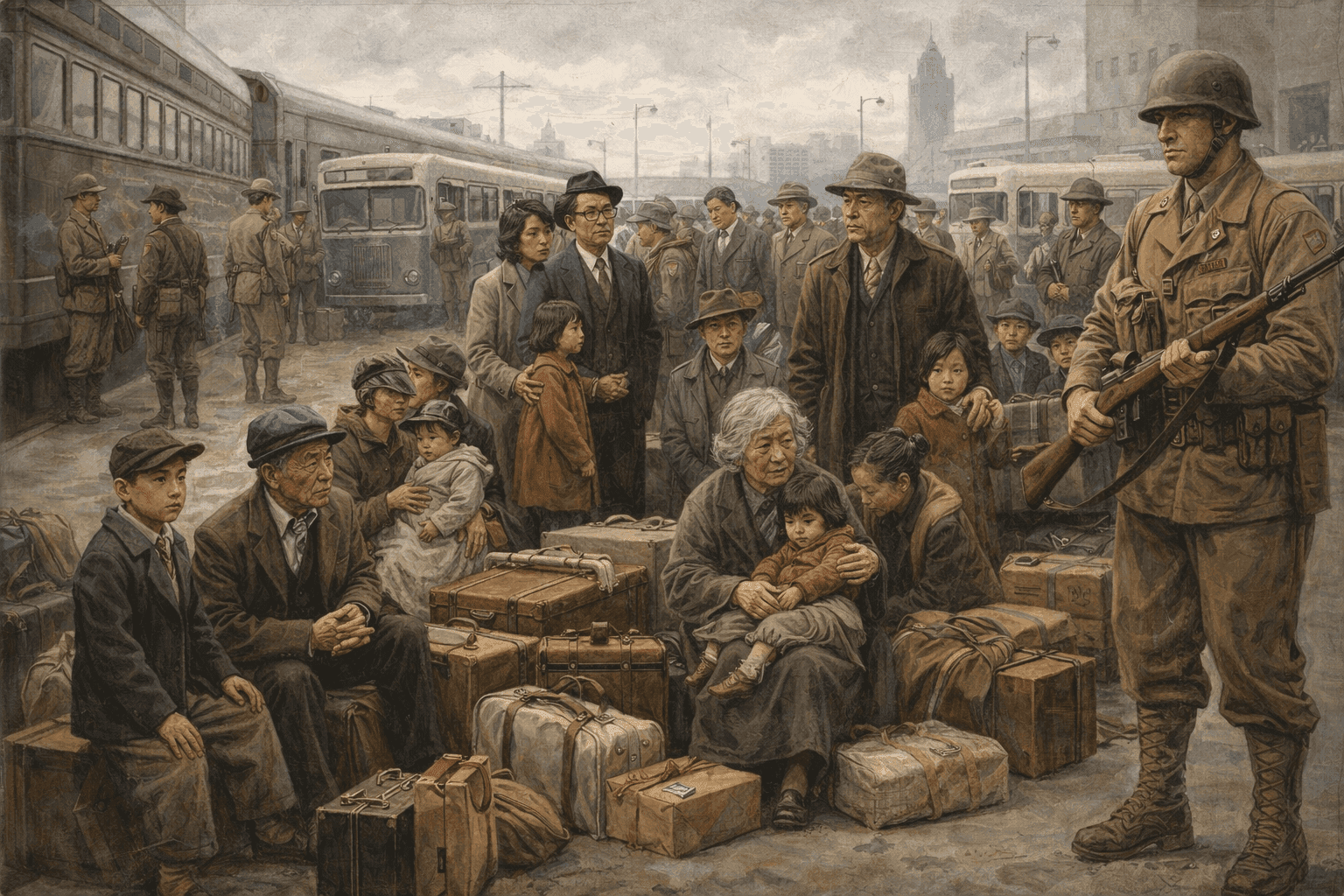
On February 19, 1942, President Franklin D. Roosevelt signed Executive Order 9066, authorizing the forced removal of over 120,000 people of Japanese ancestry, two-thirds of them American citizens, from the West Coast to internment camps in remote areas. Two months after Pearl Harbor, military officials and racist politicians claimed Japanese Americans posed a security threat, though not a single Japanese American was ever convicted of espionage or sabotage during the war. The order gave the military authority to designate "exclusion zones" from which any or all persons could be removed. Though it didn't explicitly mention Japanese Americans, that was its clear and only purpose.
Families were given days or weeks to dispose of homes, businesses, and possessions, then transported to camps surrounded by barbed wire and guard towers in desolate locations. They lived in crude barracks, subjected to harsh conditions, while their sons and brothers fought for America in segregated units like the 442nd Regimental Combat Team, which became the most decorated unit in U.S. military history. The internment represented one of America's gravest civil liberties violations, stripping citizens of freedom without trial or evidence based solely on their ancestry. In 1988, Congress formally apologized and provided reparations to survivors, acknowledging the camps resulted from "race prejudice, war hysteria, and a failure of political leadership." The order signed on this day demonstrated that constitutional protections can crumble during wartime, that fear can make democracies commit injustices they later regret, and that American citizenship offers no guarantee against persecution when racial prejudice combines with security panic. The Japanese Americans imprisoned starting on this date proved through their resilience and their sons' valor that loyalty is measured by actions, not ancestry, and that America's greatest strength comes from living up to its principles even when frightened.