February 17: An Opera Flops, A Beetle Triumphs, and A Nation Declares
February 17 connects three moments of unexpected outcomes. When Puccini's opera premiered to jeers and walkouts but became one of the most beloved works in the repertoire, when an affordable car designed under Hitler's regime became history's best-selling automobile and a symbol of counterculture freedom, and when a Serbian province declared independence and created a state recognized by some nations but rejected by others. These stories remind us that initial failure doesn't predict lasting value, that products transcend their creators' intentions, and that independence declared is not always independence achieved.
The Opera That Started With Boos
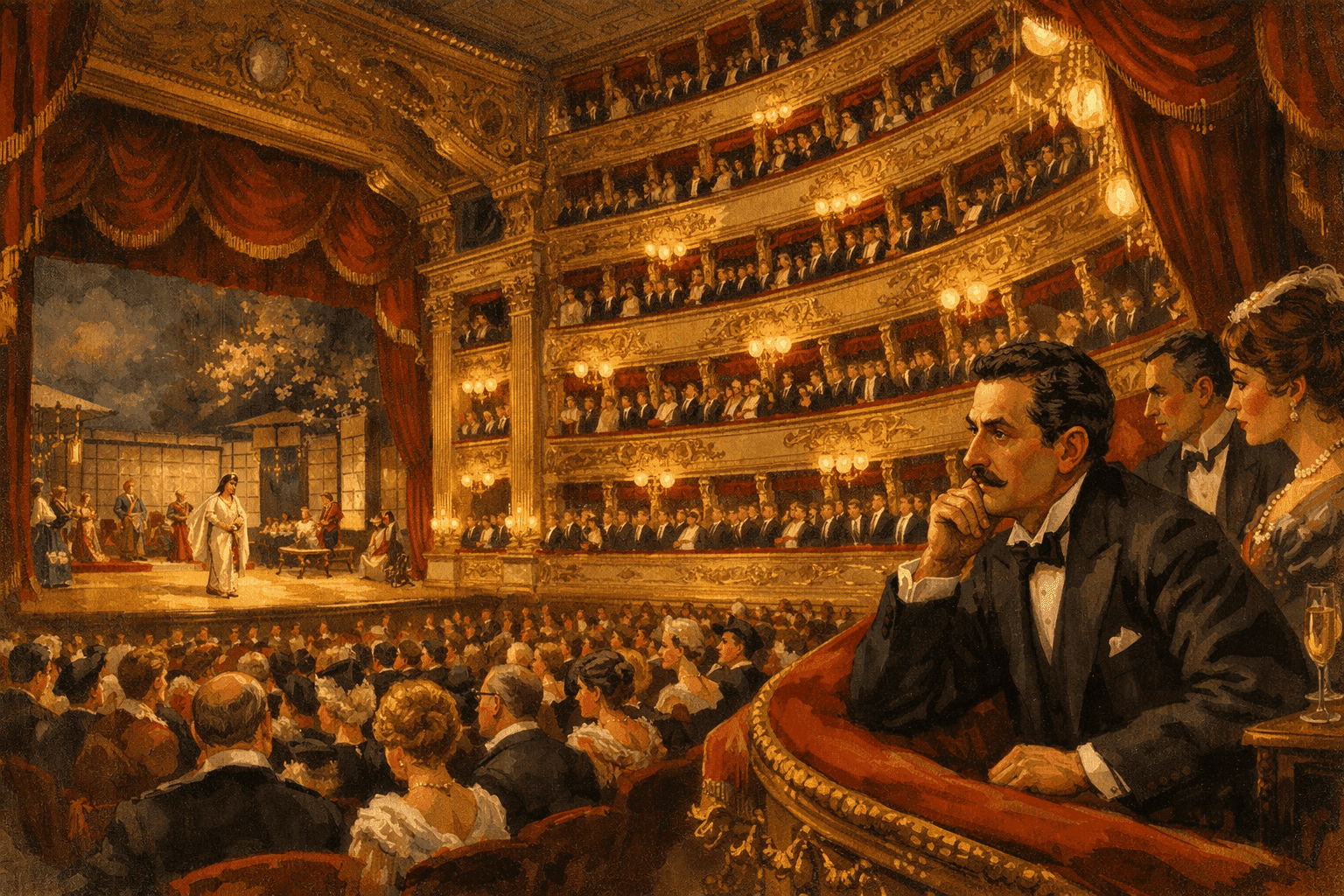
On February 17, 1904, Giacomo Puccini's Madama Butterfly premiered at Milan's La Scala opera house and was met with one of opera history's most famous disasters. The audience, La Scala's notoriously demanding regulars, laughed during tragic scenes, shouted insults, made animal noises, and walked out before the final curtain. Critics savaged the opera, calling it derivative and boring. Puccini was devastated, his masterpiece apparently rejected. The hostile reception may have been orchestrated by rival composers' supporters or critics of Puccini's previous success, but regardless of cause, Butterfly closed after a single performance.
Yet Puccini believed in his opera. He revised it, shortening the second act and making minor adjustments, then premiered the new version three months later in Brescia to enthusiastic acclaim. Madama Butterfly became one of opera's most performed works, its tragic story of Cio-Cio-San, the Japanese geisha abandoned by her American naval officer husband, moving audiences for over a century. Arias like "Un bel dì vedremo" ("One Fine Day") became standards, while the opera's exploration of cultural collision, imperialism, and feminine sacrifice resonated across generations. The premiere that failed on this night demonstrated that initial reception doesn't determine lasting value, that audiences can be wrong and artists right, and that revisions can transform failure into triumph. Puccini's faith in his work despite La Scala's rejection proved that creators must sometimes trust their vision against immediate judgment. The opera booed on this February night became timeless, proving that masterpieces can emerge from disasters if artists refuse to abandon their creations.
The Bug That Beat the Model T
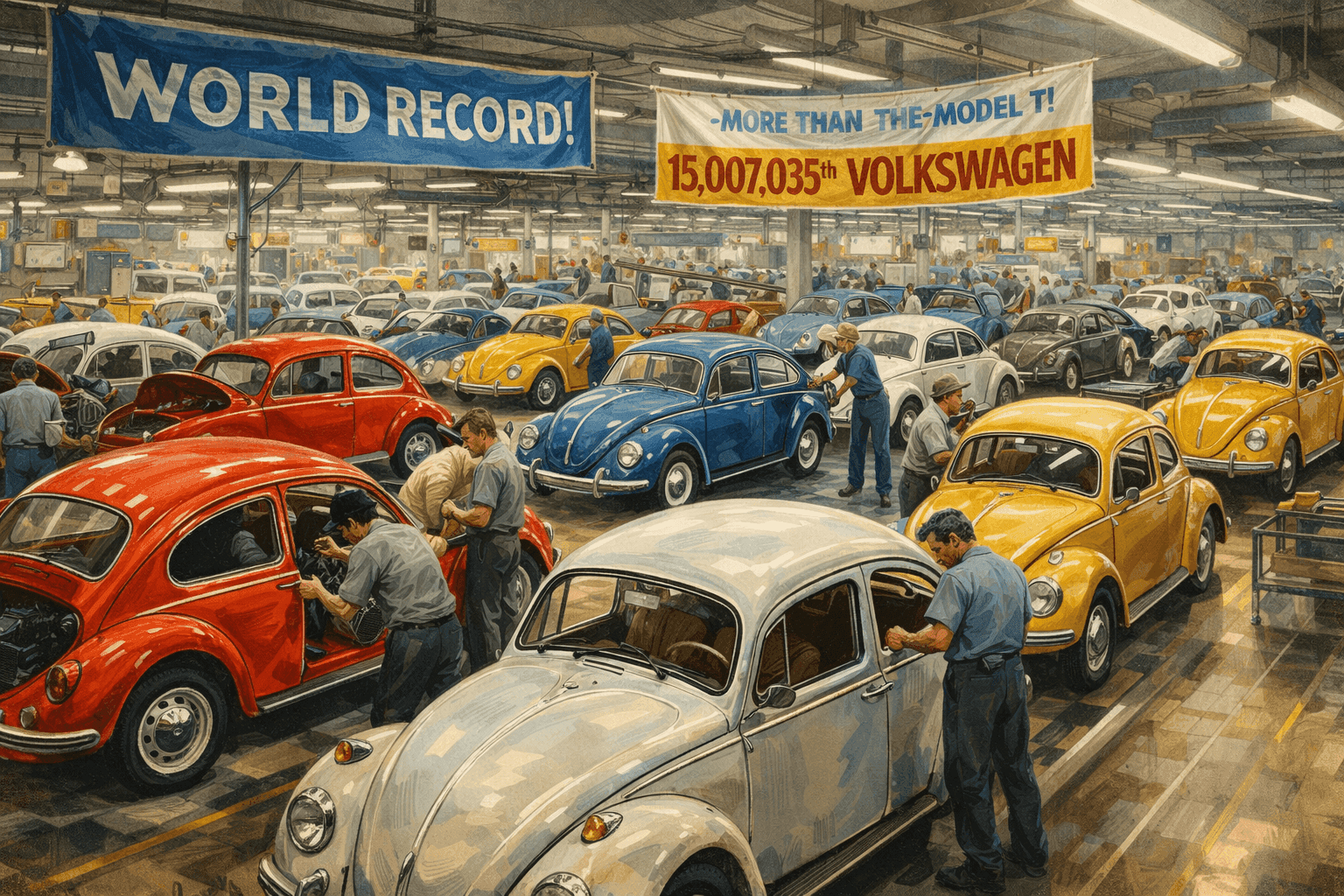
On February 17, 1972, Volkswagen announced that the Beetle had surpassed the Ford Model T's production record, becoming the most-manufactured car in history with over 15 million units produced. The milestone was remarkable given the Beetle's Nazi origins. Ferdinand Porsche had designed it in the 1930s at Adolf Hitler's direction to create an affordable "people's car" for German families. World War II interrupted production, and the factory was used for military vehicles. After the war, the British Army controlled the bombed-out Volkswagen plant and considered scrapping it, with British automotive executives declaring the Beetle too ugly and poorly designed to ever succeed commercially.
Yet the Beetle became a global phenomenon, transcending its troubling origins. Its reliability, affordability, and distinctive design made it beloved worldwide. In 1960s America, the Beetle became a countercultural icon, the anti-establishment choice that rejected Detroit's chrome-laden behemoths. Volkswagen's famous advertising campaign celebrated the car's quirky appearance with self-deprecating humor, turning its oddness into charm. The Beetle proved that good design endures regardless of its creators' ideology, that products can be separated from their problematic origins, and that sometimes what experts dismiss as unmarketable becomes universally beloved. The car that surpassed the Model T on this day demonstrated that affordability, reliability, and distinctive character matter more than conventional beauty, that Hitler's "people's car" could become freedom's symbol, and that the best products transcend their creators' intentions. Production would continue until 2003 in Mexico, with over 21 million Beetles eventually manufactured, making it one of automotive history's most enduring success stories.
The Newest Country on Earth
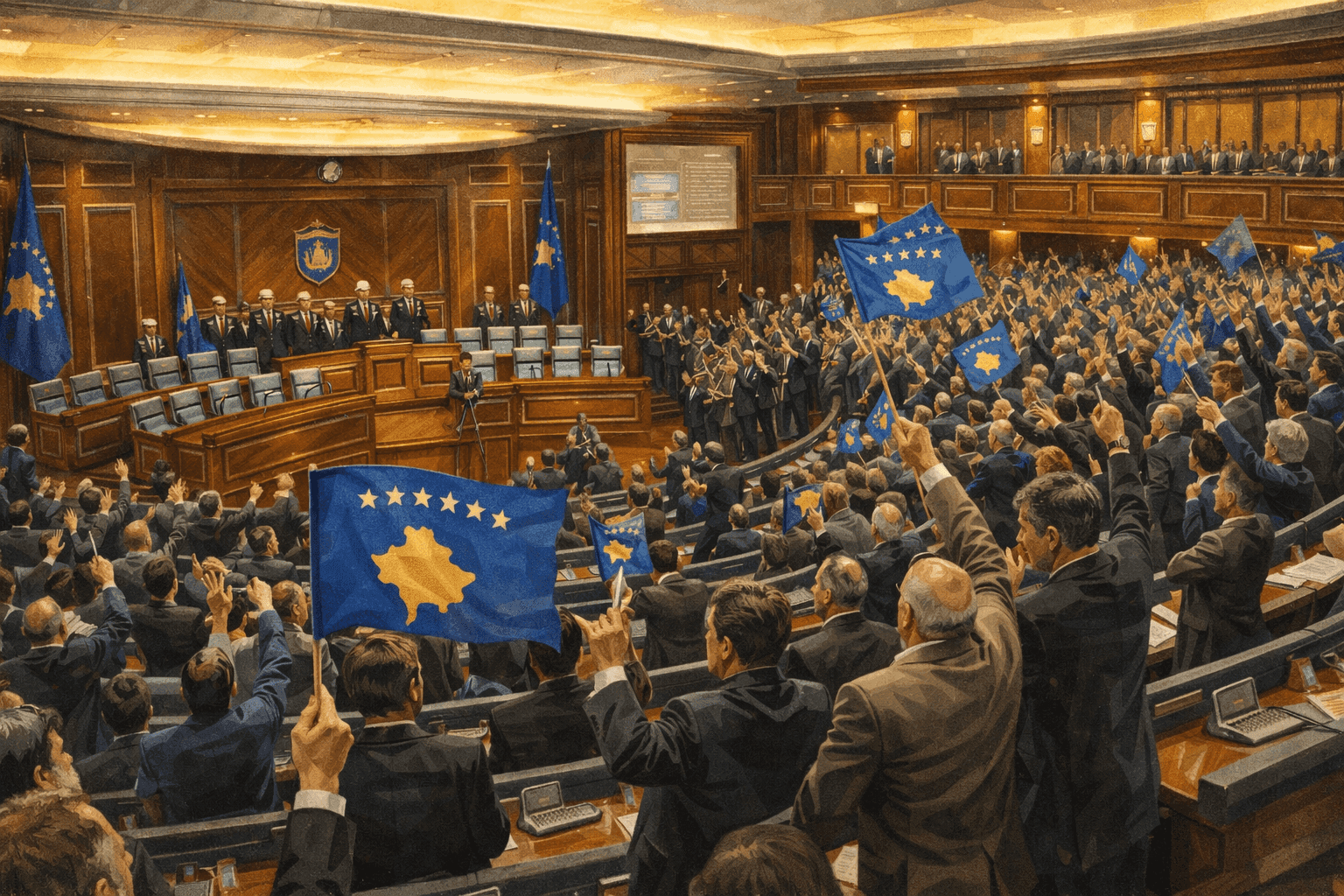
On February 17, 2008, Kosovo's parliament declared independence from Serbia, creating one of the world's newest nations. The predominantly ethnic Albanian province had been under United Nations administration since 1999, when NATO bombing forced Serbian forces to withdraw after a brutal campaign of ethnic cleansing. Kosovo's Albanian majority had long sought independence, while Serbia insisted Kosovo remained an integral part of its territory, pointing to the region's historical and cultural significance to Serbian identity. The declaration came after years of failed negotiations between Albanian and Serbian representatives, with international mediators unable to find compromise acceptable to both sides.
Kosovo's independence remains contested. Over 100 countries recognize it as a sovereign state, including the United States and most European Union members. Yet Serbia, Russia, China, and dozens of other nations refuse recognition, fearing that accepting Kosovo's independence would encourage separatist movements within their own borders. The declaration on this day created a functioning state with its own government, currency, and institutions, but one whose international status remains ambiguous. Kosovo demonstrated that declaring independence is easier than achieving it, that self-determination principles conflict with territorial integrity norms in international law, and that ethnically divided regions struggle to resolve disputes peacefully. The newest country declared on this day exists in a diplomatic gray zone, functioning as a state for some purposes while remaining a disputed territory for others. Kosovo's uncertain status proves that even in the 21st century, new nations can emerge, but their acceptance by the international community is never guaranteed. The parliament that declared independence on this day created a state whose sovereignty remains incomplete, recognized by enough powers to function but rejected by enough to remain perpetually contested.