February 16: Unconditional Surrender, A Pharaoh Revealed, and Castro Takes Power
February 16 connects three moments when power shifted decisively. When a Union general's refusal to negotiate made him a national hero and turned the Civil War's momentum, when an archaeologist opened a sealed door and found a pharaoh's treasures untouched for 3,000 years, and when a bearded revolutionary took office and began transforming Cuba into America's Cold War nemesis. These stories remind us that some victories come from refusing compromise, that the past preserves its secrets until persistence reveals them, and that revolutions often transform their leaders as much as their nations.
No Terms But Unconditional Surrender
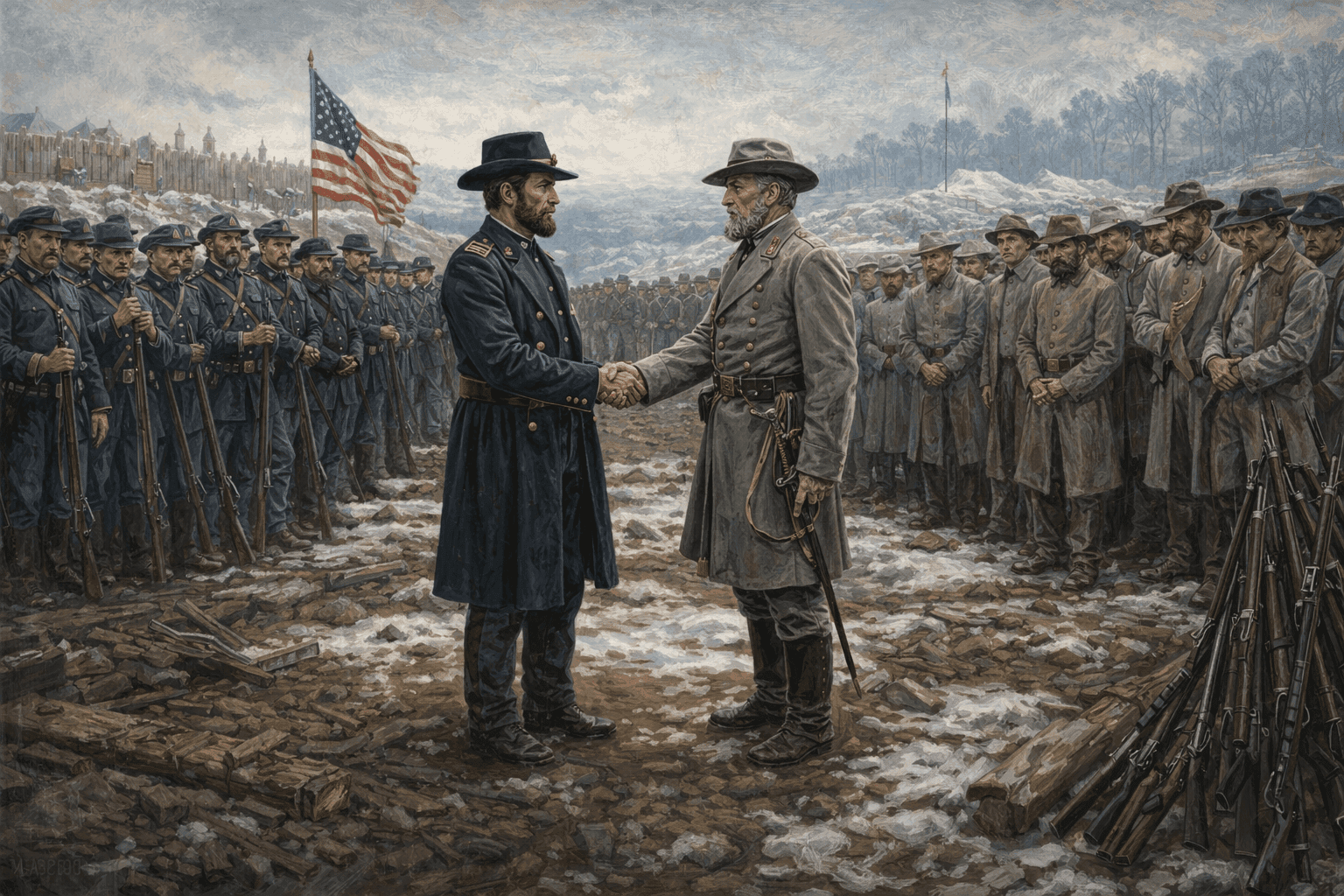
On February 16, 1862, Confederate General Simon Bolivar Buckner surrendered Fort Donelson to Union General Ulysses S. Grant after a four-day siege that demonstrated Grant's aggressive approach to warfare. The fort, strategically positioned on the Cumberland River in Tennessee, guarded a critical Confederate supply route. When Buckner, an old friend of Grant's from West Point, requested terms of surrender, Grant replied with a message that would make him famous: "No terms except an unconditional and immediate surrender can be accepted." Buckner had no choice. With Union forces surrounding the fort and gunboats controlling the river, he surrendered approximately 13,000 Confederate troops, the first major Union victory of the war.
Grant's victory at Fort Donelson transformed the Civil War's momentum and his own career. The fall of Donelson, combined with Fort Henry's capture days earlier, opened Tennessee to Union invasion and demonstrated that the Confederacy could be defeated through aggressive, coordinated campaigns. Grant became a national hero overnight, newspapers dubbing him "Unconditional Surrender Grant" based on his initials U.S. and his uncompromising demand. President Lincoln, desperate for generals who would fight rather than endlessly prepare, promoted Grant and gave him larger commands. The victory proved that refusing to negotiate could sometimes be the path to success, that boldness could overcome superior defensive positions, and that the Civil War would be won by generals willing to accept casualties in pursuit of decisive victories. The Confederate prisoners marched north on this winter day represented the Union's first major territorial gain, opening a campaign that would eventually split the Confederacy and lead to ultimate victory. Grant's "unconditional surrender" became Union policy, a refusal to recognize the Confederacy's legitimacy by negotiating terms.
The Tomb That Time Forgot
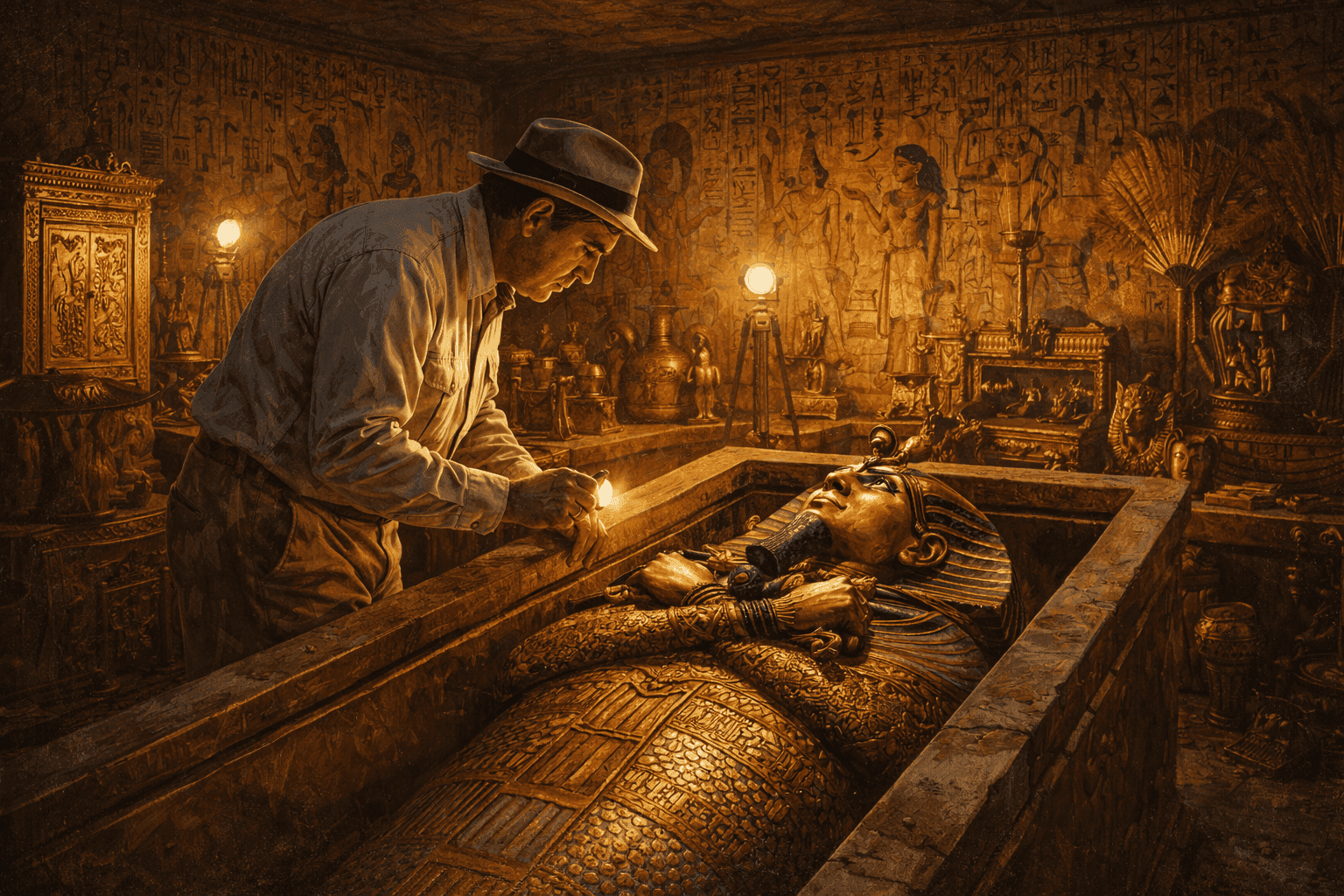
On February 16, 1923, Howard Carter and his sponsor Lord Carnarvon opened the sealed inner burial chamber of King Tutankhamun's tomb in Egypt's Valley of the Kings. Carter had discovered the tomb's entrance the previous November after years of fruitless searching, finding it remarkably intact despite being in a valley where nearly every tomb had been looted in antiquity. As Carter made a small hole in the sealed doorway and held up a candle, Carnarvon asked if he could see anything. Carter's reply became legendary: "Yes, wonderful things." Inside lay treasures that had remained undisturbed for over 3,200 years: golden furniture, chariots, weapons, jewelry, and the famous golden death mask that would become ancient Egypt's most iconic artifact.
Tutankhamun's tomb revolutionized Egyptology and captured global imagination. Though Tut was a minor pharaoh who died young, his tomb's preservation offered unprecedented insight into royal burial practices, art, and daily life in ancient Egypt. The discovery made "Egyptomania" a global phenomenon, influencing fashion, architecture, and popular culture. Carter spent a decade cataloging over 5,000 objects from the tomb, working with meticulous care that set new archaeological standards. The "curse of the pharaohs" legend emerged when Carnarvon died months after entering the tomb, though he actually died from an infected mosquito bite, and Carter lived to 64. The tomb opened on this day proved that patience and systematic searching could reveal treasures everyone assumed had been plundered millennia ago, that ancient civilizations preserved their beliefs and artistry in ways that speak across millennia, and that some archaeological discoveries transcend academic interest to become cultural phenomena. The golden mask Carter found in that burial chamber became the face ancient Egypt shows the modern world.
The Revolutionary Takes Office
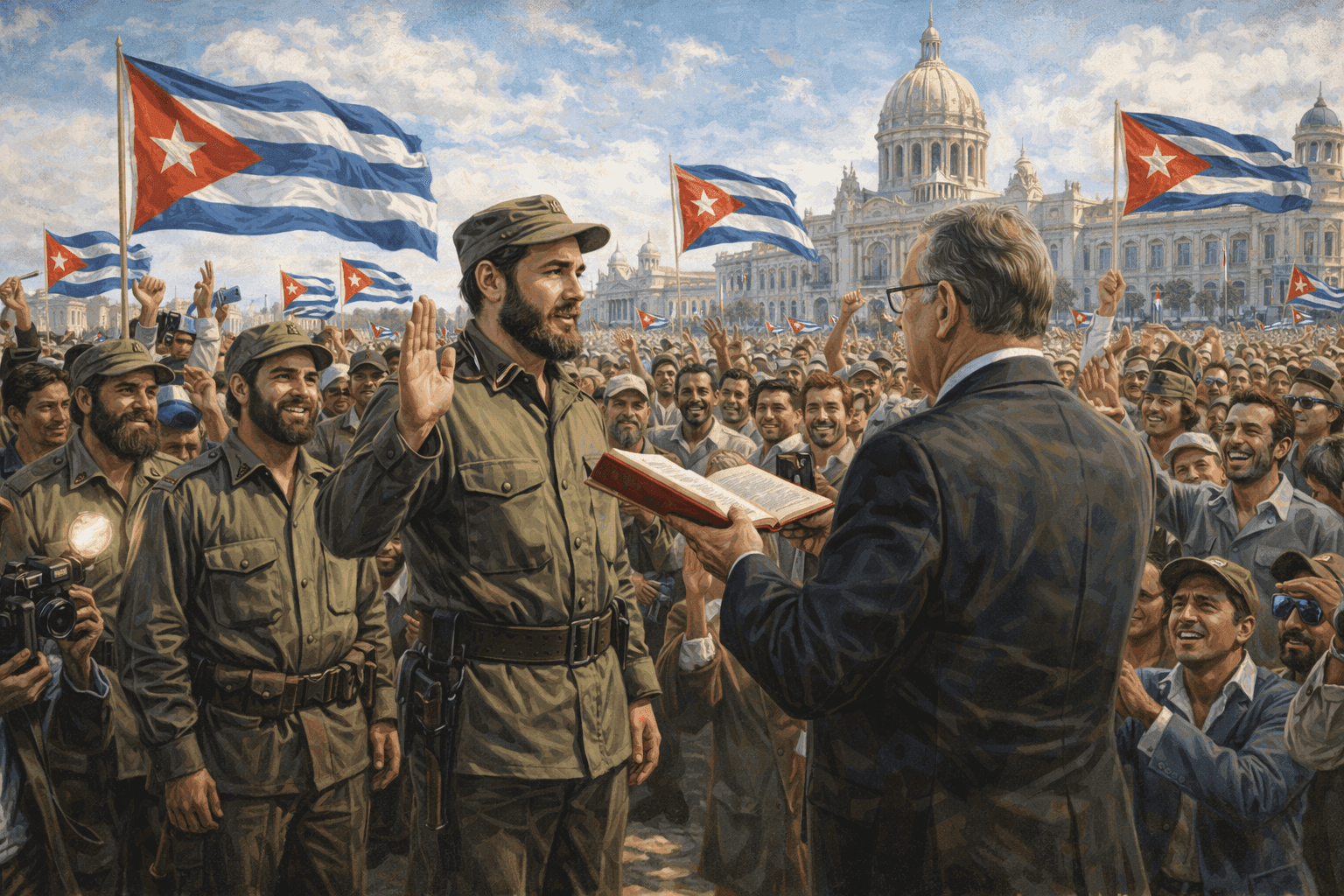
On February 16, 1959, Fidel Castro was sworn in as Prime Minister of Cuba just six weeks after his revolutionary forces had toppled the Batista dictatorship. The 32-year-old former lawyer had spent years in the Sierra Maestra mountains leading a guerrilla campaign that captured Cuban imagination and international attention. Castro promised democratic reforms, land redistribution, and an end to corruption. Many Cubans and Americans initially viewed him as a democratic reformer rather than a communist revolutionary. The United States had even provided tacit support during his insurgency, with American public opinion favoring the charismatic rebel over the corrupt Batista regime.
Castro's Cuba would become one of the Cold War's most contentious flashpoints. Within months, he began nationalizing American businesses, executing political opponents, and aligning with the Soviet Union, transforming Cuba from a U.S. client state into America's communist adversary just 90 miles from Florida. The revolution that brought Castro to power on this day would lead to the Bay of Pigs invasion, the Cuban Missile Crisis, decades of embargo, waves of refugees fleeing to Florida, and a frozen relationship between neighboring nations that lasted over half a century. Castro himself would remain in power for 49 years, longer than any non-royal head of state in modern history, surviving CIA assassination attempts, economic isolation, and the Soviet Union's collapse. The revolutionary who took office on this day proved that small nations can defy superpowers if leaders are willing to endure isolation, that revolutions often devour their democratic promises, and that personal charisma combined with ruthless control can maintain power for decades. Castro transformed Cuba into a symbol of anti-American resistance while his opponents called him a dictator who impoverished his people for ideology. The bearded revolutionary who became prime minister would shape Cuban and American politics until his death in 2016.