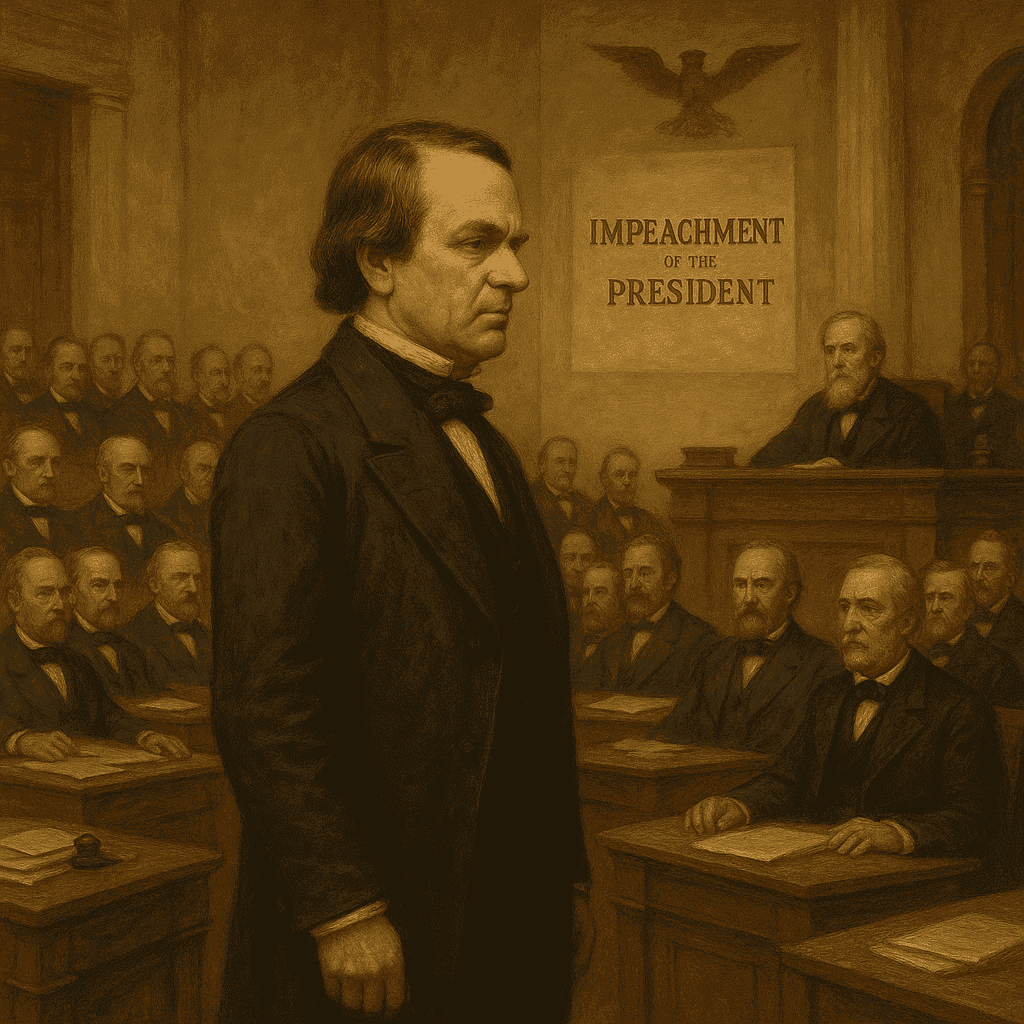
On May 26, 1868, President Andrew Johnson was acquitted in his impeachment trial by the United States Senate, narrowly avoiding removal from office by a single vote. The conclusion of the trial marked the end of the first impeachment proceedings against a U.S. president, unfolding against the turbulent backdrop of post–Civil War Reconstruction. The trial exposed sharp political divisions and set an enduring precedent for the limits of presidential power and the constitutional checks on executive authority.
A Presidency Marked by Conflict
Andrew Johnson, a Southern Democrat and former vice president under Abraham Lincoln, assumed the presidency following Lincoln’s assassination in 1865. Though he had remained loyal to the Union during the Civil War, Johnson’s lenient approach to Reconstruction and his frequent vetoes of civil rights legislation quickly alienated the Republican-dominated Congress.
Tensions reached a boiling point when Johnson violated the Tenure of Office Act—a law passed by Congress (and later declared unconstitutional)—by attempting to remove Secretary of War Edwin Stanton, a staunch ally of the Radical Republicans, without Senate approval. This move provided the legal grounds for his impeachment.
The Impeachment and Trial
The House of Representatives voted to impeach Johnson in February 1868, bringing 11 articles of impeachment against him, most centered around his defiance of the Tenure of Office Act. The Senate trial began in March and was watched with intense national interest.
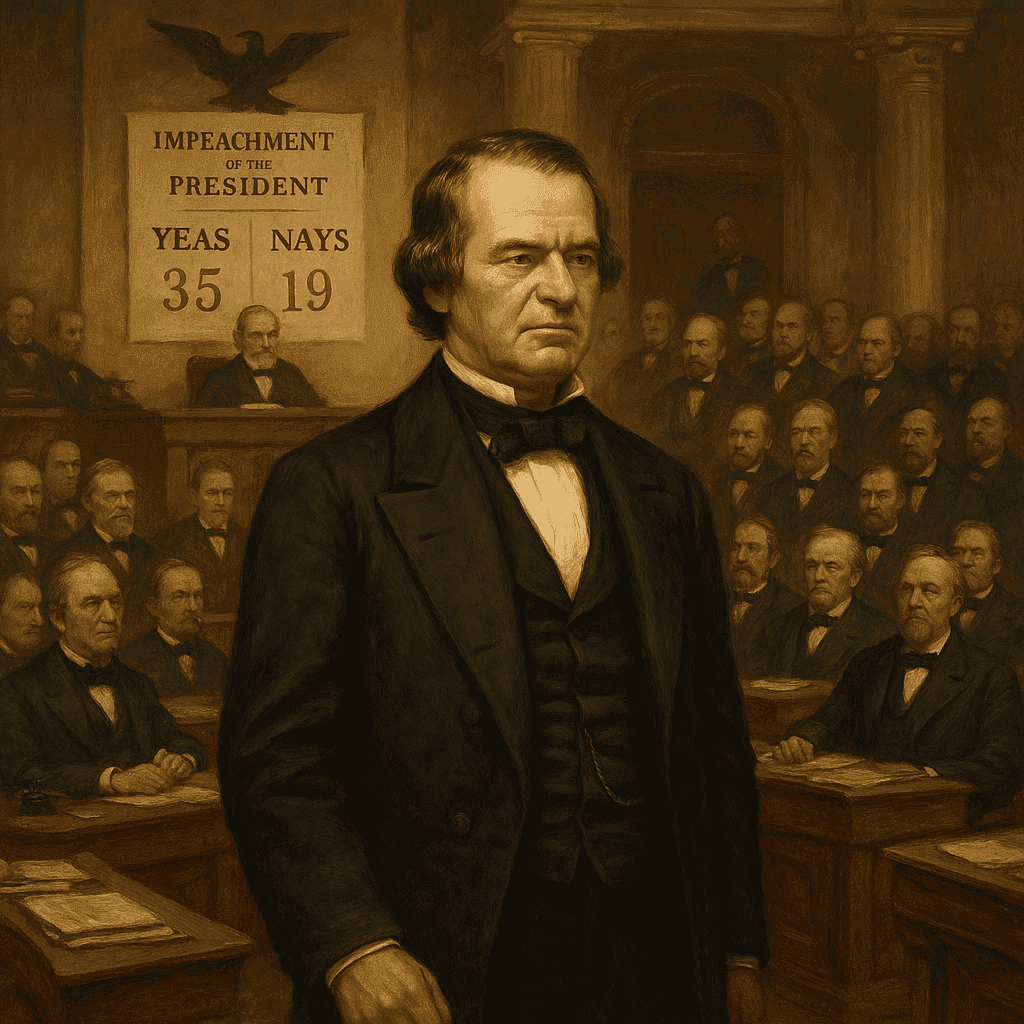
On May 16, the Senate held its first vote, falling one vote short of the two-thirds majority required for conviction. Ten days later, on May 26, the Senate held its final vote on the remaining articles of impeachment, and again Johnson was acquitted by a single vote—35 guilty to 19 not guilty. Seven Republican senators had broken ranks, fearing that convicting Johnson would set a dangerous precedent and further destabilize the fragile postwar government.
Legacy and Precedent
Johnson's narrow acquittal preserved the balance of power between the executive and legislative branches, affirming that impeachment should be a measure of last resort, not a tool for political retaliation. Though he finished his term weakened and deeply unpopular, his survival underscored the constitutional gravity of removing a president from office.
The trial's outcome also reflected broader debates over Reconstruction, civil rights, and the direction of national healing after the Civil War. It delayed more aggressive efforts to enforce civil rights in the South, contributing to decades of systemic racial inequality.
An Enduring Constitutional Moment
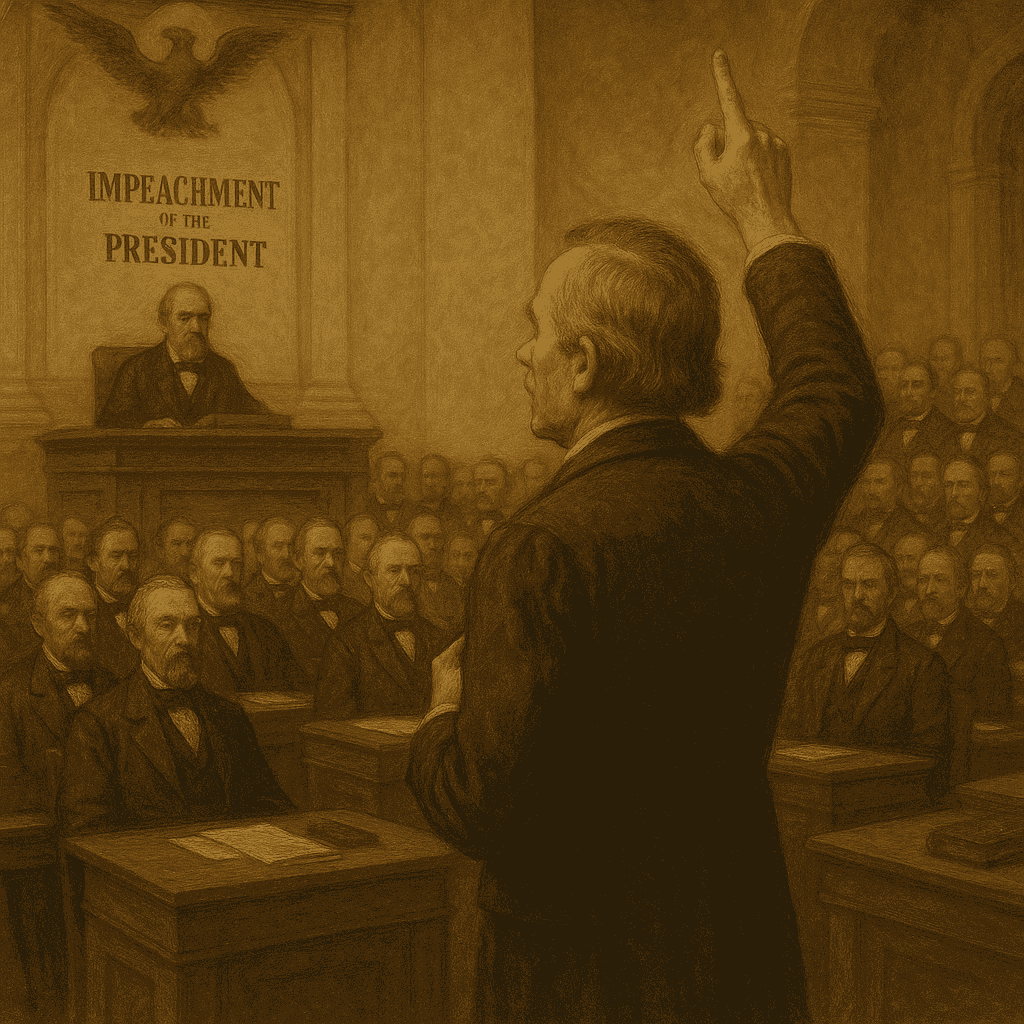
The impeachment and acquittal of Andrew Johnson on May 26, 1868, remains a critical chapter in American history—a test of the Constitution, a reflection of political polarization, and a stark reminder of how fragile democratic institutions can be in times of national division. It set a benchmark for future impeachments and continues to inform debates over the limits and responsibilities of presidential power.